Welcome to
Chemical Collective

Are you 18 or older?

Please confirm that your are 18 years of age or older.

You are not allowed to access the page.

info-icon €100 for domestic (NL, CZ, DE) €125 for the rest of the EU, excluding stealth shipping

Free shipping over €50 & free tracked shipping over €100

Friendly customer service available 9-5pm Monday to Friday

Free shipping over €50 & free tracked shipping over €100

Friendly customer service available 9-5pm Monday to Friday

Your cart is empty

How Young is Too Young to Use Psychedelics?

sam-woolfe

By Sam Woolfe

how young is too young to use psychedelics
in this article
  • Brain Plasticity During the Younger Years
  • What Do We Know About the Risks of Using Psychedelics at a Young Age?
  • A Future in Which Children and Adolescents Are Eligible for Psychedelic Therapy
sam-woolfe

By Sam Woolfe

Disclaimer: The views and opinions expressed in this article are those of the authors and do not necessarily reflect the official policy or position of the Chemical Collective or any associated parties.

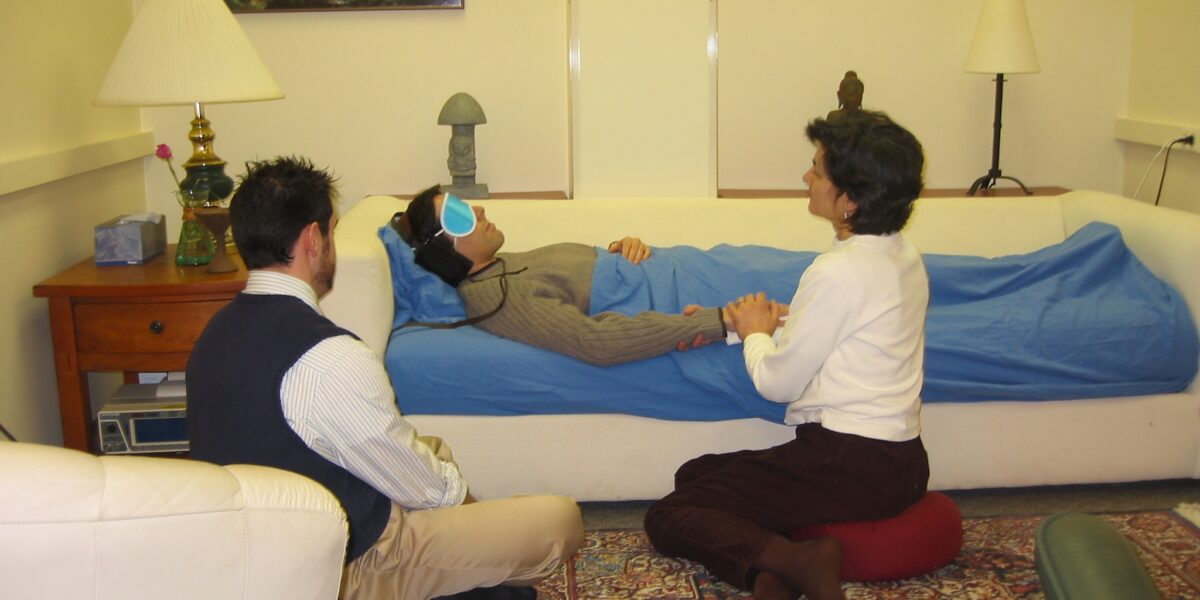
For those who want to join a psychedelic clinical trial, psychedelic therapy session, or psychedelic retreat, you have to be a legal adult. For many clinicians, therapists, and retreat organisers, this means you have to be at least 18, although a small number of retreats restrict their services only to those 25 years and older. As Spinoza states on their website:

You cannot use our products or participate in our retreats if you are under 25 years of age. The primary reasons for this caution are twofold. First, the human brain continues to develop up until around this age. Second, while rare, psilocybin can exacerbate latent mental conditions, such as psychosis. Such conditions typically manifest before the age of 25. If these disorders are already dormant within an individual, using psilocybin can increase the risk of them surfacing. Due to these concerns, as well as the ongoing brain development, using our products or participating in our retreats before the age of 25 is discouraged.

Brain Plasticity During the Younger Years

I’ve definitely heard the above recommendation in the psychedelic space before – to not use psychedelics until around the age of 25, when your brain has stopped developing. Notable voices in the space have expressed a similar sentiment. Ann Shulgin said, “When you are under the age of, say, 16, you haven’t really lived that long. You haven’t had time to find out what the core of yourself is.” Terence McKenna opined, “This is very adult business and you can get into trouble of all different kinds and here are the kinds of trouble you can get into.” And the artist Allyson Grey cautioned that “young forming egos should not partake in mind-altering ‘ego dissolving’ substances.” The artist Alex Grey, husband to Allyson, said during an interview:

I guess I’m of a mind similar to Stephen Gaskin, who basically feels that the drinking age is appropriate for the other stuff as well, in a general sense. That one wants to form an ego before one starts to transcend it. I know that my friends—when I was in junior high and high school—were probably 13 or 14 when they started trying LSD. And I think it really freaked most of them out. Some of these people stayed kind of rubbery throughout that period, and I don’t know that it was helpful for them in gelling their personality.

As far as I’m aware, there isn’t research into the relative risks of tripping as the brain is still developing compared to after this point. But the reasoning behind the advice is that a potent and destabilising trip at a young age could set in place hard-to-undo neural pathways associated with distress. Since the brain is more plastic in younger years, there is a worry that heavy or frequent tripping at this age could increase the risk of extended difficulties, such as hallucinogen persisting perception disorder (HPPD), which is more common in younger people. As the authors of a study published in PNAS Nexus note:

We also found that younger age was associated with a greater likelihood of reporting HPPD-related effects. This suggests that the role of age and critical windows for perceptual learning should be considered when investigating psychedelic effects in humans. Adolescence represents the peak age of onset for mental disorders … and the adolescent brain is known to be particularly vulnerable to the negative consequences of substance use…. Heightened neuroplasticity during adolescence might thus explain the higher likelihood for younger people in the current sample to report HPPD-type effects following psychedelic use, which should be taken into account when defining minimum recruitment age in future studies using psychedelics.

What Do We Know About the Risks of Using Psychedelics at a Young Age?

Some psychonauts who tripped when they were younger (e.g. as teenagers) will say they wish they waited until they were older. Often, this is because of the lack of knowledge and maturity they had at this age, which led them to trip without paying attention to set and setting. This could have meant tripping in the wrong places, with the wrong people, taking too high a dose, not testing substances, mixing substances, doing drug binges, not spending time integrating, falling into negative mental and behavioural patterns, and so on and so forth.

At the same time, many people trip as teenagers and seem to suffer no ill effects; they instead describe these early experiences as educational, transformative, and life-changing. There is also the idea that using psychedelics when your brain is not fully developed is not inherently risky; the risks only arise because of a lack of a safe container for the experience. For example, it is commonplace in many Indigenous cultures for children to take psychedelics. From a Western perspective, this might set alarm bells ringing. But cultural differences lead to different outcomes in use. As Rebecca Kronman writes in a piece for Chacruna:

Indigenous use, which involves children in the ceremonial or ingestion aspects of psychoactive substances, not only removes the taboo and legal restrictions that can increase harm for Western adolescents engaged in psychedelic use, but also instills a sense of reverence for these substances. Indigenous children are not using psychedelics for escapism, experimentation, or in ways that are contrary to their society’s norms.

Alex Grey recounts:

I waited until I was around 21. My first trip was an extraordinary opening into resolving issues that had been coming up during adolescence, which kind of crystallized through that experience, resolved themselves in some ways, and suggested ways past my impasses. It might be that some kids would get that early, and they would be able to skip some of the doldrums or depressions of adolescence if they were initiated in a framework of support and by folks who were part of their tribe—a sort of wider and wiser family. And so if they were opening up and becoming vulnerable—exposing their psyche and delving into those dimensions in a loving supportive setting—then I can imagine that it could be.

Having a safe container for these experiences, as present in Indigenous contexts, could make psychedelic use safe for children and adolescents. This would involve elements like reverence for the substance and experience, traditions of use, age-dependent doses, preparation, having the experience in a communal setting, and post-experience support. However, it’s questionable whether this could neatly translate into a Western context, given the attitudes surrounding drugs. We do not have well-developed traditions, practices, education, or tight-knit communities in place that make giving psychedelics to children and adolescents advisable.

In Aldous Huxley’s psychedelic utopian novel Island (1962), children ingest psychedelics as part of their initiation into adolescence and the community. Ram Dass also discussed the potential benefits of having psychedelic rites of passage. But it would be idealistic to imagine that, in the West, we could easily develop communal contexts in which it’s safe for children and adolescents to take psychedelics. 

We know that Native Americans (including children) who regularly use peyote show no evidence of brain damage or psychological problems. Kronman writes, “Native Americans who used peyote scored better on several measures of overall mental health than members of the same tribe who did not use peyote, likely due to their association with the Church community that uses peyote as a sacrament.” A 2011 study of 40 Brazilian adolescents who used ayahuasca found no differences between them and a control group on neuropsychological and psychiatric tests. The study also found that the ayahuasca-using group used alcohol and other substances at lower rates and experienced less anxiety. However, Western contexts in which psychedelics are used differ. Kronman stresses:

Since childhood and adolescence are periods of rapid brain development, anything that may alter the structure or functioning of the brain warrants very careful consideration in how they are used, or whether they are used at all until the brain finishes developing. Moreover, procuring and ingesting psychedelics is illegal. Children risk interactions with the criminal justice system, especially non-white children whose communities are more heavily policed and who are arrested at disproportionate rates.


A Future in Which Children and Adolescents Are Eligible for Psychedelic Therapy

In a 2023 paper, Gail Edelsohn and Dominic Sisti state:

Recent clinical trials of psychedelic drugs aim to treat a range of psychiatric conditions in adults. MDMA and psilocybin administered with psychotherapy have received FDA designation as “breakthrough therapies” for post-traumatic stress disorder (PTSD) and treatment-resistant depression (TRD) respectively. Given the potential benefit for minors burdened with many of the same disorders, calls to expand experimentation to minors are inevitable. This essay examines psychedelic research conducted on children from 1959 to 1974, highlighting methodological and ethical flaws. It provides ethics and policy recommendations for psychedelics research involving children and adolescents, including recognizing that the psychedelic experience is an ineffable one that makes informed proxy consent for parents, guardians, and others especially challenging. Psychedelic experiences are associated with novel benefits and risks, such as significant personality changes, shifts in fundamental values, and possible re-exposure to traumatic memories. These effects may alter the process of personality development in minors. Recommendations for ethically sound psychedelics research in minors include strict adherence to eligibility criteria, including a comprehensive family and individual psychiatric, substance use, and trauma history. An age-appropriate assent process that includes considerations related to the use of therapeutic touch should be developed.

According to the authors, it is not inherently or always unsafe or risky for children and adolescents to be considered eligible for psychedelic therapy. And as they point out, given that many people under the age of 18 struggle with severe emotional distress, psychedelics could potentially help. But given the unique age-related risks associated with taking psychedelics at a young age, we would need unique protocols in place to make psychedelic therapy safe for those under 18.

Sam Woolfe | Community Blogger at Chemical Collective | www.samwoolfe.com

Sam is one of our community bloggers here at Chemical Collective. If you’re interested in joining our blogging team and getting paid to write about subjects you’re passionate about, please reach out to Sam via email at samwoolfe@gmail.com

share your toughts

Join the Conversation.

0 Comments
Inline Feedbacks
View all comments

Related articles

Our Products

Related Products

1V-LSD 150mcg Blotters
1V-LSD 150mcg Blotters From 22.00
(143)
1cP-LSD 100mcg Blotters
1cP-LSD 100mcg Blotters From 18.00
(137)
Tryptamine Mix and Match Pack (4 x 0.1g)
Tryptamine Mix and Match Pack (4 x 0.1g) 65.00
(1)
1V-LSD 10mcg Micro Pellets
1V-LSD 10mcg Micro Pellets From 15.00
(43)
2-FDCK HCL
2-FDCK HCL From 12.00
(82)
1V-LSD 225mcg Art Design Blotters
1V-LSD 225mcg Art Design Blotters From 35.00
(62)
1S-LSD 150mcg Blotters
1S-LSD 150mcg Blotters From 29.00
(16)
1cP-LSD 150mcg Art Design Blotters
1cP-LSD 150mcg Art Design Blotters From 25.00
(74)
1V-LSD 225mcg Pellets
1V-LSD 225mcg Pellets From 35.00
(26)
1D-LSD 225mcg Pellets (1T-LSD)

SALE! -15%

1D-LSD 225mcg Pellets (1T-LSD) From Original price was: €42.00.Current price is: €35.70.
(13)
1cP-LSD 10mcg Micro Pellets
1cP-LSD 10mcg Micro Pellets From 15.00
(23)
5-MeO-DMT Freebase
5-MeO-DMT Freebase From 23.95
(36)
O-PCE HCL
O-PCE HCL From 17.50
(25)
1cP-LSD 20mcg Micro Blotters
1cP-LSD 20mcg Micro Blotters From 18.00
(27)
4-HO-MET Fumarate
4-HO-MET Fumarate From 19.50
(26)
rewards-icon
popup-logo

Reward program

popup-close
  • Earn
  • Affiliates