Welcome to
Chemical Collective

Are you 18 or older?

Please confirm that your are 18 years of age or older.

You are not allowed to access the page.

info-icon €100 for domestic (NL, CZ, DE) €125 for the rest of the EU, excluding stealth shipping

Free shipping over €50 & free tracked shipping over €100

Friendly customer service available 9-5pm Monday to Friday

Free shipping over €50 & free tracked shipping over €100

Friendly customer service available 9-5pm Monday to Friday

Your cart is empty

What Does Integration Look Like for Traumatic Psychedelic Experiences?

sam-woolfe

By Sam Woolfe

shutterstock 2467379207
in this article
  • Integrating Traumatic Experiences Through an Attitudinal Stance
  • More Examples of Helpful Attitudinal Stances
sam-woolfe

By Sam Woolfe

Disclaimer: The views and opinions expressed in this article are those of the authors and do not necessarily reflect the official policy or position of Chemical Collective or any associated parties.

Integration, in the context of psychedelics, is typically defined as the process of making sense of psychedelic experiences and applying the insights contained therein to one’s everyday life. But how does this definition of integration apply to traumatic psychedelic experiences? For those unfortunate to undergo them, they can make immediate sense (in terms of why they were traumatic), and the experience itself may have provided no spiritual or therapeutic insights (at least, not yet).

The definition of integration above often feels meaningful in the context of challenging psychedelic experiences, as these may be challenging for reasons conducive to insight, such as insight into one’s past, present, and future trajectory. Post-trip, it’s common for psychedelic users to feel grateful for the challenging experience, viewing it as highly valuable, and often more valuable than a joy-filled experience. However, traumatic psychedelic experiences differ from challenging ones; they are the types of experiences that tend to result in long-term difficulties. This can leave people with PTSD-like symptoms, including anxiety, social disconnection, sleep difficulties, reactivations, and derealisation.

It is, of course, possible to grow through recovery from a traumatic trip, but we also cannot discount people’s valid wish that the experience had never occurred, that it did more harm than good, and how difficult it can be – emotionally, socially, and financially – to recover from it. To judge an extended difficulty after a traumatic psychedelic experience as a ‘failure to integrate’ or, less harshly, as illustrating the ‘need to integrate’, that person’s emotional suffering is minimised. This gaslighting is common in psychedelic circles: people who have been lucky not to have had a traumatic psychedelic experience, causing extended difficulties, may claim that ‘there are no bad trips, only challenging ones’ or ‘bad trips are the most valuable ones’. We wouldn’t respond in this way to someone else who had a traumatic experience caused by something non-psychedelic, such as an accident or crime. If we did, it’d be right to call that tone-deaf and a form of toxic positivity.

Concepts like the ‘dark night of the soul’ or ‘shadow work’ (perhaps referencing Jung quotes like “No tree, it is said, can grow to heaven unless its roots reach down to hell”) may also be used to shine a positive light on every type of challenging psychedelic experience. This is simplistic and unhelpful for those who’ve had terrifying trips that have ruined their mental health and ability to function normally at work, school, or in their family or social life.

While being given unsolicited advice to integrate a traumatic psychedelic experience is going to rub the wrong way, people who’ve undergone one may still be left questioning what to do with what they experienced. Is integration a meaningful concept when applied to these sorts of non-ordinary states? I would argue that, based on the aforementioned definition of integration, it isn’t always helpful. Nevertheless, I believe we should broaden the concept of integration to include the attitude we adopt towards the experience

Integrating Traumatic Experiences Through an Attitudinal Stance

If we’re to take the term ‘integration’ at face value, it broadly means incorporating the psychedelic state into everyday life. While this is often framed in terms of clarifying insights and/or applying insights, for many people, integration also comes from the kind of attitude they take towards the experience itself. Without this attitudinal kind of integration, it’s possible to fall into the potential traps of psychedelic states, as well as miss out on potential benefits.

Take extremely positive, ecstatic experiences as an example: if you integrate these only through the lens of insights and their applications, the risk of spiritual materialism or the spiritualised ego remains. In other words, without adopting the attitudinal stance of not clinging to these spiritual high states, sober reality could thereafter pale in comparison, or one could feel self-important by having experienced these high states. The attitudinal stance of non-attachment and humility, in contrast, is very much a positive form of integration; it is a way of reflecting on the altered state in a way that improves one’s mindset in ordinary waking consciousness.

Attitudinal stances also matter when it comes to traumatic psychedelic experiences – the lowest of the lows of non-ordinary states. When no insights can be gleaned – at least not yet – dealing with the persisting distress can involve ways of relating to the experience. Even if one recognises that one’s mental health would be better for not having had the experience, this doesn’t mean regret and self-blame are the right attitudes to adopt. Those stances, while understandable and common, will just exacerbate emotional distress. Instead, helpful attitudinal stances tend to include acceptance, non-judgement, and self-compassion. Phrases encapsulating these attitudes might include ‘I handled the experience as best as I could’, ‘It’s understandable to feel the way I do’, ‘I didn’t get the help and support I needed at the time’, ‘That was truly horrible what I went through’, or ‘I’m really suffering right now, but I deserve to be happy and free from this suffering’.

More Examples of Helpful Attitudinal Stances

I can’t exhaust all the possible helpful attitudes that someone may adopt towards their traumatic psychedelic experience: these will vary based on the nature of the experience and the individual factors involved. However, I would like to offer some examples of possible attitudes that some people may find helpful:

  • Gratitude for sobriety: even if a traumatic experience causes lasting distress, it’s still possible to feel grateful for returning to sobriety and coming down from the acute terror that was experienced. ‘At least I’m not in that state anymore’ or ‘I’m glad to be on the ground level’ are potential ways of phrasing this attitude.

  • Compassion for others: a common feeling that arises after a traumatic trip is compassion for other people who’ve had similar experiences. This can be an important aspect of integration since it can help foster connectedness, which is a salve for the disconnection one often feels after going through such an experience.

  • The desire to help others: many people who’ve suffered trauma, through the compassion they experience after the traumatic event, feel motivated to help others who’ve also gone through that type of experience. The attitude ‘I need to do something positive with this experience’ – in terms of preventing it from happening to others or helping others cope with it when it’s happened – is another way of moving forward. This may be done through a related career, volunteering, organising or attending a support group, sharing one’s experience publicly so others feel less alone, or offering emotional support to others online or in person.

  • Adjusting one’s view of the psychedelic experience: no one wants to be in the unlucky minority of people who have extremely distressing trips that result in long-term difficulties. However, many people who have such trips adjust their view of the psychedelic experience. Sometimes, this adjusted view may become overly negative, but it’s also possible for a particularly negative experience to encourage a more balanced view of psychedelics. When a personal experience motivates one to draw more attention to risks, harms, and safety, this can help shift narratives – even if slightly or only in one’s immediate circle – so that a more balanced picture of psychedelics is on offer. This is also crucial when it comes to traumatic experiences involving sexual transgressions: speaking out about these harms can help others look for red flags and protect themselves. The suggestibility and vulnerability created by psychedelics involve unique risks.

As psychedelics become more accessible through legal changes, it’s expected that more traumatic psychedelic experiences will arise. This is why we need more research to shed light on what best helps people cope with these experiences, as well as the resources available based on this evidence. The current evidence available suggests that certain attitudes do help people, but we should be wary about using this evidence to make post-trip recovery a highly individualistic affair. Community and mental health support also play critical roles in helping people process and interpret their negative experiences in a positive way.
Sam Woolfe | Community Blogger at Chemical Collective | www.samwoolfe.com

Sam is one of our community bloggers here at Chemical Collective. If you’re interested in joining our blogging team and getting paid to write about subjects you’re passionate about, please reach out to Sam via email at samwoolfe@gmail.com
share your toughts

Join the Conversation.
0 Comments
Inline Feedbacks
View all comments

Related articles

Our Products

Related Products

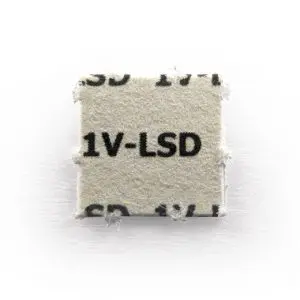
1V-LSD 150mcg Blotters
1V-LSD 150mcg Blotters From 22.00
(143)
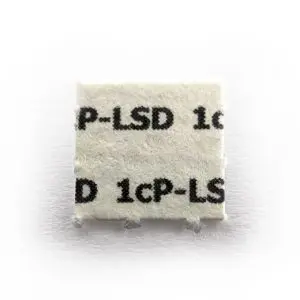
1cP-LSD 100mcg Blotters
1cP-LSD 100mcg Blotters From 18.00
(137)
Tryptamine Mix and Match Pack (4 x 0.1g)
Tryptamine Mix and Match Pack (4 x 0.1g) 65.00
(1)
1V-LSD 10mcg Micro Pellets
1V-LSD 10mcg Micro Pellets From 15.00
(43)
2-FDCK HCL
2-FDCK HCL From 12.00
(82)
1V-LSD 225mcg Art Design Blotters
1V-LSD 225mcg Art Design Blotters From 35.00
(62)
1S-LSD 150mcg Blotters
1S-LSD 150mcg Blotters From 29.00
(16)
1cP-LSD 150mcg Art Design Blotters
1cP-LSD 150mcg Art Design Blotters From 25.00
(74)
1V-LSD 225mcg Pellets
1V-LSD 225mcg Pellets From 35.00
(26)
1D-LSD 225mcg Pellets (1T-LSD)

SALE! -15%

1D-LSD 225mcg Pellets (1T-LSD) From Original price was: €42.00.Current price is: €35.70.
(13)
1cP-LSD 10mcg Micro Pellets
1cP-LSD 10mcg Micro Pellets From 15.00
(23)
5-MeO-DMT Freebase
5-MeO-DMT Freebase From 23.95
(36)
O-PCE HCL
O-PCE HCL From 17.50
(25)
1cP-LSD 20mcg Micro Blotters
1cP-LSD 20mcg Micro Blotters From 18.00
(27)
4-HO-MET Fumarate
4-HO-MET Fumarate From 19.50
(26)
rewards-icon
popup-logo

Reward program

popup-close
  • Earn
  • Affiliates