The Smashing Pumpkins are rarely filed alongside the great psychedelic bands.
It’s not hard to see why.
They don’t look psychedelic, for a start.
Their best-known look is a mixture of eyeliner and operatic steampunk. In recent years, the band have developed a taste for glam makeup and one-piece gowns, which to me recall the clothing choices of Emperor Palpatine and Wesley Snipes in Blade.
Their lyrics are not especially psychedelic, either. They speak of post-adolescent rage and angst at the machinations of the 1990s’ record business. The music is steeped in guitar tones usually seen in metal. And the most divisive quality of the band’s sound is their vocalist, Billy Corgan, who might well possess one of the strangest vocal styles of any popular band.
Corgan is best known in popular culture for his all-around eccentricity. He has described engaging in Kaufman-esque media magic to destroy his own public persona. For instance, he was the star of a viral meme after being papped looking miserable while sat in a ride at Disneyland – he claimed this was deliberate. To the puzzlement of his own bandmates, Corgan bought the NWA wrestling brand, and achieved headlines for playing an eight-hour synthesiser set in his own cafe. He was an icon for a generation of disaffected anti-corporate teens, but holds to free-market libertarianism and appears on Joe Rogan and Alex Jones’ podcasts.
It is perhaps not surprising that Corgan was once a great consumer of psychedelic chemicals. Gaze at the band’s first press pictures and you’ll soon stand face-to-face with a Corgan whose visage is bordered by glorious curls of purple dyed hair, and a band wholly and gaily decked in paisley.
Their first album is called Gish. On the cover, Corgan is holding his hands aloft for some reason – and the band stares on dead-eyed like they hate you (remember, it was the ‘90s). Once the music starts, you will immediately encounter a band playing a very different kind of psychedelia: one of exceptional aptitude (not a given amid psych’s historic quality control problem) and the moods of shoegaze and metal. The influence of such alkaloids would persist even in their most emotionalist later recordings.
The album was released in 1991, a time when the profile of psychedelics was at a precipice.
Anti-drug campaigns had successfully embedded the notion of acid-induced insanity in the American consciousness. Some of the old heads had become drug addicts, too. Corgan’s father, William Corgan Sr., was a musician who dealt drugs, including heroin, cocaine, and marijuana. Corgan recalls sitting at the dinner table as a child in the early 1970s, watching his dad smoke “joint after joint” until the whole family was in contact high. He even remembers innocently stumbling upon “eight pounds of weed in the kitchen” and being taken along during his father’s drug deals. Witnessing the toll of substance abuse up close had a powerful impact. Corgan says it “pretty much” turned him into a teetotaler in his early years, as he “wanted nothing to do [with it]” after seeing that world firsthand.
In 1982, only 6% of U.S. adults over 26 had tried psychedelics. However, the 1990s saw a resurgence, with lifetime psychedelic use jumping from 6% in 1991 to 14% by 1996; high-school seniors’ perception of LSD’s risk dropped from 90% to 80%. LSD use persisted, especially among fans of the Grateful Dead. Corgan’s home city of Chicago stood as a central node in Deadhead culture and later Phish tours, which made it fertile ground for LSD distribution: the flow of the drug around America followed the Dead’s touring schedule. At the same time, Chicago birthed house music, a genre initially rooted in queer black clubs like The Warehouse and extended by Frankie Knuckles’ trance-inducing sets.
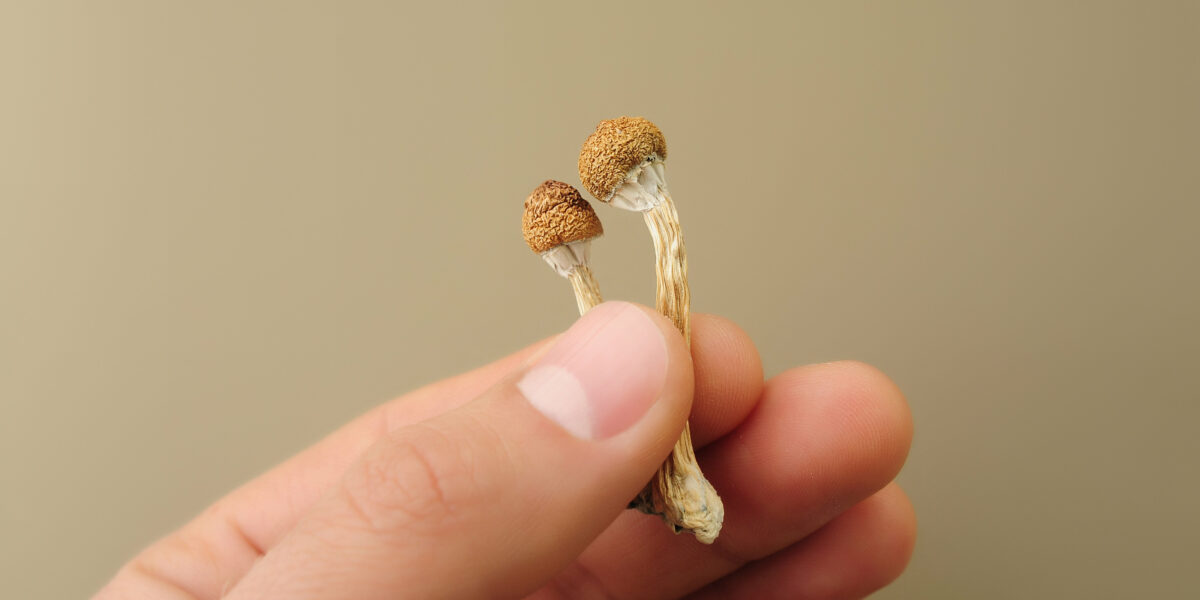
This time also saw the emergence of major compilations of forgotten gems from the 1960s. Vinyl hunting had become an established subculture. Psilocybin mushrooms gained popularity as a “natural” alternative, championed by figures like Terence McKenna, whose Food of the Gods (1993) reimagined psychedelics as evolutionary tools. At the same time, a nascent psychedelic renaissance was forming. Rick Strassman began formal studies; MAPS advocated for medical use; and Alex Grey sought to convey drug-altered consciousness through a series of sometimes extraordinary and other times hideous paintings. The term “entheogen” gained currency, reframing psychedelics as spiritual sacraments. Underground ayahuasca ceremonies and the work of transpersonal psychologists like Stanislav Grof were on the ascendant.
“I was a big psych listener”, Corgan told Rolling Stone. “I’d listen to psychedelic records I’d find at thrift stores. I turned James [Iha] onto a lot of stuff, like the Lemon Pipers. We used to sit in my bedroom and listen to The Lovin’ Spoonful circa 1989. I think that was already kind of in the mix.” The Smashing Pumpkins’ deep affinity for psychedelic rock is evident in the covers they chose. Their blistering rendition of The Animals’ “A Girl Named Sandoz,” recorded during a 1991 Peel Session, recalls the explicitly lysergic intentions of the original – written as a paean to the Swiss pharmaceutical firm that manufactured LSD. They also paid tribute to Syd Barrett with a fragile and haphazard cover of “Terrapin,” featuring James Iha on lead vocals.
The band has regularly returned to psych classics over the years, covering Pink Floyd’s “Set the Controls for the Heart of the Sun” and Iron Butterfly’s “In-A-Gadda-Da-Vida”. The band’s later Pisces Iscariot cover art gave an explicit nod to ‘60s design. In 2008, Corgan collaborated with the glorious weirdo Sky Saxon of The Seeds, and expressed his interest in the psych music of the Source Family commune: a group that pioneered cults’ love of the colour white, and was led by a sexually abusive guru called Yod who looked like Father Christmas.
The first time he did LSD, Corgan wrote ‘Rhinoceros’ – a highlight of the first LP.
“I was having a spiritual epiphany. I thought, ‘Oh, I should write some lyrics,’” he said. “So I jotted down one line. I thought, ‘Wow, this sums up everything. It’s so deep.’ And the next day when I was coming off the LSD, I looked at the line, which in a very Smashing Pumpkins jokey way ended up in the song ‘Rhinoceros’. And that line, the key, the gate opener to the universe was ‘Open your eyes to these mustard lies.’ And I thought, Fuck it.”
The Pumpkins’ ’90s live shows would be feasts of light projections and strobe effects, enhancing jams like “Silverfuck,” which could stretch into near 40-minute feedback-laced freak-outs.
On August 5, 1990, at Chicago’s FreeFest, the Smashing Pumpkins, still a local act, played a chaotic set fueled by Billy Corgan and Jimmy Chamberlin’s unannounced LSD use. Unbeknownst to bandmates James Iha and D’arcy Wretzky, the duo’s acid trip led to a legendary “good/bad gig.” Three songs in, Corgan’s amplifier blew, triggering an “art breakdown” where the band defied organisers’ attempts to stop them, diving into louder, heavier improvisations. Corgan and Chamberlin’s uncontrollable laughter was apparently bewildering – and it would be the first of several shows in which he and the band performed while high.
When Corgan took LSD, he enjoyed listening to Black Sabbath on the come-up and Ry Cooder on the come-down. He loved The Cure – look back a year or two before Gish and you see a sort of Goth Corgan – and My Bloody Valentine. But he also nursed a love for Metallica, Queen, and Boston: the latter band being best known for their stadium anthem, ‘More Than A Feeling’, which influenced Kurt Cobain in an unlikely turn to write ‘Smells Like Teen Spirit’. Corgan clarified in a podcast with Metallica’s Lars Ulrich that his love of metal was partly borne of class. Growing up poor, he resonated with the rootsy aspiration and anger of an album like Ride The Lightning, which was deemed far too uncool for the more privileged alt-crowd.
How could he synthesise these disparate sounds? Who would even like the final mixture?
Mark Fisher wrote in his posthumous and influential essay, ‘Acid Communism’, of psychedelia’s ability to reveal the contingency and plasticity of all systems of culture and power.
“Widespread experiments with consciousness promised nothing less than a democratisation of neurology itself — a newly widespread awareness of the brain’s role in producing what was experienced as reality”, he wrote. “Those on acid trips were externalising the workings of their own brain, and potentially learning to use their brains differently.”
Perhaps contrary to its own social mechanisms of action, however, ‘psychedelia’ had long been caught in a groove, a predictable furrow ploughed and deepened by the overwhelming weight of the 1960s. In a 2022 interview with Rick Beato, Corgan spoke of the pressure and prejudice felt by bands of his era. What was the music of their era to be? How would they define themselves? How would they beat The Beatles?
“LSD gave me the confidence to attempt these things on a kind of weird tightrope wire act”, he said. It would all go in: psychedelia, metal, shoegaze, snarling garage, psychedelic irony, combined in a sincere reflection on what Corgan calls “spiritual ascension”.
The band recorded Gish, that debut album, between December 1990 and March 1991 at Butch Vig’s Smart Studios in Madison, Wisconsin, with a modest $20,000 budget the band had raised entirely for themselves. The setup was minimal: a couple of guitars, a single amp for bass and guitar, and drums placed in the centre of the room for maximum acoustic impact. Corgan wore both headphones and earplugs to withstand the sheer volume.
“We were trying to become this balance point between what felt like dumb riff rock and the stuff we were really attracted to coming out of the U.K.,” Corgan explained. Songs like ‘Rhinoceros’ embodied that synthesis: “we could be beautiful, pretty, psychedelic, and then flip the switch and be heavy and play a ripping lead.”
It is “amazing how many of these songs have to do with LSD”, he said.
Tracks like “Siva” exemplify this fusion. It blends what he called the “violence” of Black Sabbath with the meditative strains of Ravi Shankar. “Snail” vibrates on a similar ‘60s plane, though Corgan later dismissed its lyrics as “bullshit,” valuing its role as a snapshot of the band’s early innocence. “Hippy Trippy (Crush),” another Gish-era track, leans into this with its swirling acoustic guitar and ascending bass riff. “You wrap your arms around / A feeling that surrounds / Like liquid peppermint.” Woah.
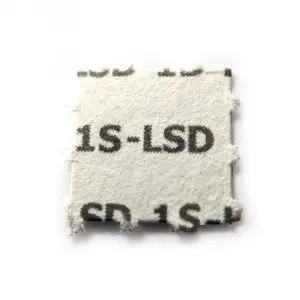
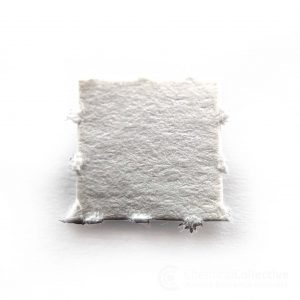
“Window Paine” – with its nod to “Windowpane” or “Clearlight”, gelatin-based LSD, distinct from blotter, which may have influenced Steve Jobs’ designs for Apple – pulses with a heavy, hypnotic churn. Corgan’s liner notes paint a vivid picture: “Coming down off the long trip now… The window to my heart is opened up with lysergic acid and strychnine.” This may have been tongue-in-cheek. For the title’s stylised nod to LSD had something of a wink, Corgan describes: while the song and its mother LP were drenched in acid, and the song is based around an earnest buildup and drop, to confess the drug influence explicitly would have to be ironised.
On the Thirty-Three podcast, he revealed that “I Am One” grappled with his disillusionment with church teachings, having grown up Catholic. LSD convinced him of a more universal connection, reinterpreting Jesus as a guide rather than a saviour. Over time, his spirituality morphed into a syncretic blend, embracing Gnostic and pagan elements while retaining a personal devotion to Jesus, whom he still prays to nightly. In a 2020 interview, he identified as an “old pagan” who sees God as a unifying force of love.
The Smashing Pumpkins built their early psychedelic sound on two foundations: drones and the Mixolydian mode. The Mixolydian mode is a musical scale that sounds like a major key but with one crucial twist: the penultimate note (or ti in the do, re, mi) is lowered. This small shift gives the scale a cool, slightly off-kilter vibe, as if the listener is floating. In “I Am One,” the Mixolydian mode fuels the driving riffs with a tense propulsion, balanced with dramatic octave leaps on the low E string. The song is perhaps the album’s best showcase of its eclectic ambition: pounding drums, trebly bass and a growling drone background a sprawling and veritable feast of effect-laden and varied guitar parts.
Corgan was inspired here by Tony Iommi of Black Sabbath, who pioneered a similar fusion of heaviness and LSD mysticism. In tracks like “Paranoid” and “War Pigs”, Iommi used the Mixolydian’s perfect fourth and major third to give his riffs an emotional ambivalence: not happy, not sad, but charged with a sense of magical release.
Gish would become the best-selling independent rock album of all time. “At the time when Gish came out in 1991, all the reviews were (saying we sounded) like throwback psych, hippie crap, jam band, Grateful Dead”, Corgan said recently. The band sounds nothing like this, of course.
“[P]eople really didn’t understand what we were doing. I underline really. They did not get it. You gotta imagine it. Think of a hipster crowd circa 1990 at some bar, and I’m playing ripping leads. Just the leads alone on the guitar freaked people out. ‘Why are you guys so aggressive? Why is it so loud?’ They were comfortable with other people’s take on it, but ours made them uncomfortable because it was too classic rock. There was too much Boston and Queen in it for them. That sort of freaked them out.”
The album’s impact echoed widely. Josh Homme of Kyuss and Queens of the Stone Age credited Gish as a turning point, helping shape QOTSA’s hypnotic, trance-driven riff style. Butch Vig’s production approach – layered guitars, raw drums, swirling dynamics – would also influence his next major project: Nevermind by Nirvana, during whose production the band consumed psilocybin at a show for the Butthole Surfers to garner some psychedelic influence. Pearl Jam’s Ten similarly absorbed Gish’s emotive grandeur, and they performed “Window Paine” with the Pumpkins together on stage.
“I’ve had a lot of conversations over the years of people talking to me about Gish”, Corgan commented. “But it’s been kind of pushed aside because, obviously, what followed it was so massive and so game-changing that it got a little pushed back. And then Siamese Dream seemed like our breakthrough moment.”
By the time Siamese Dream was conceived, Billy Corgan was on the edge. Gish, the Pumpkins’ debut, had become an unlikely indie hit; Nevermind had exploded beyond anyone’s wildest imaginations. Virgin Records offered to re-release it and “blow it up,” handing Corgan “the keys to the kingdom.” But he refused. “Gish isn’t the record you want,” he told them. “Let me go back to the studio and make a different kind of album.”
Siamese Dream is equally suffused with psychedelic moods – albeit of a more melancholy kind, with compliments of strings and keyboard. Corgan would layer dozens of guitar tracks to create a “wall of sound” that shimmered like a psychedelic trip but retained grunge’s emotional weight.
Take a track like “Soma”: beginning with a kind of shimmering spiritual calm, it builds over six minutes into sonic disintegration. The lyrics are cryptic but tactile: “Nothing left to say / And all I’ve left to do / Is run away from you.” It sounds like the interior monologue of someone losing themselves – not in rapture, but in psychic exhaustion. Or consider “Hummer”: ethereal sitar loops and feedback and soaring effects. Songs like “Cherub Rock” and “Mayonaise” were more exuberant still.
Corgan was undergoing a prolonged breakdown during the album’s production. “I was whacked out of my mind for eight months” with the help of “copious amounts of LSD and mushrooms”, he said. Drugs became tied to suicidal ideation. He described planning his own death, including forging inchoate plans for his funeral and nurturing fantasies of suicide. “I had various scenarios, one of which was taking a bunch of mushrooms and throwing myself out the window. Psychedelic.” Famously, the song “Today” was written during a particular self-injurious trough in mood, in which he declared ironically that he “can’t wait for tomorrow, [because] I might not have that long”.
Gish and Siamese Dream were part and parcel of a broader psychedelic pollination within the grunge genre. Grunge’s signature drop-D tunings and feedback-heavy riffs, as heard in bands like Soundgarden and Mudhoney, echoed the fuzzed-out, experimental guitar work of Jimi Hendrix or Blue Cheer – whose torch was carried by Corgan’s guitar heroics – but with a heavier, more oppressive tone. For instance, Soundgarden’s Badmotorfinger (1991) features tracks like “Rusty Cage,” where swirling, dissonant guitar layers create a disorienting, almost hallucinatory effect, doubled up in the streamy and psychedelic qualities of its spun-out music video. Similarly, Nirvana used dynamic shifts and harmonic weirdness, like the eerie calm of “Something in the Way” or the droned-out Mixolydian “All Apologies”, to evoke a fractured, dreamlike state that feels psychedelic yet grounded in despair.
Grunge emerged in a post-counterculture world where any delight associated with psychedelic logic had collapsed under the weight of the War on Drugs and cultural cynicism. Corgan’s work with the Pumpkins sat precariously within this mould. Not least as the band entered its post-psychedelic phase with Mellon Collie and the Infinite Sadness, Corgan’s lyrics evoked altered states and surreal imagery – “sinking” into bliss or fragmented inner monologues – within a project that both celebrated and challenged any project of enlightenment. Instead, the Pumpkins reflected a Gen X spiritual hunger, a sense of the horizon of experience, without an explicit object of belief. Grunge’s psychedelic influence thus became less about communal liberation and more about private, often painful, self-discovery, with Corgan’s use of psychedelics shaping songs that sound more like an autopsy of the psyche than a particular celebration of its powers.
Even outside grunge, Gish and Siamese Dream reached unlikely admirers. Fred Durst of Limp Bizkit called it a formative influence. Kevin Parker of Tame Impala described Siamese Dream and its layers of suspended fuzz as “a big hug”; Parker’s own “It Is Not Meant to Be” even bears a striking resemblance to Pumpkins’ B-side of 1979, “Set the Ray to Jerry.” The psychedelic tendencies did not disappear by the time of Mellon Collie, which remains the band’s most successful album.
The last track to be recorded for the LP – whose production was punishing and to the wire – was “1979”, which is the Smashing Pumpkins’ best-known song – and for good reason. It trades the thick, distorted guitars of earlier tracks for something leaner and more reflective. A looping drum machine and clean, chiming guitars create a hypnotic groove rooted in droning E and A notes and major seventh tones found in Nick Drake and Tame Impala. Unlike much of Mellon Collie, which leans into theatricality, “1979” is understated – it captures an LSD-refracted in-between space of late adolescence: restless, half-numb, nostalgic before life has even really begun.
By contrast, “Thru the Eyes of Ruby” is one of the album’s most expansive and trippy tracks. Built around swirling guitars, shifting time signatures, and rising waves of distortion, it showcases the band’s love of dynamic extremes. The song moves from hushed, almost whispered verses to explosive, layered climaxes that verge on symphonic. There’s a clear sense of journey – emotional, musical, even metaphysical. With its modal guitar figures, dreamy drones, and operatic structure, it channels the spirit of psychedelic rock without ever losing the band’s harder edge. It’s one of their most ambitious tracks and still one of their most affecting.
Corgan has since described his return to God as a halting but essential journey that began in these years of pain. “I was wildly successful at a very young age, and I didn’t know what to do with myself because I was miserable. I found the one thing that wouldn’t abandon me, which was God”: a notion in which he’d developed belief through the help of psychedelic drugs.
This tension – between fame and disappearance, God and the void – defined the era. “I’ll shave my head and write ‘Zero’ across my chest,” he said, enacting a ritual negation of self in response to celebrity. The song “Zero” declared: “God is empty, just like me.”
Adore, the band’s fourth album, was born from this crucible of despair and spiritual questioning. Though not a commercial success, it marked a full expression of Corgan’s inner world – and the discovery of a reason to live.
Psychedelic drugs played an unexpectedly integral part in that personal evolution. Here, Corgan stands as yet another data point of the vast spreadsheet of LSD’s influence – for good and for ill – across the history of music.
Ed Prideaux | Community Blogger at Chemical Collective
Ed is one of our community bloggers here at Chemical Collective. If you’re interested in joining our blogging team and getting paid to write about subjects you’re passionate about, please reach out to Sam via email at samwoolfe@gmail.com




















share your toughts
Join the Conversation.