in this article
- The ReSPCT Guidelines. The GOLD STANDARD for Psychedelic Trials
- MAGA and Psychedelics
- Crackdown on Hemp-Derived THC
- A Downturn in Psychedelic Investment
- Psychedelic Use on the Rise
- Psilocin Shows Anti-Ageing Potential
Are you 18 or older?
Please confirm that your are 18 years of age or older.
You are not allowed to access the page.
Disclaimer: The views and opinions expressed in this article are those of the authors and do not necessarily reflect the official policy or position of Chemical Collective or any associated parties.
Positive developments in the UK this week as significant strides are made in the push to develop guidelines to standardise research practices for psychedelic trials. The surprising association of the conservative Trump government with the relaxation of the regulation of psychedelics continues as lawmakers back promising new MDMA and psilocybin therapies. Conversely, regulators in the U.S. continue their attempts to close legal loopholes around synthetic cannabinoids, as a result of the 2018 Farm Bill. New data from a phase 3 trial into psilocin for the treatment of depression is showing some cautiously optimistic results, while additional research into psilocin is even showing the potential to reverse the ageing process. Finally, stark contrasts in the business sector, as Compass Pathways stocks plummet, while Lykos Therapeutics successfully secured a further $50 million in funding.
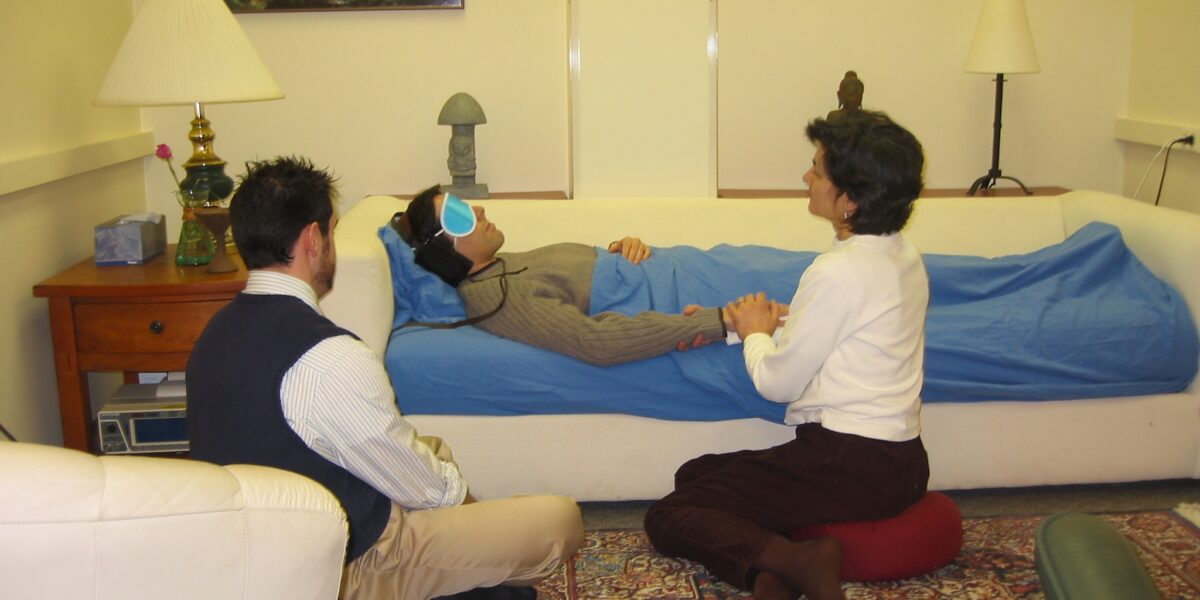
A study, published in Nature, headed by researchers at the University of Exeter, McGill University, and Imperial College London, is pushing for a holistic approach to clinical research into psychedelics, which stresses the importance of the context of the experience.
This is an area we are, of course, extremely familiar with at Chemical Collective, as regular readers and fellow psychonauts, we hope you are equally familiar with what we know as “Set and Setting”. Integrating this into a clinical/research framework is long overdue, paramount to positive experiences and will go a long way to furthering psychedelics’ acceptance as potential therapeutic aids.
The combined team has developed what they have dubbed: ReSPCT (Reporting of Setting in Psychedelic Clinical Trials). The study aimed to:
Generate consensus-based guidelines for reporting settings in psychedelic clinical research… [because] Psychedelic substances exhibit complex interactions with the ‘set and setting’ of use, that is, the mental state of the user and the environment in which a psychedelic experience takes place. Despite these contextual variables’ known importance, psychedelic research has lacked methodological rigor in reporting extra-pharmacological factors.
Simply put, psychedelic therapy and research have not taken “set and setting” into account in a systematic, coherent manner, even though we are eminently aware of its importance and effects on the experience.
A total of 89 experts from 17 countries independently listed factors they considered important in psychedelic settings. The 770 responses were first refined into 49 distinct items. These were then given a rating – unimportant, important, very important, etc. These refined results were debated and further finalised into the 30 variables considered paramount to a successful experience.
I am aware this is a news article, and I know it’s a lot to take in, but I feel these considerations are worth including in full, all the same:
| Item | Item Number | Item Details |
| Physical Environment | ||
| Location | 1 | Location of the trial, and whether indoors/outdoors and urban/rural/suburban. |
| Ambiance | 2 | Room ambiance curated by the study team. |
| Access to nature | 3 | Sources of nature or natural elements accessible to participants. |
| Objects and decorations | 4 | Objects and decorations in the room. |
| Lighting | 5 | Room lighting and adjustability. |
| Sensory reduction | 6 | Sensory reduction used, such as headphones and eyeshades. |
| Bathroom facilities | 7 | Level of bathroom accessibility, privacy, and safety. |
| Dosing Session Procedure | ||
| Number and roles of people present | 8 | Number and roles of people present, including participants, study staff, and informal support. |
| Positioning | 9 | Relative position of people in the room, and what participants were positioned on. |
| Focus and main activities | 10 | Focus (internal or external) and main activities of the dosing session. |
| Music or soundscapes | 11 | Music or soundscapes that accompanied the dosing experience. |
| Interpersonal interventions | 12 | Verbal or physical interpersonal interventions used throughout the session. |
| Participant autonomy, control, and agency | 13 | Level of participant control and agency over activities and environment of the dosing session. |
| Dosing regimen | 14 | Dosing regimen, including drug dose(s), frequency, and length of the session. |
| Medical and experimental procedures or assessments | 15 | Medical and experimental procedures performed during the session. |
| Pre- and post-dosing protocol | 16 | Activities before and after dosing, including participant arrival and release conditions. |
| Potential disturbances or interruptions | 17 | Disturbances that may have impacted the dosing session. |
| Therapeutic Framework and Protocol | ||
| Therapeutic or guiding approach | 18 | Therapeutic or guiding approach used throughout the study, if any, with the accompanying manual or protocol. |
| Narrative framing | 19 | Framing of the trial intervention by the study team, including the short- and long-term drug effects. |
| Number of sessions | 20 | Number and length of preparation, dosing, and integration sessions. |
| Preparation protocol | 21 | Activities performed during the preparation sessions. |
| Integration protocol | 22 | Activities performed during the integration sessions. |
| Additional support or follow-up | 23 | Formal or informal support or follow-up offered to participants after the end of the trial, including in the case of adverse events. |
| Study personnel qualifications | 24 | The credentials, training, and expertise of personnel providing the study intervention or care. |
| Cultural competence and safety | 25 | Study team’s level of cultural competence and efforts towards cultural safety. |
| Subjective Experiences | ||
| Therapeutic alliance | 26 | Therapeutic alliance between participants and facilitators throughout the intervention. |
| Trust | 27 | Participant’s level of trust throughout the intervention. |
| Physical comfort | 28 | Participant’s level of physical comfort during the dosing session. |
| Physical safety | 29 | Participant’s sense of physical safety during the dosing session. |
| Psychological and cultural safety | 30 | Participant’s sense of psychological and cultural safety with the people present during the dosing session. |
As you can see, there are many factors here that you, yourself, can consider in a recreational scenario. Here at Chemical Collective, we are heavily focused on encouraging harm reduction and safety when considering using psychedelics, which is why I felt their inclusion was necessary in full.
You can find a complete explanatory document from ReSPCT explaining these 30 factors in full HERE.
The U.S. Republican Party has long been a proponent of the disastrous “Just Say No” movement, but recently its position appears to be evolving considerably. I would posit, perhaps cynically, that the motivation here is more a result of the arrival of capital to the sector, as a result of already thawing social attitudes, rather than a purely wellbeing-focused enterprise. Psychedelics are being pushed as potential mental health treatments, particularly for vulnerable groups like veterans. This has largely been brought about by Health Secretary Robert F. Kennedy Jr. His bullish proposals suggest psychedelic-assisted therapies with substances such as ibogaine and MDMA may be available within a year.
Whether or not this is advisable is debatable. With the recent FDA rejection of Lykos Therapeutics’ psychedelic-assisted PTSD therapy, there are definite, widespread concerns with standards and practices. Regardless, it appears Kennedy, alongside the Make America Healthy Again movement, is actively pushing this ahead. This is quite the cultural U-turn, and one of the more surprising developments of the populism at the heart of the Trump era.
Pretty much as soon as the 2018 Farm Bill legalised Hemp in the U.S., entrepreneurs predictably and immediately began pushing the envelope of this potential legal grey area. The 2018 Farm Bill permits:
the production of hemp in the United States, and no longer includes hemp as a controlled substance. Hemp with a tetrahydrocannabinol (THC) level of 0.3% or less on a dry weight basis is [no longer] a controlled substance.
This resulted in the proliferation of hemp-derived intoxicants that slip through the wording of this legislation. Chemically modified compounds like Delta-8 THC can still produce psychoactive effects, and now federal agencies and state legislatures are moving aggressively to regulate, restrict, or ban these products outright. This is due to growing concerns over safety and youth access, as well as the more obvious skirting of regulations.
In June, potential language alterations to the bill were raised, which would ban hemp products containing any “quantifiable amounts” of THC, or any other cannabinoid with analogous effects. This would mean pretty much all hemp-based cannabinoid products on the market today could be banned. Even non-intoxicating CBD products would likely be affected by this, as they usually contain trace amounts of THC. While the bill may not be approved in its current format, it does signal the motivations of lawmakers to close this loophole, which will have a large impact and far-reaching implications for the industry as a whole.
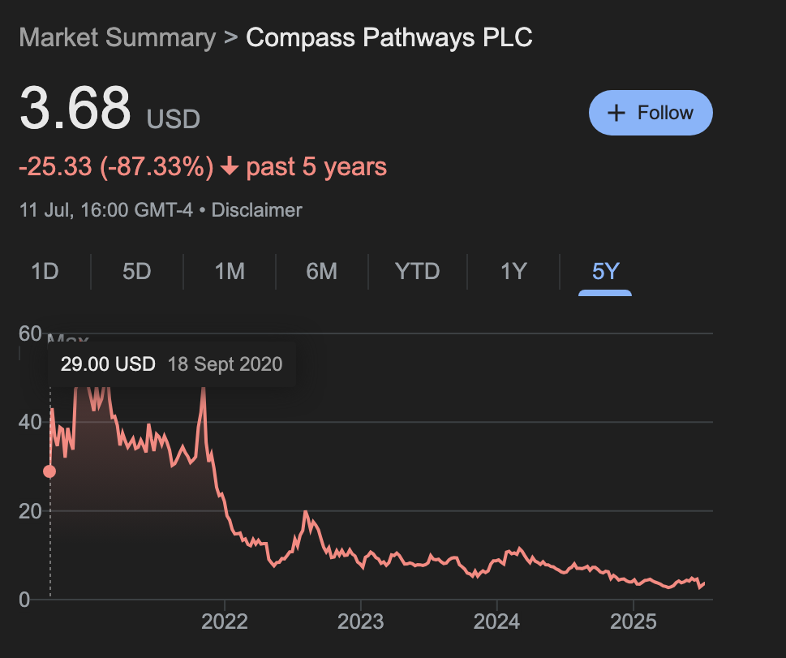
Though psychedelics’ seemingly inevitable push into the mainstream is continuing to pick up pace, 2025 has seen a significant downturn in funding in the sector. Investors are likely cautious due to continued regulatory uncertainty, and clinical results may be less positive than expected. Psychedelics as panacea and potential god-send are, of course, an attractive investment, but with actual results providing positive, but much less compelling data thus far, the market remains uncertain. Compass Pathways provides a stark example. See the change in their stock price over the last 5 years:

On June 23rd this year alone, its stock plummeted 49%, despite Phase-3 results of its latest psilocybin-assisted therapy study successfully hitting its targets. While the trial met its safety and efficacy requirements and Compass Pathways considered the results as both “highly statistically significant” and “clinically meaningful, investors remained unimpressed, which triggered a wider sell-off of psychedelics-related shares.
Bucking this trend, however, Lykos Therapeutics has successfully raised $50 million of additional investment led by billionaires Sir Christopher Hohn and Antonio Gracias. This represents the largest funding round for a psychedelic company in over a year. With the results of widespread trials soon due for release, analysts predict the next 12 months will be critical for the sector’s future success.
Most recreational drug use remains low in adolescents and has remained stable at low levels after a drastic drop during the COVID-19 pandemic. However, new data is showing a sharp rise in adult usage of both cannabis and psychedelics, particularly among U.S adults between 19-30.
The Monitoring the Future survey has reported that in 2023, 9% of adults aged 10-30 used hallucinogens in the past year, up from around 5% in 2017 and 3% in 2012. Cannabis use remained at historic highs, with 42% of 19 to 30-year-olds having consumed the drug in the past year.
While the continued rising usage among older populations reflects the growing cultural acceptance of these substances, and I would argue, recreational drug use as a whole, experts warn against potential risks, especially outside of controlled settings. Approximately 40% of users of hallucinogens reported experiencing a “bad trip”, more than likely a result of poor preparation, or poor care and attention to set and setting, and subsequent integration.
A Canadian study even found that individuals who had previously been admitted to ER as a result of psychedelic use were 3.5 times more likely to receive a schizophrenia diagnosis within 3 years.
Much of the limited harm-reduction frameworks we have in place the world over focus on adult treatment. The low rate of adolescent usage is encouraging, suggesting that shifting social norms may lower perceived risks over time anyway, but we cannot lose sight of the fact that education – information freely available and free of scaremongering – is the only way to improve the situation for the future.
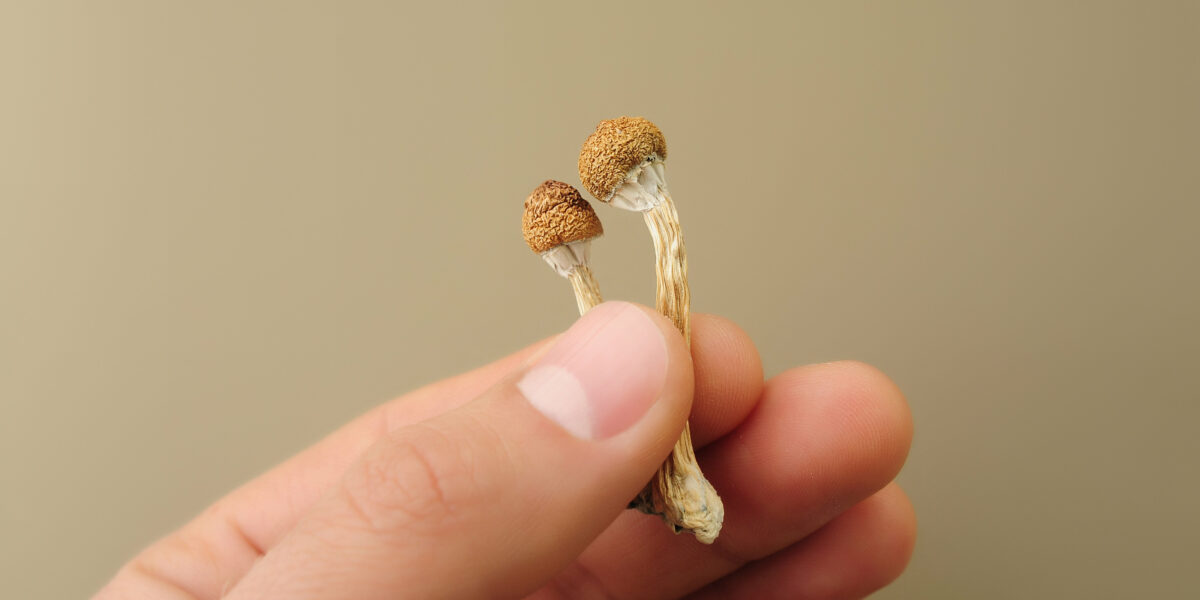
A study published in NPJ Aging has revealed that psilocin, one of the main active ingredients of magic mushrooms, significantly increases the lifespan of human cells and improves the lifespan of mice. The findings were as follows:
This all sounds exceedingly promising, and potentially very exciting, but we must bear in mind that this is officially preclinical data, so we must temper our expectations somewhat. Perceived effects of substances gained from studies involving mice do not necessarily transfer to human subjects, and the lab context further limits the results’ efficacy in the outside world. To be clear, there are as yet no studies providing concrete evidence that psilocin slows ageing or improves lifespan in human subjects. Safety and appropriate dosage in this scenario are complete unknowns. It is positive, however, to see preliminary results such as these, further signs of psychedelics’ seemingly massive healthcare potential.
David Blackbourn | Community Blogger at Chemical Collective
David is one of our community bloggers here at Chemical Collective. If you’re interested in joining our blogging team and getting paid to write about subjects you’re passionate about, please reach out to Sam via email at samwoolfe@gmail.com
Welcome to Chemical Collective.
Create an account to earn 200 welcome points.
Already have an account? Sign in
Check out our Community Blog and get involved with the conversation. You will be awarded 50 x ChemCoins for each comment up to a limit of 250 total ChemCoins.
Have you purchased any of our products? Reviews and reports are so important to the community. Share your honest opinion, and we’ll reward you with 50 ChemCoins for each review!
Every time you complete an order with us, you’ll be awarded ChemCoins for each Euro spent.
Welcome to Chemical Collective.
Create an account to earn 200 welcome points.
Already have an account? Sign in
Earn commission every time someone makes a purchase through your link.
When you become an affiliate, you will be allocated a unique link to share with your friends, followers, subscribers, or Aunt Susan.
You can choose to payout the commission earned once per month, or save it up to receive on a rainy day! Commission earned is 5% of the total order value per referral.
Contact us to join the Chemical Collective family and become an affiliate.
share your toughts
Join the Conversation.