Reflections on Indigenous Usage of Psilocybe Mushrooms
The Tangled Taxonomic Backstory of Psilocybe Ochraceocentrata and Psilocybe Natalensis
The Potential of Psilocybe Ingeli
What Does the Future Hold?
Share
10 minute read
0
Last updated July 24th, 2025
By Sam Gandy
Disclaimer: The views and opinions expressed in this article are those of the authors and do not necessarily reflect the official policy or position of Chemical Collective or any associated parties.
A number of fascinating new species of Psilocybe fungi have been reported from Southern Africa in the last few years. These include P. natalensis, P. ingeli, P. maluti, and the provisionally named P. ochraceocentrata. Notably, the latter two species have recently been documented in ceremonial usage for purposes of healing and divination by different Indigenous groups in the region.
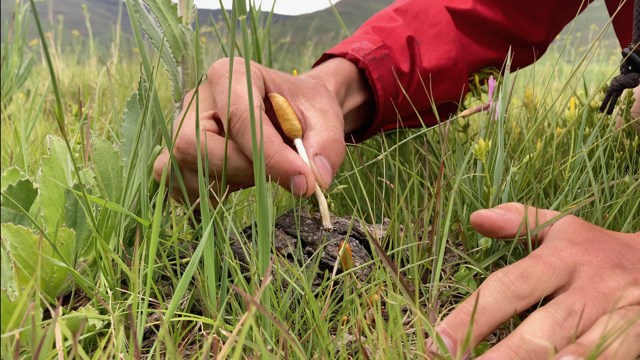
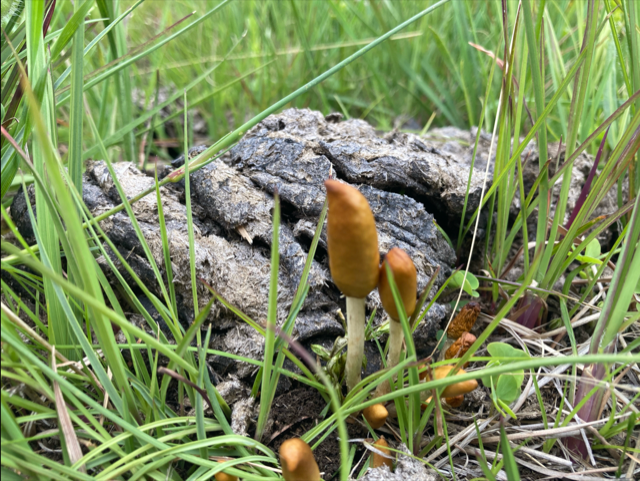
Psilocybe maluti is a dung-loving species related to the familiar Psilocybe cubensis. It was observed fruiting from bovine dung in pastureland in 2021, being recorded from Free State in South Africa and the neighbouring Kingdom of Lesotho. P. ochraceocentrata is another dung-loving species that has been observed growing in woodland in South Africa and Zimbabwe. It bears a closer resemblance to P. cubensis in appearance than P. maluti, being its closest living relative.
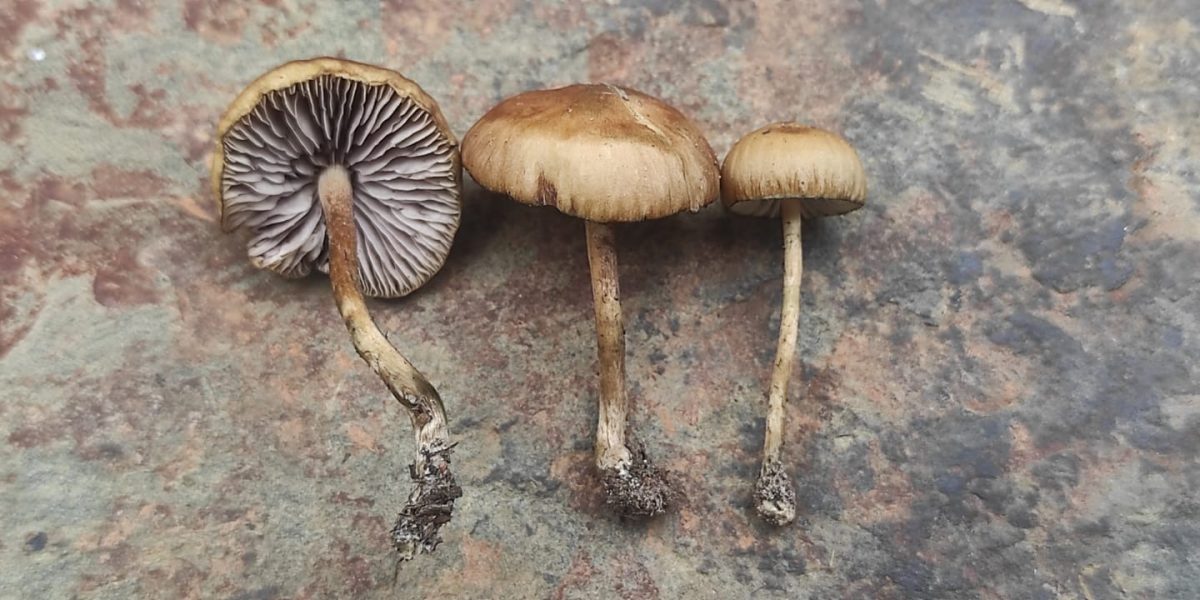
Psilocybe ingeli is another interesting species that was found in manure-enriched pastureland in 2023 in the KwaZulu-Natal region, in a habitat and location that it shares with Psilocybe natalensis. It was first noted in the wild by citizen mycologist Talan Moult, who noticed two mushrooms growing through the grass while clearing a plot for his beehives. He suspected it to be a Psilocybe of some kind and noted a strong indigo blueing reaction when it was bruised. He collected samples and submitted them for genetic analysis, with DNA sequencing indicating it to be a new species to science (it being named after the Ingeli mountain range, where it was first found).
These findings were published in the journal Mycologia, the result of a collaboration between citizen mycologists and academics from Stellenbosch University.
The Vital Role of Citizen Mycologists
The scientific documentation of these species and their usage by Indigenous groups in the region was largely underpinned by the efforts of knowledgeable amateur citizen mycologists, who collected samples of these species in the field and submitted them for genetic analysis. A single researcher would only be able to cover a fraction of the ground that such committed fungal fans can cover.
Citizen mycologists have a particularly important role to play in under-surveyed parts of the world, such as Africa. Cullen Taylor Clark.
Fungi are a highly underrepresented group scientifically, with very few professional mycologists in relation to the incredibly rich diversity of the fungal kingdom, or the mycological richness of Africa in particular. This lack of scientific oversight is compounded in locations like Africa, which are heavily under-surveyed for fungi. This would make scientific work in such locations very difficult without teaming up with local citizen scientists who are the experts of their environment.
Spore Dispersal of Psilocybe Maluti
P. maluti possesses a distinct secotioid cap structure (where the caps remain closed even when mature, hugging the stem), so the spores cannot be transmitted into the air to be distributed by wind or convection, as is the case with other fungi which open their caps. This suggests that animals may be acting as spore dispersal vectors for the fungus.
Psilocybe maluti fruiting from bovine dung. Cullen Taylor Clark.
The Basotho people have reported pied crows interacting with the fungus, and this association of the fungus with the crow has influenced its Indigenous name, ‘koae-ea-lekhoaba’ (with ‘lekhoaba’ referring to crow or crow-like bird). There are also 50 species of mammals native to Lesotho, and it is possible that mammals may also play a role in distributing the spores.
Indigenous Usage of Psilocybe Maluti
There has been much speculation about the usage of psychedelic mushrooms – in both ancient and modern times – by cultures across the world, with inferences sometimes made from somewhat ambiguous art and artefacts. However, solid evidence of present-day Indigenous usage of these fungi outside of Mexico has been lacking. Until now.
While the species P. maluti might be new to science, it certainly isn’t to the Basotho of Lesotho, who have long used these mushrooms in healing ceremonies. Such usage was first documented by South African ethnomycologist Cullen Taylor Clark, who is working to shine a light on these practices. This comprises the first evidence of such practices occurring on the African continent.
Two types of healers among the Basotho inhabiting Lesotho are known to use P. maluti. The linohea are diviners or soothsayers, who use the fungi and other agents such as medicinal plants to “foresee the future”, and the ngaka-chitja are healers who possess extensive knowledge of natural remedies but do not practice divination. The Basotho name for P. maluti is ‘koae-ea-lekhoaba’, with the mushroom used to induce a trance-like state.
The mushrooms are prepared for consumption by steeping them in warm water, often alongside the plant Boophone disticha. This plant has long been used as a source of traditional medicine and as a hunting poison by a number of African Indigenous groups. It contains a number of alkaloids which harbour similar activity to the deliriant compound scopolamine, found in the Solanaceous nightshade family of plants.
The combined chemical cocktail of a psychedelic fungus and a plant with deliriant properties is likely to yield a powerful psychoactive potion, with the extract of both referred to as ‘seipone sa koae-ea-lekhoaba’. It is consumed in front of a mirror by the patient who vocalises their visions to the healer. The healer then interprets these visions in relation to the patient’s spiritual questions. Such a practice is also sometimes used as part of ceremonial iboga ingestion in central Africa.
In Amazonia, small amounts of Brugmansia (Toé) are sometimes added to the ayahuasca brew, which harbours compounds with similar activity. This can enhance the visual effects of the brew, but can also be dangerous, particularly to unwitting tourists who are unknowingly dosed.
Indigenous Usage of Psilocybe Ochraceocentrata
The ceremonial usage of P. maluti mushrooms does not appear to be an isolated occurrence. Cullen very recently documented the usage of another species of fungus by another Indigenous community. He found that different healers among communities of the Xhosa (the second largest ethnic group in South Africa) are using P. ochraceocentrata mushrooms (or what they refer to as ‘Inkokowane’) in a variety of ways in the Eastern Cape province.
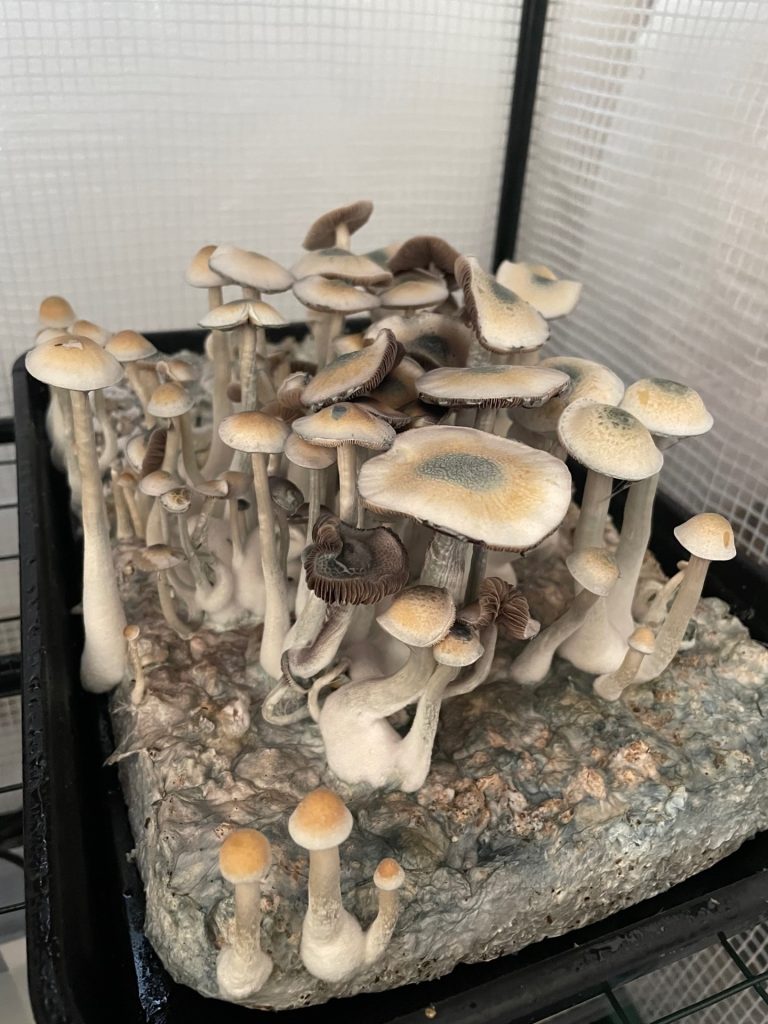
Psilocybe ochraceocentrata mushrooms.
One Xhosa healer prepared it as a decoction with various roots and barks from the local environment, not to induce visions but as a tonic to treat a range of maladies, to help fortify vitality and strength, and to promote healing. This healer stated that they have been using this mushroom to do their work and provide them with insight as far back as they can remember. Another Xhosa healer stated that he had feared ingesting the mushroom, but that he had overcome this fear on many occasions when consuming it, and that he always did so with purpose. He stated that when he needed guidance, he would ingest one to two dried mushrooms in order to convene with his ancestors.
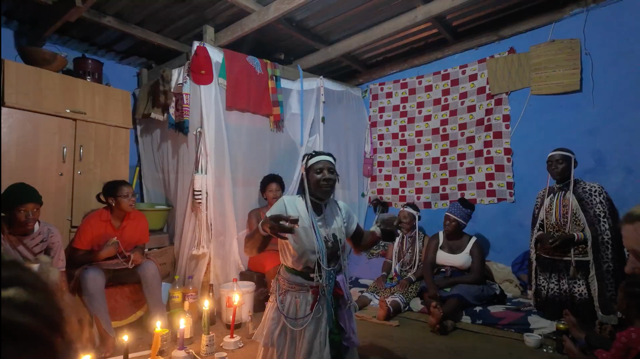
Cullen was invited to participate in a 30-person strong ceremony (which he also had permission to document and record), involving ingestion of P. ochraceocentrata mushrooms with a Xhosa community. This is the first time a psychedelic mushroom ceremony has been recorded in Africa. Among the Xhosa, the primary purpose for using the mushroom in this way by the igqirha (diviners or shamans) was to act as a conduit to their ancestors, through which insight and guidance could be obtained.
Female healer singing. Cullen Taylor Clark.
The ceremony took place in the evening and into the night, and was an event that involved the whole local community when it came to the preparation of the ceremonial space (one of the healer’s homes) and gathering of necessary materials, such as the mushrooms, umqombothi (a thick, low-alcohol maize and sorghum beer), whiskey, candles, rice and chickens, with local diviners also summoned. (Only tiny – and optional – sips of the alcohol would be permitted during the mushroom ceremony, with some poured on the ground as an offering to the ancestors).
Young children were present and participated (but did not ingest the mushroom) to help strengthen the community link to their ancestors. The diviners checked through the mushrooms, putting aside choice specimens, and the ceremony was led by two healers (one male, one female).
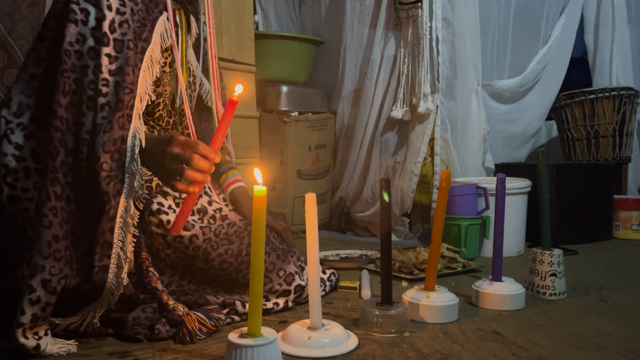
The ceremony involved various ritualistic elements, such as the burning of herbs, the lighting of candles, fungal face painting, drumming, dancing, singing, storytelling, and intervals of silent reflection. The mushrooms were added to water in a cauldron, with the female healer inspecting the brew, chanting over it with the diviners until she deemed it ready for consumption.
Lighting of the candles. Cullen Taylor Clark.
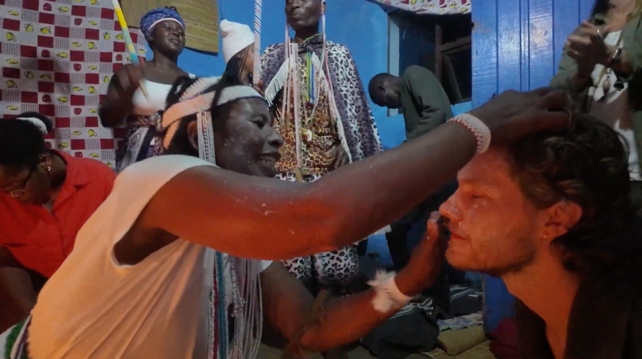
The sacred South African herb imphepo was then burned to cleanse the ceremonial space. Another fungus was broken up and mixed with water, and ground up with a stone. The resulting paste was applied to the faces of all the ceremonial participants who would be imbibing the mushroom, and it was stated that this fungal application was vital for aligning and grounding the body in preparation for the journey ahead.
Fungal face painting. Cullen Taylor Clark.
Dancing followed drumming, which followed chanting, which followed storytelling in a cyclic flux. A shift in the drumming and humming from the diviners marked the initiation of the imbibing of the mushroom tea, with it being first drunk by the female diviner before being shared with the ceremonial participants. Dancing followed, after which singing gave way to speeches, which gave way to chanting. The ceremony was closed with some words from the male healer and three more songs.
This very recently documented case heralds the opening of another exciting new chapter in the story of the usage of Psilocybe fungi by cultures inhabiting the Southern African region. (More information on this can be found on Cullen’s Patreon here.)
Reflections on Indigenous Usage of Psilocybe Mushrooms
This is an expanding frontier of knowledge, but it appears that Indigenous usage of Psilocybe fungi is likely quite widespread among Indigenous communities in Southern Africa. The ways in which the mushrooms are used – and the reasons for their use – in the Southern African Indigenous context are quite varied and also distinct when comparing such usage to that of Indigenous Mexican groups such as the Mazatec, Mixtec, and Zapotec.
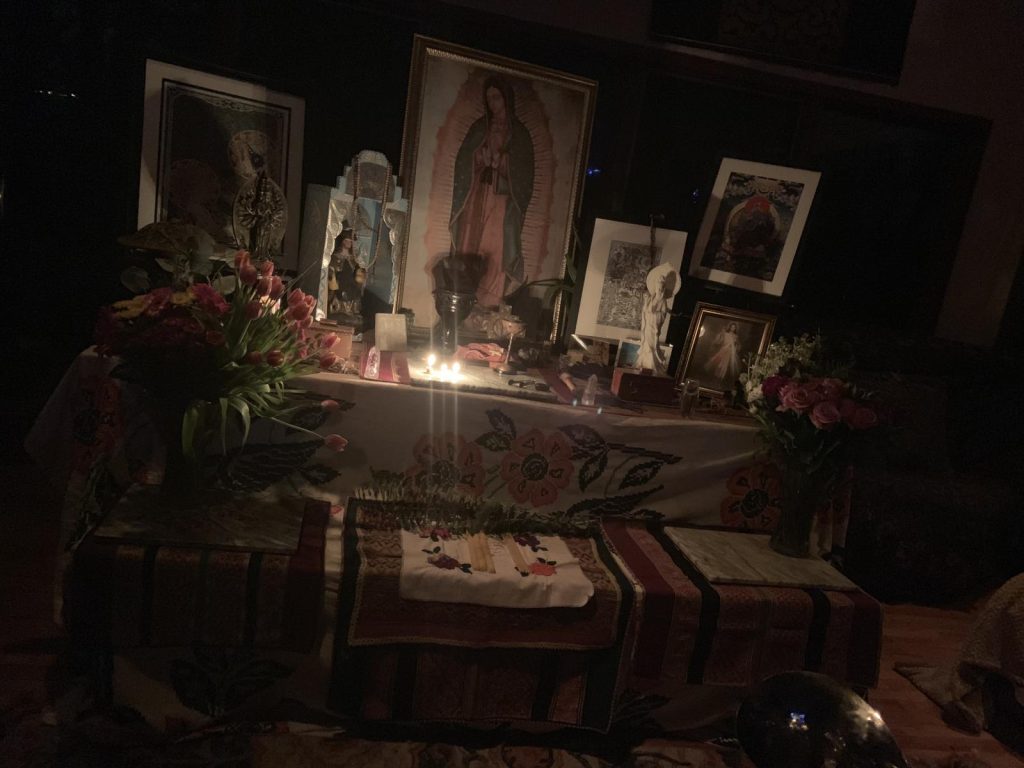
Mazatec-inspired ceremonial altar.
In a Mazatec context, mushrooms are principally used ritualistically to diagnose or alleviate illness, ascertain the whereabouts of a person or lost or stolen objects, or to seek guidance concerning a particular problem or difficulty. In the Bathoso context, the mushrooms are ingested by those seeking insight into spiritual questions, with the answers provided by the healer through interpreting the mushroom imbiber’s visions. The Xhosa use mushrooms as a tonic and ritualistically as a means to connect with their ancestors, seeking insight and guidance. While the ritualistic elements and manner in which the mushrooms are used vary significantly between these different groups, one commonality shared between them is that the mushroom is used as a pathway to insight and guidance.
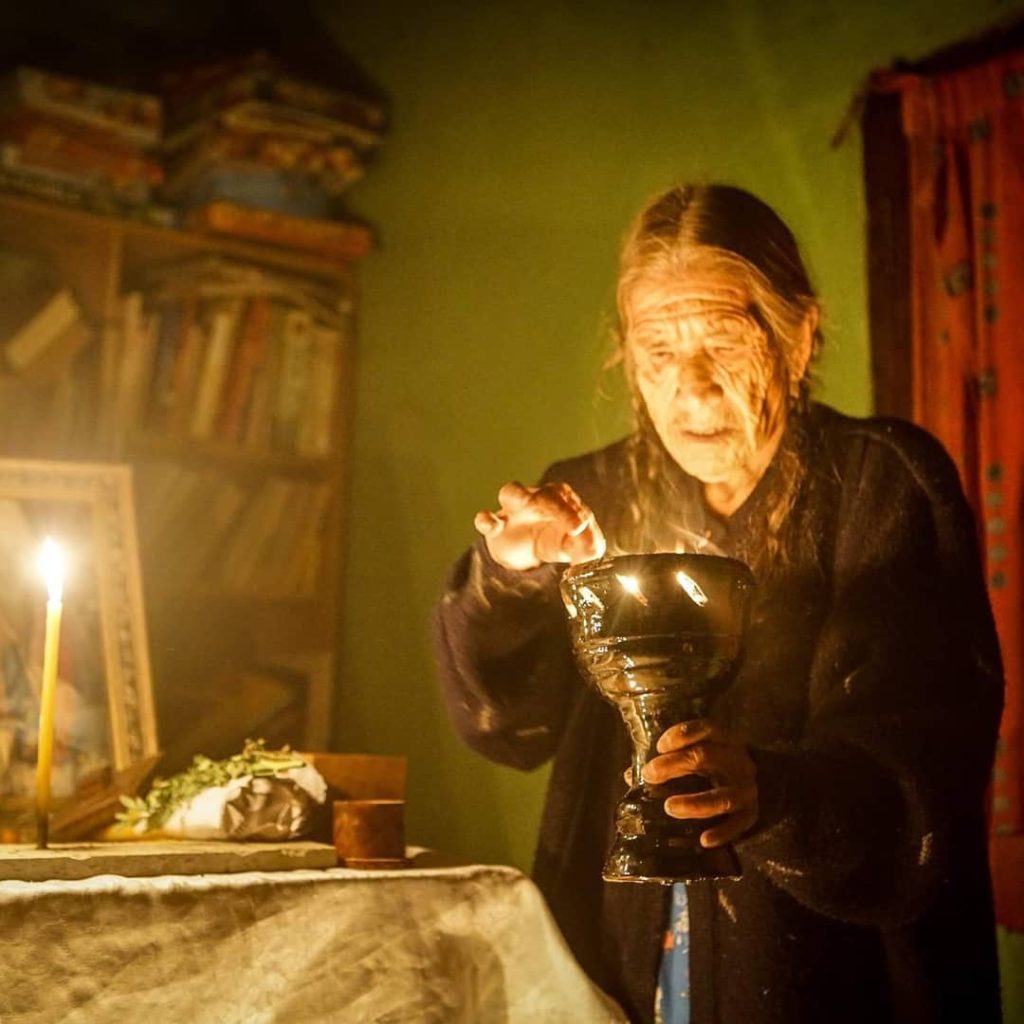
Mazatec elder curandera Don Natalia Martinez cleansing mushrooms in copal smoke. Chris Casuse.
Other commonalities shared by these different groups on both sides of the Atlantic are the degree of reverence with which the mushrooms are held and that such usage appears to be waning. Knowledge of mushroom lore is largely carried by the elders, with young people departing rural communities and heading to cities in search of work and the perceived perks of a more Western lifestyle. This means that such practices are at risk of dying out, which may partly inspire a greater openness to share knowledge of mushroom lore with outsiders in some instances.
The Tangled Taxonomic Backstory of Psilocybe Ochraceocentrata and Psilocybe Natalensis
The science of fungal taxonomy is challenging, with species being tricky to identify given the polymorphic nature of mushrooms, or their ability to take on different forms, coupled with the lack of professional mycologists profiling fungal diversity. This can sometimes sow seeds of confusion.
The species P. natalensis was formally described in 1995, with mushrooms collected from high-elevation pasture in the KwaZulu-Natal region of South Africa. The genetics of what was considered to be P. natalensis have been doing the rounds in cultivator circles over the last few years, until it was found via DNA sequencing that the genetics of these mushrooms did not match the P. natalensis species holotype (the single specimen a mycologist uses to formally describe a new fungal species).
No samples submitted by members of the cultivator community matched the P. natalensis holotype, and instead matched what had been provisionally described as “P. aff. natalensis” (the ‘aff’ referring to its affinity to P. natalensis), or labelled ‘Natal Super Strength’ (and considered a Southern African variety of P. cubensis) by spore vendors. Further genetic analysis revealed this species – provisionally described as P. ochraceocentrata – as its own distinct species, and the closest living relative of the more familiar P. cubensis, with both likely sharing a common ancestor 1.5 million years ago.
Genetics of the ‘real’ P. natalensis have only now started to trickle into cultivator circles. Some initial analyses suggest it is a species of low potency, and it has a long growing time. Over the last few years, P. ochraceocentrata, however, has gained a firm fan base, being no more challenging than P. cubensis to cultivate, while growing on a similar timeline. Some people seem to prefer the experience P. ochraceocentrata provides over that of P. cubensis, often reporting a smoother experience with fewer body load issues. However, all the attention directed towards P. natalensis and P. ochraceocentrata may have taken it away from another Southern African Psilocybe that may hold even more potential to the cultivator community (and beyond) – P. ingeli.
The Potential of Psilocybe Ingeli
Psilocybe ingeli is a very interesting species in its own right. While no Indigenous group in South Africa has (yet) been documented using this species, it is highly potent, easy to cultivate, and grows quickly. Analyses of the dried mushrooms have revealed it to be of high potency, indicating alkaloid levels ranging from 2.3% to 3.2%. This makes it a generally far more potent species than the commonly cultivated P. cubensis.
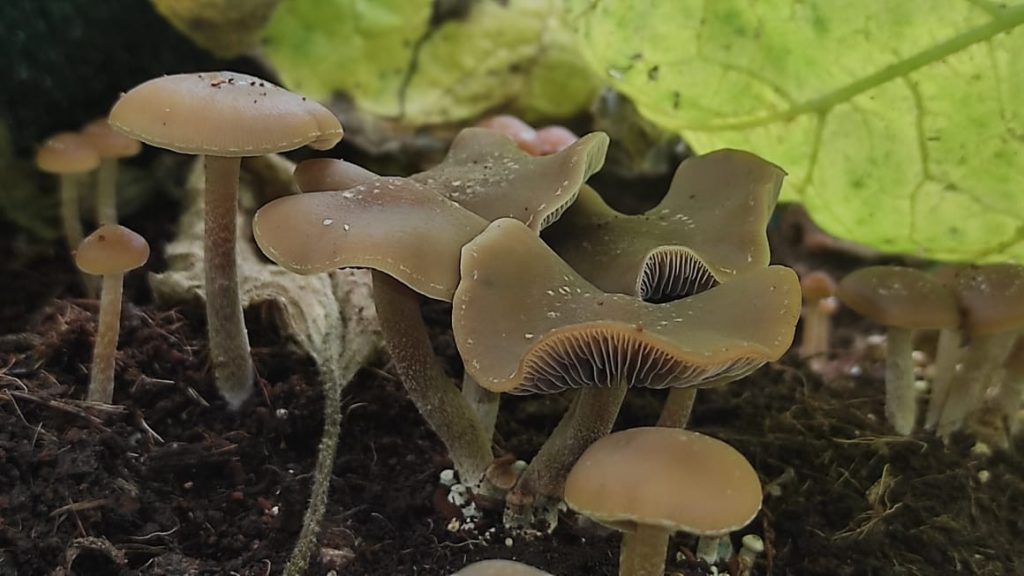
Fruiting Psilocybe ingeli mushrooms.
While P. cubensis can attain such potency levels on occasion, this is the result of decades of strain selection work, after spores of this species made their way into cultivation circles from the Colombian Amazon via the McKenna brothers half a century ago. P. cubensis has hogged the limelight in the cultivator community over this time, being the go-to species to grow, due to the ease of its cultivation and its ability to reliably produce bountiful flushes of mushrooms. However, there appears to be a growing interest in other species of mushrooms.
To put the potency of P. ingeli into context, most clinical studies involving psilocybin use a (high) dose of 25mg of the pure compound. At these potency levels, this means that a gram of dried mushroom material could harbour this dosage of psilocybin (or more), so newcomers to this mushroom should dose with caution (and perhaps not exceed a dosage of 0.5g of dried mushroom material for a first-time experience). Like all psilocybin mushrooms, potency can vary widely, as can individual sensitivities. One way of accounting for potency variation is to powder the dried mushrooms from a given flush and encapsulate them, which should provide a more consistent form of dosing.
Generally speaking, more potent species of mushrooms seem to be held in higher regard. Some people report more body load issues when ingesting less potent species, such as P. cubensis, which require the consumption of larger amounts of fungal matter, with the option of lighter fungal dining being appealing to some.
P. ingeli is a member of Section Zapotecorum. Other related species that are part of this same group include P. zapotecorum and P. subtropicalis, which are held in high shamanic esteem by Indigenous groups in Mexico. However, these species take a while to grow, shifting into slow motion when fruiting (if using P. cubensis as a reference), and they can be more challenging species to cultivate than P. ingeli. P. ingeli is a fast fruiter compared to these species, fruiting on a similar timeframe to P. cubensis, with the added bonus that it is easier to take spore prints from than these other Section Zapotecorum species can be.
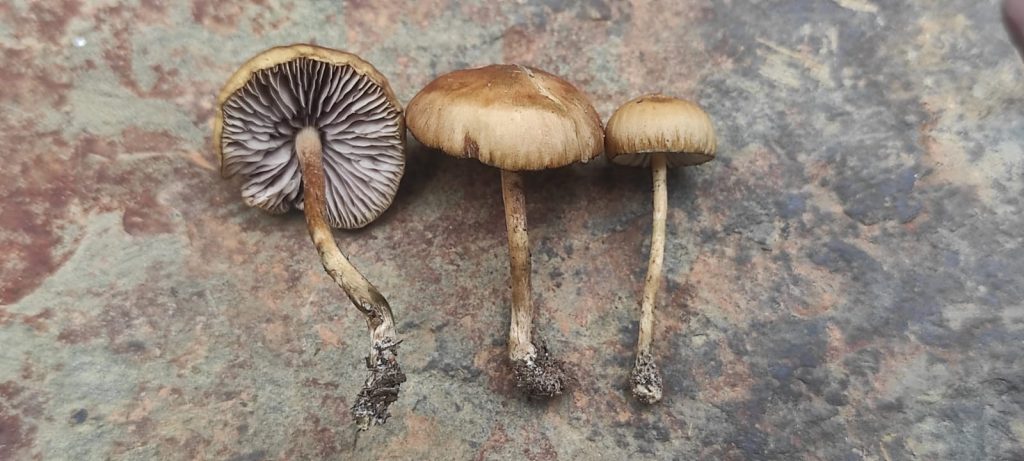
Harvested Psilocybe ingeli mushrooms.
P. ingeli has been described as “basically Zaps that fruit as fast as cubes and under similar low maintenance conditions” by chemist and researcher Julian Mattucci of Imperial Labs. Given the combination of its various qualities, P. ingeli could be a species of great importance to the psilonaut cultivator community, and beyond.
What Does the Future Hold?
The discovery of these species of African Psilocybes and the documentation of practices involving them heralds the opening of exciting new chapters in both awareness of the ceremonial use of these fungi by Indigenous cultures and their wider cultivation. The discovery of these fungi highlights the vital role citizen mycologists can play in contributing to expanding the frontiers of knowledge in under-surveyed parts of the world, such as Africa, as well as the great value such work can hold. Who knows what remains to be discovered across this underexplored fungal frontier?
Sam Gandy | Community Blogger at Chemical Collective
Sam is one of our community bloggers here at Chemical Collective. If you’re interested in joining our blogging team and getting paid to write about subjects you’re passionate about, please reach out to Sam via email at samwoolfe@gmail.com
Check out our Community Blog and get involved with the conversation. You will be awarded 50 x ChemCoins for each comment up to a limit of 250 total ChemCoins.
Leave a product review
50
Have you purchased any of our products? Reviews and reports are so important to the community. Share your honest opinion, and we’ll reward you with 50 ChemCoins for each review!
Complete an order
X
Every time you complete an order with us, you’ll be awarded ChemCoins for each Euro spent.
Earn commission every time someone makes a purchase through your link.
When you become an affiliate, you will be allocated a unique link to share with your friends, followers, subscribers, or Aunt Susan.
You can choose to payout the commission earned once per month, or save it up to receive on a rainy day! Commission earned is 5% of the total order value per referral.
Contact us to join the Chemical Collective family and become an affiliate.
































share your toughts
Join the Conversation.