In the West, there has been a growing understanding of how sensory deprivation can alter the mind, as many people have experienced this in a floatation tank. But the floatation tank experience typically lasts for only an hour (unless you pay extra for an extended session), and so it can be hard to access deep altered states of consciousness in this way (unless this activity is combined with a mind-altering substance). Darkness retreats, then, can be seen as a more committed (as well as challenging) way to experience darkness-induced altered states.
Tereza Rasovska describes intense effects during her 7-day darkness retreat. On day three, she recounts:
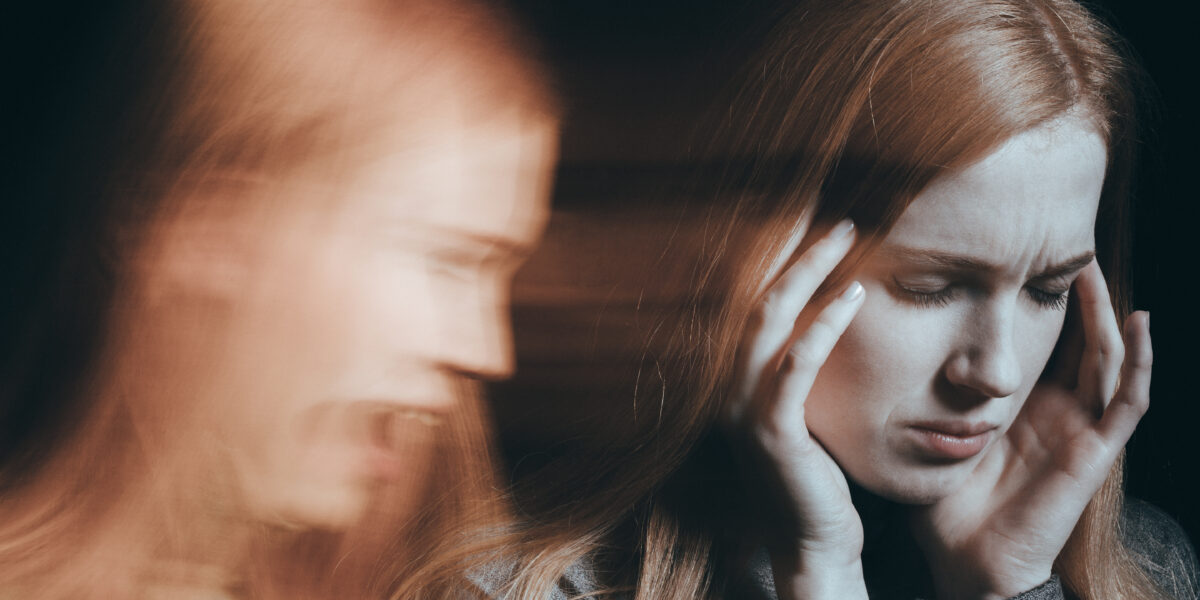
It felt like a panic attack approaching. But I knew this feeling very well from my younger age taking psychedelics or then meditating and also as a person who struggles with strong anxiety. The sudden change of consciousness. Unfortunately, here when you open your eyes, nothing changes. You try to breathe and calm yourself, no change.
Either I had to leave or face my demons was my only option. I then returned to bed, prepared this time. I started to focus on my breathing as I was lying there, and it came back. I kept saying to myself, “It can show me anything,” and “I accept it and want to see it.”
Bring it on!
Then it appeared as though a demon of some sort was sucking a bright stream of energy from my body. But it was a blast. There was a background sensation of relief.
It felt like a near-death experience.
Although it may sound absurd, that is how things were. It got more difficult as it grew more powerful but I knew I had to let go because the more you fight it, the worse it gets. I, therefore, stopped fighting and…
It turned around 180°. Suddenly feeling of ecstasy, gratefulness, and unconditional love. Just the most beautiful feelings ever. I was crying. It lasted just moments but seemed like hours (both the worst and best part of it).
However, she feels she may have been more prone than others to experience these non-ordinary states:
Nobody among my friends who I had previously discussed it with, had any experiences similar to mine.
Everyone told me how they were relaxing, chilling, or sleeping. No hallucinations or scary things.
But again, I’m sensitive, very imaginative, and a bit paranoid with a bad past.
On day four, she experienced “light pseudo-hallucinations”, which she got used to:
Sometimes spiders were flying around (my nightmare), sometimes corpses, sometimes weird languages I never saw before.
Childhood memories started to appear, which I also never remembered. I don’t know if they were true or just imagination.
One time I saw the whole room in infrared light (at least that’s what I think it looks like).
Some of those visions sound quite ayahuasca-like, or DMT-like (I’ve written previously about the strange writing and symbols people perceive on psychedelics, in a blog post and my book). The experience of visual effects or hallucinations during a darkness retreat is common. Podcast Aubrey Marcus remarks in his documentary on darkness retreats, Awake In The Darkness, “I’m in an ayahuasca vision that just won’t shut off. Lights flashing in the corners of my eyes, constant visuals … imagine an ayahuasca ceremony with no music, no sight, no sound and no people—and it doesn’t end! It just keeps going!”
NFL star and psychedelic enthusiast Aaron Rodgers went on a darkness retreat and promoted its benefits. Scott Berman, co-founder of Sky Cave Retreats – where Rodgers did his retreat – told CNN:
When someone goes into the darkness, all these things that were important to them like money, fame, power, status, being worthy – they all become insignificant and meaningless in the dark. In the dark, all you have is the present moment which reveals what is truly meaningful – whether it’s love, forgiveness, peace – and it begins to transform you as you truly authentically touch what is most important to you.
Taoist master Mantak Chia, who helped repopularise dark retreats, says that prolonged darkness brings about “a unique spiritual journey to access higher levels of consciousness and reunite with your true self”. Journalist Mattha Busby shared his experience of a 5-day darkness retreat – at the Bliss Haven Retreat Centre in Oaxaca, Mexico – in an article for Vice. He recalls experiencing a lot of introspection about past relationships, shedding baggage, and making positive personal resolutions.
He eventually experienced more ‘psychedelic’ effects one evening:
I first feel something “unlocking” between my eyebrows — in the region of the mythical third eye spoken of in eastern traditions. The next morning, following a night of disrupted sleep, I descend ever deeper into a well of clarity, as what’s said to be a natural form of DMT slowly circulates through my body. I was half expecting this, but I still whoop as it sets in – finally it’s time to get high on my own supply.
Still lying down, I float through the night gently on my own cosmic saucer. I melt into a soothing dreamland where my entire extended family — including those who have passed, most notably my father who passed away in December — get together for a game of cards. This never happened in real life. Then I wake up with a sore hip, and see my room filled with faintly crackling holograms – the first visions. Now it’s getting seriously trippy.
(It is worth noting that there is, as of yet, no conclusive evidence that altered states of consciousness like this result from the release of endogenous DMT, although this theory, and alternative theories on the role of endogenous DMT, are still being investigated. Another explanation for the mind-altering effects of darkness is potentially the body’s increased production of melatonin, a hormone that regulates the sleep-wake cycle, and which is naturally produced by the body when it gets dark.)
The effects for Busby become more intense by day five:
By this point, Day Five morning, the “DMT” really seems to have kicked in and it all feels rather incredible, so we agree I’ll emerge the following dawn instead. While the previous “DMT” rushes plateaued after no more than half an hour, this one has some staying power. It kinda feels like I’m candy flipping on a low dose of MDMA and LSD, rather than DMT which tends to deliver an intense, short-lived high. This may be the sustained natural high I’ve long yearned for. It leads to my aches reaching their lowest point yet and I’m even able to muster the energy – and joint flexibility – for a decent Qi Gong routine, a type of Chinese standing yoga slash martial arts practice.
The blissful euphoria of quiet in my mind unfolds placidly. Slowed down to unprecedented degrees, it rests without straining to find something to think about. With the volume turned right down, you can really listen to the silence within.
Busby also observes some advantages of the darkness retreat experience compared to taking psychedelics:
The journey through the story of my life was a deeply psychedelic experience – an intense, illuminating and calming journey. It also feels somewhat easier to digest these intense events when I’m not wiping vomit from my cheek, as with rollercoaster ride hallucinogens like ayahuasca.
In the days following the retreat, he experienced “deep calm” and “heightened sensitivity”. Rasovska says that her experience showed her “That if anything happens I can handle it and I am the person who supports me and will always be there for me,” and “It gave me a big load of gratitude for what I have in life.” However, some difficulties arose as well: “Few weeks later I still felt lost. I had no one to talk to about it. I felt disconnected from the world around me.” She notes too:
Now, a year later when I think about it, I’m happy I went there, but I didn’t have the time after to integrate. I went straight to work a day after and it took me a while to get used to it. So if I could go back in time I would certainly take at least 2 days of after the Dark to spend it alone somewhere quiet.
This also seems to be something that many people who attend meditation or psychedelic retreats describe. Without time dedicated to processing the retreat experience, it can feel destabilising and overwhelming – to go back to one’s normal routine can feel like ‘too much, too soon’.
The potential dangers of darkness retreats lie in how powerful their mind-altering effects can be. As we have seen, traditionally, dark retreats in Buddhism have been seen as part of an advanced spiritual practice. Entering a darkness retreat without adequate knowledge of the states of mind that can arise, or how to handle them, can result in emotional distress. There is the danger that some people will take the visions they experience as objectively real. People already in a vulnerable emotional state may feel their distress heightened. Those prone to psychosis or schizophrenia may experience a trigger or worsening of symptoms. Author Andrew Holecek writes in a blog post:
Nearly every opportunity and obstacle in the world of psychedelics applies to dark retreat. With the proper set and setting, one good trip can change your life. Without the proper set up, one bad trip can leave you bruised…. Despite the hype and hope with psychedelics or dark retreat, nothing is a panacea. Don’t turn to dark retreat to cure all your ails, or view it as the newest self-help method in the New Age supermarket.
There’s a reason the formal practice of long dark retreats (versus informal home use) is historically guarded. It’s not because dark retreat admits you into a secret club. It is because such an exotic practice tends to magnetize spiritual thrill-seekers, reckless psychonauts, and poorly motivated explorers that then suffer the consequences of a flippant attitude.




























share your toughts
Join the Conversation.