in this article
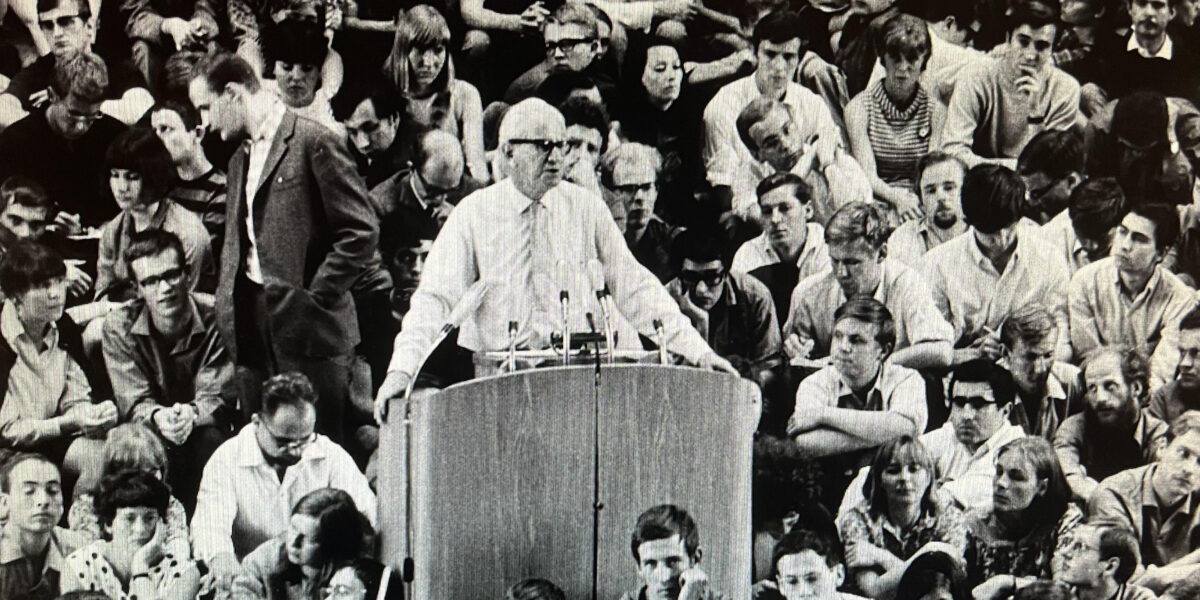
- The Forgotten History of LSD
- Exploring LSD Against a Backdrop of Social Change
- Unearthing the Undiscovered
Are you 18 or older?
Please confirm that your are 18 years of age or older.
You are not allowed to access the page.
Disclaimer: The views and opinions expressed in this article are those of the authors and do not necessarily reflect the official policy or position of the Chemical Collective or any associated parties.
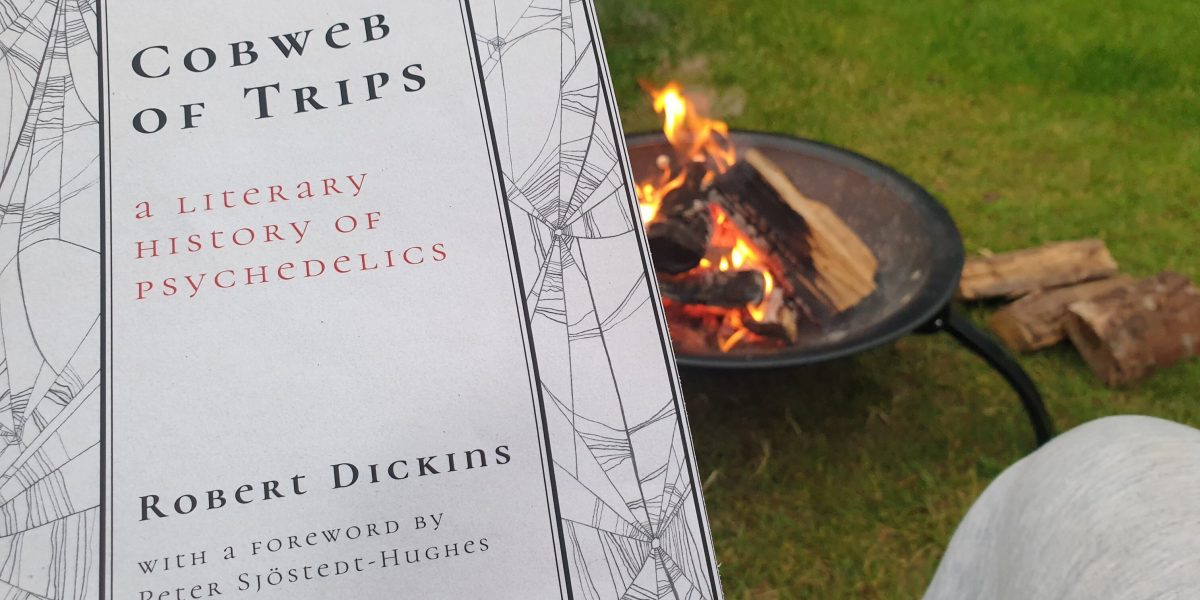
LSD exploded into the counterculture in the 1960s – but hidden between pages of poetry, threading through psychiatric practice, and parading its way into politics, its influence ran deep into culture long before it was adopted into a scene. In Cobweb of Trips: A Literary History of Psychedelics, historian Rob Dickins takes us on a journey through the mid-20th century, revealing how LSD weaved its web of influence through literature, scientific developments, and the broader social landscape.
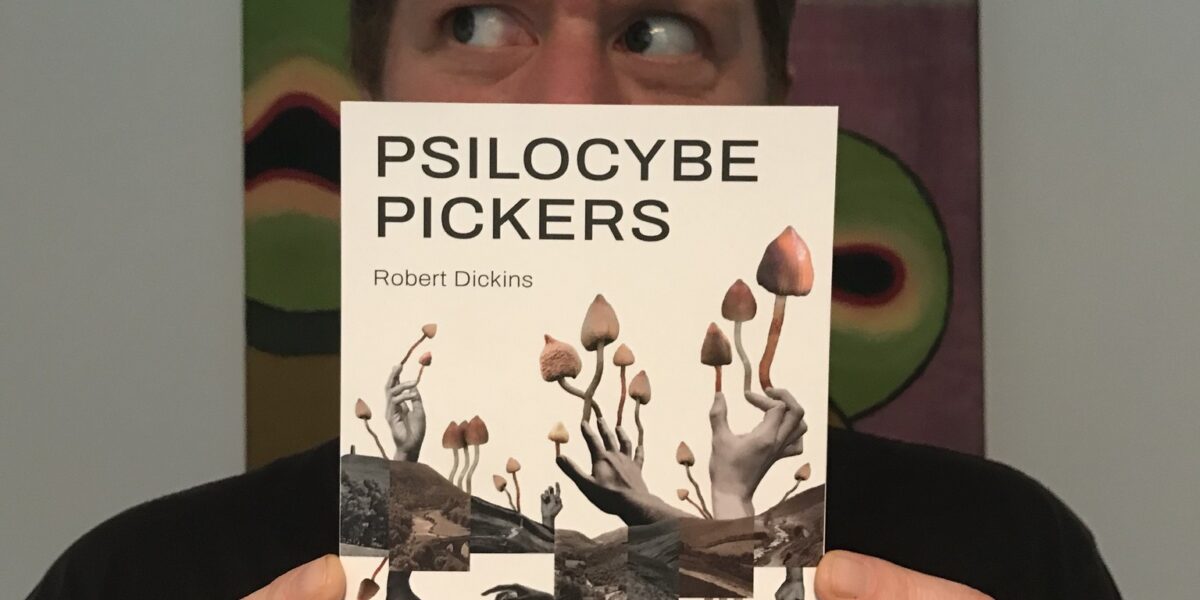
Since 2008, Robert Dickins has been feeding interested psychonauts with a healthy diet of all things trippy through Psychedelic Press – an independent UK publisher exploring the world of psychedelia.
As well as running the official Breaking Convention bookstall, the writer and historian has been publishing articles and books on the history, culture and philosophy of psychedelics through the platform, quenching even the most insatiable of psychedelic appetites.
Cobweb of Trips is no different. In this gorgeous morsel of psychedelia, Dickins has raided the archives, pored over the literature and dug through the history to serve up psychedelic snacks that are revelatory to LSD’s deep impact in the mid-20th century.
Cobweb of Trips explores LSD’s impact on culture and society, particularly in post-war Britain, looking at the compound’s influence across sectors such as art, literature, psychiatry, the Anglican Church, and countercultural movements.
“The book itself is more widely a bit of psychedelic history. But LSD is the main drug that’s having an influence at that time,” explains Dickins.
“This history has been well delved into – the broad narrative of the science that emerges, how LSD becomes counter-cultural, and how these substances get thrown out the window by the government.
“It is a similar story in the US, that’s sort of narrativised here in the UK as well. With Cobweb of Trips, I really wanted to show that there are lots of forgotten corners of LSD’s history and lots of different groups of people who were involved with it in some way.”
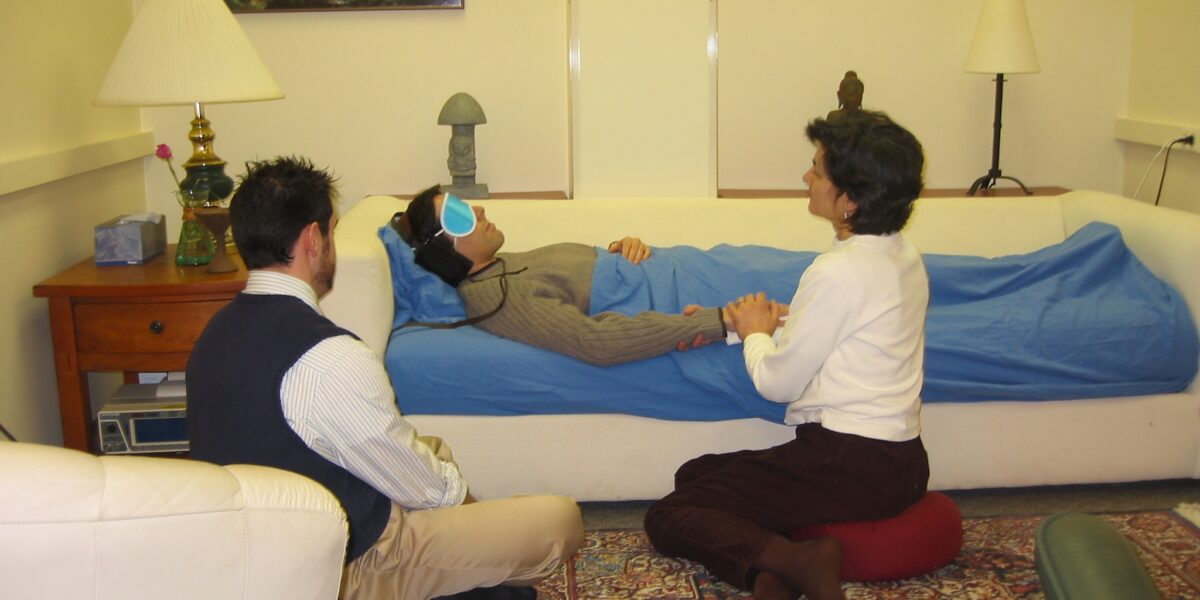
From Dr Frank Lake’s experimentation with LSD in psychiatry to actor and writer Richard Heron Ward’s book A Drug Taker’s Notes and its influence on popularising knowledge of LSD, Dickins shows how LSD was not only threading itself through the culture but also feeding back into society.
“I really wanted to write something which gave a more rounded view of LSD and also introduce some different characters that people haven’t come across before,” says Dickins.
“I wanted to give people the vision that LSD was spider-like, weaving through society and culture – it wasn’t just a linear behaviour that was happening. It was coming in lots of different pockets.”
Dickins explores how LSD acted as a non-specific amplifier of the social changes that were taking place in the mid-20th century following the Second World War – a time when the UK was entrenched in conservatism and crying out for change.
“Some people put forward the argument that things like LSD appear, and they transform society – and all the agency is put on the drug,” says Dickins.
“But a drug doesn’t have any agency. It’s an inanimate object. LSD is coming into a world that’s in flux all the time. Post-war Britain was poor, it was very conservative, it was depressed – in some respects it was dealing with a lot of trauma coming out of the war.
“LSD dropped into this state of being. A lot of people in psychiatry and science were looking for ways to treat what had happened. People like Ronald Sandison and Humphrey Osmond were in the army during the Second World War, and they were looking for some novelty and some change.
“LSD represents not only what is going to be a wider shift in their professions, but as the 50s and 60s roll on, what’s going to be a wider shift in cultures as well.
“This is the change when Harold Wilson’s government comes in, and with that, lots of sweeping social changes as well – LSD is part of a larger set of things that’s happening.”
Cobwebs of Trips has something new to discover for everyone from the psychonauts, the scientists, and the poets to the spiritualists, the campaigners, and the politically-minded.
Filled with little-known snippets of psychedelic history, Dickins delves into the less explored terrain of psychedelia – pulling up archives of Kenneth Leach’s work in Bishopsgate Institute and spotlighting lesser-known writers like Harry Fainlight and influential novels like Simon’s Daughter by Ronald Sandison.
“The documents themselves tell their own story,” explains Dickins.
“Reading Sandison’s book, for example, it’s actually a deeply historical book. He’s trying to tell a narrative about Britain using LSD. Now, 40 years after that book was published – and that book was published 20 years after he was doing his LSD research – you get a kind of hindsight.
“Were the visions of the past brought to bear on reality? The answer is often not, but the answer is that things did change, but in unexpected ways.
“A lot of what I do in Cobweb of Trips is think about that – has it been useful? Have things changed in the ways that people hoped and what was LSD’s role within that?
“People pin all sorts of hopes on LSD, with one’s personal journey, one’s community journey, one’s national journey, or the international journey. People pin hopes on LSD being able to change things – nearly always, they’re wrong. But change does always happen – it’s about trying to figure out, how did that happen? Why did that happen? For whose benefit? That’s the storytelling of Cobweb of Trips.”
From one of the most knowledgeable minds on psychedelia in modern Britain and featuring a foreword from Dr Peter Sjöstedt-Hughes, philosopher of mind and metaphysics, Rob Dickins’ Cobweb of Trips is a must-read for the newly enthused and the connoisseurs alike – and a new staple for the psychedelic bookshelf.
Stephanie Price | Community Blogger at Chemical Collective
Stephanie is one of our community bloggers here at Chemical Collective. If you’re interested in joining our blogging team and getting paid to write about subjects you’re passionate about, please reach out to Sam via email at samwoolfe@gmail.com
Welcome to Chemical Collective.
Create an account to earn 200 welcome points.
Already have an account? Sign in
Check out our Community Blog and get involved with the conversation. You will be awarded 50 x ChemCoins for each comment up to a limit of 250 total ChemCoins.
Have you purchased any of our products? Reviews and reports are so important to the community. Share your honest opinion, and we’ll reward you with 50 ChemCoins for each review!
Every time you complete an order with us, you’ll be awarded ChemCoins for each Euro spent.
Welcome to Chemical Collective.
Create an account to earn 200 welcome points.
Already have an account? Sign in
Earn commission every time someone makes a purchase through your link.
When you become an affiliate, you will be allocated a unique link to share with your friends, followers, subscribers, or Aunt Susan.
You can choose to payout the commission earned once per month, or save it up to receive on a rainy day! Commission earned is 5% of the total order value per referral.
Contact us to join the Chemical Collective family and become an affiliate.
share your toughts
Join the Conversation.