Welcome to
Chemical Collective

Are you 18 or older?

Please confirm that your are 18 years of age or older.

You are not allowed to access the page.

info-icon €100 for domestic (NL, CZ, DE) €125 for the rest of the EU, excluding stealth shipping

Free shipping over €50 & free tracked shipping over €100

Friendly customer service available 9-5pm Monday to Friday

Free shipping over €50 & free tracked shipping over €100

Friendly customer service available 9-5pm Monday to Friday

Your cart is empty

The Mystery of the Dreamfish

sam-gandy

By Sam Gandy

trippy dreamfish
in this article
  • The Salema Porgy (Sarpa Salpa)
  • One Fish, Two Fish, Three Fish, Dreamfish
  • What is Responsible for Dreamfish Intoxication?
  • Psychoactive Fish Food?
  • Unravelling the Mystery of the Dreamfish – the Next Steps
sam-gandy

By Sam Gandy

Disclaimer: The views and opinions expressed in this article are those of the authors and do not necessarily reflect the official policy or position of Chemical Collective or any associated parties.

While plant and fungal psychedelics attract a great deal of attention, animal psychedelics tend to be more overlooked. The best known is the Sonoran desert toad, Incilius alvarius, which produces 5-MeO-DMT in its defensive secretion. Some marine animals, such as sponges, sea squirts and soft corals, produce psychedelic analogues of DMT, and there are tales of a psychedelic insect hailing from eastern Brazil. Perhaps the most mysterious is the dreamfish (or dreamfishes).

Intoxication through consuming fish is referred to as ichthyoallyeinotoxism. It is uncommon, unpredictable, poorly understood, and likely under-reported.

Cases of dreamfish intoxication may be under-reported for a number of reasons. Intoxication events may occur in remote areas such as isolated islands, effects may manifest at nighttime and be short-lived, amnesia may result from the intoxication, and voluntary ingestion very rarely leads to medical intervention. Cases may also be confused with ciguatera fish poisoning.

The chemical agents responsible for ichthyoallyeinotoxism remain totally shrouded in mystery.

The Salema Porgy (Sarpa Salpa)

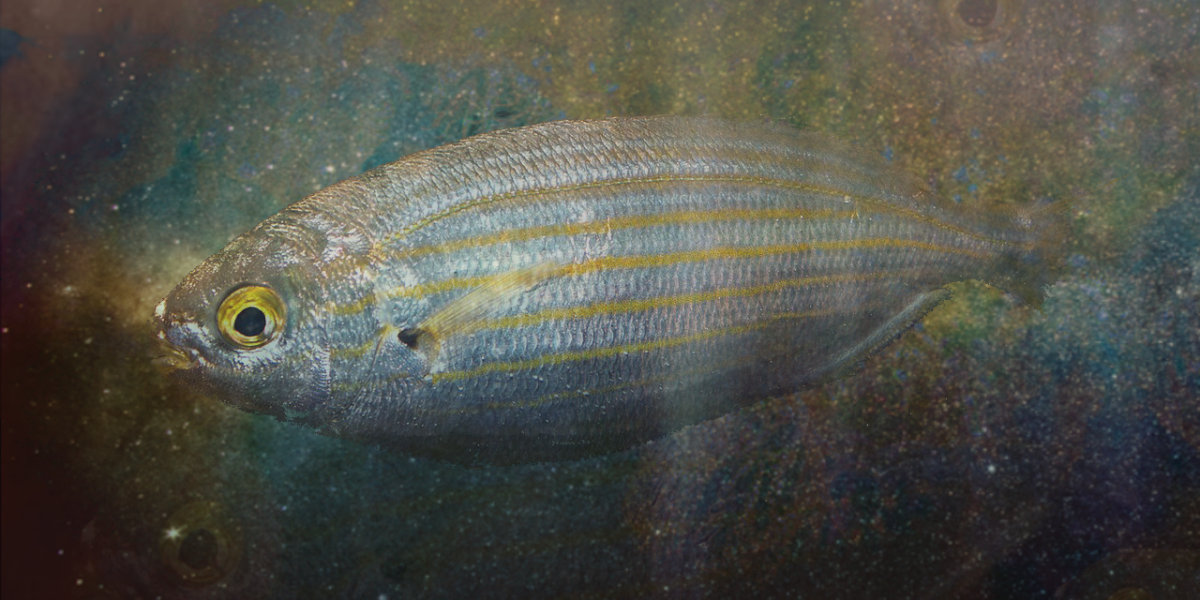
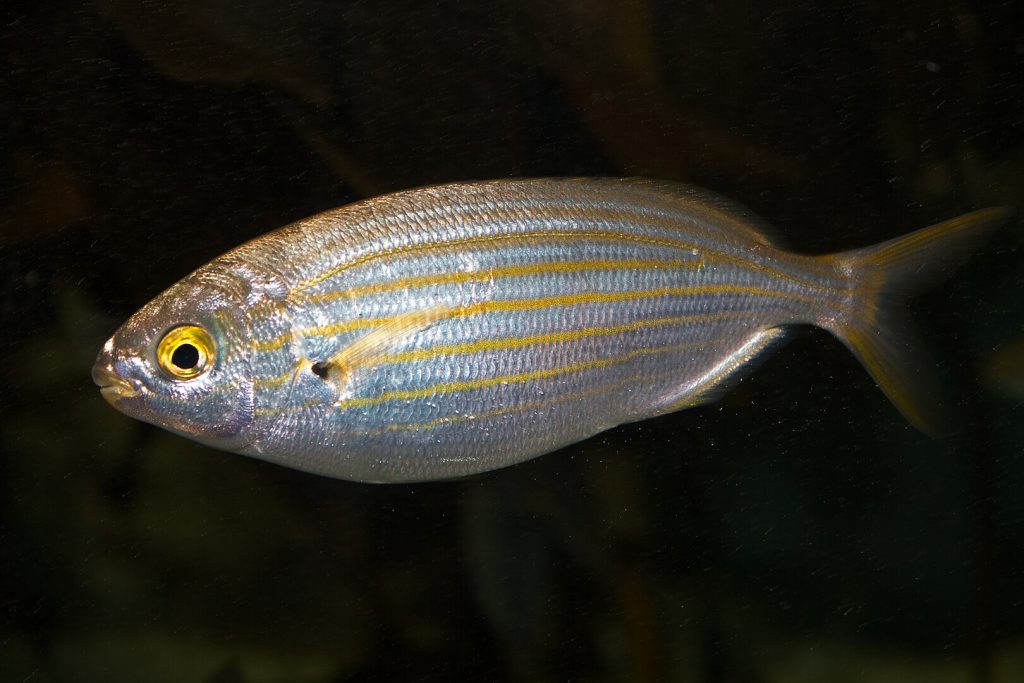
One dreamfish species that inhabits the East Atlantic from the Bay of Biscay to South Africa is the salema porgy (Sarpa salpa). A species of seabream with distinctive golden stripes running down its sides, it is a rare visitor to British waters, and has been consumed in the Mediterranean region for centuries – and usually without incident. Some sources claim the fish was ingested for its intoxicating effects by the Romans, with it being referred to as “the fish that makes dreams” in Arabic.

The salema porgy, Sarpa salpa. Brian Gratwicke.

Two case reports of dreamfish intoxication in the Mediterranean paint an intriguing picture, where two men – one 40, the other 90 – were intoxicated after consuming salema porgy fish (almost a decade apart). The 90-year-old man had eaten the fish on numerous prior occasions without incident. Intriguingly, both men reported animal-themed auditory hallucinations (of screaming animals and squealing birds).

Agitation and disorientation led the younger man to seek out medical assistance. He reported being unable to drive as he was seeing giant arthropods circling his car. It is one thing to perceive visuals that take on the form of critters, or to encounter them in otherworldly realms (a la DMT), but quite another to be convinced these critters are assailing you in the real world. 

This hints that he was experiencing hallucinations in the true sense of the word, i.e. something that is falsely but convincingly experienced that cannot be distinguished from reality. This is suggestive of deliriant rather than psychedelic effects (coupled with his amnesia of the hallucinatory period). Psychedelics tend to distort perception of reality rather than fabricate scenarios that are taken as real.

On medical examination in the hospital, no abnormalities were found, bar an elevated pulse (which was linked to the mental disturbances). This is similar to the case of Albert Hofmann, who was sailing, terror-stricken, into the turbulent, uncharted waters of the first-ever high-dose LSD experience. A doctor was summoned, but on giving Hofmann a checkup, no abnormalities were noted – bar his extremely dilated pupils.

The older man reported vivid nightmares over the following two nights, but at the time, he was unwilling to share what he was going through with his friends or the attending doctor, fearing the symptoms were heralding the beginning of a major mental illness. It was only when he recalled overhearing a warning at the fish market concerning the intoxicating potential of sea bream that he suspected his fish meal might be responsible, inciting him to contact the Poison Control Center in Marseille.

Aside from the occurrence of auditory and visual hallucinations and the effects on dreaming, inebriated people may also report feelings of drunkenness, delirium, lethargy, disturbances to motor coordination, and vertigo. Occasionally, itching, burning of the throat, muscular weakness, and abdominal distress are also reported.

One Fish, Two Fish, Three Fish, Dreamfish

The salema porgy isn’t the only fish species that can result in inebriation when ingested. A range of different fish species, found in the Pacific and Indian oceans, have also been associated with intoxications, with a range of different fish families implicated, including sea chub, surgeonfish, rabbitfish, goatfish, mullet, groupers, clown fish, and damselfish.

A photographer for National Geographic, Joe Roberts, broiled another species of dreamfish for dinner on Norfolk Island in 1960 and had what sounded like a much more pleasant experience than those reported previously. He described extremely vivid and realistic visions while asleep, “with a science-fiction theme that included futuristic vehicles, images of space exploration, and monuments marking humanity’s first trips into space.” 

Notably, he insisted he never normally dreamed. Unlike the previous two cases, where the dreamfish intoxication was unexpected and undesired, in this instance, the intoxication was expected and welcomed, following discussions about the dreamfish with local fishermen. Expectancy is a very powerful sculptor of altered states experiences, and this is likely why the account of his experience had such a distinct tone from the previous two.

In the episode ‘Fish N’ Trips’ of the VICE series Hamilton’s Pharmacopeia, Hamilton Morris visited Réunion Island and Madagascar to investigate the consumption of dreamfish by the islanders there. Interestingly, the Réunion Island fishermen and their families described ingesting the dreamfish intentionally for their inebriating effects, referring to drunken feelings and vivid dreams. This is something not often reported in other areas where dreamfish occur. 

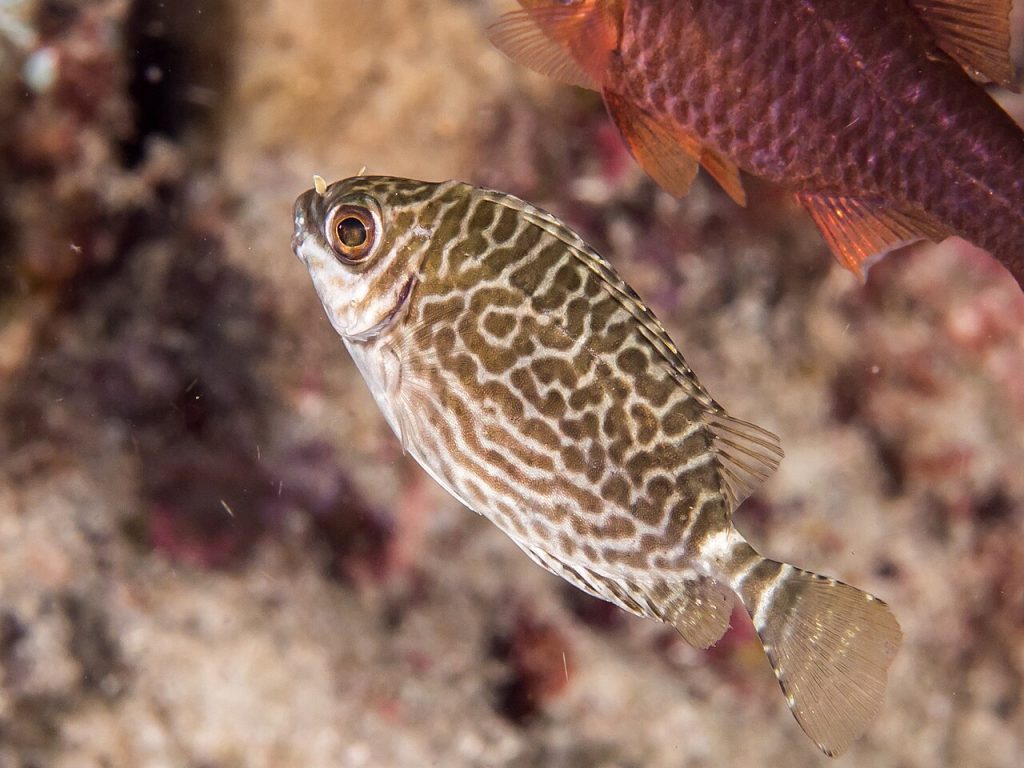
This may be due to the presence of a number of dreamfish species in the area, making intoxications more common and consistent, with the fishermen referring to three different intoxicating fish species. They specifically referred to an intoxicating species of surgeonfish (Acanthurus sp.), and the scribbled rabbitfish (Siganus spinus) is referred to as “the fish that inebriates” in Mascareignes (around the southwest coast of Réunion Island).

The scribbled rabbitfish (Siganus spinus). Rickard Zerpe.

What is Responsible for Dreamfish Intoxication?

While intoxication with the fish has been described as eliciting “LSD-like” effects, it is so little studied and accounts of intoxication so rare that this isn’t clear. The few accounts there are, in fact, suggest a distinct effect profile to LSD. Whatever is responsible seems to act as a potent oneirogen or dream inducer, also manifesting feelings of intoxication and sometimes visual and auditory hallucinatory effects during waking. Such effects distinguish the intoxication from that elicited by psychedelics such as LSD. 

According to Dr. Luc de Haro, a toxicologist at Marseille’s Anti-Poison Center, who has seen several such incidents, “It’s not so much disrupted perception of reality—more often the sufferer tends to create new images. And often, that person experiences it as an attack.

One unusual quality of dreamfish inebriation is that the hallucinatory effects which manifest during wakefulness can powerfully spill over into sleep, resulting in highly vivid dreams and nightmares. This is an unusual and distinctive quality that appears to set it apart from other known psychoactive substances.

The length of the effects reported also stands out, with case reports detailing effects spanning up to 36 hours, or several days in some cases. Very few psychoactive agents produce such sustained effects. Substances known to produce such prolonged intoxication include the psychedelic amphetamine DOB (at high dosages), iboga, and the deliriant Solanaceous nightshade plants.

Another distinctive feature of dreamfish intoxication sometimes reported is the feeling that someone is sitting on one’s chest, or a sensation of constriction around the chest. One of the Réunion islanders Hamilton Morris spoke to reported feeling “it’s like being pinned in bed”. These experiences sound much like episodes of sleep paralysis or the associated incubus phenomenon. Morris described experiencing feelings of numbness and later an episode of sleep paralysis the night after dining on the dreamfish himself (interspersed with episodes of very vivid and realistic dreams).

No deaths have been reported in association with dreamfish intoxication, and those affected go on to make a full recovery. The chemical agent or agents responsible for dreamfish inebriation seem to present an unusual and distinct effects profile, and the identity of whatever is responsible remains a mystery.

Psychoactive Fish Food?

The inconsistency in intoxication events suggests that the compounds responsible are likely not made “in-house” by the fish, but instead are something related to their diet.

A potential dietary influence is further hinted at by the seasonal variation in the likelihood of salema porgy intoxication events in the Mediterranean (with most cases of intoxication being reported in spring and summer). Not immediately gutting the fish after catching it is also thought to increase the likelihood of intoxication, further hinting that a dietary factor may be responsible. 

Cooking the fish with its head intact is another factor associated with intoxication events – this applies not just to the salema porgy, but also to other dreamfish species in different parts of the world. A number of marine toxins are known to bioaccumulate in the fatty tissues of fish brains from phytoplankton such as dinoflagellates and diatoms.

The salema porgy is largely vegetarian, and in the Mediterranean, grazes on the seagrass Posidonia oceanica, which is endemic to the region, along with algae, some of which grow on the seagrass. Some have speculated that certain algae that the fish are eating could underlie the psychoactive effect.

A range of dietary candidates have been put forward (by both researchers and fishermen) to explain the psychoactivity of dreamfishes, including seagrass, algae, cyanobacteria, and phytoplankton such as dinoflagellates. Phytoplankton are highly adept at concocting a range of complex and unusual molecules, of which very little is known. 

It is possible that a single chemical compound isn’t responsible for intoxication events, but rather a range of different compounds that could potentially vary with region, season, fish species and their diet. The ichthyoallyeinotoxins responsible could be novel.

The dreamfishes also have a propensity for sequestering other toxins, such as those produced by the dinoflagellate Gambierdiscus toxicus, which is responsible for ciguatera poisoning (or ichthyosarcotoxism), which may be confused with cases of dreamfish intoxication. However, in the tropics, dreamfish intoxication tends to be associated primarily with herbivorous reef fish or those found around islands, whereas ciguatera poisoning is often associated with predatory fish (which bioaccumulate the ciguatoxins).

The symptomology of both is distinct, and ciguatera poisoning is much more serious. While those afflicted with dreamfish intoxication go on to make a full recovery after 36 hours (or a few days at most), ciguatera poisoning comes with much more pronounced and unpleasant physical side effects, a greater risk of death, and prolonged symptomology (potentially lasting for several months). Like the compounds responsible for dreamfish intoxication, these toxins are not destroyed by conventional cooking.

Unravelling the Mystery of the Dreamfish – the Next Steps

Marine biologist Dr Catherine Jadot studied the salema porgy as part of her PhD research. In her words: More research is needed to identify the toxin responsible for getting hallucinogenic effects from fish. Today, there isn’t enough research to know what compounds cause this.”

The creation of a platform to allow physicians, travellers, and local community members to report suspected cases of dreamfish intoxication and collaborate with marine toxin monitoring programmes (such as for ciguatera poisoning) could help net more data on the phenomenon.

To stand the best chance of unravelling the mystery of the dreamfish, it may be wise to focus research efforts in areas where there are multiple species of dreamfish, such as Réunion Island. This may make it easier to research than in areas such as the Mediterranean, where fish intoxication is more uncommon and inconsistent. Interviewing fishermen and coastal communities could contribute to mapping cases according to geographical location, while highlighting implicated species and any seasonal variation in intoxication events.

If the psychoactive compounds responsible for dreamfish intoxication are indeed dietary in origin – which is possible, if not probable – a logical place to begin trying to unravel this mystery would be to find what degree of dietary overlap is shared by the different dreamfish species. This could be achieved by observing the feeding behaviour of target species and comparing their gut contents to ascertain what organisms (e.g. algae or plankton) they are feeding on. Then any species or algae consumed by these fish could be screened for psychoactive compounds.

A lack of prior knowledge about what class of compounds the active substances underpinning dreamfish intoxication belong to makes identifying them tricky. However, analytical techniques such as mass spectrometry and NMR spectroscopy could be applied, and candidate molecules could be identified by looking for those likely to exhibit biological activity based on the mass spectrometry results (e.g. indole alkaloids or polyketides). NMR spectroscopy could be applied as a follow-on step to characterise any target compounds.

Suspect dreamfishes could potentially be halved, bioassayed to confirm psychoactivity, and then tissue samples from the other half analysed. Or fish suspected to harbour the active compounds could be compared with other members of the same species thought unlikely to harbour them, with the chemical analytical results compared.

Tissue samples from dreamfishes could potentially be used in neurobehavioral or receptor-based assays, with any fractions yielding dream-enhancing or hallucinatory effects prioritised. If active compounds are characterised, in vitro and in vivo pharmacological research could elucidate their receptor affinity profiles and some of their effects.

If the chemical culprit is some kind of marine algae or plankton, this could then likely be cultured, which would allow for more research on the compounds in question. These compounds – or others derived from them – could hold medical or therapeutic utility, or be used in the study of dream states. Future collaboration between marine biologists, natural product chemists, pharmacologists, and neuroscientists could help unravel the mystery of the dreamfish.

Sam Gandy | Community Blogger at Chemical Collective

Sam is one of our community bloggers here at Chemical Collective. If you’re interested in joining our blogging team and getting paid to write about subjects you’re passionate about, please reach out to Sam via email at samwoolfe@gmail.com


share your toughts

Join the Conversation.

0 Comments
Inline Feedbacks
View all comments

Related articles

Our Products

Related Products

1V-LSD 150mcg Blotters
1V-LSD 150mcg Blotters From 22.00
(143)
1cP-LSD 100mcg Blotters
1cP-LSD 100mcg Blotters From 18.00
(137)
Tryptamine Mix and Match Pack (4 x 0.1g)
Tryptamine Mix and Match Pack (4 x 0.1g) 65.00
(1)
1V-LSD 10mcg Micro Pellets
1V-LSD 10mcg Micro Pellets From 15.00
(43)
2-FDCK HCL
2-FDCK HCL From 12.00
(82)
1V-LSD 225mcg Art Design Blotters
1V-LSD 225mcg Art Design Blotters From 35.00
(62)
1S-LSD 150mcg Blotters
1S-LSD 150mcg Blotters From 29.00
(16)
1cP-LSD 150mcg Art Design Blotters
1cP-LSD 150mcg Art Design Blotters From 25.00
(74)
1V-LSD 225mcg Pellets
1V-LSD 225mcg Pellets From 35.00
(26)
1D-LSD 225mcg Pellets (1T-LSD)

SALE! -15%

1D-LSD 225mcg Pellets (1T-LSD) From Original price was: €42.00.Current price is: €35.70.
(13)
1cP-LSD 10mcg Micro Pellets
1cP-LSD 10mcg Micro Pellets From 15.00
(23)
5-MeO-DMT Freebase
5-MeO-DMT Freebase From 23.95
(36)
O-PCE HCL
O-PCE HCL From 17.50
(25)
1cP-LSD 20mcg Micro Blotters
1cP-LSD 20mcg Micro Blotters From 18.00
(27)
4-HO-MET Fumarate
4-HO-MET Fumarate From 19.50
(26)
rewards-icon
popup-logo

Reward program

popup-close
  • Earn
  • Affiliates