Welcome to
Chemical Collective

Are you 18 or older?

Please confirm that your are 18 years of age or older.

You are not allowed to access the page.

info-icon €100 for domestic (NL, CZ, DE) €125 for the rest of the EU, excluding stealth shipping

Free shipping over €50 & free tracked shipping over €100

Friendly customer service available 9-5pm Monday to Friday

Free shipping over €50 & free tracked shipping over €100

Friendly customer service available 9-5pm Monday to Friday

Your cart is empty

PSYCH NEWS – 28/07/2025

david-blackbourn

By David Blackbourn

shutterstock 1959297163
in this article
  • MindMed MM-120 Receives FDA Breakthrough Designation for GAD
  • HHC Potency Found to be Comparable to THC
  • Psychoactive Drug Pollutants Accumulate in Fish Eyes
  • Sheffield University Studies Psychedelic Use Throughout History
  • 5-MeO-DMT Nasal Spray Trial Shows Antidepressant Effect
  • Māori Representatives Present Indigenous Knowledge at Psychedelic Conference
  • Structure of LSD Bound to 5-HT2A Receptor Determined
  • Psilocybin Reduces Depression in Cancer Patients
david-blackbourn

By David Blackbourn

Disclaimer: The views and opinions expressed in this article are those of the authors and do not necessarily reflect the official policy or position of Chemical Collective or any associated parties.

This week’s developments in psychedelics news and research around the world show the continuing and wide-ranging effects of a “psychedelic renaissance” in full swing. Major strides are being made in developing new mental health treatments for a variety of depressive conditions, from LSD to 5-MeO-DMT for GAD/MDD, and psilocybin for depression in cancer patients. Alongside this, crucial cultural conversations are underway, surrounding the impact of the growing psychedelics industry on indigenous populations. Research is even shedding light on the historical and current effects of psychoactive substances on the development of urban spaces.

MindMed MM-120 Receives FDA Breakthrough Designation for GAD

The biotech firm MindMed has begun treatment of patients in its Phase 3 clinical trial for MM-120. MM-120 is a proprietary formulation of lysergic acid diethylamide (LSD), which is being studied for its potential to treat generalised anxiety disorder (GAD). The study is a randomised, double-blind, placebo-controlled trial to determine the optimum dosage of MM-120 in this context. The effectiveness of the compound will be monitored over a 12-week period to determine its efficacy for treating GAD, when compared to other current solutions.

The prior phases of the trial have already demonstrated a significant clinical benefit. As a result, the U.S. Food and Drug Administration (FDA) has granted MM-120 designation as a “Breakthrough Therapy”. This is an exciting development for the team at MindMed, as breakthrough designation is intended to expedite the development and review process required to bring promising drug treatments to the public.

HHC Potency Found to be Comparable to THC

A new study has found that the semi-synthetic cannabinoid, hexahydrocannabinol (HHC), has psychoactive effects which are much more powerful than initially believed. HHC recently appeared in the exceedingly grey area of the recreational drug market and is often sold as a legal replacement for THC. Users primarily consume HHC for recreational purposes, but adverse effects have been reported.

Little is known about the chemistry of the substance as of yet. The research carried out by Italy’s National Institute of Health revealed that HHC’s potency is comparable to that of THC. This challenges the perspective, often used as a selling point, that HHC is a milder alternative.

The study used lab analysis to measure HHC’s interaction with cannabinoid receptors, as well as monitoring behavioural changes in mice administered the substance. They observed significant psychoactive effects in both contexts, which raises concerns about safety and potential regulation. More public awareness and scrutiny around cannabis alternatives is seemingly required.

Psychoactive Drug Pollutants Accumulate in Fish Eyes

A study published in Environmental Science & Technology Letters has reported that psychoactive drugs that are common pollutants in aquatic environments accumulate in the eyes of fish. Researchers studying European perch discovered that high concentrations of these contaminants were significantly higher in the fish’s eyes, as opposed to their brain tissue.

The accumulation of these substances in the eyes was found to affect the levels of neurotransmitters, which are critical for visual processing. This suggests that this pollution is directly and seemingly negatively affecting the fish’s physiology and sensory capabilities.

The study appears to reveal just how much we are underestimating the ecological harm caused by pharmaceutical contaminants. The researchers concluded that the methods we currently use to monitor aquatic pollution are insufficient and called for further research to include sensory function as a key indicator of pollution’s environmental effects.

Sheffield University Studies Psychedelic Use Throughout History

Research from Sheffield University has explored the wide-ranging impact of what they call the “psychoactive revolution” on the development of society and the shape of our public spaces. The research revealed the economic, even architectural impact of the trafficking of intoxicants such as coffee and tobacco…into Western Europe. Urban spaces were indeed organised around psychoactive substances. The pub, the coffeeshop, for example. The impact of the industries which stemmed from the use of these substances cannot be undersold.

Dr James Brown led the research efforts and concisely explained the motivations behind the study:

It’s important to talk about the history of these intoxicants because they remain a live issue for society. There are many conversations around legal and illegal substances and the role they play in our lives…and the study of this history helps us to better understand its impact on social behaviours and therefore the ethics of these supply chains.

The wider purpose of the research was to educate the next generation. Partnering with seven schools across the UK, Sweden, Germany and the Netherlands, the team shared the research with A-level students. Events involving facilitators like artists, novelists and cartoonists provided an accessible means to relate the wider effects of psychedelics on culture. Dr Brown described the response to the research as positive:

The students responded well to the research…and showed an understanding of the origins of substances that we take for granted today. It opened up further conversations about social spaces that are important in their lives and concerns around exploitative commodity chains that are still current today.

Substances which alter consciousness have been central to cultures around the world for millennia. Art, philosophy, and our understanding of the mind as a whole have all been affected by psychedelic use. 

5-MeO-DMT Nasal Spray Trial Shows Antidepressant Effect

Atai Life Sciences and its partner Beckly Psytech have announced positive results from their Phase 2b Study of BPL-003 in Patients with Treatment-Resistant Depression (TRD). BPL-003 is a proprietary, short-acting formulation of 5-MeO-DMT, a substance which is around 4-6 times stronger than DMT. The treatment is administered as a nasal spray. Both 8 mg and 12 mg single doses of BPL-003 showed what the two companies described as “statistically significant and clinically meaningful reductions in depressive symptoms at all time points of the study.”

The treatment was well tolerated, and the effects of the treatment only lasted around two hours. This shorter duration potentially makes 5-Me0-DMT a more logical substance to employ in a therapeutic context. Psilocybin, for example, can last for more than double that time. If we consider that as an individual therapy session requiring monitoring throughout, preparation and subsequent integration, that is likely to be unfeasible on any kind of useful scale – at least any time soon.

A larger study is planned for later this year to confirm these initial findings and establish an optimum dosage.

Māori Representatives Present Indigenous Knowledge at Psychedelic Conference

A delegation of Māori researchers and traditional healing practitioners attended Europe’s biggest psychedelic conference to share insights from the Mātauranga Māori (traditional Māori knowledge systems). The purpose of their visit was not only to share knowledge but to ensure that indigenous worldviews are included in the global conversation around psychedelics. The effects of psychedelics on the individual are rooted in culture (set & setting), and the spiritual and communal context in which they have been taken provides valuable insight into their potential applications.

The central message of the delegation was a call for more ethical and respectful engagement with indigenous communities from the industry. Commercial interests behind a lot of research today often suppress indigenous knowledge in favour of quick-fix, rapid-to-market solutions, lacking any cultural underpinning. There are significant risks associated with the cultural appropriation of indigenous knowledge without reciprocity. Their presence served as a necessary reminder to the scientific community that honouring the existing, in-depth knowledge and deep cultural roots of these substances is paramount to their future application.

Structure of LSD Bound to 5-HT2A Receptor Determined

Research published in Cell has successfully mapped the structure of the human serotonin receptor 5-HT2A when it is activated by LSD.

Think of the 5-HT2A receptor as a chemical lock, which LSD fits into to alter the flow of serotonin in the brain, leading to its consciousness-altering effects.

Using advanced electron microscopy, scientists were able to create a detailed, three-dimensional map of exactly how it is that LSD binds to and interacts with the receptor. We have had research confirming that the majority of “classical” psychedelics (LSD, DMT, Psilocybin) interact with the 5-HT2A receptor, but the specifics of this interaction were murky at best. No longer!

This concrete, structural data provides the critical insight required to understand the effects of these substances. This can serve as a blueprint for future drug development, enabling scientists to map novel compounds more precisely to the architecture of the receptor. It will also provide a deeper understanding of the substances’ effects, for example, their length of duration, etc.

All of this knowledge will provide more precision to the application of these substances in a variety of contexts.

Psilocybin Reduces Depression in Cancer Patients

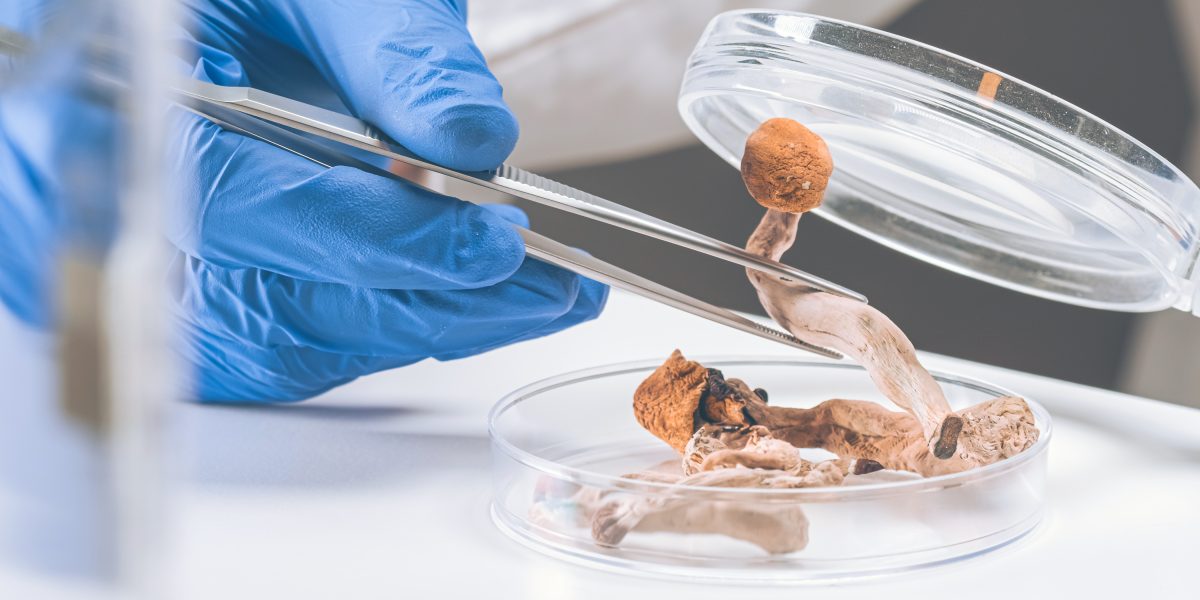
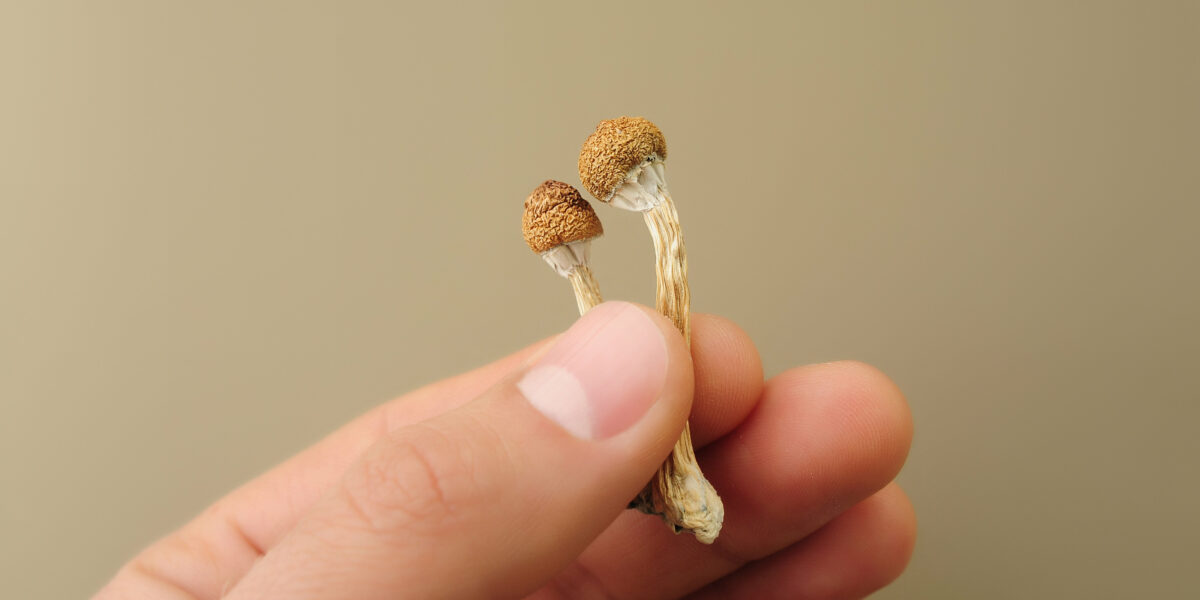
Roughly one in four people with cancer has depression. Treatment for this is difficult, especially with potential interactions between the treatment and existing medications that individuals may be prescribed. New research has revealed that just a single dose of psilocybin (the main psychedelic compound in magic mushrooms) has a long-lasting impact on cancer patients’ well-being, dramatically and safely reducing depressive symptoms for a sustained period.

The trial involved the administration of a single dose of synthetic psilocybin to individuals with both cancer and major depressive disorder. This was conducted in a clinical environment with set & setting controls and psychological support prior to and after the session. The lead author of the study, Manish Agrawal, of Sunstone Therapies, explains the long-lasting nature of the psilocybin treatment:

One dose of psilocybin with psychological support to treat depression has a long-term positive impact on relieving depression for as much as 2 years for a substantial portion of patients with cancer, and we’re exploring whether repeating the treatment resolves depression for more than half of the patients.

Continuing:

If randomized testing shows similar results, this could lead to greater use of psilocybin to treat depression in patients with cancer.

Tackling depression in cancer patients is extremely important. The existential distress associated with a cancer diagnosis is profound, and the resulting depression can actually affect the ability to tolerate potentially helpful medical treatments, and therefore their chances of survival. Psilocybin potentially offers a safe, rapid solution to these widespread issues.

David Blackbourn | Community Blogger at Chemical Collective

David is one of our community bloggers here at Chemical Collective. If you’re interested in joining our blogging team and getting paid to write about subjects you’re passionate about, please reach out to Sam via email at samwoolfe@gmail.com


share your toughts

Join the Conversation.

0 Comments
Inline Feedbacks
View all comments

Related articles

Our Products

Related Products

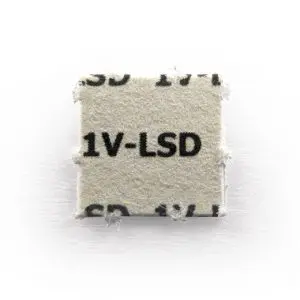
1V-LSD 150mcg Blotters
1V-LSD 150mcg Blotters From 22.00
(143)
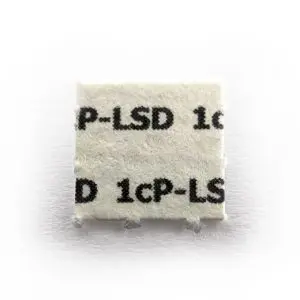
1cP-LSD 100mcg Blotters
1cP-LSD 100mcg Blotters From 18.00
(137)
Tryptamine Mix and Match Pack (4 x 0.1g)
Tryptamine Mix and Match Pack (4 x 0.1g) 65.00
(1)
1V-LSD 10mcg Micro Pellets
1V-LSD 10mcg Micro Pellets From 15.00
(43)
2-FDCK HCL
2-FDCK HCL From 12.00
(82)
1V-LSD 225mcg Art Design Blotters
1V-LSD 225mcg Art Design Blotters From 35.00
(62)
1S-LSD 150mcg Blotters
1S-LSD 150mcg Blotters From 29.00
(16)
1cP-LSD 150mcg Art Design Blotters
1cP-LSD 150mcg Art Design Blotters From 25.00
(74)
1V-LSD 225mcg Pellets
1V-LSD 225mcg Pellets From 35.00
(26)
1D-LSD 225mcg Pellets (1T-LSD)

SALE! -15%

1D-LSD 225mcg Pellets (1T-LSD) From Original price was: €42.00.Current price is: €35.70.
(13)
1cP-LSD 10mcg Micro Pellets
1cP-LSD 10mcg Micro Pellets From 15.00
(23)
5-MeO-DMT Freebase
5-MeO-DMT Freebase From 23.95
(36)
O-PCE HCL
O-PCE HCL From 17.50
(25)
1cP-LSD 20mcg Micro Blotters
1cP-LSD 20mcg Micro Blotters From 18.00
(27)
4-HO-MET Fumarate
4-HO-MET Fumarate From 19.50
(26)
rewards-icon
popup-logo

Reward program

popup-close
  • Earn
  • Affiliates