Welcome to
Chemical Collective

Are you 18 or older?

Please confirm that your are 18 years of age or older.

You are not allowed to access the page.

info-icon €100 for domestic (NL, CZ, DE) €125 for the rest of the EU, excluding stealth shipping

Free shipping over €50 & free tracked shipping over €100

Friendly customer service available 9-5pm Monday to Friday

Free shipping over €50 & free tracked shipping over €100

Friendly customer service available 9-5pm Monday to Friday

Your cart is empty

A Profane Illumination: The Drug Experiments of Walter Benjamin

david-blackbourn

By David Blackbourn

rsz shutterstock 1933708166
in this article
  • The Method of Intoxication
  • Altered States
  • The Limits of Perception
david-blackbourn

By David Blackbourn

Disclaimer: The views and opinions expressed in this article are those of the authors and do not necessarily reflect the official policy or position of Chemical Collective or any associated parties.

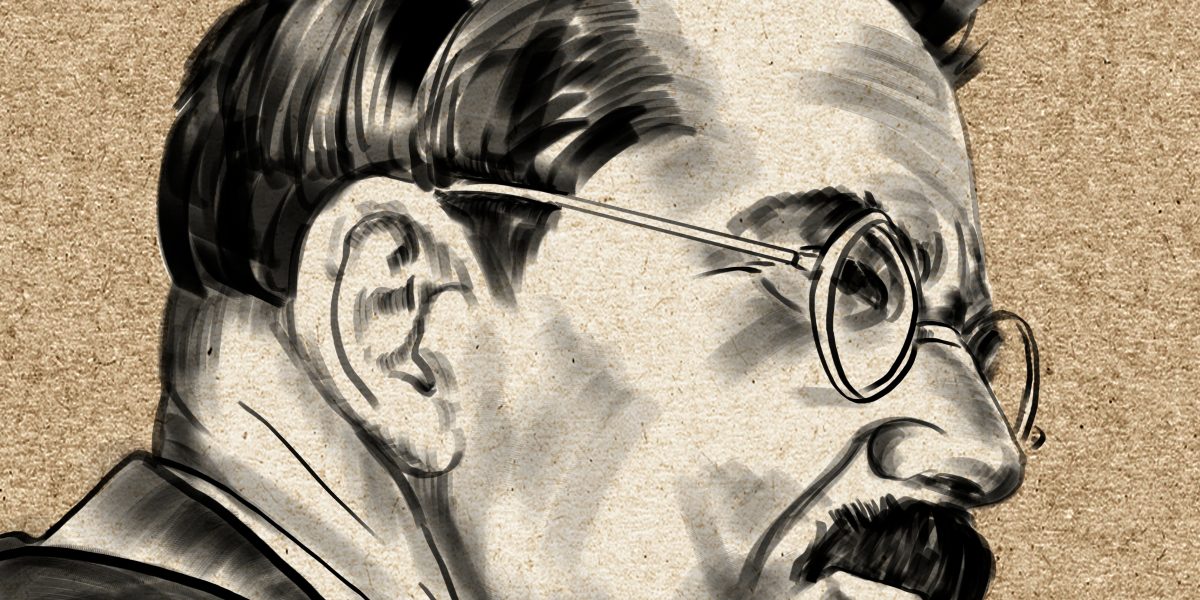
In the 1920s, Germany was a mess of extremes: full of burgeoning artistic creativity, but equally embroiled in political turmoil and societal upheaval. The philosopher Walter Benjamin was himself at this time conducting his own series of smaller, rather more personal upheavals. These were not declarations of change or public manifestos. These were more clandestine, if no less significant, upheavals.

“Fed on the damp boredom of postwar Europe and the last trickle of French decadence”, in opium dens and private rooms from Berlin to Paris, enterprising individuals sought to expand their minds through black-market, chemical means. Hashish, opium, even subcutaneous injections of pure mescaline. But Benjamin did not dive into this world for the sheer hedonistic indulgence of it all, though I’m sure there was a certain dark allure to the proceedings. His drug use was intentional, methodical, observed, and above all, recorded. Each altered state he encountered was another opportunity to study himself as an avatar of humanity, interrogating the structures of memory and perception, even the foundations of meaning itself.

During his first hashish experiment in December 1927, Benjamin poetically described the immediate head-change: “Your thinking follows the same paths as usual, but they seem strewn with roses.” This romantic notion would darken somewhat as his experimentation continued, and in the following years, up to 1934, Benjamin used various substances as a method to achieve what he famously declared a ”profane illumination”, a kind of materialist epiphany inaccessible to contemplative thinking. This flash of insight, grounded in hard, sensory reality rather than any kind of mystical transcendence, was a phenomenon he laid out in his 1929 essay Surrealism: the Last Snapshot of the European Intelligentsia. 

With his friends, the medical doctors Ernst Joël and Fritz Fränkel, acting as co-observers, he documented his sessions in a series of highly detailed protocols. The vast majority of these remained unpublished long after his death but are now available in On Hashish, a posthumous collation of the protocols. On Hashish is a strange text that teeters between rigorous scientific inquiry, journal, and exploration of complex metaphysics. So, it was ambitious in its scope to say the least.

Inspired by the prominent poet Charles Baudelaire’s Les Paradis Artificiels (Artificial Paradises), a book in which he himself describes the experience of consuming hashish, and coming to a somewhat disheartening conclusion: “What hashish gives with one hand it takes away with the other: that is to say, it gives the power of imagination and takes away the ability to profit by it.”

Benjamin, unimpressed with the work, hoped to write a more definitive book on hashish that would succeed where Baudelaire failed. He sought something far more rigorous and scientific, applying the ideas of phenomenology (the study of subjective experience), to truly investigate the structure of consciousness, and therefore how it can be moulded and changed. Benjamin was sadly never able to fully complete his work. The relentless political upheaval in Germany, culminating in the rise of Nazism, saw him exiled from the country, and in 1940, on the Spanish border, fleeing from persecution, Benjamin tragically took his own life.

What remains of the work, however, is a testament to his attention to detail and dedication to the subject. On Hashish is a remarkable archive of hyper-detailed reflections on the effects of hashish, opium, and mescaline, and the insights they can provide us on human consciousness. The work is dense, far from a traditional scientific text, somewhat a reflection of the consumption in and of itself, a blend of critical prose and strangely surreal metaphor. It is one of the earliest serious explorations of altered states carried out by a prominent European intellectual. Scholars like Sebastian Marincolo have argued that Benjamin’s protocols represent “one of the most nuanced cognitive phenomenologies of cannabis ever produced” and are crucial to understanding Benjamin’s evolving theories on aesthetics, particularly the concepts of “aura” and the “optical unconscious”.


The Method of Intoxication

Benjamin’s approach to consumption was in complete contrast to the Parisian Surrealists. Their rejection of rationalism, following the horrors of the First World War, sought to unlock Freud’s ideas of the power of the unconscious mind via chaotic, purposefully uncontrolled means. Benjamin sought out genuine and (somewhat ironically) sober insight. He was not a proponent of simply dissolving the rational mind, but rather of observing how it reacted under a variety of pressures. He insisted upon controlled settings, sober observers, and thorough note-taking throughout. This was a strictly philosophical exercise to attempt to understand the structure of meaning and how it is that, in certain scenarios, it can break apart.

This was far from hedonism; Benjamin outright rejected the romantic notion of the drug-fueled fantasy. He criticised Baudelaire’s work on opium and hashish intoxication, in a 1919 letter to the well-known writer and socialist activist Ernst Schoen: “I have read Baudelaire’s Paradis artificiels. It is an extremely reticent, unoriented attempt to monitor the “psychological” phenomena that manifest themselves in hashish or opium intoxication for what they have to teach us philosophically. It will be necessary to repeat this attempt independently of this book.”

He sought out the means to remain sober within the state of intoxication, to observe it rather than letting it take hold and drive the experience. Whereas Benjamin believed Baudelaire had allowed the imagination to cloud the raw data of the drug’s effects, he himself would acknowledge this as just one aspect of the experience. The drug-fuelled imagination serves its purpose as a reflection of the unconscious, but the experience must be taken as a whole and anchored in the material world. Benjamin saw that the drug, whatever it may be, did not have to dominate the experience; it could be harnessed as a tool to further explore the historical underpinnings of our thoughts themselves.

This is the essence of “profane illumination”. Not a journey into another plane, or some kind of spiritual dimension, but a dive into the collective memory that is integral to our understanding of everyday experience. Under the influence, familiar spaces and objects take on renewed significance. I’m sure you have experienced this if you have taken psychedelics. The wild web of associations, interrelations, and history behind each and every thing suddenly becomes apparent, defining how we experience and interact with them. Benjamin was not trying to journey into new worlds; he was seeking a new way to see this one, allowing him to bypass the cultural biases and obfuscation of the world created by all of these intermeshed associations between the past and the now. All of Benjamin’s experimentation was designed to expose how it is that the ego constructs meaning in the first place; altering his perception with drugs was a means to do so.
Altered States

The true value of Benjamin’s work is the extraordinary level of detail he was able to maintain throughout. Regardless of the substance he had consumed, Benjamin was able to coherently relate not just what he saw but the changing structure of how he saw. Throughout his experiences, three elements were consistently altered:

Time and Space

Time and space became elastic and lost coherence. Under the influence of hashish, Benjamin found that time lost its linearity, describing every human as “eternal at every second of his or her existence”. A moment could last forever, an hour could vanish in a moment. Spaces would expand or contract in reaction to his emotions rather than adhering to their usual, static physical dimensions. Opium he found slowed time to a crawl, with space taking on a panoramic, contemplative shape, expanding awareness beyond a single point. This experience of non-linear time progression would go on to heavily shape Benjamin’s evolving philosophy. The concept of “Jetztzeit” (now-time) stems directly from these experiences. Jetztzeit is, as Ian Buchanan explains, when discussing Benjamin in A Dictionary of Critical Theory, “a notion of time that is ripe with revolutionary possibility, time that has been detached from the continuum of history.”

This idea of now-time is central to Benjamin’s Theses on the Philosophy of History. The state of intoxication was a means of deconstructing and reconstructing perception through a historically disconnected lens.

Language and Symbol

The perception of language was also profoundly altered by hashish; words lost their usual transparency and became material objects, tangible things. In his own words: “Language only seemed itself where sound and image, image and sound interpenetrated with automatic precision and such felicity that no chink was left for the penny-in-the-slot called ‘meanings’.”

A simple word could shatter into its constituents, images, and ancestral associations. He became fascinated by their etymological roots (where they originated) as well as their sounds, and double-meanings like puns. This fascination mirrored Benjamin’s interest in Kabbalistic Mysticism. According to Kabbalah, words and letters are the actual building blocks – the raw material – of creation. The psychedelic experience of language appeared to mirror these ideas, permitting an experience of language at its most base level, shorn of all meaning.

Memory and Aura

“Memory” and “Aura” are two of Benjamin’s most well-known aesthetic concepts. Hashish in particular had a profound effect on memory. In his essay ‘Hashish in Marseilles’, Benjamin quotes his friends Ernst Joël and Fritz Fränkel, who observed and described several memory-related effects of a hashish high: “Images and series of images, long gone memories re-appear, whole scenarios and situations become present…the (man) comes to experiences which come near to insights and epiphanies…the room can become extended…colors become brighter, shining…often, streams of thought become difficult to follow because you forget about everything you had just thought about.”

Past memories, rather than stories, or narratives, become something much more fragmented and ephemeral. This insight would go on to inform what many see as Benjamin’s magnum opus, The Arcades Project, in which historical understanding is derived from a montage-like collection of scattered fragments, rather than a smooth, linear line. This conception of memory and history feeds directly into his theory of the “aura” of objects, which he outlined in The Work of Art in the Age of Mechanical Reproduction.

In a protocol from the beginning of March 1930, Benjamin reported that an idea came to him, “with his eyes closed”, under the influence of hashish. This idea was the concept of “aura”. For Benjamin, the aura is not an esoteric or mystical property, as you may have heard it described previously. Rather, it is something tangible which can be attributed to every single object in the world – literally everything relating to it, encasing it, surrounding it; the object is a container for its context, if you will. Put a bit less obtusely (hard when talking about stoned philosophy, honestly), aura is the unique time and space the object inhabits, surrounded by the cultural and historical context that defines the object as it is.

The Limits of Perception

Benjamin was not a naive psychonaut and was very much aware of the dangers and absurdities of attempting scientific rigour in an intoxicated state. His protocols were very honest about the fact they were written at least partially under the strong influence of presumably high doses of hashish, which made them somewhat of an ironic reflection of his insights about perception, with reports being often jumpy, fragmentary, almost lyrical in some instances, and often ‘cryptic’, and not all of his experiences produced profound insight. In higher doses, hashish brought about a state which Benjamin described as: “a satanic phase” in which “The red of the walls became the determining factor for me. My smile took on satanic features.”

The familiar became terrifying, faces distorted, and he became gripped by anxiety. These issues with distorted perception were not only an issue in terms of just promoting confusion and fear, though. Their seemingly concurrent ability to provide profound insights about the world was tempered by the ineffability of these insights, as a result of the distorted perception they stemmed from. If you’ve ever journalled during a trip, I am certain you will have had that familiar sensation of reading something back which, in the moment, seemed to explain EVERYTHING, and now is just a word. It is testament again to Benjamin’s dedication to note-taking under the sometimes pretty extreme duress of hashish, opium, or otherwise.

Benjamin’s drug experiences transformed his thinking and, as a result, continue to impact philosophical discourse today. On Hashish remains one of the most sophisticated, anecdotal explorations of altered states, even into the 21st century. Unlike the psychedelic evangelism following the post-war era and the onset of the 1960s, Benjamin’s work is full of contradictions and doubts. It is a far less naive representation of how these substances affect us and the insights they can provide. There is no mystical baggage, even though the drug-skewed prose can be fragmented and confusing. Benjamin offers no easy answers, no peace and love or magical healing properties, no union with nature or mystical transcendence, just an honest attempt to relate his experiences and place them in a societal and historical context.

Benjamin’s work shows us that altered states are not just the sacred spaces they are often touted as. They are not to be worshipped or revered; for Benjamin, they are experiences to be interrogated and broken into their constituents. They are opportunities for learning.

While his life was tragically cut short while fleeing the Nazis, and his final manuscript was left incomplete, its impact is still felt. In the age of the psychedelic renaissance, we would do well to listen to Benjamin’s insights. The value of these substances is not in their ability to reveal thus far hidden, mystical realities but in their ability to fracture the current one, revealing what is already there. The epiphanies and personal revelations that psychedelics can promote cannot be viewed in isolation. Everything must be interpreted through a critical, historical lens, or our insights risk becoming meaningless. The goal is not just to alter consciousness, but to understand it, what it is, how it is constructed, and to contextualise it in the reality of the material world. 

David Blackbourn | Community Blogger at Chemical Collective

David is one of our community bloggers here at Chemical Collective. If you’re interested in joining our blogging team and getting paid to write about subjects you’re passionate about, please reach out to Sam via email at samwoolfe@gmail.com

share your toughts

Join the Conversation.

0 Comments
Inline Feedbacks
View all comments

Related articles

Our Products

Related Products

1V-LSD 150mcg Blotters
1V-LSD 150mcg Blotters From 22.00
(143)
1cP-LSD 100mcg Blotters
1cP-LSD 100mcg Blotters From 18.00
(137)
Tryptamine Mix and Match Pack (4 x 0.1g)
Tryptamine Mix and Match Pack (4 x 0.1g) 65.00
(1)
1V-LSD 10mcg Micro Pellets
1V-LSD 10mcg Micro Pellets From 15.00
(43)
2-FDCK HCL
2-FDCK HCL From 12.00
(82)
1V-LSD 225mcg Art Design Blotters
1V-LSD 225mcg Art Design Blotters From 35.00
(62)
1S-LSD 150mcg Blotters
1S-LSD 150mcg Blotters From 29.00
(16)
1cP-LSD 150mcg Art Design Blotters
1cP-LSD 150mcg Art Design Blotters From 25.00
(74)
1V-LSD 225mcg Pellets
1V-LSD 225mcg Pellets From 35.00
(26)
1D-LSD 225mcg Pellets (1T-LSD)

SALE! -15%

1D-LSD 225mcg Pellets (1T-LSD) From Original price was: €42.00.Current price is: €35.70.
(13)
1cP-LSD 10mcg Micro Pellets
1cP-LSD 10mcg Micro Pellets From 15.00
(23)
5-MeO-DMT Freebase
5-MeO-DMT Freebase From 23.95
(36)
O-PCE HCL
O-PCE HCL From 17.50
(25)
1cP-LSD 20mcg Micro Blotters
1cP-LSD 20mcg Micro Blotters From 18.00
(27)
4-HO-MET Fumarate
4-HO-MET Fumarate From 19.50
(26)
rewards-icon
popup-logo

Reward program

popup-close
  • Earn
  • Affiliates