in this article
- LSD in UK Military History
- LSD’s Influence on Wellness and Culture
- LSD in Modern Britain
Are you 18 or older?
Please confirm that your are 18 years of age or older.
You are not allowed to access the page.
Disclaimer: The views and opinions expressed in this article are those of the authors and do not necessarily reflect the official policy or position of the Chemical Collective or any associated parties.
LSD’s history in Great Britain is not well documented – yet its roots are tangled deep in its soil. In this revised edition of Albion Dreaming: A Popular History of LSD in Britain, author Andy Roberts takes us through the winding streets of Albion into the heart of LSD’s hidden history on the Isle.
First published in 2008 with only a limited number of prints available, each chapter of this revised edition of Albion Dreaming has been thoroughly updated and overhauled, along with the addition of several new appendices.
Written out of the mythical hills of North Wales, Andy Roberts takes us on an exploration of LSD’s history in the UK – from its use in psychotherapy to its impact on music, art, fashion, and beyond – and now includes updated details on the military use of LSD in the UK.
“I’ve always been interested in the history of LSD, having been an enthusiastic user since 1971, and have read everything I could about it over the years,” says Roberts.
“In the 90s, I realised that no one had ever written a history of the drug in Britain.
“The history of LSD in the UK was scattered across many people’s autobiographies, memoirs and in social histories. I thought that, if nobody records it, then this is going to be a huge piece of our social history lost forever.”
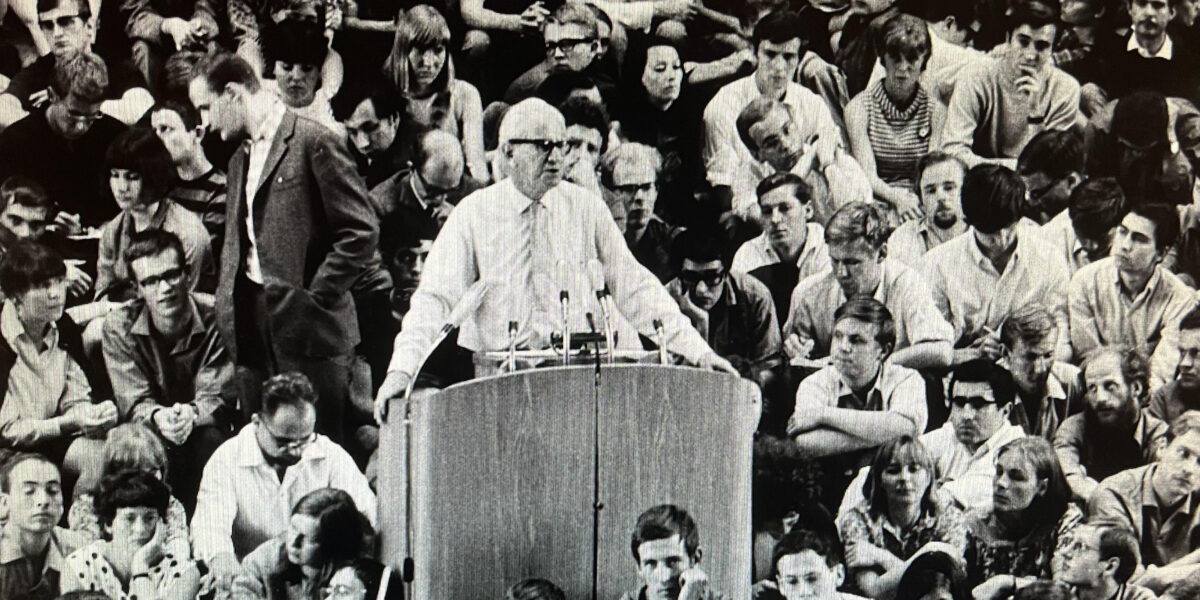
In 1953, the US Central Intelligence Agency (CIA) launched MK Ultra – a secret experimentation programme exploring the effects of LSD on the mind. The project sought to understand if the substance could manipulate individual mental states and alter brain function.
From looking at using the drug for interrogations to experimenting with its role in telepathy and warfare, MK Ultra is famous for its secrecy and questionable ethics. The mysterious programme was wiped from public history when it came screeching to a halt in 1964.
More recently, the US government released previously hidden documents revealing some of the experiments that took place under MK Ultra – spawning a number of books, movies, and documentaries on the topic.
MK Ultra is the first thing that comes to mind for many when we think about the substance’s political history, yet the UK government also took part in multiple experiments with the substance.
While much of this UK history is still hidden, Roberts’ revised Albion Dreaming delves into updated details of these government LSD experiments.
Roberts says, “When the secret services tried to use it in the 50s, and then the Ministry of Defence (MOD) used it in the 60s, they were trying to weaponise it, and obviously failed – because you can’t weaponise a drug that isn’t really controllable.”
Roberts lets us peep through the window at LSD experiments that took place in the 50s and 60s, looking at Porton Down, where the War Office’s research into the substance for chemical warfare took place, sanctioned by the Cabinet’s Defence Committee. These experiments included Operation Moneybags (Operation Small Change) and Operation Recount.
Beyond early military use of LSD and exploring its use in psychotherapy, Albion Dreaming lays out Britain’s cultural history with the substance, from its impact on music and art to its mass production in secret Welsh LSD labs.
Roberts says that it is hard to quantify LSD’s impact on culture and society, but that the interest people have today in philosophies such as veganism, vegetarianism, and yoga, and in bodywork practices and breathwork, all started with LSD.
“LSD made people much more aware of their environment and of their bodies,” says Roberts.
“If you wanted to enjoy yourself on psychedelics, it was good to have a ‘pure’ body, by eating well and making sure that you’re exercising properly, and so forth.
“Yoga played a big part in that, and the whole foods movement came out of psychedelic use in the late 60s, and then, of course, it had a massive impact on fashion.
“Fashion changed dramatically once acid hit the streets and music – we wouldn’t have much of the music we do today were it not for the influence of psychedelics on people like the Beatles.”
The Beatles may be the perfect example of the obvious shifts induced by psychedelics on creative cultural output – the drastic change seen in the Beatles’ music after 1965, once Revolver, Sgt Pepper’s and the White Album came out, was crystal clear.
Albion Dreaming also highlights lesser-known individuals from the UK who had a huge impact on LSD in the world.
“The most interesting finding I came across was in the very early days of LSD,” explains Roberts.
“I’d heard about this man called Michael Hollingshead. He was like a mercurial figure in the history of psychedelics in the world.
“When I started looking into him, it became apparent that he was much more of an important figure than I’d ever guessed, because he was the person – a man from Darlington, from a lower working class background – who got interested in LSD in the late 50s and then turned up in New York in the early 60s, and decided to make it his mission to get some LSD.
“He had a doctor friend who ordered some, and he got a gram – which is a phenomenal amount – and split it up into a jar into manageable doses, and then he went around turning people on.
“He was the man who turned Timothy Leary onto LSD. Without Michael Hollingshead, Leary may not have been who he was and the way he was. I found that absolutely fascinating.”
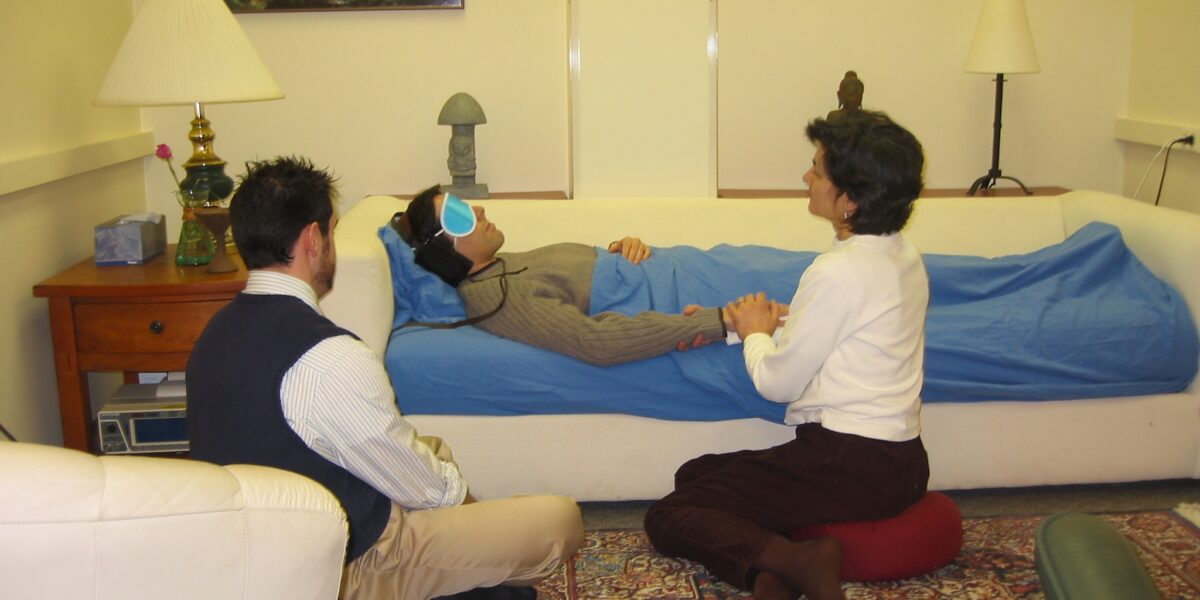
The current developments around LSD and other psychedelics like psilocybin are seeing increasing research and access to the compounds in a medical context, and there are high hopes around their potential in a number of different areas of healthcare, from mental health to palliative care and beyond.
This would require legal rescheduling, however, Roberts says LSD may ultimately not be stripped of its illegal status due to its immense impact on consciousness – highlighting how history already shows us why this may never be the case.
“A lot of people are hoping that there will be some form of decriminalization at some point because of the way things are going medically with psychedelics,” says Roberts.
“Now, I think the establishment is against people being able to change their consciousness at will, with the drug that they want – so that they will never make it anything less than a Class A drug.
“On the other hand, it won’t stop people using it, because people will always seek it out.
“Whilst I would hope that the government sees sense in the end, I very much doubt it, because to allow people to use it openly like that, would, I think, really threaten them.
“In the 1970s the establishment destroyed the free festival movement, because it was underpinned by LSD. They destroyed the LSD factories that were fueling free festivals in the Operation Julie initiative.
“LSD is a very powerful drug, and taken in the wrong circumstances, with the wrong mindset, it can have quite damaging effects.
“Sometimes people don’t take the principles of set and setting seriously. To me, that is the Ground Zero of what you need to know about before you take LSD. You need to have your head in a good space, and you need to have your physical environment set up for the experience that you want.”
Roberts says he has now begun working on research for a book about clandestine LSD laboratories in Britain.
“Since 1965 there have been at least 20 clandestine LSD laboratories that have supplied much of the world with LSD – so I’m digging deep into that,” says Roberts.
“There’s so much going on with psychedelics. At one time, there were only one or two books a year written and published on psychedelics. Now there’s almost one a week coming out, and the majority of them are about the medical users of it.
“I thought it needed to be rebalanced by bringing this history back, because you can’t really use a substance if you’re not aware of its history.
“With Albion Dreaming, I hope it alerts people to the past and how it’s been used in the past, what worked and what didn’t work – and also I hope it emphasises the fact that the medical side of using psychedelics is just one, tiny aspect of the use of psychedelics.”
Albion Dreaming is a one-of-a-kind exploration into LSD’s hidden history in the UK and a must-read for anyone seeking a deeper understanding of its influence on British culture and society.
Stephanie Price | Community Blogger at Chemical Collective
Stephanie is one of our community bloggers here at Chemical Collective. If you’re interested in joining our blogging team and getting paid to write about subjects you’re passionate about, please reach out to Sam via email at samwoolfe@gmail.com
Welcome to Chemical Collective.
Create an account to earn 200 welcome points.
Already have an account? Sign in
Check out our Community Blog and get involved with the conversation. You will be awarded 50 x ChemCoins for each comment up to a limit of 250 total ChemCoins.
Have you purchased any of our products? Reviews and reports are so important to the community. Share your honest opinion, and we’ll reward you with 50 ChemCoins for each review!
Every time you complete an order with us, you’ll be awarded ChemCoins for each Euro spent.
Welcome to Chemical Collective.
Create an account to earn 200 welcome points.
Already have an account? Sign in
Earn commission every time someone makes a purchase through your link.
When you become an affiliate, you will be allocated a unique link to share with your friends, followers, subscribers, or Aunt Susan.
You can choose to payout the commission earned once per month, or save it up to receive on a rainy day! Commission earned is 5% of the total order value per referral.
Contact us to join the Chemical Collective family and become an affiliate.
share your toughts
Join the Conversation.
I don’t believe Andy mentioned LSD having an illegal status, such a misunderstanding would be fatal to writing about our relationship with drugs, some parts of this article stray off the benchmark standard of understanding drugs from a human centric perspective
LSD .. encouraging veganism ….what sort of nonsense are you spouting now Andrew ?