Welcome to
Chemical Collective

Are you 18 or older?

Please confirm that your are 18 years of age or older.

You are not allowed to access the page.

info-icon €100 for domestic (NL, CZ, DE) €125 for the rest of the EU, excluding stealth shipping

Free shipping over €50 & free tracked shipping over €100

Friendly customer service available 9-5pm Monday to Friday

Free shipping over €50 & free tracked shipping over €100

Friendly customer service available 9-5pm Monday to Friday

Your cart is empty

The Science of Lucid Dreaming – PART ONE: The Role of Classic Psychedelics

david-blackbourn

By David Blackbourn

shutterstock 320810267
in this article
  • Where, When, and Why?
  • Science and Subjective Experience
  • Can Psychedelics Enhance Lucid Dreaming?
  • Therapeutic Applications
  • Conclusion
david-blackbourn

By David Blackbourn

Disclaimer: The views and opinions expressed in this article are those of the authors and do not necessarily reflect the official policy or position of Chemical Collective or any associated parties.

Firmly press together your thumb and forefinger. Feel the pressure. The resistance. Solid. Reality. It’s a simple interaction, confirmation of your physicality. Now, imagine trying that again exactly the same, except this time, rather than feeling the expected sensation of thumb and forefinger pressing together, they glide effortlessly through one another as if they aren’t there. The solidity of your being disappears in an instant, immediately replaced by a sudden realisation: you’re in a dream. This exact moment is the “reality test” that unlocks the door to the mysterious phenomenon known as “lucid dreaming”, the conscious realisation that you are in a dream, while it is still happening. This allows the passive observer to become the creator. The architect of their own inner universe.

But what if you again attempt to test the solidity of your reality, but this time in what you previously understood to be the waking world? What if a wave of doubt washes over you because the concepts of “thumb” and “forefinger” themselves are beginning to dissolve? What if even the concept of “you” as an individual is beginning to disappear and fragment? The world folds and twists itself into a mess of wild, fractal geometry. The distinction between you and the environment you previously knew was “around” you, wobbles, then frays. This is the world, your world, opened up and made ephemeral, then shattered by psychedelics. Put simply, when you consume high-dose psychedelics, you experience, to varying degrees, a loss of your ordinary sense of self.

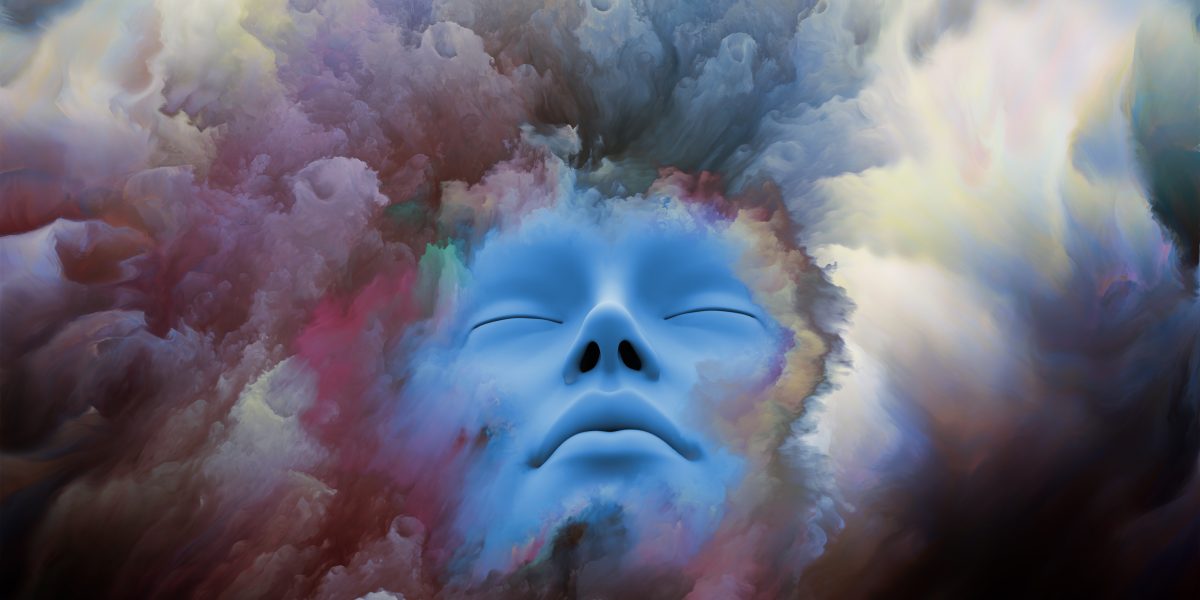
This is an incredibly vulnerable position in which to find yourself. It can bring about a state of blissful euphoria, and oneness with the universe, or a profound terror as your existence crumbles, initially before your eyes, then with terrifying unity. This is a process that researchers have termed “ego dissolution”. The parallels between these two experiences are striking. Common features between psychedelic states and dreams include perception, mental imagery, emotion activation, fear memory extinction, and loss of sense of self and body. The commonalities between psychedelic substances, such as psilocybin, lysergic acid diethylamide (LSD), and dimethyltryptamine (DMT), and sleep are an emerging area, but their impact remains relatively unexplored. On the one hand, we have lucid dreaming, a natural phenomenon, and on the other, the psychedelic experience, a chemically induced state. For hundreds, perhaps thousands of years, mystics, medicine men, artists, and psychonauts have explored these encounters with the fragility of conscious perception. But is this seeming similarity just happenstance, or does it allow us a window into the depths of our selves, the very wiring of the human mind?

What is known as “the psychedelic renaissance”, a resurgence of research into the therapeutic potential of these well-known (but still far from understood) “classical” psychedelics, is currently underway. Concurrently, the scientific investigation of lucid dreaming has shifted from the fringes of New Age and psychedelic culture into the academic sphere. The broad overlap between dreaming and psychedelic states supports the idea that psychedelics acutely induce dreamlike subjective experiences.

This article will explore the overlap between these two profound states, assessing their similarities, differences, potential applications, and what they can tell us about ourselves. Before we dive into the depths of neuroimaging studies and how psychedelic drugs might themselves influence the areas of the brain responsible for lucid dreaming, let’s break this down and get a little historical context for both of these powerfully influential realms of consciousness.

Where, When, and Why?

The history of lucid dreaming stretches way further back than its modern conception in the 1980s. References to conscious dream states appear in some of the world’s most ancient texts. The first available textual evidence of lucid dreaming dates back to before 1000 BCE, from the Upanishads, the Hindu oral tradition, which contains spiritual lessons, philosophies, and proverbs. The Vigyan Bhairav Tantra is another example of an ancient Hindu text that describes how best to harness conscious awareness within the dream state. Indian influence spread to the mountains of Tibet. The shamanic, animistic traditions of the Bönpo relied on magic to tackle evil spirits. Lucid dreaming is an integral element of their meditations and has been used for over 12000 years.

The intermingling of the shamanic tradition with Buddhism in the Tibetan Book of the Dead, a text which has become widely recognised and influential in the modern psychedelic community, dates back (conservatively) to the 8th century. The partial translation of sections of the Tibetan Book of the Dead, in 1935 by Walter Y. Evans-Wentz, was the first time a Western audience learned of these ancient practices. Initially, lucid dreaming as a concept was confined to areas of interest or study, such as occultism and history, later expanding into the 20th century, via philosophy and into psychology.

Further evidence of lucid dreaming practices has been uncovered throughout the ancient world. Dreams held a privileged position in Greek philosophy. The early Greek philosophers Socrates, Plato, and Aristotle (350 BC) all held a deep fascination with our nightly unconscious experiences. There is evidence of Aristotle’s interest in this area his text, On Dreams, he says, “when one is asleep, there is something in consciousness which tells us that what presents itself is but a dream.”

Lucid dreaming may have played a role in the early development of Islam too. Mohammed’s Layat al-Miraj is a literal account of a dream encounter with the spirit world. The 12th-century Spanish Sufi (a term for a Muslim mystic), Ibn al-Arabi, intimated that cultivating the ability to control your thoughts while immersed in the dreamworld was an integral skill for aspiring mystics to learn. Several hundred years later, another Sufi mystic, Shamsoddin Lahiji, himself recorded a separate, seemingly lucid dream experience, which inspired visions of the divine presence. It is worth bearing in mind, however, that due to cultural differences and issues with differentiating actual, unconscious dream states, or conscious spiritual visions in historical accounts, making conclusions is tricky. So, it is uncertain whether these experiences originated from dreams. They are certainly lucid, though!

Despite these widespread cultural roots, the rise of Judeo-Christian religions across the world stifled the concept of lucid dreaming. Theologians described the visions, or higher truths, experienced in dreams as ephemeral and often false. In the Middle Ages, Italian philosopher Thomas Aquinas reflects this common Christian opinion, even fear of, dreams: “Sometimes…it is due to the action of the demons that certain images appear to persons in their sleep.” This lack of coherent interest in or study of lucid dreaming throughout this period mirrors the lack of cultural use of psychedelics – another interesting parallel.

By the 17th Century, though, lucid dreams surface again in literature. Multiple philosophers and prominent thinkers, such as Thomas Reid, reported conscious dream states. Even René Descartes, well-known for his phrase: “cogito ergo sum” (“I think, therefore I am”), and widely regarded as the father of the modern scientific method, wrote about his experiences of lucid dreaming in a private journal. This philosophical and scientific fascination with dreams continues into the modern day, with the parallels to the psychedelic experience thrown ever more heavily into light.

Perhaps, though, the concept of “lucid” dreaming as separate from “ordinary” dreams is more a result of a Western culture still enmeshed culturally in Judeo-Christian ideals. Maybe it is how we think about dreaming itself that makes us unconscious in that state, detached from reality, as opposed to experiencing it from an alternate aspect. Are psychedelics’ boundary-dissolving effects a shortcut to at least somewhat of a lucid dream state, or are they entirely separate? Should they even be considered as such? The link between the two appears intuitive, and as we have discussed, is far from a modern observation. New research allows us to move beyond mere metaphor and begin structured analysis of this relationship, so we can understand the scientific underpinning of these parallels.


Science and Subjective Experience

The analysis of the differences and similarities between the psychedelic experience and lucid dreams operates on two levels:

Phenomenological – your individual experience. Phenomenology is the study of subjectivity.

Neurological – the actual effects on the brain and body; scientific investigation of the underlying brain function.

Subjectively, both states promote a profound alteration in the experience of the self, or “I”. Usually, you experience yourself as a coherent narrative with a sense of continuity and continual forward progression. You experience yourself as an individual, an entity, separate from what we deem to be the “outside” world. During a lucid dream, this sense of coherence and separation ceases. You become aware of your awareness, observing the dream’s narrative while simultaneously an intrinsic part of it. The psychedelic experience parallels this, but in perhaps an even more extreme fashion. The narrative ceases its forward march and warps and stretches, and the ego can begin to dissolve. At high enough doses, it disappears entirely, and your separation from the environment and the linear progression of time is simply gone. The concept itself evaporates; everything that is/was/will be simultaneously exists.
Ordinary consciousness, as we experience it, is mainly governed by external sensory data, sight, sound, touch, smell, etc., which the brain interprets to build a functional model of us and our surroundings. In both dreaming and intense psychedelic states, the activity of the brain becomes solely focused on the inner world. Science calls this an “endogenous” experience, a world constructed by memory and emotion, rather than external, sensory input.

Research has long known that classic psychedelics induce heightened activity in the visual cortex, which explains the vivid imagery, or “visuals”, which define the experience. This is very much analogous to the experience of REM (deep) sleep, where the most intense dreaming occurs. The difference here is the level of arousal. Psychedelics occur in a high state of arousal, often with the eyes open. External stimulus still plays a huge role in the experience. Dreams, on the other hand, occur in a state of very low arousal, while the body is resting and external stimulus is largely muted.

As far back as 1965, scientists have investigated parallels between sleep, dreams, and psychedelics. William J. Green concluded that while LSD emulates some of the cortical effects of sleep, more often than not, it promotes more of an alert, wakefulness.

New and groundbreaking neuroimaging studies from pioneering researchers like Robin Carhart-Harris of Imperial College London have shown that psychedelics dramatically decrease the activity in what is known as the Default Mode Network (DMN). The DMN is a collection of regions of the brain that are most active when we are engaged in self-referential thinking – thinking about ourselves, others, the past, and the future. Essentially, it is the brain-image representation of the ego. This is what is known as the “Entropic Brain” hypothesis. Entropy is a term used to measure the uncertainty about the state of a system. This effect on the DMN is not unique to psychedelics. Oddly enough, and seemingly conversely to William J. Green’s conclusions, REM sleep mirrors these effects on the DMN. Waking consciousness is governed by the DMN, but in a dream state, its influence is drastically reduced. This is arguably the most tangible link between psychedelics and dreaming. The DMN is the mechanism that creates the subjective experience of ego-dissolution, allowing for the emergence of internally generated worlds.

Beyond these seemingly parallel effects on the DMN, there is also some evidence that both states promote increased cortical activity in the gamma frequency range. Gamma waves are thought to be integral to binding scattered neural processes into our conscious experience. This change in the frequency of gamma waves in the brain may correlate with the intensity of an experience. Basically, it seems that both psychedelics and the dream state alter conscious experience by disorganising brain activity.

Can Psychedelics Enhance Lucid Dreaming?

While the similarities in both brain activity and subjective experience are convincing, this naturally leads to another, more practical question: Can the use of psychedelics promote, or alter the frequency or intensity of lucid dreams? The fact that there is such a raft of historical evidence of various substances being used to access dream states provides some anecdotal evidence that psychedelics can influence and promote our ability to access this lucid unconsciousness. Actual, scientifically backed evidence, however, is extremely limited. Some recent studies into psilocybin have revealed that it appears to actually reduce the time spent in REM sleep, as well as delay the arrival of REM sleep. While initially this might appear to counter the idea that psychedelics could increase the frequency of lucid dreaming, there are perhaps delayed catalysing effects. As a result of the temporary dulling, or lessening of REM sleep, the brain can experience a rebound effect, which can result in a temporary increase in the intensity of REM. So, we can somewhat confidently conclude that psychedelics will definitely have an effect on lucid dreaming, but we don’t really have the data yet to conclude that they will actively promote it.

Therapeutic Applications

Psychedelics and lucid dreams have a lot of potential in a therapeutic context, providing the means to explore and consciously engage with internal experiences. Lucid dreaming is used to tackle chronic nightmares, as well as being applied with some seeming success to combating the symptoms of PTSD (post-traumatic stress disorder).  PTSD UK has recently reported an exciting, peer-reviewed study from the Institute of Noetic Sciences. The study involved participants suffering from severe PTSD practising lucid dreaming for 7 days and self-reporting their experiences. 85% of participants were no longer classified as experiencing the symptoms of PTSD by the conclusion of the week.

There is also growing evidence that psychedelic-assisted psychotherapy for PTSD, utilising substances such as MDMA, ketamine, psilocybin, and LSD, is extremely effective. Once again, though, as with all research related to psychedelics, conclusions are hard to make with any certainty. Due to the widespread illegality of these substances, research is still in its infancy. While evidence from studies conducted in hundreds of participants suggests that psychedelic-assisted psychotherapy may be effective, there is not yet enough information from large clinical trials to make any categorical conclusions.

Conclusion

The intuitive connection between lucid dreaming and the psychedelic experience is far more than mere metaphor. We have moved from ancient anecdotal evidence from Greek and Hindu texts to concrete neuroimaging studies. The analogous effects on the default mode network – the disorganisation of brain processes – provide a tangible scientific grounding for the subjective experience of ego-dissolution. This shared suppression of the self allows the creation of intense visions and internal worlds completely detached from everyday reality. It does not appear to be a merely coincidental link; the parallels are rooted in the fundamental wiring of the human brain. This shared mechanism of action also opens up the myriad therapeutic possibilities of these states of mind.

The psychedelic renaissance is still in its infancy, and the science of lucid dreaming has only recently emerged from the realm of New Age pseudoscience. While the links between these two states are compelling and somehow self-evident, research is limited. Further study is required to navigate the complexities of these experiences, subjectively and scientifically, but they hold the promise of unlocking not only powerful new treatments but also offering us a deeper understanding of consciousness itself.

In PART TWO, we will explore “oneirogens”, substances that are not necessarily psychedelic, but which humanity has employed for millennia to promote lucid dream states and powerful, spiritual visions.

David Blackbourn | Community Blogger at Chemical Collective

David is one of our community bloggers here at Chemical Collective. If you’re interested in joining our blogging team and getting paid to write about subjects you’re passionate about, please reach out to Sam via email at samwoolfe@gmail.com

share your toughts

Join the Conversation.

0 Comments
Inline Feedbacks
View all comments

Related articles

Our Products

Related Products

1V-LSD 150mcg Blotters
1V-LSD 150mcg Blotters From 22.00
(143)
1cP-LSD 100mcg Blotters
1cP-LSD 100mcg Blotters From 18.00
(137)
Tryptamine Mix and Match Pack (4 x 0.1g)
Tryptamine Mix and Match Pack (4 x 0.1g) 65.00
(1)
1V-LSD 10mcg Micro Pellets
1V-LSD 10mcg Micro Pellets From 15.00
(43)
2-FDCK HCL
2-FDCK HCL From 12.00
(82)
1V-LSD 225mcg Art Design Blotters
1V-LSD 225mcg Art Design Blotters From 35.00
(62)
1S-LSD 150mcg Blotters
1S-LSD 150mcg Blotters From 29.00
(16)
1cP-LSD 150mcg Art Design Blotters
1cP-LSD 150mcg Art Design Blotters From 25.00
(74)
1V-LSD 225mcg Pellets
1V-LSD 225mcg Pellets From 35.00
(26)
1D-LSD 225mcg Pellets (1T-LSD)

SALE! -15%

1D-LSD 225mcg Pellets (1T-LSD) From Original price was: €42.00.Current price is: €35.70.
(13)
1cP-LSD 10mcg Micro Pellets
1cP-LSD 10mcg Micro Pellets From 15.00
(23)
5-MeO-DMT Freebase
5-MeO-DMT Freebase From 23.95
(36)
O-PCE HCL
O-PCE HCL From 17.50
(25)
1cP-LSD 20mcg Micro Blotters
1cP-LSD 20mcg Micro Blotters From 18.00
(27)
4-HO-MET Fumarate
4-HO-MET Fumarate From 19.50
(26)
rewards-icon
popup-logo

Reward program

popup-close
  • Earn
  • Affiliates