in this article
- Midsommar
- Black Mirror: Bandersnatch
- Fear and Loathing in Las Vegas
- Taking Woodstock
- Enter the Void
- Across the Universe
- Conclusion
Are you 18 or older?
Please confirm that your are 18 years of age or older.
You are not allowed to access the page.
Disclaimer: The views and opinions expressed in this article are those of the authors and do not necessarily reflect the official policy or position of the Chemical Collective or any associated parties.
There is nothing at all on earth like psychedelics. Whether it’s the feeling of melting into the ground and becoming one with nature that you feel on mushrooms, the soul-opening thought loops of LSD, or mind-melting conversations with DMT elves, these experiences are truly something you have to feel to understand. However, not everybody can or will try them in this lifetime, so how do we share the trips with others? How can we even begin to explain?
Enter cinema. While film is one of the newest art forms available, it has fast become the most explosively popular and widespread form of telling stories on the planet. And, while some may prefer books or paintings or music, it’s hard to deny that movies are the easiest way to reach a modern audience.
Psychedelic use has been part of the human experience for tens of thousands of years, but it wasn’t until the evolution of technology over the last century that we could begin using film and TV to portray the effects of these trips to others. Attempting to capture the visuals, sounds, thought patterns, and overall headspace of psychedelics is no easy feat – so, just how accurate have we managed to be?
We’ve likely all seen the bad portrayals of psychedelics on film, which often depict unrealistic hallucinations, energy more aligned with methamphetamines, and other over-the-top side effects that are more for humor than accuracy, but some directors take the time to do it right.
Here are a few films (and TV show shoutouts) that have managed to rise above the rest.
Midsommar (2019) is one of the standout horror films of the last decade and some of director Ari Aster’s best work to date. The whole movie is psychedelic in nature, with cryptic cult leaders, bizarre ceremonies, and subtle themes woven throughout the story, but one of the standout moments in the film comes near the beginning.
The main character, Dani (Florence Pugh), and her American entourage arrive in a sleepy Swedish town for a midsummer gathering and find themselves in a sunny open field with other travelers (and cult members). Their Swedish friend offers them all mushrooms, and what comes next is one of the most incredible cinematic psychedelic portrayals ever captured. From the melting tree bark to Dani’s creeping fear that others are laughing at her, this film nails it.
Psychedelics are featured again toward the end of the film, with a much darker connotation, but this particular scene has been referenced again and again since Midsommar’s debut as a lesson on how to convey trips with accuracy.
Bandersnatch (2018) is an episode of the iconic British television show Black Mirror rather than a standalone film, but due to Black Mirror’s anthology style, it still tells a contained and complete story. It also pioneered an experimental phase for Netflix, as viewers of Bandersnatch could make decisions for the characters while they watched and directly influence the overall plot.
In Bandersnatch, programmer Stefan (Fionn Whitehead) works with writer Colin (Will Poulter) to turn Colin’s novel into a video game. The plot has many dark twists and turns, with various endings depending on the viewer’s choices. In the acid trip scene, Stefan and Colin embark on a psychedelic journey together that beautifully portrays the effects of LSD. The shifting colors, music, and trippy visuals that Stefan experiences all combine to tell a story through sight and sound. Stefan listens as Colin rambles about life, death, and reality – who hasn’t heard a similar monologue while tripping with friends?
Unfortunately, Bandersnatch is no longer on Netflix, but it’s still available in other corners of the internet if you want to see the full story. It asks a question that many of us have pondered while under the influence of psychedelics: how much control do we really have over our reality?
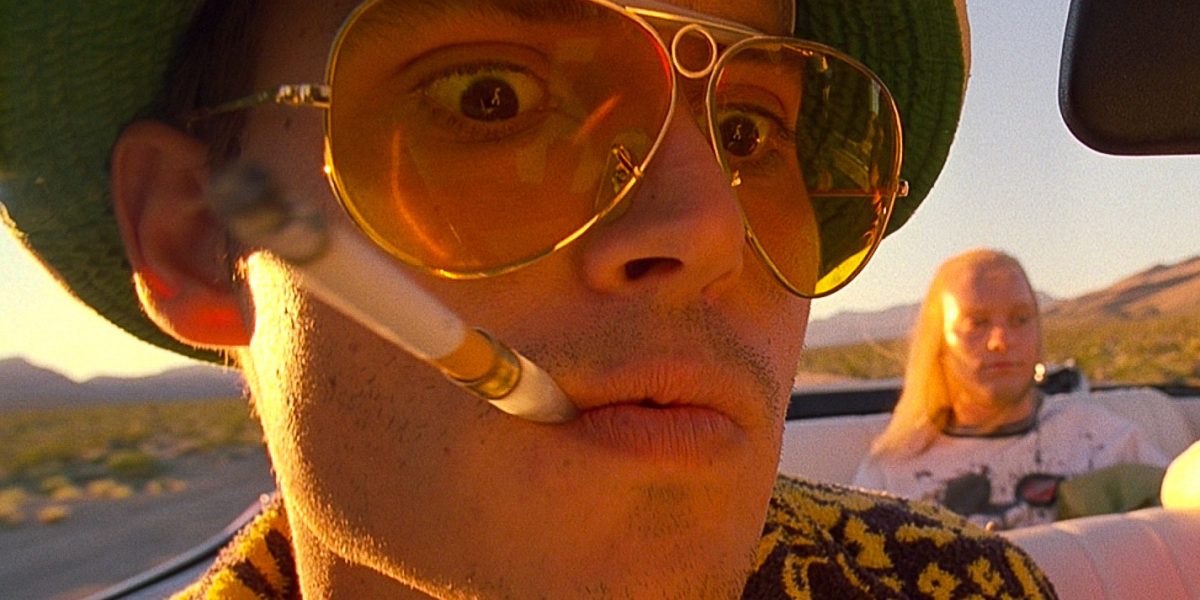
Fear and Loathing in Las Vegas (1998) is one of the most popular drug-based movies of all time, and for good reason. Based on the book written by Hunter S. Thompson about his real-life experiences in Las Vegas, it’s a fast-paced tale filled with wild characters and nearly every kind of drug trip imaginable (including the fictional “trip” of adrenochrome).
While in Vegas, journalist Raoul Duke (Johnny Depp) and Dr. Gonzo (Benicio del Toro) consume a cocktail of substances, trashing multiple hotel rooms and ruminating on the American dream and the inner workings of human consciousness. There are several scenes from the movie that have etched their mark into pop culture, but one particular moment made an extra impression on psychedelic enthusiasts.
In it, Duke and Dr. Gonzo are attempting to check into their first hotel of the weekend – all while peaking on several hits of acid. Duke struggles to hold it together, getting lost in the visuals on the carpet and the various people in the casino bar. The use of camera angles, color, mirrors, a cacophony of noises, and Depp’s masterful acting captures the intensity of tripping too hard in public so well that viewers can truly understand the anxiety Duke is experiencing in the moment.
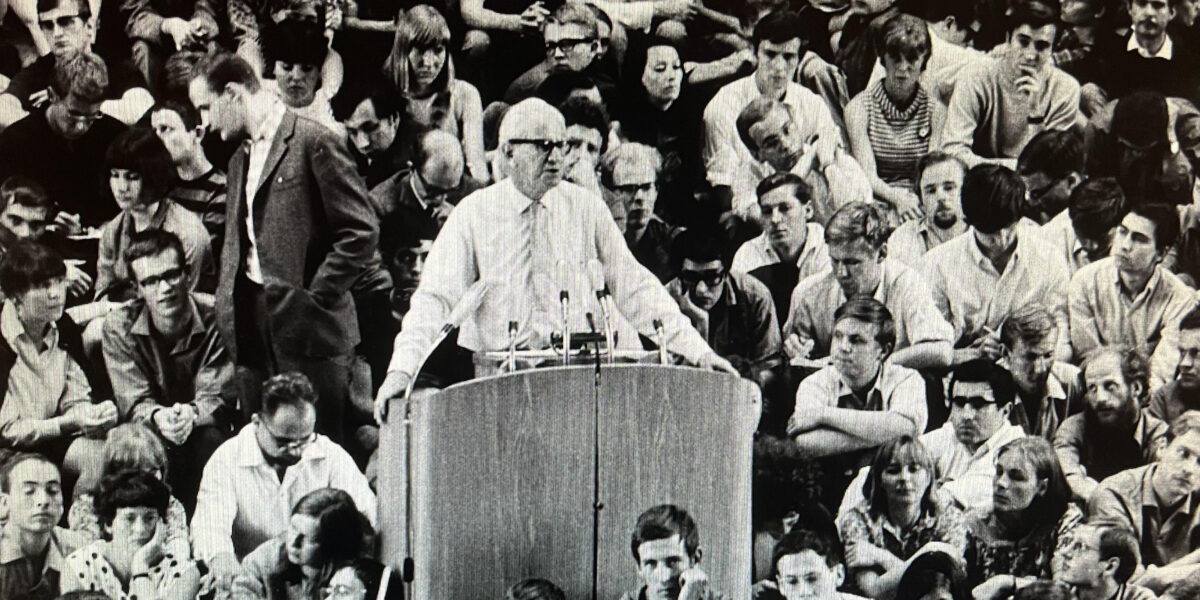
The Woodstock music festival in 1969 defined a pivotal point in counterculture for hippies around the world, bringing psychedelic use into the mainstream and setting a foundation for every other music festival that followed. Taking Woodstock (2009) tells the story of Elliott Tiber, who helped secure the grounds for the event and was instrumental in making it happen.
Opinions are divided on whether or not the movie is actually good, but almost everyone agrees that the acid scene is a near-perfect representation of tripping.
At a turning point in the film, the main character, Tiber, finds himself in the back of a cozy hippie van with two friends while he doses for the first time. We see the come-up through his eyes, watching as the van transforms out of the darkness into a colorful, breathing atmosphere. They step out, joining the sea of people dancing and moving as one, together experiencing all the wonder of a good trip at a festival.
Enter the Void (2009) follows the journey of a drug dealer in Tokyo as he embarks on a psychedelic trip through both his lived life and the afterlife. The entire film is a strange, thought-provoking experience that asks questions about death, resurrection, and the very purpose of having a soul, and it’s packed with hidden meanings to uncover each time you watch it.
Already a notable movie on its own, it’s stayed relevant through the years due to one iconic scene, which depicts the main character smoking crystalline DMT from a pipe. The next few minutes are a swirling, surreal, and extended look at the intricacy of DMT visuals. Both eerie and beautiful, this scene has been called the most accurate cinematic depiction of DMT ever done. It’s nearly impossible to capture the feeling of leaving your body behind and entering another realm, but the director uses music, camera motion, and graphics to get as close as possible.
Across the Universe (2007), also known as the “Beatles musical,” follows a colorful cast through the Vietnam War era as they tackle love, death, careers, and growing up. It’s a love letter to the 1960s, showing both the light and dark sides of an era that would change music, politics, and popular culture forever.
The music of the Beatles is a core component of this film, and it follows their own sound evolution as the plot progresses. “I Am the Walrus” marked a foray into more experimental tracks when the Beatles themselves began experimenting with psychedelics, so the characters in the movie follow suit. As Bono begins singing, they take acid at a party. They soon find themselves on the infamous Further bus, getting lost in bright colors and visuals as they release themselves from the stressors of New York City.
While the filters and colors used to depict tripping are more over-the-top than what one would actually experience, Across the Universe still captures the youthful feelings of interconnectedness and freedom when trying acid for the first time.
https://www.youtube.com/watch?v=I_m7SRZ-Ix4&list=RDI_m7SRZ-Ix4&start_radio=1
Countless artists, whether they be musicians, filmmakers, actors, painters, or writers, have found inspiration through psychedelic trips over the years. Trip experiences are personal, yet uniting; scary, yet beautiful; and complex, yet shockingly simple at their core. Trying to capture it is like harnessing lightning in a bottle, but it hasn’t stopped many of these artists from giving it a go. Fortunately, some of them have found success.
There are many, many more incredible movies and TV shows that pay homage to the beauty (and darkness) of psychedelics and other drugs – Requiem for a Dream, Easy Rider, Have a Good Trip, and A Field in England, to name just a few. An even broader amount of films and TV shows are psychedelic in nature, like Adventure Time, The Midnight Gospel, or Adult Swim’s Off the Air series on YouTube. There is something for every type of mind traveler, no matter where you’re from or what you use psychedelics for.
Whether you watch psychedelic movies while tripping yourself or cue them up to try and imagine what it’s like, there is no denying that film has allowed these substances to reach a far broader audience than they were able to do before. Every person who has helped create these scenes – from the camera operators, to the sound engineers, to the visual effects artists, to the actors themselves – has instilled a little bit of their own magic into it, allowing the audience to share in the trip as one. And that, truly, is the most psychedelic element of all.
Emily Mullins | Community Blogger at Chemical Collective
Emily is one of our community bloggers here at Chemical Collective. If you’re interested in joining our blogging team and getting paid to write about subjects you’re passionate about, please reach out to Sam via email at samwoolfe@gmail.com
Welcome to Chemical Collective.
Create an account to earn 200 welcome points.
Already have an account? Sign in
Check out our Community Blog and get involved with the conversation. You will be awarded 50 x ChemCoins for each comment up to a limit of 250 total ChemCoins.
Have you purchased any of our products? Reviews and reports are so important to the community. Share your honest opinion, and we’ll reward you with 50 ChemCoins for each review!
Every time you complete an order with us, you’ll be awarded ChemCoins for each Euro spent.
Welcome to Chemical Collective.
Create an account to earn 200 welcome points.
Already have an account? Sign in
Earn commission every time someone makes a purchase through your link.
When you become an affiliate, you will be allocated a unique link to share with your friends, followers, subscribers, or Aunt Susan.
You can choose to payout the commission earned once per month, or save it up to receive on a rainy day! Commission earned is 5% of the total order value per referral.
Contact us to join the Chemical Collective family and become an affiliate.
share your toughts
Join the Conversation.