Welcome to
Chemical Collective

Are you 18 or older?

Please confirm that your are 18 years of age or older.

You are not allowed to access the page.

info-icon €100 for domestic (NL, CZ, DE) €125 for the rest of the EU, excluding stealth shipping

Free shipping over €50 & free tracked shipping over €100

Friendly customer service available 9-5pm Monday to Friday

Free shipping over €50 & free tracked shipping over €100

Friendly customer service available 9-5pm Monday to Friday

Your cart is empty

How Psychedelics Disrupt Our Sense of Knowing

annabelle-abraham

By Annabelle Abraham

shutterstock 460940179
in this article
  • Here’s Tom with the Weather
  • Awareness of Ignorance is Bliss
annabelle-abraham

By Annabelle Abraham

Disclaimer: The views and opinions expressed in this article are those of the authors and do not necessarily reflect the official policy or position of Chemical Collective or any associated parties.

Remember that moment in childhood when you discovered that the tooth fairy (or Santa or any other myth generated by your culture) wasn’t real? That moment was probably your first ontological shock. Consequently, you realized that the gift you received was actually bought by your parents. It was all part of a web of lies created by them and other adults you’ve trusted. What else were they lying about, you might have wondered. Your perception of your parents as the ultimate source of true knowledge cracked – this is epistemic loosening. Maybe you felt humiliated by the exposure of your own naivete, maybe you grieved its loss. “I will never-ever believe anything my parents tell me again!”, you promised yourself.

But of course you did. Growing up, you continued to learn new things, acquiring knowledge from your parents, through formal schooling, the media, and personal experiences. Becoming an adult, you have a feeling that you finally understand the world. You also get to know yourself better, and learn to define and describe yourself with growing confidence: “I’m a night person”, “I’m a visual learner”, or the more advanced: “I’ve learned to accept that I’m not good with numbers”. Then one day, you take a psychedelic, and it looks like this: “Today a young man on acid realized that all matter is merely energy condensed to a slow vibration, that we are all one consciousness experiencing itself subjectively, there is no such thing as death, life is only a dream, and we are the imagination of ourselves. Here’s Tom with the Weather.”

Epistemic loosening and ontological shock are two phenomena that can occur during a psychedelic experience and outlive it. Epistemology is interested in what sorts of knowledge exist, how we know what we know, and what the limitations of knowledge are. During a trip, as the senses ‘capture’ a different reality, one may wonder which representation is ‘correct’. This can raise further doubts about our ability to acquire knowledge through the senses, which is called epistemic loosening.

The philosophical branch of ontology deals with being. It asks metaphysical questions about the nature of reality, what it is made of, and what the most fundamental categories are. For example, to say that mind and matter are separate, or that fundamentally only matter exists, are ontological statements. Frequent examples that can induce an ontological shock are related to experiencing a dissolving of the Self or the breakdown of previous metaphysical beliefs. When that happens, you are left to deal with contradictory worldviews or with the void left after having realized that your perceptions were based on wrong assumptions. Such experiences can generate feelings of disorientation, overwhelm, fear, and existential anxiety, which is why ontological shocks are often framed negatively, especially when they outlast the psychedelic experience.

Here’s Tom with the Weather

Now let’s go back to the famous Bill Hicks joke and the tooth fairy. As far out as the insights in the joke may be, Hicks describes it as a positive experience, as we can learn from his introduction: “How about a positive LSD story? Wouldn’t that be news-worthy just once?” And the tooth fairy episode? Both of them can be characterized as positive, funny stories about learning and growing up. Then why are epistemic and ontological difficulties associated with psychedelics framed in a story of shock, challenge, and fear, even when the learning is recognized?

It seems to me that part of it has to do with our expectations. In a way, we want the full Bill Hicks experience. We want our minds to explode with big insights and change our perceptions (pun intended). But we also expect to be able to hop to Tom’s weather forecast instantly and seamlessly, as if we were scrolling down a feed. But if the snowglobe of our mind is shaken, shouldn’t we expect to get even a little bit dizzy? Rather than considering uncertainty, effort, and temporary discomfort as an integral part of the learning process, we isolate them and mark them as negative, challenging, or difficult. If we could only skip that part… But learning to hold uncertainty and move through difficulty may just be the lesson.

Awareness of Ignorance is Bliss

The overwhelm of epistemic and ontological shock might push people to quickly adopt a new overarching belief to replace the one that just crumbled. Filling up the void can make us feel better, as order is restored and we regain a sense of control. In my case, that never happened, and the loss of certainty is perhaps the greatest psychedelic gift I’ve received.

When we think of wisemen and sages, we often associate them with scholarship, with the accumulation of knowledge. In Daoism, the spiritual road is one of unlearning. Recognizing your own ignorance is the first necessary step, which is considered a higher sort of knowledge. In the words of the Chinese philosopher Lao Tzu: “To know that you do not know is the best. To not know that you {do not} know is a defect.”

Like a psychedelic trip, experiencing the Dao is considered ineffable, and by applying words to describe it, we only get further away from it. Striving for cognitive understanding, we cling to words, concepts, and theories, but spiritual experiences cannot be fathomed by the intellect and cannot be faithfully expressed in words. Daoism goes further and applies the same inability to conceive the world and translate experience into words to everyday life. As the Chinese philosopher Zhuangzi puts it: “the stupid believe they are awake, busily and brightly assuming they understand things, calling this man ruler, that one herdsman”. We keep slicing the universe (and the self) into categories, and make distinctions and valuations based on our limited and partial knowledge, and knowledge that we attribute to our ancestors. We constantly mistake societal and cultural distinctions for natural ones, and our own subjective judgments for objective truths. When we look at the world, we see it through our self-made categories. This is why we need to unlearn.

In Finding Your Way in Daoism, Marcus Leroy explains that people have an intense need for certainty about everything – from the little things in our daily routines to the meaning of the universe. We need to know that we have things under control, and this need is so dominant that we continuously convince ourselves that we actually do know. To keep that feeling going, we cling to beliefs which reinforce it. Leroy quotes psychologist and Nobel Prize winner Daniel Kahneman, who explains that leaning on false understandings is part of human nature, as contemporary science informs us:

You cannot help dealing with the limited information you have as if it were all there is to know. You build the best possible story from the information available to you, and if it is a good story, you believe it. Paradoxically, it is easier to construct a coherent story when you know little, when there are fewer pieces to fit into the puzzle. Our comforting conviction that the world makes sense rests on a secure foundation: our almost unlimited ability to ignore our ignorance.

When our understanding of the world crumbles following a trip, we feel like we are losing control. The truth is that we never had it. What we are really losing is the illusion of certainty that we have been nurturing for years. This lesson can induce intensely different feelings for different individuals. So rather than labelling knowledge-related experiences as positive, negative, frightening, or existential (more categories, anyone?), we can try to describe them neutrally, highlight the variance in people’s emotional reactions, and discuss expectations. Terence McKenna’s humorous yet serious advice nails it just right:

You see, what the psychedelic is going to do is it’s going to destroy your whole world, your whole conception of your world. And for some people that’s tremendously liberating, they say: ‘wonderful, at last I’m free of it!’ Other people say: ‘My God, now I’m hopelessly mad, I have nothing to cling to, I’ve really done it this time.’ So that’s almost an aesthetic judgement whether you like watching your world shredded before your eyes and made into nonsense. If that makes you feel liberated and secure then you can sign up for this carnival. If that alarms you, you are best to stick to the tried and true. It’s not for people with weak psychic constitution.

Annabelle Abraham | Community Blogger at Chemical Collective

Annabelle is one of our community bloggers here at Chemical Collective. If you’re interested in joining our blogging team and getting paid to write about subjects you’re passionate about, please reach out to Sam via email at samwoolfe@gmail.com


share your toughts

Join the Conversation.

2 Comments
Inline Feedbacks
View all comments
AJ
3 months ago

What you’re describing has been true for me as well. Black and white has been replaced by shades and spectrums. Having a sense of certainty about things made me placid and stagnant. Uncertainty, on the other hand, makes me stop in the moment, reach deep inside of myself and say: “huh. I wonder what I think about this? What do I feel?” I’d say certainty = dissociation and autopilot. While uncertainty = being in the moment.

Pieter
3 months ago

What’s more boring than observing one’s own bubble? For me the only option is to expand that bubble. Shaking foundations might be frightening, but are a sign of growing! In a way that can make fear rewording.

Related articles

Our Products

Related Products

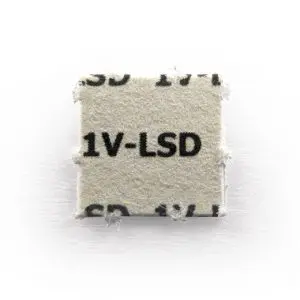
1V-LSD 150mcg Blotters
1V-LSD 150mcg Blotters From 22.00
(143)
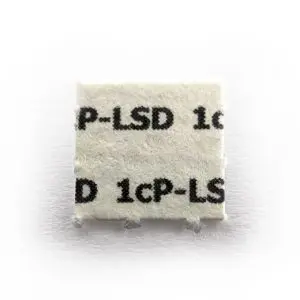
1cP-LSD 100mcg Blotters
1cP-LSD 100mcg Blotters From 18.00
(137)
Tryptamine Mix and Match Pack (4 x 0.1g)
Tryptamine Mix and Match Pack (4 x 0.1g) 65.00
(1)
1V-LSD 10mcg Micro Pellets
1V-LSD 10mcg Micro Pellets From 15.00
(43)
2-FDCK HCL
2-FDCK HCL From 12.00
(82)
1V-LSD 225mcg Art Design Blotters
1V-LSD 225mcg Art Design Blotters From 35.00
(62)
1S-LSD 150mcg Blotters
1S-LSD 150mcg Blotters From 29.00
(16)
1cP-LSD 150mcg Art Design Blotters
1cP-LSD 150mcg Art Design Blotters From 25.00
(74)
1V-LSD 225mcg Pellets
1V-LSD 225mcg Pellets From 35.00
(26)
1D-LSD 225mcg Pellets (1T-LSD)

SALE! -15%

1D-LSD 225mcg Pellets (1T-LSD) From Original price was: €42.00.Current price is: €35.70.
(13)
1cP-LSD 10mcg Micro Pellets
1cP-LSD 10mcg Micro Pellets From 15.00
(23)
5-MeO-DMT Freebase
5-MeO-DMT Freebase From 23.95
(36)
O-PCE HCL
O-PCE HCL From 17.50
(25)
1cP-LSD 20mcg Micro Blotters
1cP-LSD 20mcg Micro Blotters From 18.00
(27)
4-HO-MET Fumarate
4-HO-MET Fumarate From 19.50
(26)
rewards-icon
popup-logo

Reward program

popup-close
  • Earn
  • Affiliates