Welcome to
Chemical Collective

Are you 18 or older?

Please confirm that your are 18 years of age or older.

You are not allowed to access the page.

info-icon €100 for domestic (NL, CZ, DE) €125 for the rest of the EU, excluding stealth shipping

Free shipping over €50 & free tracked shipping over €100

Friendly customer service available 9-5pm Monday to Friday

Free shipping over €50 & free tracked shipping over €100

Friendly customer service available 9-5pm Monday to Friday

Your cart is empty

Tripping in the Material World: A Historical Materialist Analysis of Psychedelia

ed-prideaux

By Ed Prideaux

karl marx 8669662
in this article
  • Historical Materialism and Psychedelic Ideology
  • Psychedelics and Commodity Fetishism
  • Material Questions: Who Makes, Markets, and Profits from Psychedelics?
  • How Social Conditions and Culture Shape the Trip
  • Psychedelics as Tools of Control
  • Psychedelic Capitalism
ed-prideaux

By Ed Prideaux

Disclaimer: The views and opinions expressed in this article are those of the authors and do not necessarily reflect the official policy or position of the Chemical Collective or any associated parties.

There seems to be a common belief among enthusiasts that psychedelics somehow stand outside of ideology: that they cut through cultural noise and show us reality as it really is.

At the same time, it is increasingly recognised that psychedelics operate as ‘non-specific amplifiers’: capable of engendering enormous ranges of experience and insight depending on the context in which they are consumed.

This article will attempt to understand ‘the psychedelic experience’ as a socially conditioned phenomenon. I will survey how psychedelics’ simultaneous flexibility and metaphysical pretence of a ‘truer’ world exist as motors and catalysts for various currents in modern culture.  

We are behooved to such analysis by the strange developments of the last decade. 

In spring 2022, Miami Beach hosted the inaugural Psychedelics Capital Conference, where investors paid nearly $700 to hear Shark Tank’s Kevin O’Leary forecast a psychedelic industry worth “hundreds of billions”. 

By 2025, the global psychedelics market, valued at $4 billion by one analysis platform, is projected to reach $7.75 billion by the early 2030s: a far cry from O’Leary’s hype but still significant. Political figures like Robert F. Kennedy Jr., now Secretary of Health and Human Services under the Make America Healthy Again (MAHA) initiative, have championed psychedelics as alternatives to SSRIs and stimulants, with his surgeon general nominee, Casey Means, calling psilocybin-assisted therapy “one of the most meaningful experiences of life.” 

This convergence of ‘countercultural’ drugs with capitalist ambition and political power raises some questions: How have substances once synonymous with 1960s rebellion been co-opted by elites, from Silicon Valley tech moguls to conservative Trumpians? 

Why are drugs celebrated as liberatory now entangled with systems of control and profit? 

Historical Materialism and Psychedelic Ideology

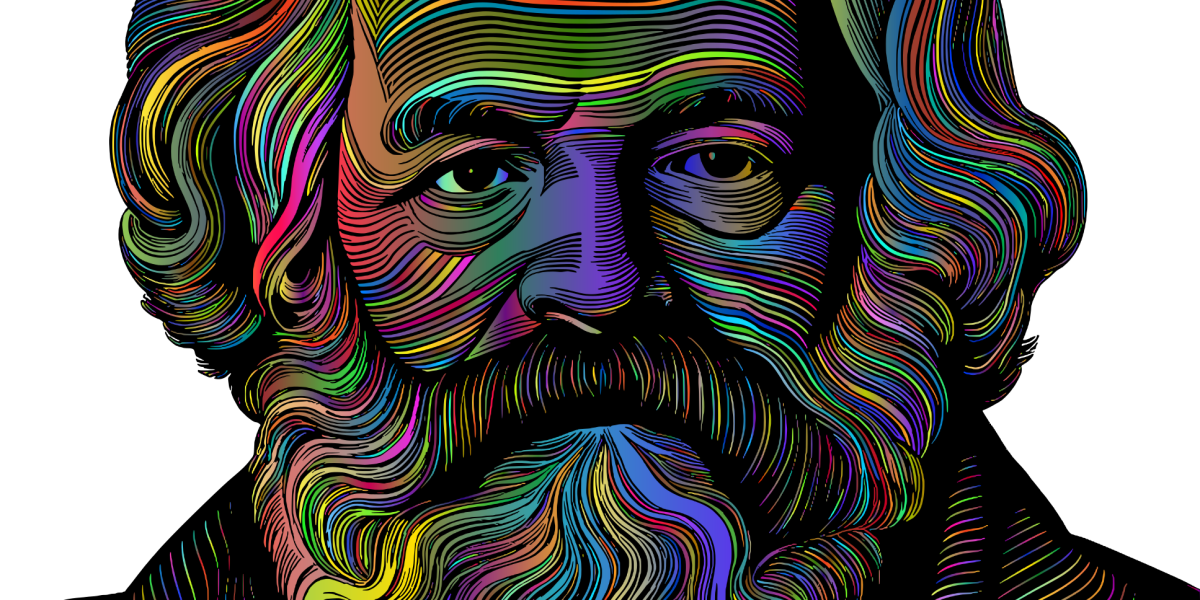
Historical materialism, developed by Karl Marx and Friedrich Engels in the 19th century, understands human consciousness as inseparable from socioeconomic conditions. It emerged as a critique of the dominant Hegelian idealism, which held that the real force of change in history is the evolution of ideas. Marx and Engels pointed out that the kinds of ideas people hold are often mirrors of their class interests and the ways in which material life and survival are proceeding. People will rarely profess or spread ideas that threaten their survival within the broader balance of exploitation. Marx and Engels also make a more foundational point: the arts of deep philosophy and contemplation cannot occur until the means of subsistence are established at any one time. 

The critic Chaim Wigder, in his essay Tripping On Ideology, identified four foundational axioms of a loose ‘psychedelic ideology’, or ‘psychologised psychedelia’, which have persisted from the 1950s to the ‘renaissance’ of the present day. 

For one, Wigder says, psychedelics are seen as possessing “psychological healing powers” beyond the context and media through which they are consumed. Such a move echoes psychiatry’s focus on individual defects in the brain, with various diagnoses developed in close correspondence with pharmaceutical firms (amphetamines for ‘ADHD’, ‘anti-depressants’ for ‘depression’). Users then interpret trips through psychological (e.g. “observing the unconscious”, “developing resilience”) or neuroscientific lenses, which clinicians and researchers validate with pseudoscientific notions like the “depressed part of the brain”, forming a feedback loop that reifies individualist and apolitical theories of the self. 

Indeed, the ‘insights’ users realise tend to reflect cultural scripts, like therapeutic or New Age ideals, which are actively promoted by interested economic agents like retreat providers and IP holders, whose equity values appreciate based on user expectation and belief. Combined with the suggestibility-enhancing effects of the drugs, these ‘insights’ nudge users into narrative pipelines that converge on various commodities, such as retreats, workshops, clothing choices, media and advertising providers, etc., further segmenting them into consumer groups in a later feedback loop with surveillance technologies. 

True, the ‘intrinsic’ powers of the psychedelic are under increasing doubt in the research community – but we see suggestions to ‘make use of’ the power of psychedelics as ‘placebos’, or ‘super placebos’, which can only place greater agency in the narrative manipulations of marketing and PR departments, which cannot be unaware of the ‘Pollan Effect’ that enhances therapeutic outcomes. 

Psychedelics and Commodity Fetishism

The notion that a drug can have intrinsic powers echoes Marx’s idea of commodity fetishism. A commodity is any good or service produced for exchange. Under capitalism, everything from food to human labour time to drugs becomes an exchangeable commodity. But Marx noticed something odd: once a thing becomes a commodity, on display in the market, its monetary or exchange value starts to appear as if it comes from the object itself, and not from the relative amounts of societal work required to put it on the proverbial shelf. ‘Fetish’ is an anthropological term for an inanimate object believed to be alive and charged with magical abilities. In other words, we believe that a diamond is worth £100,000 due to some physical property therein, as opposed to that sum approximating the degree of human effort and expenditure required to position it to market. It’s as if the object is magically infused with worth.

This is commodity fetishism: the process by which social relations – between workers, consumers, producers – are occulted, and in their place we see relations between things. A shoe, a smartphone, or a pill doesn’t just seem to have value – it seems to have it naturally, as part of what it is. The commodity presents itself as self-sufficient, even sacred.

Marx famously described this as a kind of metaphysics:

A commodity appears, at first sight, a very trivial thing, and easily understood. Its analysis shows that it is, in reality, a very queer thing, abounding in metaphysical subtleties and theological niceties. Yet, for all that, the table continues to be that common, every­day thing, wood. But, so soon as it steps forth as a commodity, it is changed into something transcendent. It not only stands with its feet on the ground, but, in relation to all other commodities, it stands on its head, and evolves out of its wooden brain grotesque ideas, far more wonderful than ‘tableturning’ ever was… The mysterious character of the commodity-form consists… in the fact that the social character of men’s labour appears to them as an objective character stamped upon the product of that labour.

The psychedelic commodity is a textbook case. It’s not just that LSD or psilocybin is sold and bought. It’s that its status as a commodity is hidden by a spiritual or neurobiological glow. These substances are revered as transcendental agents – “healing,” “resetting the brain” – and their power is described in reverent tones, whether in shamanic ritual or the language of fMRI studies and the ‘inner healer’. Such ideas are encouraged by other folk beliefs, Wigder suggests: that psychedelics access a realm – ontological or psychological – beyond culture and ideology, offering an “objective” view of the self or reality, or that ‘the psychedelic experience’ is ineffable, understandable only to trippers, creating a mystique that shields it from critique. This universal experience may be realised if used “correctly,” Wigder diagnoses, with “bad trips” blamed on improper use. Guides and rituals, from shamanic traditions to modern therapy, shape expectations, embedding ideology. A “good trip” may repress social reality for immersive joy, while a “bad trip” may instead confront it, revealing its inescapability. 

Material Questions: Who Makes, Markets, and Profits from Psychedelics?

All in all, the implications are the same: the drug just works, like a sacred object or divine tool. Yet this obscures the fact that psychedelics are made, distributed, and profited from like any other product, or that psychedelics are commodities for sale at all, whose consumption is obviously shrouded in marketing. MDMA, for instance, is now produced at industrial scale multi-million “super-labs” in Spain, transnational criminal networks, and vast synthetic supply chains. In the U.S. and Canada, psilocybin has been seized alongside cocaine and methamphetamine, bundled into the same circuits of profit and trafficking. 

Under a historical materialist schema, the more foundational questions of the ‘psychedelic experience’ may therefore consist in the following: Who produces these drugs, as well as the surrounding marketing and narrative products that ‘amplify’ their reportedly therapeutic effects? Who profits? What affords the tripper the time and capacity to ingest and ‘process’ the experience? How are they distributed? Historical materialism insists, therefore, that “life is not determined by consciousness, but consciousness by life” (The German Ideology). 

How Social Conditions and Culture Shape the Trip

Psychedelics have always been moulded by the economic systems that define society’s underlying consciousness. In early communal societies, whose mode of survival came from the metabolisms of nature, psychedelic experiences were woven into a collective consciousness – what Lévy-Bruhl called la participation mystique. Here, plant preparations like ayahuasca were not “drugs” but sacred agents within an animistic cosmos. Their visions reinforced the ecological rhythms – seasonal cycles, hunting, and gathering – that defined existence. 

The emergence of agriculture broke humans’ one-to-one reliance on nature and nurtured various cross-cultural fantasies around a prelapsarian natural past. Agriculture birthed an economic surplus and a more stratified class structure. Class societies and states turned psychedelic rites into elite mysteries (e.g. Eleusinian ceremonies) or suppressed peasant visions as heresies. The shaman’s role as communal guide gave way to the prophet’s privatised revelations, detaching psychedelics from collective life.

Indeed, anthropological research, such as David Dupuis’ studies on ayahuasca in the Peruvian Amazon, reveals that hallucinations are profoundly social. Amazonian users report visions of ancestral spirits or jungle animals, shaped by local cosmology, while Silicon Valley trippers see futuristic imagery like “machine elves,” reflecting sci-fi tropes. These differences stem from mechanisms like the education of attention (what to notice or ignore), categorisation of perceptions (cultural labels for experiences), and shaping of emotions and expectations. Indigenous ceremonies use music and chants to steer visions, while modern therapy provides psychological scripts. The belief that psychedelics offer unfiltered truth ignores these cultural influences, which pre-condition the trip before it begins. Growth over collective resistance.

Psychedelics are only one part of a broader reality liquefaction shaped primarily by digital media. Ubiquitous screens, social media, virtual reality (VR), and algorithms create personalised “realities,” fostering dissociation, depersonalisation, and derealisation – feelings of detachment from self or scepticism about reality’s authenticity. Studies during COVID-19 linked digital overload to increased depersonalisation, with people feeling like they were observing themselves or that their surroundings weren’t real. This mirrors psychedelic experiences, where LSD or ketamine can make the world feel alien or stage-like. The 1980s cyberpunk movement and figures like Timothy Leary even likened computers to LSD, coining “cyberdelic” to describe digital experiences’ mind-expanding potential. Marshall McLuhan called the computer “the LSD of the business world,” while Leary updated his mantra to “turn on, boot up, jack in.” Like psychedelics, technology’s liberating promise is shaped by its social conditions, repurposed to fit capitalist values of competition and control.

Reality liquefaction comes from another source: a value system increasingly unmoored from the ‘real economy’. Like NFTs, speculative securities or meme coins, the psychedelic drugs float freely from fixed use and gain value from collective belief. They can be therapy, creativity enhancers, status symbols, performance hacks – anything associated with an intensity of affect whose meaning can be branded and sold. 

Psychedelics as Tools of Control

Indeed, to take the 20th century’s most popular psychedelic, the history of LSD is inseparable from the pharmaceutical industry and clandestine modes of control. Synthesised in 1938 by Albert Hofmann at Sandoz, a Swiss pharmaceutical company, LSD emerged within a paradigm of scientific rationalism – one designed for psychological experiments and informed by the marketing incentives of a for-profit pharmaceutical firm. The notion of an ergotamine elixir had also been laden in centuries of projection, Vincent Rado has noted: Hegel, Anthroposophists, Rosicrucians, and other groups in the European milieu had shaped a particular reading of the Rites of Eleusis that persists to the modern day.

By the 1950s, that psychological maladies could be treated by specific compounds was one readily promoted by pharmaceutical corporations. As made famous in 1966’s ‘Mother’s Little Helper’ by the Rolling Stones, tens of thousands of housewives were prescribed tranquilisers to address the melancholy of oppressive lives at home; there were hopes that ‘anti-psychotics’ and ‘anti-depressants’ could treat ‘diseases’ of the mind much like pathologies of the body. The promotion of LSD as a neurochemical salve in the 1950s was no different. In Acid Hype, Steve Siff surveys an extraordinary range of CIA-connected puff pieces around LSD by magazines like TIME and Newsweek, which altogether depicted LSD as a miracle drug. We mustn’t forget, either, that the ‘discovery’ of the magic mushroom in the Western world occurred through an MK-ULTRA-funded search for a mind control prospect. Later led by a notion of ‘better living through chemistry’, the 1960s LSD boom was shaped indelibly in this regard by consumer culture and media spectacle. “The very mass media which mainstreamed psychedelic concepts along with the Vietnam War was itself a massive experiment in altering consciousness”, Mark Fisher wrote

In Acid Dreams, Martin A. Lee and Bruce Shlain present a compelling case that the CIA actively shaped the 1960s hippie counterculture and LSD’s spread via deliberate distribution networks. The agency seeded LSD into cultural hubs, leveraging figures like Timothy Leary to promote its use, aiming to destabilise dissent or study mass behavioural control. This suggests that the counterculture’s “rebellion” was partly orchestrated, a tool to redirect radical energies into apolitical mysticism. Many examples throughout history have been recorded of decaying societies displaying greater interest in various strands of mysticism and irrationalism. In post-Soviet Russia, for instance, groups like Ashram Shambala and Russian Authentism were encouraged by the Kremlin to distract the populace from the dysfunction of social life.

The reason why LSD in particular was able to pollinate and spread with such force was likewise material: with relatively little formal training, underground chemists like Owsley Stanley could mass-produce millions of doses, transforming LSD into a widely available commodity sold at low prices.

Historically, the military and intelligence community have always pioneered research around new technologies, including the internet and radio technology. Current programmes administer MDMA to expedite recovery from PTSD in soldiers returning from foreign wars, reflecting the military’s ongoing interest in psychedelics as tools for psychological resilience and operational efficiency. Organisations like the Multidisciplinary Association for Psychedelic Studies (MAPS) and Johns Hopkins University continue this rationalist legacy, quantifying “mystical” experiences as data for therapeutic outcomes. 

Psychedelic Capitalism

Today, it is also important to recall that the so-called psychedelic renaissance stands largely as a marketing term for a product of post-COVID financial conditions. Loose monetary policy and massive liquidity injections fueled speculative investment in nascent markets, including psychedelics. Framed as the next mental health revolution, psychedelics attracted venture capital, with startups promising treatments for depression, PTSD, and addiction. Companies went public with little more than pitch decks and branding, amplified by media outlets and psychedelic influencers. Retail and institutional investors piled in, creating a bubble akin to those in tech and biotech.

By late 2021, however, the psychedelic market faltered. Valuations collapsed, companies laid off staff, scaled back trials, or pivoted to other sectors. Funding dried up, yet the psychedelic community – focused on personal healing and spiritual insights – rarely acknowledges this economic fragility.

Sociologists Brownlee and Walby describe this as “psychedelic capitalism”, a force alternately described as “corporadelica,” where economic elites – pharmaceutical companies and upscale therapy clinics – position themselves as gatekeepers to the psychedelic experience. Controlled legalisation under a medical model limits access to those who can afford treatment or fit specific diagnoses, reinforcing social inequalities. Underground and indigenous knowledge, from Amazonian shamans to the hippie counterculture, is appropriated without credit, while prohibition criminalises non-approved users. As Belén Fernández notes, it is “mind-bending” to expect the capitalist system, which fuels “alienation and mental strife”, to heal it through commodified psychedelics. The industry’s success often depends on maintaining punitive drug policies, ensuring monopoly profits while punishing unlicensed users, particularly from marginalised communities.

As we’ve explored, psychedelic culture often frames media- and big business-informed ‘experiences’ as glimpses of a “higher reality,” “ego death,” etc., but such explorations also reflect the class privilege of typical users. Tripping requires time, privacy, safety, and support – luxuries afforded to the middle and upper classes that have long dominated academic philosophy and contemplations of metaphysics. Indeed, this framing treats the psyche as detachable, a notion rooted in the ability to abstract oneself from labour and material constraints – something even reflected in the nominative character of psychedelics, as ‘mind manifesting’. Psychedelics are sanctified as spiritual or therapeutic, unlike “dirtier” drugs like methamphetamine, which produce similar exotic states but without the cultural capital of elite institutions or Silicon Valley. This “psychedelic exceptionalism” protects privileged users while reinforcing punitive drug policies for others, perpetuating racial and class disparities.

In his book Acid Dialectics, the writer Vincent ​​Rado’s core insight is that the various and conflicting identities of psychedelic drugs are not merely parallel but dialectically intertwined. The mystical experience, rooted in Hofmann’s 1943 “Bicycle Day” and speculative ties to the Eleusinian Mysteries, frames LSD as a gateway to transcendent truths, yet this narrative is steeped in anti-materialist ideology that aligns with neoliberalism. This mysticism enabled LSD’s use as a mind control weapon, as seen in Nazi experiments and the CIA’s MK-ULTRA program, which, per Acid Dreams, seeded the 1960s counterculture to redirect dissent into apolitical introspection. Simultaneously, LSD’s identity as a revolutionary pharmacology, embodied by Allen Ginsberg’s “psychedelic anarchism,” emerged as a reaction to such control, promising liberation through altered consciousness, yet it was co-opted by the same state and market forces it sought to resist. 

These identities are mutually reinforcing: mysticism justifies commodification by promising personal transformation, while state control and marketisation limit revolutionary potential, creating a feedback loop where each role sustains the others within capitalist and statist frameworks.

The synthesis of these dialectical contradictions in 2025 manifests as a strange chimaera: the psychedelic as a controlled instrument of neoliberal therapeutics, blending personal liberation with systemic co-optation. This synthesis is evident in the mainstreaming of psychedelic therapy, where substances like LSD and MDMA are administered under clinical supervision to reintegrate individuals into societal norms rather than challenge them. As ever, a mind control legacy lingers in state oversight of psychedelic research, ensuring its use aligns with social stability rather than radical change. 

In sum, a historical materialist approach does not dismiss the wonder of psychedelic experiences. The “mind-manifesting” power of psychedelics lies not in revealing other dimensions but in illuminating this one – exposing how society and power brokers co-author our innermost visions.

Ed Prideaux | Community Blogger at Chemical Collective

Ed is one of our community bloggers here at Chemical Collective. If you’re interested in joining our blogging team and getting paid to write about subjects you’re passionate about, please reach out to Sam via email at samwoolfe@gmail.com


share your toughts

Join the Conversation.

0 Comments
Inline Feedbacks
View all comments

Related articles

Our Products

Related Products

1V-LSD 150mcg Blotters
1V-LSD 150mcg Blotters From 22.00
(143)
1cP-LSD 100mcg Blotters
1cP-LSD 100mcg Blotters From 18.00
(137)
Tryptamine Mix and Match Pack (4 x 0.1g)
Tryptamine Mix and Match Pack (4 x 0.1g) 65.00
(1)
1V-LSD 10mcg Micro Pellets
1V-LSD 10mcg Micro Pellets From 15.00
(43)
2-FDCK HCL
2-FDCK HCL From 12.00
(82)
1V-LSD 225mcg Art Design Blotters
1V-LSD 225mcg Art Design Blotters From 35.00
(62)
1S-LSD 150mcg Blotters
1S-LSD 150mcg Blotters From 29.00
(16)
1cP-LSD 150mcg Art Design Blotters
1cP-LSD 150mcg Art Design Blotters From 25.00
(74)
1V-LSD 225mcg Pellets
1V-LSD 225mcg Pellets From 35.00
(26)
1D-LSD 225mcg Pellets (1T-LSD)

SALE! -15%

1D-LSD 225mcg Pellets (1T-LSD) From Original price was: €42.00.Current price is: €35.70.
(13)
1cP-LSD 10mcg Micro Pellets
1cP-LSD 10mcg Micro Pellets From 15.00
(23)
5-MeO-DMT Freebase
5-MeO-DMT Freebase From 23.95
(36)
O-PCE HCL
O-PCE HCL From 17.50
(25)
1cP-LSD 20mcg Micro Blotters
1cP-LSD 20mcg Micro Blotters From 18.00
(27)
4-HO-MET Fumarate
4-HO-MET Fumarate From 19.50
(26)
rewards-icon
popup-logo

Reward program

popup-close
  • Earn
  • Affiliates