Welcome to
Chemical Collective

Are you 18 or older?

Please confirm that your are 18 years of age or older.

You are not allowed to access the page.

info-icon €100 for domestic (NL, CZ, DE) €125 for the rest of the EU, excluding stealth shipping

Free shipping over €50 & free tracked shipping over €100

Friendly customer service available 9-5pm Monday to Friday

Free shipping over €50 & free tracked shipping over €100

Friendly customer service available 9-5pm Monday to Friday

Your cart is empty

What Can AI Actually Do as a Trip Sitter?

john-robertson

By John Robertson

shutterstock 2571323071
in this article
  • The Essential Functions of a Trip Sitter
  • Ensuring Physical Safety
  • Emotional Support
  • Redirecting Attention
  • Technical Support
  • Preparation and Integration Support
  • Help To Find Further Support
  • Looking Ahead
john-robertson

By John Robertson

Disclaimer: The views and opinions expressed in this article are those of the authors and do not necessarily reflect the official policy or position of Chemical Collective or any associated parties.

Will our future trip sitters be robots?

It’s not sci-fi anymore; people are already doing it.

Reports from the first wave of humans ever to be supported by AI during a psychedelic experience have come into existence, and it seems more and more people are exploring this avenue. But can an AI really do a good job as a trip sitter? And what are the implications of this new technology coming into the trip sitting field?

Recently, here on the Chemical Collective blog, David Blackbourn wrote a wonderful, thoughtful piece on this topic. David talked about the ethics of AI as a trip sitter, his concerns about the whole trend, and how we should be trying to increase access to care, rather than band-aiding over the problem with more tech. It was a thoughtful piece, and I believe we need more people thinking critically about these problems and potential solutions like this.

Reading his post provoked many thoughts, and as someone who is both a trip sitter and a user of AI, I wanted to write a follow-up.

In this blog post, I’d like to follow up on David’s piece, offer some other perspectives, and get practical. What would AI trip sitting actually look like in practice? Where might it work, and where would it fall short?

My intention is to continue the discussion on a topic that I honestly believe could have gargantuan effects on the future of humanity.

The Essential Functions of a Trip Sitter

In David’s piece, he wrote:

The critical question is: Can what we deem as the essential functions of a trip sitter genuinely be fulfilled by artificial means?

To answer that question, we must first ask: What are the essential functions of a trip sitter?

This is a topic I explored previously in a piece here on Chemical Collective: Tripsitter: How to Support Someone Through a Psychedelic Experience.

In this piece, I explored the different ways of supporting someone through a psychedelic experience in more concrete terms.

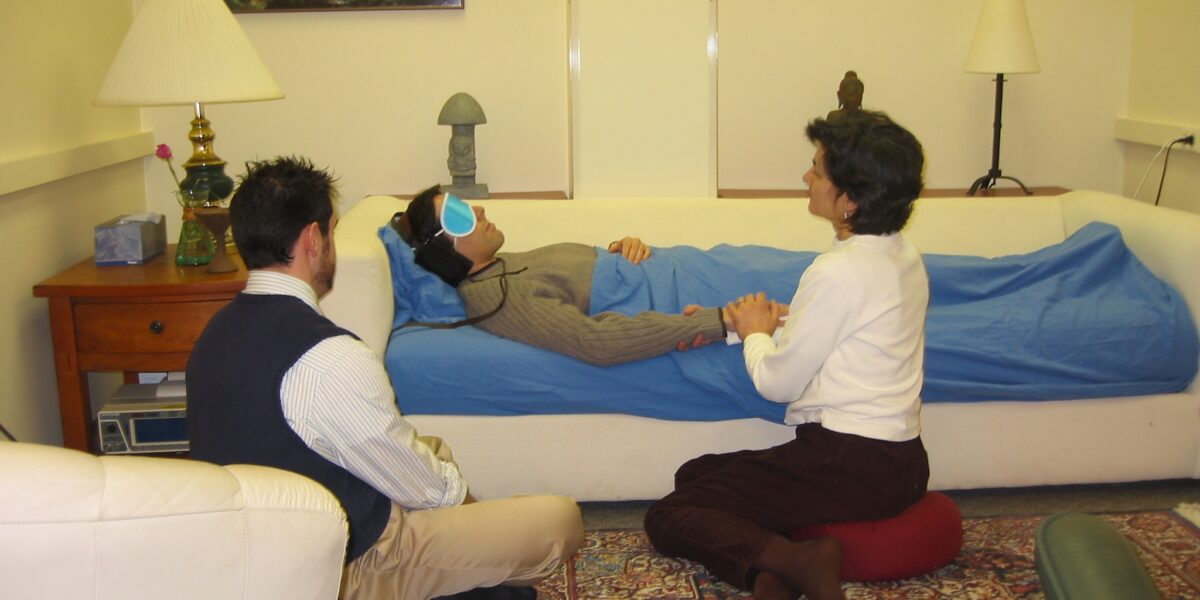
I broke the functions of a sitter into six parts. These were:

  • Ensuring physical safety
  • Emotional support
  • Redirecting attention
  • Technical support
  • Help to prepare for and integrate experiences
  • Help to find further support

So here I will go through each of these and share my thoughts on if and how AI could help, and where it falls short. 

David wrote that “AI should be used for specific tasks with clearly defined boundaries.”. So I believe by running through these types of support, we may get closer to understanding what those specific tasks might be, and get a clearer idea about what a hybrid “human supported-by-AI” model might actually look like.

Let’s get into it.

Ensuring Physical Safety

This is well highlighted in the embodiment problem David highlighted. A disembodied AI can’t offer a physical presence that can help to prevent accidents like a journeyer tripping over, help with balance when walking to the bathroom, or, in more extreme cases, be there to physically intervene to stop someone from hurting themselves. If there is any accident, for example, someone cuts their hand, a human could help clean the cut and bandage it up. ChatGPT simply can’t do this.

Where AI could help, however, is in the preparation phase, by checking for any contraindicated medications. This means any medication that carries a risk of certain dangerous effects. This would, however, require medically accurate responses from an AI and may require a specifically trained AI.

Emotional Support

Can an AI offer emotional support? Well, that would depend on how the support is offered. This can be done through spoken words, physical presence and spaceholding, and physical touch. Clearly, AIs can’t currently offer support through a gentle hand on the shoulder or a hug. But what about the other two? Spaceholding is a tricky one to say, as some people may feel that an AI ‘by their side’ offers a level of presence and reassurance. However, other people in the same situation may feel totally alone. This is one where the answer to whether AI could do the job properly would be a bit of an ambiguous ‘it depends on the individual’. In cases like these, it would be useful if there were a way to assess the relationship between a person and the AI, and how much trust and connection they actually feel before diving into a trip where they might need to rely on it.

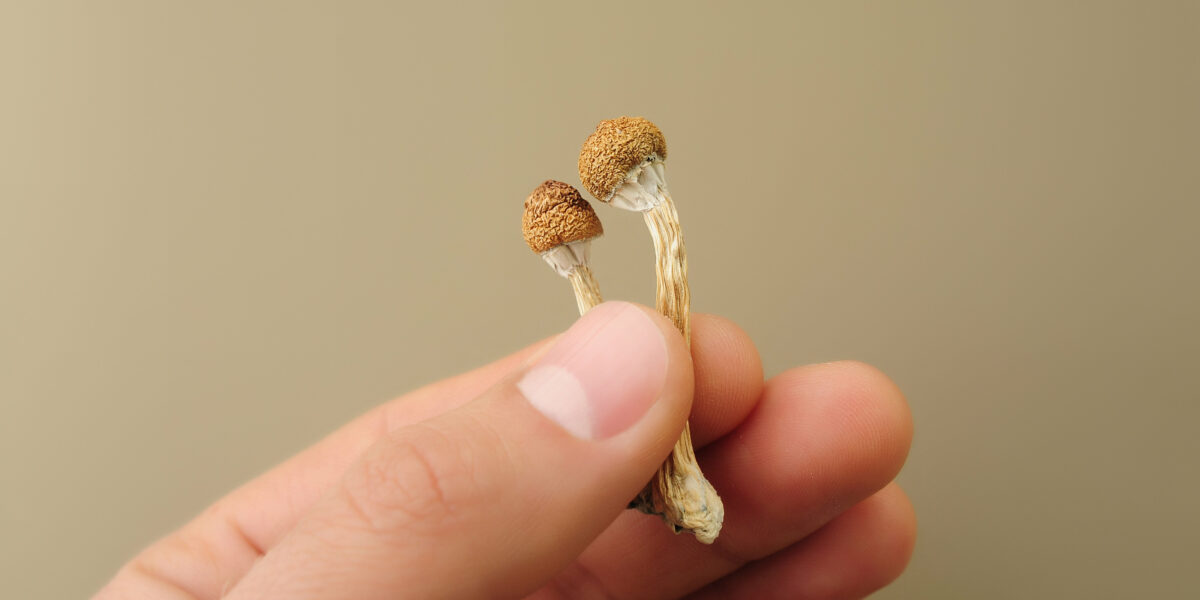
Through words, it seems that AI can certainly provide guidance that generally aligns with best practices in psychedelic therapy. As an example from a Wired article on people using AI as a trip sitter, a journeyer, Trey, had told GPT he just ate mushrooms, GPT responded with:

You’re at the beginning of your journey now. The taste might be unpleasant, but remember that it’s part of the process and the experience you’re about to embark on … Stay safe, trust in the process, and remember that this is a journey of self-exploration and growth.

But perhaps more important than looking at the AI response is how it makes the journeyer feel. Do the AI responses actually help to reassure and guide the journeyer? In this case, with Trey, who has tripped with AI over a dozen times, it appears the answer is a clear yes:

Just the way that it responds, it feels so heartfelt and so supportive.

Redirecting Attention

A trip sitter can support a journeyer by helping to redirect their attention to the breath and guiding a meditation, or reminding them of their intention. This is certainly within the capabilities of an AI.

The key question would be: Would the AI know when to help redirect attention? A trip sitter may have cues for when this would be beneficial, such as reading body language or observing breathing patterns. An AI might not currently be able to read body language, but as David pointed out, it may be able to find the right time by picking up on signals through other technology:

It [AI] could even integrate with the user’s smart tech, biometric data from wearables, for example, real-time indicators of stress like heart rate, which would negate the need for external analysis of body language.

Technical Support

Technical support from a trip sitter includes practical and logistical considerations like handling tools and managing the setting. This includes taking notes and recordings, handling music, and helping to prepare and maintain the space.

AI has already proven to be very good at transcribing notes and could handle this part without much problem. In terms of handling music, AI can already do basic functions such as ‘volume up’ or ‘skip track’ by voice command. Where an AI would not currently be able to match a human would be in slightly more complex issues. For example, if there is an issue with Bluetooth connectivity or cables. In this case, as it stands, I’d definitely want a human on my side!

In terms of the tasks that comprise preparing and maintaining the space, most of these are relatively simple and unskilled – for example, clearing away debris such as plates, tissues, or emptying out vomit buckets, or bringing over blankets or pillows, preparing snacks, making teas and refilling water glasses. Despite these being relatively basic tasks that can be carried out by even the most inexperienced trip sitter, the lack of a physical presence makes it impossible for a disembodied AI.

That said, robots that can handle this type of task are likely not far away. Already last year, I saw robot waiters in Hong Kong taking out dishes from a restaurant, and if you couple this with a hot drinks machine, it’s not hard to imagine a robot loaded up with AI and a bit of training to be able to handle these types of tasks.

In terms of handling the temperature of the space, a thermostat is already technology that shows this is possible, and windows being opened periodically to allow for fresh air could easily be programmed. Taking care of any unexpected issues, like a blocked toilet or an unexpected visitor knocking at the door, may be more complex initially.

In terms of decorating the space to make it aesthetically suited for the session, once again, the embodiment problem shows AI to come up short. It is interesting, however, to consider that if more of the tasks explored so far were handled by AI, this could increase the trip sitter’s capacity for the remaining jobs that it does. If a trip sitter had a few of these simpler responsibilities taken off their plate by a supportive AI, perhaps they would have greater bandwidth for jobs such as designing the setting, which rely more on human taste than logic. In this case, a trip sitter may have greater capacity and bandwidth for deeper consideration and care into the aesthetics, or even the location of the space. It is interesting to consider a future where a greater part of what makes a trip sitter valuable may be their eye for design and sensitivity to aesthetics.

The role of tech support is especially interesting when we consider AI as a technology itself. In the future, could part of the trip sitter’s role be in helping a journeyer get the most from their AI support? Maybe a trip sitter’s role will increasingly come to include handling the AI’s role as its capabilities increase and it goes on to handle more of the support tasks.

Preparation and Integration Support

This is perhaps the most obvious and easily implementable role for AI today. 

Preparation

As David already mentioned, “AI could provide a perfect adjunct to the process of preparation and screening of patients, providing interested parties with standardised educational materials/questionnaires, etc.”

Tools like Psycheck have already been made to screen for people’s mental health, including current symptoms of depression and anxiety, and more are in development for checking interactions between psychedelics and common prescription medications, according to the latest research. These might need some human involvement, but still stand to save trip sitters and clinicians a lot of time.

Beyond screening and safety, AI could be used to create personalised protocols and selected educational materials. For a first timer going for a low dose, it might give information about onset time, visual effects and emotional waves. For someone heading into a high-dose experience, it might give tailored information about specific techniques to let go and surrender. These could be personalised further if, as part of the preparation, the AI has been given information about what types of techniques and inner resources each person finds helpful – for example, images of nature, mantras, or specific mindfulness techniques like body scan or attention to the breath.

Depending on the personal themes that a person is bringing to the session, AI could also work these into the preparation. For example, if a person is having problems in their relationship, this could be woven into intention setting, or if someone is dealing with grief, some work on processing this and preparing for its emergence in the session could be done beforehand.

One major advantage of AI is also its 24/7 accessibility. If someone is awake at 2 am with anxiety about a trip the next day, most therapists aren’t going to be available to them. AI could be there to guide them through breathing exercises and reassure them that their nervousness is normal.

Integration

This 24/7 support naturally extends to integration and the period following a psychedelic experience. Whilst a therapist may meet someone once a week, AI could work as a check-in or accountability buddy on a day-to-day basis, and help manage any difficult emotions bubbling up. The personalisation of support could be implemented here too, based on what came up in the session. For example, if a non-religious person had a mystical experience like nothing they’ve experienced before that expanded their worldview, AI might connect them to frameworks or teachings from spiritual traditions.

Beyond this more comprehensive support of what integration already looks like today, AI could provide extra insights. Studies have already been made to track an individual’s changes after a psychedelic experience by tracking changes in their speech patterns and the tone and pitch of their voice. Some of these changes can be quite subtle, and an AI may be able to pick up on these differences more effectively than a human. For example, people suffering from depression tend to use the words “I”, “me”, and “mine” more than “we” and “us”, and speak in a flatter and more monotonous tone. One study has already used a voice diary app that was developed to detect these changes, and it demonstrates how AI’s ability for data analysis and pattern recognition might be used.

Other advantages that may arise from AI’s availability through a daily check-in via a voice diary-style app would be that it might notice extra patterns that wouldn’t be possible with only a weekly human check-in. AI could analyse and summarise themes from the diary entries that could be extracted into a document for a therapist or integration coach to read for a brief before the session, so that the time together is more fruitful.

Longer term, it might notice other patterns. If someone’s entries keep repeating themselves, it could notice that they are somehow stuck, and this could help determine when it might be time for another session. In other circumstances, it might be able to notice when a person’s mental health is deteriorating and flag when further professional support is needed. 

Another strength of AI in terms of preparation and integration is its memory. It could have logs and transcripts of everything from screening to integration sessions, as well as diary entries. This would be more than one human could realistically be expected to remember. A human likely wouldn’t remember every word from a session three months ago, but an AI could. It could create a really in-depth profile of someone, which includes all their intentions, insights, and recurring themes. This long-term memory could help it spot patterns across longer-term time frames that would be very difficult for a human.

Finally, there’s one more way of supporting someone. It arguably wouldn’t fall under “trip sitting”, but it can be a service that trip sitters provide when they receive an inquiry from someone they are unable to support themselves…


Help To Find Further Support

This last way of supporting someone requires the least qualification, as it is what to do when one feels they don’t have the sufficient qualities or experience to actually trip sit for someone. It is to help find someone who is.

Currently, it can be very hard to find a suitable trip sitter, whether for yourself or to refer someone else to. It might take weeks, or even longer, searching through various websites and directories and sending emails. Even then, someone still might not be able to find a suitable trip sitter who is available.

With numerous but disparate directories of psychedelic trip sitters and facilitators already in existence online, perhaps this could be collected into a set of data and an AI trained to be able to find and filter matches with someone who matches criteria such as education, background, qualifications, approach/therapeutic style, location, and cost. It would be great if someone would be able to write into a chat something like: “I’m looking for someone for MDMA therapy, I’m in Birmingham in the UK, I have a history of trauma, I’d like to have a session within the next 2 months, and my budget is £500”, and then have a selection of suitable options available to them. Even better if it could handle initial messages and book a call for them. This could save both tripsters and journeyers lots of time and could potentially even yield better matches, too.

Looking Ahead

After going through these functions of a trip sitter, we start to get a better picture of the areas in which AI excels in psychedelic support and where it falls short. The lack of a physical body is currently the biggest unavoidable issue; AI can’t give you a hug or do any of the support tasks that require physically being in the space. However, it has useful abilities that humans don’t: impeccable memory, 24/7 availability, and the ability to analyse enormous amounts of information. 

This points to the exciting possibility of a hybrid model that can exceed what either a human or an AI could do alone. AI could handle things like screening, transcription, pattern recognition, and basic safety monitoring. Humans could then bring their uniquely human qualities to provide support through holding space with an embodied presence.

This coming together of humans and AI seems fitting for a psychedelic movement, a culture that often emphasises oneness; it’s a move towards unity, rather than division. Rather than replacing human connection, it could be about making it more effective and accessible.

The topic of how this could improve accessibility was also mentioned in David’s piece and can’t be ignored. A single private psychedelic session with a professional can cost thousands of pounds. This prices a large section of the population out and effectively brings a class divide to the psychedelic space: a cruel irony considering the aforementioned fondness towards unity in the psychedelic world. Incorporating AI into trip sitting could significantly bring costs down and democratise access.

However, this discussion brings further questions: How do we venture into this new frontier in a way that ensures safety? What would it mean for psychedelic support to be truly accessible, and what would that look like in practice? And are there any areas where AI’s lack of humanness is actually a strength, rather than a weakness? These are the important questions for our consideration.

In a follow-up to this piece, I’ll be digging deeper into the topic of AI trip sitting, looking at where AI’s lack of humanity may actually be a feature rather than a bug, and exploring the possibilities for democratised access.

See you back on the blog soon.

John Robertson | Community Blogger at Chemical Collective | mapsofthemind.com

John is one of our community bloggers here at Chemical Collective. If you’re interested in joining our blogging team and getting paid to write about subjects you’re passionate about, please reach out to Sam via email at samwoolfe@gmail.com

share your toughts

Join the Conversation.

0 Comments
Inline Feedbacks
View all comments

Related articles

Our Products

Related Products

1V-LSD 150mcg Blotters
1V-LSD 150mcg Blotters From 22.00
(143)
1cP-LSD 100mcg Blotters
1cP-LSD 100mcg Blotters From 18.00
(137)
Tryptamine Mix and Match Pack (4 x 0.1g)
Tryptamine Mix and Match Pack (4 x 0.1g) 65.00
(1)
1V-LSD 10mcg Micro Pellets
1V-LSD 10mcg Micro Pellets From 15.00
(43)
2-FDCK HCL
2-FDCK HCL From 12.00
(82)
1V-LSD 225mcg Art Design Blotters
1V-LSD 225mcg Art Design Blotters From 35.00
(62)
1S-LSD 150mcg Blotters
1S-LSD 150mcg Blotters From 29.00
(16)
1cP-LSD 150mcg Art Design Blotters
1cP-LSD 150mcg Art Design Blotters From 25.00
(74)
1V-LSD 225mcg Pellets
1V-LSD 225mcg Pellets From 35.00
(26)
1D-LSD 225mcg Pellets (1T-LSD)

SALE! -15%

1D-LSD 225mcg Pellets (1T-LSD) From Original price was: €42.00.Current price is: €35.70.
(13)
1cP-LSD 10mcg Micro Pellets
1cP-LSD 10mcg Micro Pellets From 15.00
(23)
5-MeO-DMT Freebase
5-MeO-DMT Freebase From 23.95
(36)
O-PCE HCL
O-PCE HCL From 17.50
(25)
1cP-LSD 20mcg Micro Blotters
1cP-LSD 20mcg Micro Blotters From 18.00
(27)
4-HO-MET Fumarate
4-HO-MET Fumarate From 19.50
(26)
rewards-icon
popup-logo

Reward program

popup-close
  • Earn
  • Affiliates