in this article
- Joe Rogan
- Duncan Trussell
- Theo Von
- Psychedelics Can Accommodate (and Intensify) a Variety of Views
- Bill Burr
- Recalibrating How We View Psychedelics
Are you 18 or older?
Please confirm that your are 18 years of age or older.
You are not allowed to access the page.
Disclaimer: The views and opinions expressed in this article are those of the authors and do not necessarily reflect the official policy or position of Chemical Collective or any associated parties.
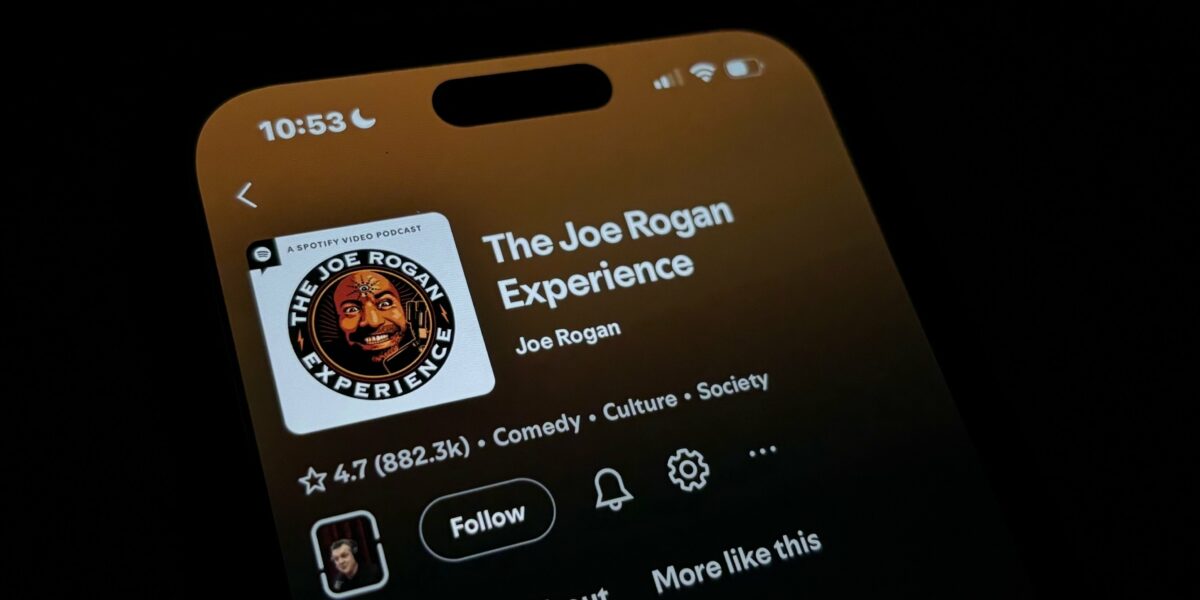
The Rogansphere – consisting of Joe Rogan and like-minded comedians orbiting around him – faces steady and consistent criticism from YouTubers (whose focus and most popular content is criticising the Rogansphere). Popular critiques of the Rogansphere began with Mike David/Redbar (at redbarradio.net), and he (and fans) uploaded clips of these to YouTube.
Today, the most impressive videos tackling the Rogansphere come from the channel The Elephant Graveyard (impressive because they’re long-form, documentary-style, and involve a lot of skilled editing work). Videos of his that are well worth a watch include ‘“Burn the Boats” is a Funeral for Joe Rogan’s Comedy Career’, ‘How Comedy Became a Dystopian Imperial Hell World’, and his most recent (and best) work to date, ‘How Comedy Was Destroyed by an Anti-Reality Doomsday Cult’. Other channels articulating all the problems with the Rogansphere include 2lazy2try, Podcast Cringe, Comedy Enforcement, and American Redact.
Well-known comics have also voiced the issues they have with the Rogansphere, including Bill Burr and Marc Maron. And political commentator Kyle Kulinski – who runs the political talk show Secular Talk, hosted on YouTube – regularly calls out Rogan too.
The critiques that YouTubers, comedians, and political commentators direct towards the Rogansphere often centre around them being cringeworthy, self-important, or out of touch; their shift to the right; punching down (using the most marginalised – often trans people – as the butt of their jokes); their obsession with so-called ‘wokeness’; embracing pseudoscience and conspiracy theories; grifting; climate change denial; spreading lies and misinformation; and praising (and buddying up to) Trump, JD Vance, RFK Jr., and right-wing billionaires like Elon Musk, Mark Zukerberg, Marc Andreessen, and Peter Thiel.
What I haven’t seen brought up enough (except by people in the comments sections of videos) is how Rogan (and others) made these disappointing shifts in their beliefs, attitudes, worldviews, and behaviour despite all their spiritual and therapeutic experiences with psychedelics. Rogan is a paragon in this respect.
I first got into listening to the Joe Rogan Experience back in university – this must’ve been around 2010 – partly because of the focus on psychedelics. This included Rogan having very psychedelic guests on his podcast, as well as him discussing his own experiences and trippy ideas. Rogan became so well-known for talking about DMT that it led to the meme ‘Joe Rogan: “That’s crazy, man. Have you ever done DMT?” (He also hosted the 2010 documentary DMT: The Spirit Molecule and got a tattoo of the DMT molecule.)
Yet, despite his many mind-blowing experiences with DMT and psilocybin mushrooms – which were full of love, introspection, and insight – these weren’t enough to prevent his shift to the right. I don’t know if Rogan still regularly consumes psychedelics, but at the very least, his past psychedelic use didn’t seem to stop him from abandoning his endorsement of Bernie Sanders and then endorsing Trump. (Some people think Rogan just needs to have a big psychedelic experience again, to catalyse some much-needed self-examination. I suppose that could happen, but as we’ll see below, there are also reasons to be sceptical of this narrative.)
Another avid psychedelic advocate, with many experiences under his belt, is Rogan’s long-time friend and fellow comedian Duncan Trussell. On his podcast, the Duncan Trussell Family Hour, and on the Joe Rogan Experience, Trussell would express his appreciation for psychedelics, Buddhism, and spirituality. On Rogan’s podcast, he also warned his friend about the risk of “people with political agendas” trying to exploit his influence and reach, and then start “blowing out their radioactivity into the world”, which is precisely what’s happened, given all the right-wing pundits and billionaires Rogan has had on his podcast, who he rarely challenges on their views. In spite of Trussell’s love for psychedelics and hippie wisdom, and his fears surrounding the influence of evil billionaires, he’s now in a place where he’s defending Thiel, the right-wing tech oligarch aligned with Trump and Vance, who holds anti-democratic, anti-women, and elitist views. Trussell also praised Musk on Rogan’s podcast.
Then there’s comedian Theo Von: while he gave up cocaine, alcohol, and other habit-forming drugs for good after getting sober, he still made room for psychedelics. He used them both recreationally (he performed standup on mushrooms and was tripping during a podcast) and therapeutically (he tried ketamine therapy, DMT, and ayahuasca). However, it seems that psychedelics didn’t make this Rogansphere comedian liberal or progressive; he still helped Trump win his second election and attended his inauguration.
As I’ve argued in my book Altered Perspectives (in an excerpt here), as well as in various blog posts (see here, here, and here), psychedelics don’t inherently make you prone to endorsing left-wing, liberal, progressive, or pro-environmental views. Psychedelics are used and advocated for by many on the right (including the far right and neo-Nazis). They are also used by many in the Rogansphere who may have previously voted Democrat and considered themselves liberal or left-wing, but who have now become Republican, Trump, and MAGA supporters. Psychedelics can accommodate a wide variety of political views. Past psychedelic experiences – regardless of how mystical, connecting, and love-filled they were – don’t necessarily prevent the abandonment of harmful political ideologies, nor do they necessarily prevent a shift to the right. Current use of these substances may make no difference as well. The Rogansphere exemplifies this.
The anthropologist Nicholas Langlitz shares his thoughts on what he calls ‘rightist psychedelia’ in a 2020 article published in Fieldsights:
As the project of mainstreaming the uses of psychedelic drugs is proving surprisingly successful, these substances also enter into forms of life that are very different from the ones that have fostered the revival [of institutional psychedelic research]. While liberal and left-leaning anthropologists might find this pluralism as disturbing as the (always imagined) psychedelic community, it’s a boon to the anthropology of psychedelics. Studied ethnographically, rightist psychedelia might teach us a great deal about the cultural plasticity of the relationship between human beings and these wondrous molecules.
Often, psychedelics act as ‘non-specific amplifiers’ of the psyche, bringing to the surface and strengthening whatever views already existed in a person’s mind. If someone is already prone to an ‘anti-woke’ narrative or conspiratorial thinking, psychedelics may not eradicate those tendencies; instead, they may amplify them.
One comedian who was in the Rogansphere, but who has now very much left it and is opposed to it, is Bill Burr. But Burr also had some profound experiences with mushrooms. For him, they have shifted him in a more positive direction, in terms of his mental health, personality, and the issues he felt were worth using as material for comedy. He credits mushrooms with giving him insight into his anger and making him a less angry person, and it shows. But he also detached himself from the Rogansphere. Did psychedelics play a role in this? Well, Burr was always known for calling people out (including Rogan) for their bullshit. While Rogan has claimed to have a great bullshit detector (he said he is “just immune to bullshit”), the evidence suggests otherwise. Burr likely already had the kind of personality that, following transformative experiences with psychedelics, would make him not feel at home in the Rogansphere. He seems to have become a more genuine person and is unwilling to be a part of the Rogansphere bubble for the sake of money, fame, or clout.
While Bill Burr has, in the past, railed against wokeism and feminism in his stand-up comedy, he no longer considers ‘anti-PC’ tirades important; his focus is now on what he considers to be the far more important issue: the right-wing billionaires like Musk who are trying to amass more power and control. Again, it is hard to know if (or to what extent) psychedelics played a role in this change – but speculatively, since psychedelics helped to dissipate his anger and mental distress, it’s not hard to imagine that Burr’s newfound peace of mind would lead him to prioritise what’s truly important. And that could include satirising those who deserve it (rather than those who don’t).
The Rogansphere, in contrast, should be a lesson on how we need to give up the idealistic view of psychedelics making everyone who uses them better people. Perhaps they have benefited the mental health of those in the Rogansphere, but it is unrealistic to think they can make people more intelligent or better at critical thinking – nor do they make people immune to the influence of culture, ideology, power, money, fame, social approval, or peer pressure. Psychedelics can change some domains of personality (e.g. enhance openness to experience and reduce neuroticism) – but it’s naive to think they can completely transform who a person is. They don’t fix personal flaws. With some effort and work – such as through contemplative practices and therapy – insights about oneself on psychedelics could lead to long-term changes. Yet while psychedelics can shine a light on personal blind spots, they don’t erase them, never to be seen again.
If we give up the notion of psychedelic experiences as ‘reboots’, ‘resets’, and intrinsically transformative, then the changes we’ve seen in people like Rogan and Trussell become less surprising. These changes are still sad (and frustrating) to see, no doubt. However, by viewing the power of psychedelics more contextually – that is, dependent on ‘set and setting’ and how the experiences are integrated – it becomes clearer why they lead to positive changes in some areas of life and not others.
Sam Woolfe | Community Blogger at Chemical Collective | www.samwoolfe.com
Sam is one of our community bloggers here at Chemical Collective. If you’re interested in joining our blogging team and getting paid to write about subjects you’re passionate about, please reach out to Sam via email at samwoolfe@gmail.com
Welcome to Chemical Collective.
Create an account to earn 200 welcome points.
Already have an account? Sign in
Check out our Community Blog and get involved with the conversation. You will be awarded 50 x ChemCoins for each comment up to a limit of 250 total ChemCoins.
Have you purchased any of our products? Reviews and reports are so important to the community. Share your honest opinion, and we’ll reward you with 50 ChemCoins for each review!
Every time you complete an order with us, you’ll be awarded ChemCoins for each Euro spent.
Welcome to Chemical Collective.
Create an account to earn 200 welcome points.
Already have an account? Sign in
Earn commission every time someone makes a purchase through your link.
When you become an affiliate, you will be allocated a unique link to share with your friends, followers, subscribers, or Aunt Susan.
You can choose to payout the commission earned once per month, or save it up to receive on a rainy day! Commission earned is 5% of the total order value per referral.
Contact us to join the Chemical Collective family and become an affiliate.
share your toughts
Join the Conversation.
Great article, Sam!
One thing I would push back on a bit (which is possibly not what you were intending to say) is the idea that Left = Good / Right = Bad
I have met many great “conservatives” in my life, and many awful “liberals”. And vice versa of course.
I think we put far too much weight on people’s beliefs nowadays, and not enough on their actions. It’s very easy to hold all of the “correct” liberal opinions, while behaving like a manipulative narcissist.
Just my two cents.
Cheers!