in this article
- Origins of the Ego Death Concept
- The Internet and Modern Myth-Making
- The Psychology of Pursuing Ego Death
- Beyond Ego Death: Alternative Frameworks
Are you 18 or older?
Please confirm that your are 18 years of age or older.
You are not allowed to access the page.
Disclaimer: The views and opinions expressed in this article are those of the authors and do not necessarily reflect the official policy or position of the Chemical Collective or any associated parties.
The Basic Trusts and Beliefs. You must be ready to accept the possibility that there is a limitless range of awarenesses for which we now have no words; that awareness can expand beyond the range of your ego, your self, your familiar identity, beyond everything you have learned, beyond your notions of space and time, beyond the differences which usually separate people from each other and from the world around them.
― Timothy Leary, The Psychedelic Experience
This quote from the 1964 book, co-authored by Leary, Ralph Metzner, and Richard Alpert (Ram Dass), was my first encounter with psychedelic literature just over 15 years ago, and I found it particularly insightful for providing a container for psychedelic experiences. The intention of this book was to act as a manual for navigating these kinds of experiences, and it utilised the teachings within the Tibetan Book of the Dead as a model to understand the concepts of death and rebirth, where consciousness is guided through the intermediary state.
I was introduced to The Psychedelic Experience by a friend with whom I was playing in a band called Bardo Thodol, named after the Tibetan Book of the Dead. This was early on into my experiences with psychedelics, and I appreciated being turned on to literature that provided a practical, spiritual container for this new interface of engaging with the world.
The quote goes on to say, “Trust your divinity, trust your brain, trust your companions. Whenever in doubt, turn off your mind, relax, float downstream.” This last sentence forms the lyrics to the start of the 1966 Beatles song ‘Tomorrow Never Knows’, which was very much inspired by the book, as well as Lennon’s own experiences with LSD. This song was quite inspirational during the formation of psychedelic rock, as it featured classical Indian motifs and sounds, as well as lyrics that espoused mind-expansion and Eastern spirituality in popular music. Having been raised on the music of the Beatles and finding intrigue in the Bardo Thodol, I resonated a lot with this song, and I had a few acid trips where it provided a useful sonic container at the start to align with this idea of the mind ‘turning off’.
This turning off of the mind is what’s often referred to as ‘ego death’, where the subjective self-identity is gone, and you as a concept no longer exists. This concept has become a central focus of popular psychedelic culture, almost as if this is the Holy Grail of experience that everyone should attain. Is the subjective self-identity inherently bad and problematic, or is ego death something that we’ve developed an obsession over? Has this singular concept come to dominate the wider narrative surrounding psychedelics?
I’ve often had conversations surrounding psychedelics where the first question I get asked is “Have you experienced ego death?”, as though if I hadn’t, then I’ve not had the peak experience that might be associated with the ‘ego dissolution’ that people may experience when it comes to higher doses of psychedelics. The concept of ego dissolution might help us to understand what is happening in this state of ego ‘death’, where we might experience the sensation of what’s known as ‘oceanic boundlessness’ – this is the concept of perceiving consciousness outside of the boundary of the self, and in doing so the perception of self as a concept begins to melt away.
This dissolution of self-identity provides sensations of merging with the whole, where we move past the boundaries of the self and become aware of awareness itself. This idea of ‘merging’ is appealing to those of us in Western psychedelic culture who might be utilising the benefits of these substances to find a new way of being. With an increase in individualistic tendencies in the West, it’s no surprise that the concept of ego death has become something to aim for, as the ultimate liberation from a confined consciousness. But has this idea been romanticised in the West or even become something of a competitive goal within the wider psychedelic culture?
In this article, I’ll explore the cultural fixation surrounding ego death, its roots, and whether or not this obsession is beneficial or detrimental (or could it be a bit of both?).
Looking at the different mystical and religious parallels can provide more insight into understanding the concept of ego death and how it has found its way so prominently into psychedelic culture.
The Buddhist concept of anattā is often referred to as a doctrine of “no-self”, being a composite Pali word consisting of an (not) and attā (self-existent essence). While it can be interpreted as denying the existence of the self, it is more to do with being a process of non-attachment. The impermanence of everything is recognised, and any sense of an unchanging, permanent self or essence is disregarded. Buddhism emphasises that change and impermanence are fundamental to our existence, but the translation of anattā to “not-self” in some of the Buddhism-related literature might be incomplete when trying to understand this concept. Peter Harvey, a contemporary British scholar of Buddhism, has said that a more complete understanding would be to translate anattā to “non-self”, with the idea of it being a non-essential or permanent thing which doesn’t take possession of the concept of self.
The psychologist Jack Engler said in a 1988 interview with Inquiring Mind that the concept of the self doesn’t really differ in Theravada Buddhist philosophy and Western psychology, as both view it as something that is constructed. But is this representative of how we actually experience the self? Are we not a stable, unchanging reference point that spans time and different states of consciousness? When we actually dig a little deeper, it might not be quite so…the “self” as we know it could be nothing more than the moment-to-moment construction of consciousness.
Does this way of understanding the “non-self” have parallels with understanding ego death from a psychedelic perspective? Perhaps we’re using this term too frequently with not enough care…I recently spoke to friend and psychedelic/religious scholar Robert Forte, who has a particular interest in the meditative practices of Theravada and Zen Buddhism. When I asked him about the topic of this article responded saying that “this whole notion of ‘ego’ ought to be examined more closely as it’s used so much in pop psychology. It’s a made-up concept, and used mindlessly in psychedelic hype.”
In Hinduism, the ego is presented as ahamkara, which can be understood to be the false identification of the self with the material, which prevents liberation (known as moksha) from the cycle of death and rebirth (Saṃsāra). Ahamkara roughly translates as “I-Maker”, in the sense that the ego has an inclination towards self-preservation, self-gratification, and self-importance, where it is entangled with the physical and mental aspects of reality. This attachment to the physical is one of the major obstacles to connecting with the divine oneness or cosmic unity, as it creates suffering and keeps us stuck in the cycle of death and rebirth.
This concept of ‘cosmic unity’ might have parallels within psychedelic experiences, as notable psychologist Benny Shanon has claimed that psychedelics, such as ayahuasca in particular, have the power to radically shift our metaphysical worldviews towards the concept of an all-permeating cosmic consciousness. Shanon has identified this as “idealistic monism with pantheistic overtones”, where we understand the interconnectedness of everything as a harmonious whole.
In other traditions, such as Sufism, there is the concept of Fana, which is the annihilation of the self in preparation for union with God, with the word being translated as “to die before one dies”. This is the idea of the individual ego and self, where there is recognition of the fundamental unity between God and all that exists.
I’m reminded here of a track by electronic artist Shackleton titled ‘Death is Not Final’, which has the lyrics:
“Death is not final
Only a misunderstanding of time
The eschaton is always has always been imminent, and is always happening
It′s happening right now
Die before you die
Die before you die”
This was one of the first electronic pieces of music I listened to after first encountering psychedelics, and the lyrics have stuck with me ever since, almost like something of a mantra to remind me of the true nature of these kinds of experiences. Another piece of music which was quite pivotal in my early psychedelic sonic engagement was ‘Meditation is the Practice of Death’ by the stoner/doom band OM, which focuses on similar themes. I appreciated having this wider concept of ego death being presented within the psychedelic creative spaces, with music having the power to transmute these ideas into more of a sensed ‘knowing’.
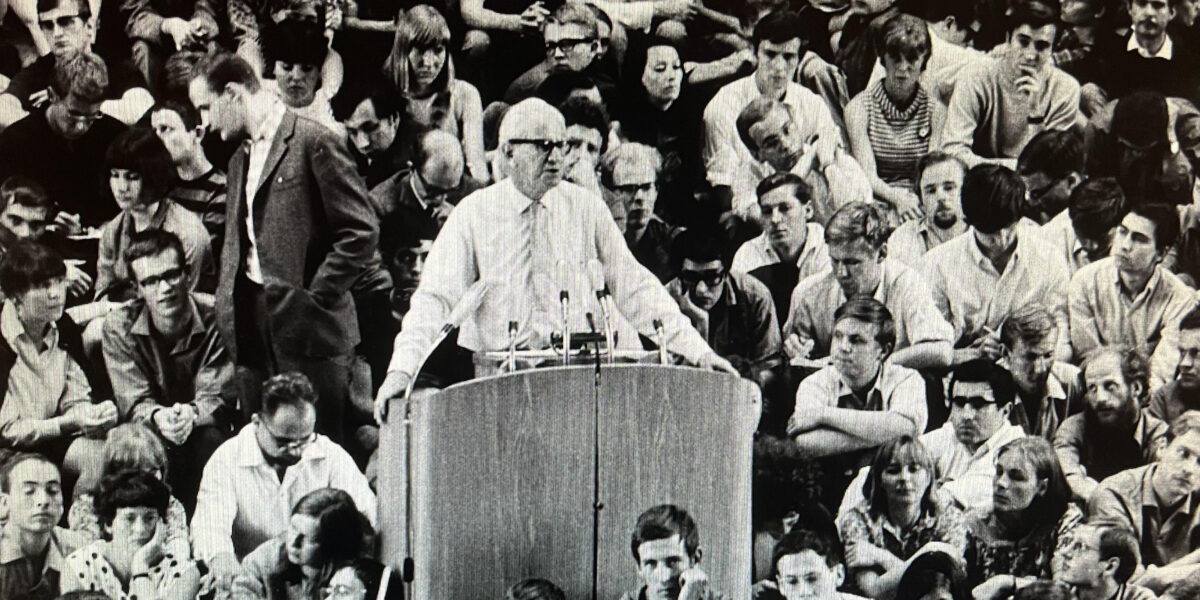
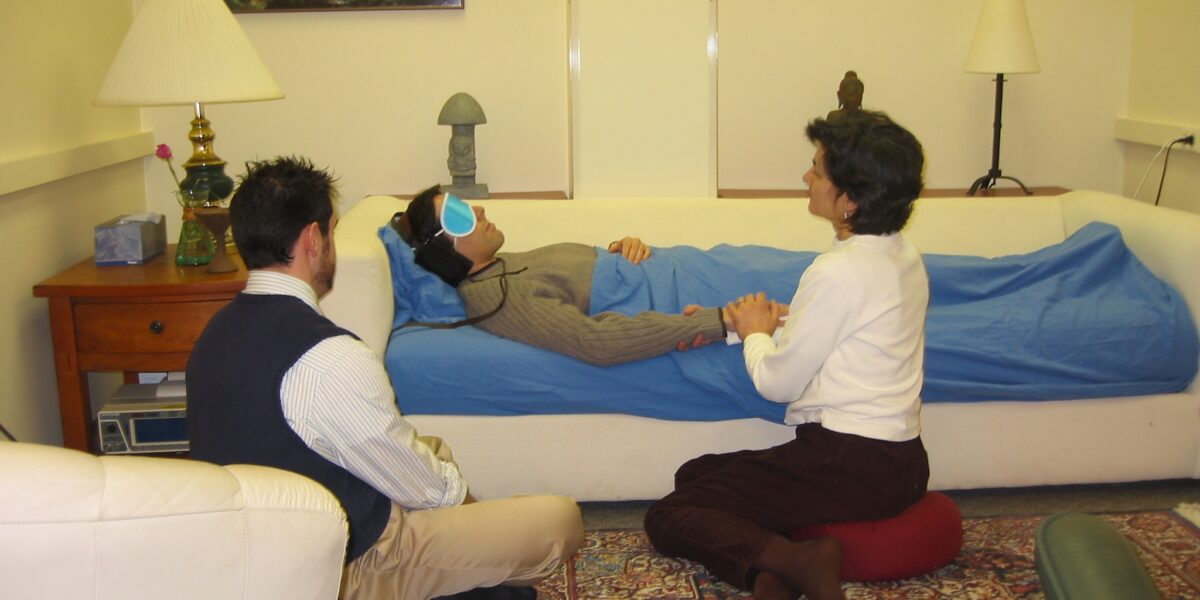
These concepts seemed to feature prominently in early psychedelic research, with individuals such as Leary, whom I mentioned previously, and others at a similar time who laid the foundation for the attention placed on the concept of ego death within the wider psychedelic culture. The prominent psychiatrist and psychedelic researcher Stanislav Grof contributed much to the conversation surrounding ego death, claiming that the main objective of psychedelic therapy is to experience this and transcend into the peak psychedelic experience. In this state, boundaries between subject and object are dissolved, and there is a ‘stepping outside’ of one’s self to allow for a unified experience.
But is this the main objective for everyone who takes psychedelics? I can see how this concept has become the “main objective” of psychedelic therapy, as it’s almost like some kind of signifier to know that a peak experience has been achieved, and then we can comfortably say that these substances are actually ‘doing’ something. This makes sense within the context of a psychedelic-assisted psychotherapy session, but I have personally heard this term used a lot in cultural contexts, where ego death might serve more like a badge of honour rather than being useful psychotherapeutic terminology.
On the r/Meditation subreddit back in 2023, user conn_r2112 asked the simple question “Why is everyone so concerned with this ‘ego death’?” – followed up by “What value do you think killing your ego will gain you?” This now archived post received 152 upvotes and 147 comments, suggesting that it’s not just psychonauts who are interested in this concept, but also those engaging in wider spiritual practices such as meditation.
The r/Psychonaut subreddit certainly has some interesting takes on this topic, and user asdfag95 asked the question “Why is EGO death seen as the ultimate experience and pursued by so many?” This post is still active from five years ago, with 740 upvotes and 385 comments currently, and there’s an implication that we don’t necessarily know what we’re talking about when it comes to ego death in the psychedelic context.
This person goes on to say:
You may think it will be fun, however the experience is nothing but humbling. You also have to deal with the aftermath, you have to come back and LIVE again as a human being. Now this is some serious shit right here, because some people may not be able to deal with that. It may take a looong time to ground yourself again and for some … it may never happen.” to which an unknown user replied – “Most people are saying they want to achieve ego-death when really what they’d probably rather achieve is an ego-less experience. Not scary or violent like feeling like you’re dying but just being able to experience consciousness without ego.
If we’re thinking about it in the context of these comments, there’s only one time I can honestly say I’ve had the experience of ego death. When I was 19, some uni friends and I bought some 50x salvia extract from a local headshop in Canterbury, not thinking it would do anything since it was technically considered a ‘legal high’. Unfortunately, it DID do something, and ‘humbling’ would be the minimal way to describe an experience which made me forget I’d smoked anything, and my entire reality just totally collapsed.
I, as a constrained physical entity, was no more, and I began turning into the bed I was sitting on like a wheel (this shape seems to be a recurring phenomenon in many individuals’ salvia trips), and my visual perception was in two places at the same time. I’d totally forgotten that I’d smoked something, and from my perspective, this was just my reality…but I was completely disoriented. Everything became utterly horrifying at the moment when I came to the realisation that I was no longer me and that I was having an insanely intense trip, almost like the ego was panicking to mould itself back together. I felt myself being physically trapped in this ongoing loop, and proceeded to ‘rip’ myself out of the trip to regain myself as a concept. It took a while to come back to myself, and this feeling persisted for the weeks afterwards, where I wasn’t really able to make much conversation, and I was most likely suffering from the trauma of having my entire concept of reality torn apart. It’s like we don’t recognise how useful and important the everyday consensus reality is until the rug gets taken out from under our feet.
Towards the end of the mid-2000s, the phenomenon of YouTube videos of people smoking salvia and seemingly losing touch with reality altogether emerged. I’m not really sure what these videos showed, but I can imagine those people having similar experiences might feel like they, as a concept, no longer existed during those videos.
Are experiences like these proof of a ‘real’ psychedelic experience that we can wear with a badge of honour? I’ll say right now, there’s nothing honourable about underestimating the power of a plant (only later did I find out that salvia shouldn’t be smoked) and having your reality shattered because you didn’t have any respect for it. I wasn’t going in with the intention of having an ego death experience, and it was probably the most irresponsible thing I’ve done when it comes to psychedelics. I can forgive myself for being young and naive at 19 years old, but I still think about that experience over 15 years later.
After this seriously challenging experience, the idea of ego death wasn’t something I ever actively pursued, although I did enjoy dabbling with ketamine during university, and it certainly yielded some experiences which I would consider to be within the realms of ego dissolution. But has the concept of ego death become something that is being pursued as a marker of a proper psychedelic experience? If you haven’t experienced ego death, are you not doing it right?
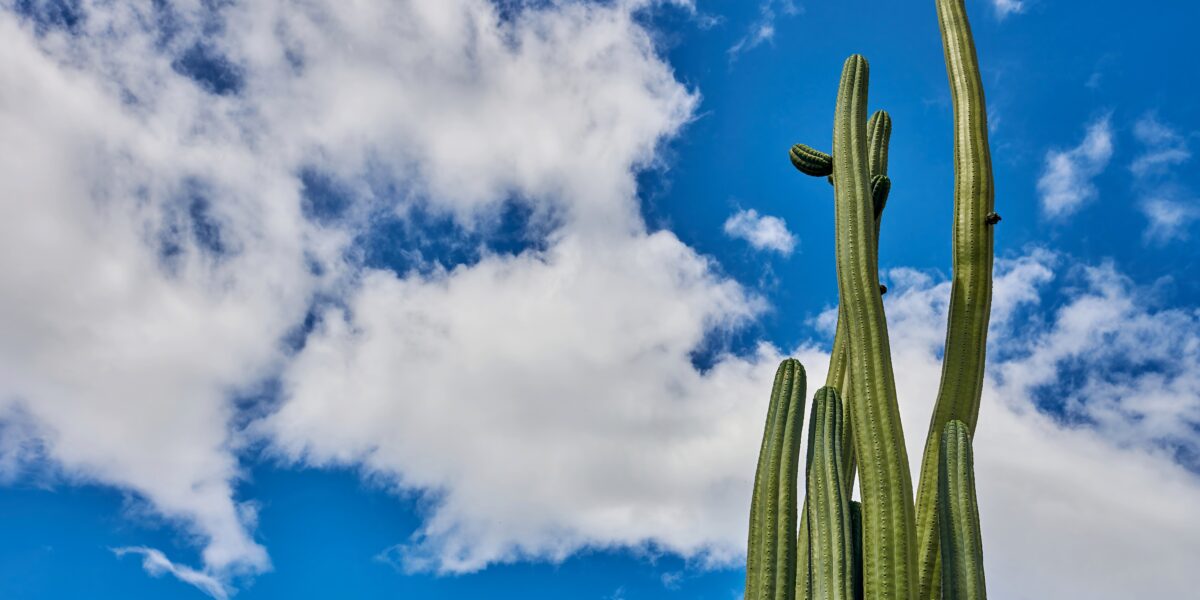
When talking to someone yesterday about the topic of this article, I mentioned how it seems like there’s an increasing focus on substances such as 5-MeO-DMT to produce experiences of ego death in a reliable fashion, particularly when it comes to the psychotherapeutic applications. This compound, which is contained in toxins produced from the skin of the Sonoran desert toad, has gained much interest over the past few years due to its short-acting effects. This experience is fundamentally different to other classic psychedelics, with individuals experiencing a ‘white light’ phenomenon within a non-dualistic state of consciousness where the ego dissolves.
This kind of experience may be appealing to those who have grappled with serious addiction or PTSD, where the transpersonal effects of being in a non-ordinary state of consciousness have great potential for healing. But does a substance like 5-MeO-DMT have the potential to attract those intrigued in some kind of psychedelic thrill-seeking?
One anonymous OPEN Foundation member stated:
If LSD is a rollercoaster, 5-MeO-DMT is an intergalactic faster-than-light rocket that takes you to a wholly unrecognizable state of being. Landing back from a high-dose experience you are left with more questions than you came in with, but what an amazing ride it is.
Whether or not people are taking this substance to have some kind of benchmark in their psychonautical experience might actually be irrelevant. If individuals are coming out of the experience having healed trauma or come through addictions, then maybe the desire to pursue an experience that connects individuals to something greater than themselves could be a powerful driving force for overcoming certain challenges.
Is the obsession with ego death in Western psychedelic culture just something that is difficult to get away from? Our everyday existence is so concerned with the self, and perhaps engaging in psychedelic experiences provides a release from being so wrapped up in the self all the time. Indigenous communities, however, might not have this same kind of focus when it comes to the potential for psychedelics to heal, as the general focus is not on the health of the individual but rather the wider community.
Psychedelic healing within indigenous cultures is more concerned with the interrelatedness between humans and the natural world, where existing in this way allows us to understand the interwoven nature of all things – the physical, emotional, mental, and spiritual are all included within a collective sense of identity.
Perhaps the self doesn’t need to be totally obliterated in order to find the healing, guidance, or relational connection that we’re seeking? I’m sure there are instances where this is incredibly helpful for dealing with serious mental health issues, but what if, for some people, they just need to soften the ego rather than kill it entirely?
Maybe there’s an opportunity to reframe our psychedelic goals to pursue balance, integration, relational awareness, and embodiment of certain practices that bring us further into alignment with ourselves, other people, and our natural world. While ego death is a fascinating phenomenon and only something that I’ve really just scratched the surface of, it might not be the only path to finding meaning. For some people, these kinds of experiences are too intense – and that’s OK. We don’t all necessarily need to be going headfirst into the white light to create more positive relationships with ourselves and the world around us.
A healthy psychedelic culture should embrace the validity of a variety of psychedelic experiences, all the way from microdosing to having a full-on non-dualistic, ego-dissolving trip. Would psychedelics lose all meaning if ego death weren’t even a concept, or can we utilise different plants and fungi in a way which can provide a variety of experiences to suit everyone’s needs?
Oli Genn-Bash | Community Blogger at Chemical Collective | linktr.ee/oligennbash
Oli is one of our community bloggers here at Chemical Collective. If you’re interested in joining our blogging team and getting paid to write about subjects you’re passionate about, please reach out to Sam via email at samwoolfe@gmail.com
Welcome to Chemical Collective.
Create an account to earn 200 welcome points.
Already have an account? Sign in
Check out our Community Blog and get involved with the conversation. You will be awarded 50 x ChemCoins for each comment up to a limit of 250 total ChemCoins.
Have you purchased any of our products? Reviews and reports are so important to the community. Share your honest opinion, and we’ll reward you with 50 ChemCoins for each review!
Every time you complete an order with us, you’ll be awarded ChemCoins for each Euro spent.
Welcome to Chemical Collective.
Create an account to earn 200 welcome points.
Already have an account? Sign in
Earn commission every time someone makes a purchase through your link.
When you become an affiliate, you will be allocated a unique link to share with your friends, followers, subscribers, or Aunt Susan.
You can choose to payout the commission earned once per month, or save it up to receive on a rainy day! Commission earned is 5% of the total order value per referral.
Contact us to join the Chemical Collective family and become an affiliate.
share your toughts
Join the Conversation.
Ever since you reached out a few weeks ago to discuss these ideas I’ve been waiting to see what you were going to write. This is a great and provocative essay that I hope will ignite long, and overdue, intelligent conversations about psychedelic experiences… I’m thinking of posting it to my facebook page, but maybe better that you host the conversation here? To start, I’d recommend we examine just what is this concept of “ego,” in our western psychological traditions? You know the word was an invention of Freud’s English translator… anyway, great and engaging well referenced writing, profound and important, so refreshing in light of all the trivialities hyped about in the psychedelic space…. I also once became the bed in a salvia experience….