Welcome to
Chemical Collective

Are you 18 or older?

Please confirm that your are 18 years of age or older.

You are not allowed to access the page.

info-icon €100 for domestic (NL, CZ, DE) €125 for the rest of the EU, excluding stealth shipping

Free shipping over €50 & free tracked shipping over €100

Friendly customer service available 9-5pm Monday to Friday

Free shipping over €50 & free tracked shipping over €100

Friendly customer service available 9-5pm Monday to Friday

Your cart is empty

Chemical Perspectives: Psychedelics and Panpsychism

stephanie-price

By Stephanie Price

shutterstock 703807816
in this article
  • Psychedelics and Panpsychism: The Research
  • Ontological Shock
  • Making Sense of the Metaphysical
  • Improving Clinical Outcomes
  • The Observer and the Observed: Understanding Consciousness
stephanie-price

By Stephanie Price

Disclaimer: The views and opinions expressed in this article are those of the authors and do not necessarily reflect the official policy or position of the Chemical Collective or any associated parties.

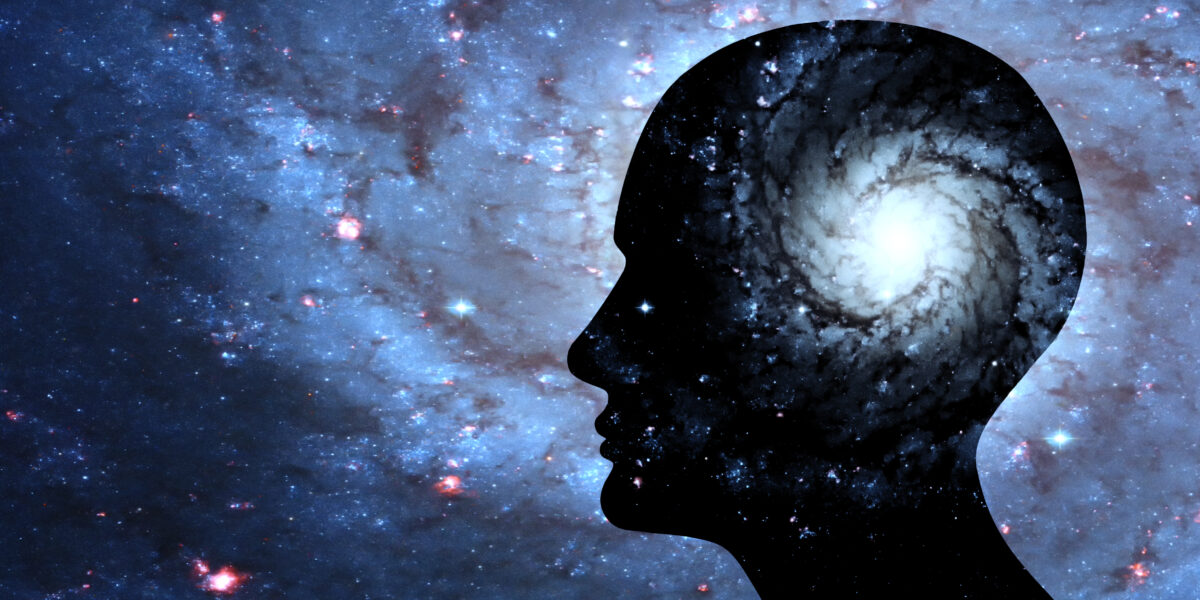
Panpsychism – the idea that consciousness is a feature of the universe rather than solely a product of the brain – is often reported as a relatable viewpoint after a psychedelic experience. Philosopher of mind and metaphysics, Dr Peter Sjöstedt-Hughes of Exeter University, believes that understanding these metaphysical shifts may help improve clinical outcomes for psychedelic therapy and how panpsychism may offer new perceptions of the world.

The traditional Western view of reality is rooted in materialism, the belief that consciousness arises solely out of the physical processes of the brain, and non-dualism, the idea that mind and body are separate. 

When exposed to psychedelics, however, many people report that this lifelong perspective is shattered, shifting towards more metaphysical views such as panpsychism – the idea that consciousness resides in all things in the universe. 

Materialism dates back over 2,500 years, but this perception of reality has gained dominance over spiritual or non-material explanations of the world since the dawn of scientific inquiry. 

There are many philosophical views that challenge this perspective, however, and research shows that psychedelics often bring materialist beliefs into question; the insights and hallucinations induced by psychedelics often trigger deep questions about our mind and the world around us.

From seeing “entities”, to feeling that plants are conscious or that we are all in some way connected to nature and the universe as a whole, psychedelics can trigger shifts in perception that may rumble the foundations of our reality.

If psychedelics can change how we perceive the world around us, what does this mean for their role in mental health, and also their role in deepening our understanding of consciousness and its place in the world? 

Dr Peter Sjöstedt-Hughes believes that helping people better understand the metaphysical belief shifts they experience after using psychedelics could potentially improve psychedelic therapy outcomes and may even contribute to our understanding of consciousness. 

In a paper published in Frontiers in Psychology, Dr Sjöstedt-Hughes presents a Metaphysics Matrix and a Metaphysics Matrix Questionnaire to help patients make sense of these metaphysical belief changes, including panpsychism.

“Materialism itself is a metaphysical belief,” says Dr Sjöstedt-Hughes, adding:

Materialism’s view that mind is produced by, or identical to, certain activities of matter is not a scientific but a metaphysical speculation. Yet the metaphysics of materialism has underlain much of Western science for the last few centuries. 

It is implicit in much of contemporary neuroscience, and as such limits the research possibilities and interpretation of findings. 

If we open up the metaphysical options, as I seek to do in the Metaphysics Matrix, then I think both the science of, and therapy with, psychedelics could enhance significantly.


Psychedelics and Panpsychism: The Research

While research into metaphysical belief changes following a psychedelic experience is limited, there is some that shows that psychedelics can indeed alter our views on the world and that metaphysical and mystical experiences during a psychedelic trip can contribute to improved clinical outcomes.

Results from a large survey sample found that, in particular, they seem to move our perceptions away from materialism and towards panpsychism, and that these belief shifts can last for up to six months following a psychedelic experience.

Another study found large increases in attribution of consciousness following a psychedelic experience not only to animals such as non-human primates and insects, but also to plants, mushrooms and inanimate man-made objects. 

Research suggests that these shifts in metaphysical beliefs correlate with improved mental health outcomes. 

For example, one study that investigated changes in anxiety about death found that, following a psychedelic experience, panpsychism was the only metaphysical belief change that significantly correlated with changes in death anxiety. 

The authors of the study suggest that panpsychist beliefs might reduce death anxiety as:

… the belief that consciousness is a fundamental aspect of the universe may offer comfort in the idea that some form of consciousness continues to exist after physical death, thereby reducing the fear of “nothingness” or nonexistence. 

Secondly, panpsychist beliefs may strengthen notions of universal interconnectedness, which could make the idea of death less isolating and more a part of a natural, universal process.

Ontological Shock

While these changes in belief can be curious, thrilling, or fascinating, someone who has experienced such a shift can sometimes experience ontological shock.

Ontological shock is when an individual experiences significant changes to their fundamental beliefs of identity or reality, and the psychological effects of this can often be profound, causing symptoms such as disorientation, existential distress, or anxiety.

In fact, these shifts can be so profound that some people report undergoing major life changes following a psychedelic experience, such as changes in religion and spirituality, sexuality, or marital status. 

While the majority of people report these experiences to be positive, some people report them to be negative, experiencing persistent existential struggle, confusion about existence and purpose, and preoccupation with meaning-making.

Making Sense of the Metaphysical

Metaphysical and mystical experiences are not the same, although mystical experiences, such as “seeing god” or “becoming one with nature”, may drive metaphysical belief changes. 

Currently, there are a number of mystical experience “scales” in research that can be applied when studying psychedelic experiences to help measure and understand their impact, such as the Mystical Experience Questionnaire (MEQ), the Hood Mysticism Scale (HMS), and the Hallucinogen Rating Scale (HRS).

However, there were previously no such ways to measure metaphysical experiences.

Dr Sjöstedt-Hughes’ Metaphysics Matrix sets out different metaphysical positions such as idealism, monism, dualism, and panpsychism, along with a Metaphysics Questionnaire that can be used to used as a tool for quantitative measurement of psychedelic experience in trials.

“For patients or participants, psychedelic-induced metaphysical experiences can then be taken as significant: as possibly real, thus potentially altering a person’s worldview, and consequently their own view of themselves in relation to this reality,” says Dr Sjöstedt-Hughes. He adds:

A common metaphysical position stemming from psychedelic use seems to be Panpsychism: that minds are part of all natural entities, from mankind to molecule and more. This is common not only in the West – it has parallels in Amerindian psychedelic cultures: as ‘Animism’.

To better understand Panpsychism we can turn to some of its greatest expositors, such as Spinoza and Whitehead. I have sought in my work to bridge such philosophies with psychedelic experiences, but the task ahead lies in making this more practical in therapeutic settings.

Improving Clinical Outcomes

Sjöstedt-Hughes suggests that utilising these tools during the integrative phase of psychedelic therapy will produce longer-term benefits to participants.

“The purpose of the Metaphysics Matrix was firstly to show that metaphysics is far broader than the commonly believed two alternatives of materialism and dualism,” explains Sjostedt-Hughes. He adds:

I wanted to show that psychedelic-occasioned experiences can be understood more comprehensively through metaphysics than through mysticism. For example, Idealism (that all is mind) is not part of the ambit of mysticism, though it is of metaphysics.

Furthermore, unlike mysticism, metaphysics seeks to explain the experience rationally, rather than leave it at the stage of mystery.

This, I believe, may give more credibility to people’s psychedelic experiences, and thus possibly extend the longevity of its positive results on mental health.

This is the reason that metaphysics itself can’t be easily dismissed as hallucination, but must be taken more seriously as a valid theory of reality – as has been the approach of philosophy through the millennia.

Further still, the Metaphysics Matrix allows therapists and researchers themselves to see where their own beliefs lie, and thus ideally loosening any dogmas that may be lodging in their psyches.

We do not recognise metaphysical prejudice and dogma at the moment in our culture. And this is how certain such prejudices maintain their dominance. And such prejudice certainly affects how we manage therapy and research – not least in psychedelic circles.

The Observer and the Observed: Understanding Consciousness

Beyond psychedelic therapy, exploring the terrain of our consciousness may have implications for advancing our understanding of its nature – but Dr Sjostedt-Hughes says psychedelics alone will not achieve this.

Panpsychism is one way of addressing the mind-matter problem: how our concepts of mind and matter relate,” says Dr Sjostedt-Hughes. He elaborates:

One can approach Panpsychism purely theoretically, by studying Spinoza, Whitehead, Fechner, Strawson, et al., or one can approach Panpsychism experientially, via, say, psychedelics.

A fuller understanding of Panpsychism comes from the double approach of theory and experience, and for this reason, psychedelics could advance our understanding of consciousness in this way.

Understanding Consciousness, thus understanding ourselves and others, however, demands a multifaceted enterprise encompassing not only psychedelics and metaphysics, but also numerous other fields such as neuroscience, anthropology, history, linguistics, AI, and much more. 

Psychedelics will get us closer, but by themselves, not close enough.

Dr Sjostedt-Hughes says that Panpsychism also offers an ethical viewpoint:

By seeing nature as sentient and therefore as holding its own values, we bequeath to nature an ethical status. 

Further, Whitehead’s form of Panpsychism – known as panexperientialism – allows us to understand psychedelic-induced nature-connectedness in a very beneficial light: The sentient object one perceives is not merely a representation, a way of picturing the world as if we see it through a computer screen, but rather part of the object one perceives becomes part of the subject who perceives it.

In other words, for Whitehead, we and nature are sentiently interfused. We are not alienated from Nature behind a screen, but we are truly part of Nature.

This is an example of how experiences had via psychedelics can be framed through a panpsychological metaphysics, one that renders such experiences as far more significant in terms of one’s relation to nature, both ethically and therapeutically.

So I believe that psychedelic therapy and research must involve metaphysics for real advancement.
Stephanie Price | Community Blogger at Chemical Collective

Stephanie is one of our community bloggers here at Chemical Collective. If you’re interested in joining our blogging team and getting paid to write about subjects you’re passionate about, please reach out to Sam via email at samwoolfe@gmail.com

share your toughts

Join the Conversation.

0 Comments
Inline Feedbacks
View all comments

Related articles

Our Products

Related Products

1V-LSD 150mcg Blotters
1V-LSD 150mcg Blotters From 22.00
(143)
1cP-LSD 100mcg Blotters
1cP-LSD 100mcg Blotters From 18.00
(137)
Tryptamine Mix and Match Pack (4 x 0.1g)
Tryptamine Mix and Match Pack (4 x 0.1g) 65.00
(1)
1V-LSD 10mcg Micro Pellets
1V-LSD 10mcg Micro Pellets From 15.00
(43)
2-FDCK HCL
2-FDCK HCL From 12.00
(82)
1V-LSD 225mcg Art Design Blotters
1V-LSD 225mcg Art Design Blotters From 35.00
(62)
1S-LSD 150mcg Blotters
1S-LSD 150mcg Blotters From 29.00
(16)
1cP-LSD 150mcg Art Design Blotters
1cP-LSD 150mcg Art Design Blotters From 25.00
(74)
1V-LSD 225mcg Pellets
1V-LSD 225mcg Pellets From 35.00
(26)
1D-LSD 225mcg Pellets (1T-LSD)

SALE! -15%

1D-LSD 225mcg Pellets (1T-LSD) From Original price was: €42.00.Current price is: €35.70.
(13)
1cP-LSD 10mcg Micro Pellets
1cP-LSD 10mcg Micro Pellets From 15.00
(23)
5-MeO-DMT Freebase
5-MeO-DMT Freebase From 23.95
(36)
O-PCE HCL
O-PCE HCL From 17.50
(25)
1cP-LSD 20mcg Micro Blotters
1cP-LSD 20mcg Micro Blotters From 18.00
(27)
4-HO-MET Fumarate
4-HO-MET Fumarate From 19.50
(26)
rewards-icon
popup-logo

Reward program

popup-close
  • Earn
  • Affiliates