in this article
- How Does Interoception Work?
- Psychedelics and the Body
- The Neuroscience of Psychedelics and Interoception
- Subjective Interoceptive Effects
- Interoception in Psychedelic Therapy
- Are We Entering an Interoceptive Future?
Are you 18 or older?
Please confirm that your are 18 years of age or older.
You are not allowed to access the page.
Disclaimer: The views and opinions expressed in this article are those of the authors and do not necessarily reflect the official policy or position of the Chemical Collective or any associated parties.
How aware are you of your own internal bodily states? Do you notice how quickly you’re breathing if you’re feeling stressed, or perhaps how sweaty your palms have become?
As someone with a diagnosis of fibromyalgia, I’ve made many efforts to get more in tune with my body and understand what it needs and where I might need to either stop and rest or find some motivation to start moving. Being faced with chronic inflammation, pain, and fatigue has meant I’ve been through the wringer of pharmaceutical drugs, which only made me less in tune with my bodily states, and this led to issues with weight and food, which only compounded the challenging experience I was having with my body.
Even saying “my” body as if I’m separate from it feels problematic, as this can lead to potential feelings of judgement when the physical parts of ourselves don’t necessarily cooperate with what the mind wants to do. This can be hard, as I’m sure many people with long-term health conditions experience. We might feel stuck in a physical situation, and then we try to do more than we’re capable of, which then leads to instances of being totally wiped out because we haven’t “listened” to our body.
But what does this listening to our body actually mean? There’s a growing recognition of the role of something known as ‘interoception’, where our collection of senses provides information to the organism about the internal state of the body. This extra sense (or we might be able to see it more in terms of an ‘umbrella’ sense) processes information from the heart, gut, lungs, and other areas as our internal organs interact with our brain.
While the main five senses of touch, smell, hearing, sight, and taste allow us to process information about the world around us, interoception refers to perceptions of internal bodily states and signals that construct a subjective representation of the experience. This can allow us to become more aware of things such as hunger or pain, where we effectively tap into our ‘inner experience’.
Could psychedelics provide that opportunity by either enhancing or distorting our sense of interoception? With all the talk about the benefits of psychedelics to reflect on the self from mental, emotional, and spiritual perspectives, do these substances also have the potential to allow our body itself to tune in and reflect on how the different systems are operating?
Interoception is essentially our body’s way of telling us how we feel, and as we grow and develop, we learn which sensations require attending to – some of the most obvious examples might be knowing when to use the toilet if we feel the sensation of needing to pee, or eating food if our stomach is rumbling. Attending to these needs can allow us to enter homeostasis, where our body is operating as it should within a state of balance.
But this requires a lot of work when our bodies are so complex – our brains are essentially running a budget through our entire system, ensuring that the right amount of resources, such as salt, water, and glucose, are reaching the cells that need them the most. This is more related to another process in the body known as allostasis, which is predictive in its nature and attempts to meet the needs of the body before they arise. This is different to homeostasis, which is a reactive process that seeks to restore balance and return to a set point after some disruption.
Similarly to how we sense and predict things outside of the body (exteroception), interoception operates within a predictive framework. The relationship between our brain and the rest of our body allows this process to function in a mutual way: the brain is issuing motor commands to adjust the insides of the body and predicting the sensory consequences of those movements, while the different sensory surfaces inside your body (including dozens of cells) send back signals to your brain.
We have ‘interoceptors’ inside our neurons that can detect these various signals, where they are changed into electrical, hormonal, or non-neuronal signals that can be interpreted and integrated by the brain. The location of these receptors has an impact on whether or not the signals are transmitted through the peripheral nervous system, or via a non-neuronal system, such as the circulatory or lymphatic systems. Classic neuroendocrine systems such as the hypothalamic-neurohypophyseal system (HNS), the hypothalamic-pituitary-adrenal (HPA) axis, the hypothalamic-pituitary-gonadal axis (HPG), and the hypothalamic-pituitary-thyroid axis (HPT) also offer examples of interoception communication via non-neural systems.
When it comes to the peripheral nervous system, our mechanical interoceptors directly detect signals in local organs and transmit interoceptive information through these neural pathways to the brain. A distributed brain network is involved in the processing of different signals, where they pass through the thalamus, which then relays information to different parts of the brain. One key area is the insular cortex, which sends information to your body about you, such as hunger, pain, and fatigue, as well as being linked to emotion, self-awareness, and cognitive function.
There might be a spectrum of responses regarding our level of interoception when it comes to mental health problems such as anxiety or depression. For example, someone with a diagnosis of anxiety might be hyperaware of what’s going on inside their body, while a depressed individual may report being able to feel absolutely nothing at all.
These links to emotion and self-awareness might provide some opportunity to explore the benefit of psychedelics from an interoceptive perspective, where we take more of a holistic approach to see where there might be benefits from managing things like chronic pain, depression, or anxiety. This way of looking at the benefits of psychedelics can allow us to see where the whole body is being impacted, rather than just looking at what’s going on inside our brains. In recent years, the brain has become a central focus of Western approaches to understanding the impact of psychedelics – but what if indigenous approaches could allow us to understand psychedelics from more of a whole-body perspective?
The separation between the physical, emotional, mental, and spiritual sides of our bodies is a Western artefact that seems to be absent within indigenous knowledge systems related to psychedelic healing. Psychedelics might be seen within a Western context primarily as psychological tools, whereas within indigenous contexts, they can be seen more as being plants that can modify the whole body within a holistic system.
In some ayahuasca traditions, purging is an important part of the experience itself, where the body is able to expel what is causing imbalance. I’ve not personally gone down the route of ayahuasca myself, but I imagine this is an incredibly powerful experience that can really allow you to tap into what’s going on inside your body, and how this might be impacting other areas of your life.
In ceremonies involving the peyote cactus, it is common to fast before consumption to allow for a greater absorption of the active compounds. This can also potentially create an easier experience, where food isn’t getting in the way of the effects of the plant working its way through your body.
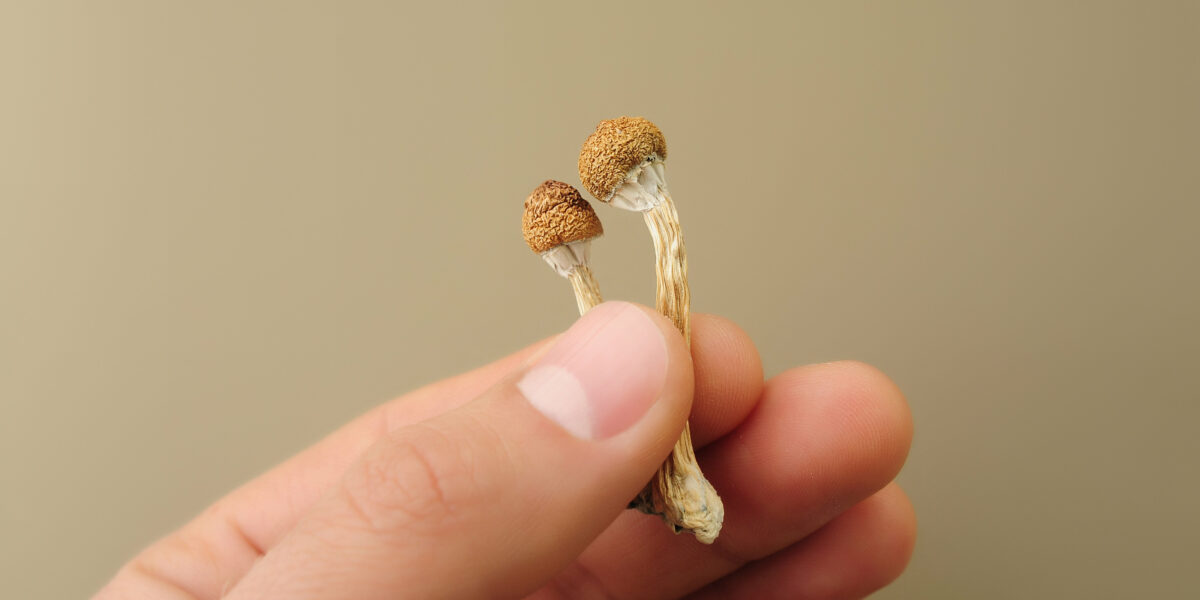
Mesoamerican consumption of Psilocybe mushrooms often involved ritualistic chanting as well as dancing to provide a container for the experience, as well as potentiating the effects of the mushrooms. This kind of full-bodied approach is less concerned with what is necessarily just going on in the mind, but more so with how our individual bodies are interrelated into a cohesive cultural wholeness. Could this wholeness allow for more empowered healing when it comes to psychedelics? If we’re more aware of what’s going on inside our bodies and how we interact with others after taking certain plants or fungi, we might see psychedelics as having an overwhelmingly positive effect on our level of interoception.
I like to think that this approach to psychedelics makes the most sense, and it seems quite obvious to me that taking certain plants or fungi would allow us to tap into what’s going on inside our bodies, or rather, switch our awareness more towards processes that might have previously been hidden from us. I remember speaking to a devotee of Osho who happened to be a cellular biologist, who claimed that through consuming ayahuasca, she was able to effectively ‘travel’ into her cells to figure out what was going on and ‘fix’ things. Apparently, she was cancer-free, and she seemed very confident that this was what she’d done, rather than it being just a coincidence. This is only one story, but I think it’s fascinating to think about our awareness and influence over the state of our own body via these plants or fungi might be much greater than we ever could have dreamed of.
But what about psychedelic science? Is it catching up with the idea of interoception, or are we still waiting for the experts to tell us what’s going on inside our brains?
Psychedelics such as LSD, DMT, and psilocybin mushrooms promote neuroplasticity primarily through the activation of serotonin 2A receptors, which are also responsible for the antidepressant effects of these substances. The activation of 5-HT2A receptors by these substances also seems to be responsible for the hallucinogenic effects we experience, as well as modulating our gut microbiome, which can also impact our level of interoception.
I think the gut-brain axis in relation to psychedelics might actually be the future, and I’m sure this would give us more insight into how our interoception can be impacted by the introduction of psychedelics. These substances actually have the ability to influence the composition of our gut bacteria and modulate the availability of certain enzymes (such as tryptophan metabolites, which allow us to create more serotonin), which can impact the way we feel while having a psychedelic experience.
Serotonin itself seems to play a positive role in the process of interoception, where it can modulate this process and reduce sensitivity in areas such as the digestive tract when faced with challenging sensations. Reduced levels of serotonin in places like the gut might also contribute towards reduced interoception, and there seems to be a link between states of anxiety and depression with a reduced level of interoception.
Serotonergic psychedelics such as psilocybin mushrooms act on the Default Mode Network and can alter our sense of self, particularly with respect to how separate we feel from the rest of our environment. We might experience a sense of ego dissolution and oneness, where we are more at peace with everything. This might bring our system into a state of wholeness, where we’re able to tap into the inner processes of our body.
Another serotonergic psychedelic, MDMA, has an interesting role to play in interoception by modulating the functioning of the insular cortex, which, as previously mentioned, is a key area of the brain involved in interoception. Experiences with MDMA might be characterised by a marked positive mood, pleasant/unusual bodily sensations and pro-social, empathic feelings, which can make us feel more in tune with our own body and individuals around us.
There might also be reduced precision under the influence of certain psychedelics, which means we might be able to modulate our beliefs and enable us to access a wider range of options for how we interpret the world. This could potentially impact our level of interoception, where our attention is placed more towards our internal world.
When I first started consuming psychedelics, the term ‘body load’ was often something we spoke about, and I wonder if ‘interoception’ has become a new term to describe the physicality of a psychedelic experience. Body load can be thought of in negative terms, as it describes the ‘load’ on the body. This concept would often prepare us for any sort of physical endurance, which might create more of a challenging psychedelic experience. Common symptoms include stomach ache, nausea, dizziness, feelings of being over-stimulated or “wired,” shivering, feelings of excessive tension in the torso, or, in more severe cases, shortness of breath. We might also experience something of a body ‘rush’ rather than a load, which would feel more pleasant and uplifting.
Psychedelics can also help us focus more on the mind-body connection by working in a somatic way, which might allow the body to release stored trauma. Through this embodied practice in combination with psychedelics, we can attune ourselves to understanding what might be going on in different parts of our body, and where this could be related to the impact of certain life events.
I personally find myself often doing ‘psychedelic physiotherapy’ on myself when I’m tripping alone – there might be a lot going on cognitively, but ultimately it gets to the point in the trip where I have to deal with what’s going on in more of a somatic way. I tend to tune in to my lower back, where I hold a lot of tension, and this could be related to feelings of not being emotionally supported by certain people in my life. I have also experienced somatic release from areas such as my heart while taking part in a San Pedro ceremony, and I very much related this to working through feelings of cynicism that had stayed with me from childhood. I understood where this sensation of a closed heart was impacting me energetically, and I can continue to tap back into the sensation of release, where I am now able to focus more on going into situations with more of an open heart.
While this kind of experience is something that feels very much in tune with my body/mind as a holistic whole, we might have experiences which make us feel dysregulated from the body. We could potentially feel nauseous, or have experiences where the embodied self and ego break down. This might play havoc with our level of interoception, where we’re unable to tune into the body as it feels like it’s getting away from us.
There might be different interoceptive impacts depending on the kind of substance we’re consuming, with some, such as 5-MeO-DMT, for example, being a strong catalyst for complete ego dissolution, compared to something like LSD or psilocybin mushrooms, which might keep us more within the confines of our embodied self. Is there some use in not totally escaping these confines so we can work more with what’s going on in our bodies? I’m personally not too keen on blasting off into space while I’ve still got things I need to deal with regarding my physical self, so it might be that we find the concept of interoception becoming more of a central focus when it comes to psychedelic therapy.
There is growing acceptance of the need to focus on interoception as a mediator of psychedelic therapy outcomes. The wide-reaching potential for psychedelics to treat a number of different conditions, from depression to PTSD, eating disorders, and even physical ailments such as fibromyalgia, might suggest that these substances can allow for more insight into the mind-body connection.
If we’ve experienced something like PTSD and our body has gone through something massive, then psychedelic therapy could eventually allow us to feel like our body is safe, which could then help us attune ourselves more to our internal state. Psychedelics have the potential to reset the brains of people experiencing depression, and this might assist with the body-emotion link in cases where our interoception could be potentially reduced.
I’ve personally found my experience with psychedelics to be key in managing symptoms of fibromyalgia, where I’m able to tune in more to my levels of pain and understand where tension might be held in certain areas. Psilocybin mushrooms in particular have simultaneously allowed me to be kinder to myself, while also showing me where in the body I need to focus. It’s quite a strange thing and difficult to describe, but there’s often the feeling that my body needs to get on board with what my brain wants to do, which generally means becoming quite frustrated with my physical self when those things don’t happen. Psychedelics have been such a useful catalyst in helping me feel more aligned and empowered from an internal sense, where I have been able to recognise what my body needs in terms of exercise and food, and break out of patterns where I feel like I can’t do anything.
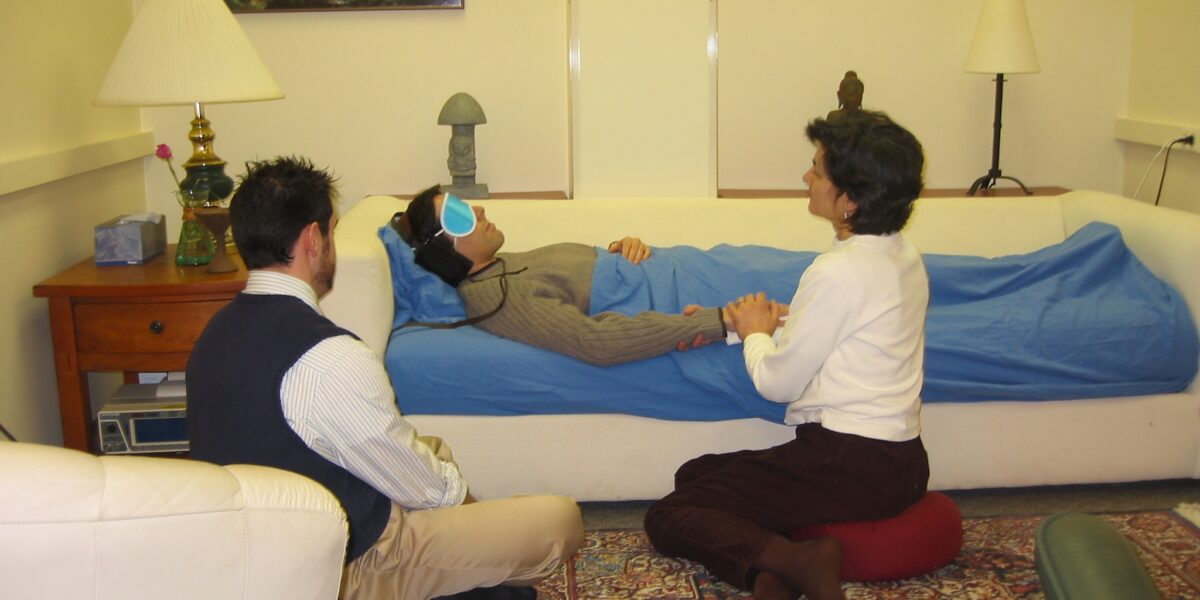
Focusing on interoception within a psychedelic therapy framework may also allow for greater integration, where we can utilise embodied techniques such as breathwork, yoga, meditation, or simply just rest to allow for the experiences to embed themselves into our daily lives in a positive way.
Too much interoception could arguably be triggering if we’re not supported properly. We might find somatic release overwhelming or find ourselves in a state of panic if we open up our physical self without enough psychological containment. Organisations such as the Psychedelic Somatic Institute, for example, are focusing on the need to create processes that are:
homeostatic, self corrective mechanisms that are part of our biology that become far more active and far more accessible when we enter altered states of consciousness. These processes take a felt sense, autonomic nervous system pathway and know exactly how to work with unresolved traumatic material.
This, to me, seems like the most intuitive way to engage with psychedelic therapy, where there is more potential to heal through engaging with the body as a holistic system. Psychedelics can heighten our inner bodily states or potentially dissolve them, with both offering different therapeutic outcomes depending on what the specific needs are. Interoception could ultimately be the foundation for our sense of self, and psychedelics might reveal how fluid the mind-body connection is, where we can engage with these deeper systems at play to enact greater healing.
Could psychedelic therapy be moving more towards what we ‘feel’ rather than just what we think or see?
Oli Genn-Bash | Community Blogger at Chemical Collective | linktr.ee/oligennbash
Oli is one of our community bloggers here at Chemical Collective. If you’re interested in joining our blogging team and getting paid to write about subjects you’re passionate about, please reach out to Sam via email at samwoolfe@gmail.com
Welcome to Chemical Collective.
Create an account to earn 200 welcome points.
Already have an account? Sign in
Check out our Community Blog and get involved with the conversation. You will be awarded 50 x ChemCoins for each comment up to a limit of 250 total ChemCoins.
Have you purchased any of our products? Reviews and reports are so important to the community. Share your honest opinion, and we’ll reward you with 50 ChemCoins for each review!
Every time you complete an order with us, you’ll be awarded ChemCoins for each Euro spent.
Welcome to Chemical Collective.
Create an account to earn 200 welcome points.
Already have an account? Sign in
Earn commission every time someone makes a purchase through your link.
When you become an affiliate, you will be allocated a unique link to share with your friends, followers, subscribers, or Aunt Susan.
You can choose to payout the commission earned once per month, or save it up to receive on a rainy day! Commission earned is 5% of the total order value per referral.
Contact us to join the Chemical Collective family and become an affiliate.
share your toughts
Join the Conversation.
Try reading old Mesoamerican prehispanic pictographs and steles and get into a pantheistic monistic view of reality instead of a western cartesian dualistic narrative of reality.