Welcome to
Chemical Collective

Are you 18 or older?

Please confirm that your are 18 years of age or older.

You are not allowed to access the page.

info-icon €100 for domestic (NL, CZ, DE) €125 for the rest of the EU, excluding stealth shipping

Free shipping over €50 & free tracked shipping over €100

Friendly customer service available 9-5pm Monday to Friday

Free shipping over €50 & free tracked shipping over €100

Friendly customer service available 9-5pm Monday to Friday

Your cart is empty

Non-Consensual Dosing in Psychedelic History

ed-prideaux

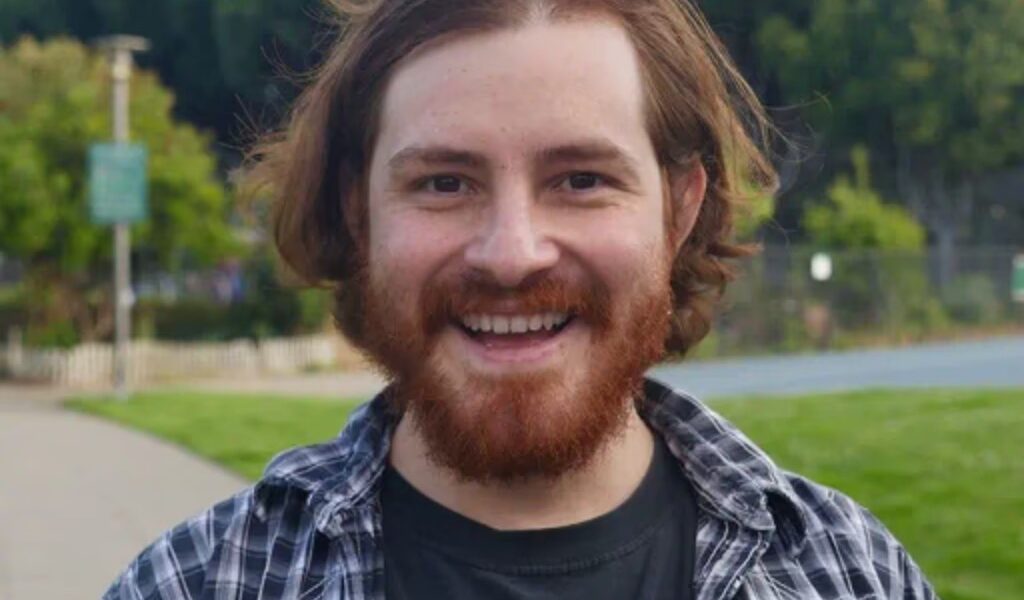
By Ed Prideaux

shutterstock 1535275943
in this article
  • The Tale of the Beatles
  • Imbalances of Power
  • Full Metal Spiking
  • Mind Control
  • A Mature Model of Consent
ed-prideaux

By Ed Prideaux

Disclaimer: The views and opinions expressed in this article are those of the authors and do not necessarily reflect the official policy or position of the Chemical Collective or any associated parties.

Dr. Timothy Leary has been quoted as issuing “Two Commandments for the Molecular Age: Thou shalt not alter the consciousness of thy fellow men. Thou shalt not prevent thy fellow man from altering his or her own consciousness.”

Dosing people with drugs without their knowledge is a criminal offence in most of the world’s jurisdictions, and is commonly received as a sinister and sociopathic practice. In the UK, around 1 in 10 women and 1 in 20 men have reported being spiked, with the end result often being sexual assault, kidnapping, and rape. The most common culprits are GHB, MDMA, ketamine, cocaine, and rohypnol, but the classic psychedelic drugs are occasionally implicated. Bars and clubs are increasingly offering drug‑testing kits; California in 2025 became the first U.S. state to require venues to provide kits for patrons. 

The cultural repository of covert dosing is wide-ranging. Stories of strangers giving out candy laced with acid have circulated widely, along with myths of crazed hippies seeking to dose the water supply. Among the more bizarre variants of these legends is the “blue star tattoo” myth. It claimed that kids were being handed temporary tattoos laced with LSD – shaped like Batman, blue stars, or the Dallas Cowboys logo. Parents were warned via flyers to watch out for them.

In the 1970s–90s, there were scattered reports of LSD being slipped to children or teachers. In 1996, a Florida high school teacher (Linda Woodard) found her soda laced with LSD by students. She felt nauseous and the teens were charged. In 1997, a San Diego middle-school student spiked an instructor’s iced tea with LSD “to get revenge” for a bad grade. More recently, an employee at a car rental firm achieved viral notoriety for dosing his colleagues, believing they had “negative energy”. 

The Tale of the Beatles

Today, we all accept that dosing people with psychedelic drugs is wrong. But this cannot be taken for granted, for it was an extremely popular practice in the 1960s. Some would theorise, for instance, that the 1960s began as a cultural phenomenon with a particular spiking incident in 1965 – around whose aftermath the whole Generation’s predatory character can be understood.

In the blurry-between days that separated their endless speed-fuelled tours, two of the Beatles went for dinner with their dentist. He was called John Riley, a ‘dentist to the stars’. He boasted a buxom, large-breasted girlfriend, many years his junior, called Cyndy, who worked as a madam for Playboy.

Riley was one such scenester with whom The Beatles and their broader entourage had been rubbing shoulders. The group’s leader, Lennon, had sampled some of the protomorphous ‘Swinging London’ set’s sexual intrigues, including cuckoldery and affairs with older women. The band would hang with Allen Ginsberg, philosophers, journalists, art dealers, and decadent aristocrats. And while Riley had undoubted charisma, it struck his clients as odd that a visit to his clinic would end invariably in Valium-induced unconsciousness.

Riley seemed insistent that the group stay for coffee when the dinner concluded. They wondered if he was trying to strike up an orgy. But John, George and their wives were soon due off to watch their friends play a gig at the Pickwick Club in London. George Harrison remembered:

After dinner I said to John, ‘Let’s go – they’re going to be on soon,’ and John said ‘OK’, but the dentist was saying, ‘Don’t go; you should stay here.’ And then he said, ‘Well, at least finish your coffee first.’ So we finished our coffee and after a while I said again, ‘Come on, it’s getting late – we’d better go.’ The dentist said something to John and John turned to me and said, ‘We’ve had LSD.’ I just thought, ‘Well, what’s that? So what? Let’s go!’ 

LSD had received consistent press coverage in the United States. This was thanks largely to the funding and enthusiasm of the CIA and the Luces: a publishing power couple that loved the drug and promoted it in TIME and LIFE. Awareness of LSD had begun to trickle to Britain. Lennon remembered:

It was all the thing with the middle-class London swingers who’d heard all about it and didn’t know it was any different from pot and pills. He gave us it, and he was saying, ‘I advise you not to leave.’

Riley had reportedly acquired the drug through an association with Michael Hollingshead, a Geordie con artist who had inveigled his way into the Harvard psychedelic scene through histrionic threats of suicide. He is speculated by one author, John Potash, to have been involved with intelligence services. He worked a suitably vague job as an emissary for the ‘Institute of British-American Cultural Exchange’ and carried his stash in a mayonnaise jar packed with LSD-impregnated sugar paste. Stationed at his Fifth Avenue apartment in New York in 1963, Hollingshead held parties to introduce the city’s intelligentsia to tripping. As described in Acid Dreams by Martin Lee and Bruce Shlain, “[t]he entire place was laced with LSD: the food, the furnishings, etc., and anyone who came through the door (even the knobs were spiked) inevitably wound up stoned.”

Fast forward two years, and John and George and their wives had made their way to the Pickwick. They soon found themselves in what Lennon’s wife called a “horror film”. Tables elongated, imaginary fires sparked in the lift, and John was having great trouble hearing people speak. He later floated on a ceiling, and George’s house was a “big submarine and [John] was driving it.” The trip was “brilliant and terrifying”, John said. George described encountering a “very concentrated version of the best feeling I’d ever had in my whole life”. 

The effect on the two was deemed sufficiently enormous that they “could not relate to Paul and Ringo on any level”, and the others would have to take LSD as soon as possible to prevent the band’s total breakdown. Here, we see that social pressure can modulate the degree of consent we have in taking a drug.

Lennon pleaded with his wife, Cynthia, who hated the drug, to try it again. Lennon was equally evangelical with the band’s assistant press officer, Alistair Taylor. The band’s primary press officer, Derek Taylor (no relation), was later double-dosed without his full awareness at a party by John and George. At this same party, Lennon’s wife “realised I had already been given it, probably in my drink, so that I wouldn’t refuse at the last minute.”

“[M]ore than peer pressure”, McCartney said, “it’s fear pressure.” McCartney heard that taking acid would mean “you were never the same again”. It was a prospect Lennon found enticing – enticing enough to take “a thousand trips” – but one Paul found terrifying. A drug of that advertised power would be difficult to consent to at all, absent the threats to his career if the band broke up.

If it’s to be believed, the drug involves an ‘unknown unknown’ range of potential shocks to one’s entire personality structure. Longstanding changes to beliefs and personality traits are possible. Perhaps the very criteria you used to take the risk won’t make sense anymore once you’ve done it. The experience is perhaps so alien that you have literally no idea what it will be like. How could one rationally agree to its risks? Based on the work of L.A. Paul, the bioethicist Eddie Jacobs has cited this same consent problem as a threat to safe psychedelic psychotherapy.

McCartney eventually ‘gave in’ and tried the drug, never much enjoying the mental endurance it required. McCartney confirmed the drug’s power for his memoir in the 1990s. “There’s something disturbing about it. You ask yourself, ‘How do you come back from it? How do you then lead a normal life after that?’ And the answer is, you don’t. After that you’ve got to get trepanned or you’ve got to meditate for the rest of your life. You’ve got to make a decision which way you’re going to go.”

Imbalances of Power

This didn’t stop him from sharing the good news with LIFE Magazine at the time. Off the back of Sgt. Pepper, the band’s most successful album to date, he told journalists that LSD “opened my eyes [and] made me a better, more honest person”. George Harrison added that if he “had half a chance, I’d put acid in the Government’s tea.” McCartney also told readers that LSD allowed users to switch on the remaining 90% of their brains, since only 10% is usually active, which would help us to end war and famine. Leary had told Playboy the year before that LSD could gift a woman “inevitably” with “several hundred orgasms”.

“Increasing numbers of persons [have begun] to arrive at psychiatric clinics and medical emergency rooms throughout the country with symptoms following LSD ingestion”, one author wrote. “This [has] occurred at about the same time that the mass media [has] publicised LSD—unfortunately often in a seductive, alluring way—as a panacea for man’s problems.”

No record of Lennon’s severe mental health problems arising from excessive LSD use would make their way to print until 1970, during his tell-all interview with Rolling Stone. Yet the now-explicit promotion in which The Beatles engaged would consummate at least a year’s worth of songs calling for impressionable young listeners to try the drug. Lennon asked his teenage fanbase to ‘turn off their minds, relax and float downstream’ on 1966’s Revolver, directly quoting Leary’s text, The Psychedelic Experience. In ‘Rain’ and ‘The Word’, Lennon pleaded with audiences to ‘be like me’ and ‘hear me’. In ‘A Day In The Life’, Lennon and McCartney wrote that they would ‘love to turn you on’: echoing the phrase Leary coined at the Human Be-In in San Francisco, in January 1967. Lennon always denied it, but many fans drew a plausible link with ‘Lucy in the Sky With Diamonds’ and LSD, a song that tells of flowers that “grow so incredibly high”.

“I don’t think my fans are going to take drugs just because I did, you know,” McCartney told journalists in the furore after his announcement to LIFE. Perhaps not. But the Beatles and a range of rock musicians had offered an almost entirely positive portrait of LSD to their audience – a population of teenagers with whom they’d cultivated parasocial relationships for profit. The band had loved but then despised the psychosexual fervour of Beatlemania, the endless screaming, and were well aware of their enormous influence. This is why the band started making comments about Vietnam from 1966, and why Lennon believed that the Beatles were “more popular than Jesus”. The madness reached such a pitch that parents presented the band with their disabled children, hoping that a mere touch would offer a cure. 

One young fan who heeded Lennon’s call was Mark David Chapman, a troubled and bespectacled Hawaiian who loved tripping with Magical Mystery Tour while only fourteen years old. He took Lennon’s command to “be like me” perhaps too literally, for he entertained notions on LSD that he and Lennon may be the same person. Chapman would kill Lennon in 1980, having long suffered from various mental disturbances. Another lost soul was a young man named Curt Claudio, who had taken large amounts of psychedelic drugs while at university. He came to a similar conclusion that Lennon was him, or speaking with him, and Claudio was later found sleeping in Lennon’s garden. Or consider the cartoonist, Ace Backwords, whose book Acid Heroes documents the enormous influence the band had on his decades of affection for LSD. The book’s embittered analysis of Beatle acid hyping has been a great help for this feature.

Charles Manson told his followers that The Beatles were talking to him, too. While he didn’t necessarily dose his followers unknowingly, Manson used psychedelic drugs to control their worldviews. “He had become the creator and through the acid we became his creation, his true believers, finally his slaves”, Tex Watson of the Family recalled in his memoir. Cults like The Family in Australia, Mel Lyman’s Commune, and Aum Shinrikyo in Japan would make specific use of covert dosing for mind control.

Some made specific use of psychedelics as forms of torture and violence. In 1970, Manson Family member Ruth Ann Moorehouse plotted to neutralise key prosecution witness Barbara Hoyt. The scheme involved luring Hoyt to Honolulu under the guise of a friendly getaway, then slipping her multiple doses of LSD via a hamburger. A shocking case in 1977 involved a woman who alleged she was forced to ingest LSD by members of the San Diego Hells Angels chapter and their girlfriends at the chapter president’s home, under false pretences. Six years earlier, two Angel “prospects” were spiked with LSD and then murdered. In 2003, the drug manufacturer and partner of William Leonard Pickard, Gordon Todd Skinner, kidnapped Brandon Green, the ex-boyfriend of Krystle Cole, better known as Neurosoup on YouTube.

Skinner, along with Krystle Cole – whose channel is now about cats and painting – and a third individual, allegedly held Green captive for six days in a downtown Tulsa hotel. During this ordeal, he was subjected not only to extreme physical abuse but also to the administration of unknown psychoactive substances as a form of chemical assault.

Full Metal Spiking

The 1960s were chock-full of incidents of spiking like The Beatles suffered. Brian Jones, together with his girlfriend Anita Pallenberg, had a habit of doing so, according to a 2023 BBC documentary. Syd Barrett of Pink Floyd – already a heavy LSD user – was reportedly kept in a near-constant acid trip by flatmates. Jefferson Airplane’s Grace Slick once carried 600 micrograms of LSD to the White House in April 1970, hoping to slip it into President Nixon’s tea, though the Secret Service turned her away before she got close.

“Even the ice cubes had been done”, the Who’s Roger Daltrey wrote of the Woodstock festival. “Fortunately, I’d brought in my own bottle of Southern Comfort so I was fine right up until the moment I decided to have a cup of tea. That’s how they got me. A nice cup of hallucinogenic tea.” 

Pete Townshend, the band’s guitarist, had brought along his six-month-old son. Townshend perched up to relax with a cup of coffee while backstage, waiting for five hours amid the concert’s logistical chaos. “Five minutes later, and I’m on an LSD trip”, he said. “LSD in the coffee, LSD in the mud, if you fell over and accidentally drank some muddy water you were on a trip.”

The worst offenders were The Grateful Dead and their crew. The band cut their teeth playing the Merry Pranksters’ ‘Acid Tests’, where adequate informed consent was never prioritised. The Kool-Aid could be double-dosed without people knowing; people who wandered in were not always told what was in the punch. The intention was to throw people in the deep end and see if they could “pass”. “There were many overdoses”, one Prankster recalled in Robert Greenfield’s Dark Star. “A lot of people became unglued, absolutely”, Jerry Garcia said. The Merry Pranksters’ antics were the inspiration for The Beatles’ Magical Mystery Tour. “The magical mystery tour is dying to take you away”, they sang. The Prankster influence was seen later in New York’s famed Paradise Garage nightclub, where the house punch was an “open secret” spiked with LSD – DJ Larry Levan’s engineer recalled: “the punch was spiked with acid… just enough to make you have a fantastic time and not know why”.

Steve Parish, the Grateful Dead’s roadie, described how “[e]veryone was dosing you all the time in those days, so if you didn’t pay attention you’d find yourself wandering around backstage, moving in slow motion, suddenly and inexplicably in the middle of an unscheduled acid trip.” It was part of a carnival atmosphere that many in the entourage enjoyed. 

Not everyone was a fan. Joe Smith, a band insider, told how the band “always said they would get me. They would nail me. They would dose me. Because I couldn’t understand their music unless I did. I never did. But I wouldn’t eat around them or drink around them.”

The band was especially keen to dose Bill Graham, the owner of Fillmore West. “And they got him at last, by placing tiny drops of an LSD-laced liquid on the top of unopened pop cans.” The band’s roadies dosed promoters, DJs, roadies, bodyguards, managers, even the journalist Geraldo Rivera. “[A]ll the fucking bouncers in dopey red jackets with black lapels and bow ties. All get dosed without exception”, Parish wrote. The band tried for weeks to dose their producer, Lowell George, during the sessions for 1978’s Shakedown Street. They eventually did so with postage stamps. 

Owsley Stanley, the band’s sound engineer and a noted LSD chemist, once dosed all the coffee backstage at a recording of the TV show Playboy After Dark. Around a decade later, the band were lucky enough to perform on Saturday Night Live thanks to the hard work of a friend behind the scenes. The band went through the motions of camera positioning prior to broadcast, which Garcia found intolerable. “At that point, Jerry was ready to walk”, the friend, Tom Davis, said. “He was pissed but they did the show. NBC came very close to getting their entire staff doped that day. Their coffee machine came very close to getting dosed.” 

“The crew is merciless”, Rock Scully, a manager, wrote in his memoir. Bob Weir, their rhythm guitarist, had foresworn psychedelics for years – in part because he had begun hearing voices. But he was dosed all the same. “He gets onstage not knowing how much he’s taken and starts fumbling with his guitar as the strings liquefy.”

Peter Bowen, a friend of the Dead, said “[i]t was a mind-control thing. Being backstage with them, you’d often find yourself high on acid. The rule was, ‘Go with the flow.’”

One notorious incident occurred on May 29, 1971, at San Francisco’s Winterland Arena during a Grateful Dead show. About 1,000 concert-goers drank apple cider that had been secretly laced with LSD. Dozens of young people were treated for acute “bad trips” – one reporter said “more than 30 persons” were hospitalised. 

As recalled in Jenny Boyd’s autobiography, Jennifer Juniper, Owsley even dosed Fleetwood Mac and their entourage before a show. It produced a mood of total panic. Three of the band’s guitarists later developed serious psychological problems associated with LSD and mescaline. Vincent Crane, the organist for Arthur Brown, developed a bipolar disorder after being dosed in 1968 and eventually committed suicide. Jerry Goffin, the famous lyricist and collaborator of Carole King, was diagnosed with schizophrenia after possibly being spiked. The guitarist for Hawkwind, Huw Lloyd-Langton, is reported as having “nearly died” after being left a “jabbering wreck” from a spiked orange juice at the Isle of Wight Festival in 1970. 

Mind Control

There is no evidence that Hawkwind spiked its audiences, but they did experiment with other forms of mind control. 

“You can force people to go into trances,” their lead singer said of extreme high volume and strobing lights. “It’s mass hypnotism.” They made use of specific frequencies with audio generators to force incontinence or loss of muscle control in audience members. “We were a black fucking nightmare,” Lemmy, who joined in 1972, has said. “We used to lock the doors so people couldn’t get out.”

An authoritarian streak was always implicit in the worship afforded to those onstage. This was later explored in Pink Floyd’s The Wall and David Bowie’s persona as the Thin White Duke. There was a particular totalism embedded in the notion that psychedelic drugs conferred a supremacy, one that other people needed to experience – even when they didn’t want to. This idea recalls the foundations of psychedelic research in mind control. From the early 1950s to the mid-1960s, the CIA ran Project MKUltra, a massive secret programme to test LSD and other drugs on unwitting subjects. Thousands of people – including CIA employees, soldiers, children, inmates, sex workers and mental patients – were given LSD often without their knowledge. 

In one notorious subproject (“Operation Midnight Climax”), CIA-paid prostitutes lured clients to hidden “safe houses” in San Francisco and New York and slipped LSD into their drinks, to study the drug’s effects on unknowing subjects. CIA chemist Frank Olson was secretly given high-dose LSD in 1953 and later died after a mysterious fall from a hotel window. A notorious experiment involved Tusko, a male Indian elephant at the Oklahoma City Zoo. Researchers injected him with 297 mg of LSD – a dose more than 30 times what a three-ton human might receive. The result was catastrophic. Within minutes, Tusko collapsed, experienced seizures, dilated pupils, and other signs of severe distress, before dying roughly 1 hour and 40 minutes later.

LSD research did not begin with the Cold War. Nazi scientists (notably under SS sponsorship at Dachau) experimented on camp prisoners with mescaline and LSD during WWII, seeking a “truth serum” for interrogation. Also worth noting is the Pont-Saint-Esprit incident (France, 1951), where over 250 villagers suffered mass hallucinations and several deaths. At the time, it was attributed to ergot poisoning, but investigative journalist H. P. Albarelli (2010) uncovered CIA documents suggesting US operatives spiked the local bread with LSD as part of a secret mind-control experiment. 

A Mature Model of Consent

As we’ve seen, non-consensual dosing follows all the same multi-dimensional patterns as sexual consent: matters of power, influence, imbalance, and being adequately informed. The same issues are extremely relevant today. Multiple exposés have shown how female participants have been manipulated by male shamans and therapists during and after ceremonies. 

While more emphasis is placed on safety and control than in the 1960s, certain problematic ideas are still shared that reduce people’s awareness of risks. For instance, researchers like David Nutt say that psychedelics are simply “safe”, or that we “know” the drugs are effective for various mental health problems, or that they “free up the depressed part of the brain”. If psychedelics may really produce a world of ‘Net Zero Trauma’, as Rick Doblin has claimed, or avert nuclear war like Roland Griffiths hoped, people may feel they “ought” to consent, or “ought” to dose people, because refusing would mean missing out on saving the world. 

Christian Angermayer, the founder-investor of Atai-COMPASS Pathways, has echoed the same line that Lennon and McCartney heard in 1965. He claimed that a single session with psilocybin affords the equivalent of “10,000 hours of therapy”. If one is desperate and on the verge of suicide, a power differential exists from the outset. Accuracy is paramount. When a trip does not provide the relief people expected, an even deeper plunge may result. The notion that the drugs are so transformative as to transcend consent, as Jacobs has suggested, may risk naturalising what is in essence a marketing claim.

More than this, as a marketer for his firm, the absurd claims that Angermayer makes will further entrench his influence by appreciating the company’s value, and thereby his narrative influence over the ways people enter trips and process them: that is, their ‘set and setting’. Indeed, the dominant biomedical paradigm has arisen thanks to an alliance of corporate-funded science and PR. It cannot be taken for granted that more people than ever take psychedelic drugs for the purpose of ‘healing’, and they do not hold complete agency over that idea and its influence. Those who can enjoy a safe ‘set and setting’ at all are likely to do so thanks to violations of people’s consent in other ways. Consider, for example, the world’s exploitative tech oligarchs, many of whom love psychedelic drugs. Their wealth affords them the luxury Burning Man tents and apocalypse bunkers required for their trips to go unbothered. Indeed, a core reason why LSD was a ‘white’ drug in the 1960s was the ghettoised and deprived nature of most black housing, which would have made for a lot of bum trips.

All in all, even if one has taken a drug with full knowledge, psychedelics pose more fundamental challenges. For when one has taken the plunge, there is little going back. One could take a trip killer, like a benzodiazepine, but it is hard to be certain the little white bar does not contain a fatal adulterant. However much fun one is having, the psychedelic state is an often terrifying and mercurial animal.

What counts as “withdrawing consent” once the trip has begun?

Ed Prideaux | Community Blogger at Chemical Collective

Ed is one of our community bloggers here at Chemical Collective. If you’re interested in joining our blogging team and getting paid to write about subjects you’re passionate about, please reach out to Sam via email at samwoolfe@gmail.com

share your toughts

Join the Conversation.

1 Comment
Inline Feedbacks
View all comments
dewressed
2 months ago

Enjoyed reading this article!

Related articles

Our Products

Related Products

1V-LSD 150mcg Blotters
1V-LSD 150mcg Blotters From 22.00
(143)
1cP-LSD 100mcg Blotters
1cP-LSD 100mcg Blotters From 18.00
(137)
Tryptamine Mix and Match Pack (4 x 0.1g)
Tryptamine Mix and Match Pack (4 x 0.1g) 65.00
(1)
1V-LSD 10mcg Micro Pellets
1V-LSD 10mcg Micro Pellets From 15.00
(43)
2-FDCK HCL
2-FDCK HCL From 12.00
(82)
1V-LSD 225mcg Art Design Blotters
1V-LSD 225mcg Art Design Blotters From 35.00
(62)
1S-LSD 150mcg Blotters
1S-LSD 150mcg Blotters From 29.00
(16)
1cP-LSD 150mcg Art Design Blotters
1cP-LSD 150mcg Art Design Blotters From 25.00
(74)
1V-LSD 225mcg Pellets
1V-LSD 225mcg Pellets From 35.00
(26)
1D-LSD 225mcg Pellets (1T-LSD)

SALE! -15%

1D-LSD 225mcg Pellets (1T-LSD) From Original price was: €42.00.Current price is: €35.70.
(13)
1cP-LSD 10mcg Micro Pellets
1cP-LSD 10mcg Micro Pellets From 15.00
(23)
5-MeO-DMT Freebase
5-MeO-DMT Freebase From 23.95
(36)
O-PCE HCL
O-PCE HCL From 17.50
(25)
1cP-LSD 20mcg Micro Blotters
1cP-LSD 20mcg Micro Blotters From 18.00
(27)
4-HO-MET Fumarate
4-HO-MET Fumarate From 19.50
(26)
rewards-icon
popup-logo

Reward program

popup-close
  • Earn
  • Affiliates