Welcome to
Chemical Collective

Are you 18 or older?

Please confirm that your are 18 years of age or older.

You are not allowed to access the page.

info-icon €100 for domestic (NL, CZ, DE) €125 for the rest of the EU, excluding stealth shipping

Free shipping over €50 & free tracked shipping over €100

Friendly customer service available 9-5pm Monday to Friday

Free shipping over €50 & free tracked shipping over €100

Friendly customer service available 9-5pm Monday to Friday

Your cart is empty

The Psychedelic Experience Illustrates the Appearance-Reality Distinction

ed-prideaux

By Ed Prideaux

rsz egor litvinov swrz xhikxw unsplash
in this article
  • Do the Walls Really Melt?
  • The Constructed Map of Perception
  • The Relativity of Colour
  • Realer than Real
  • Weird Naturalism
  • Okay, But So What?
ed-prideaux

By Ed Prideaux

Disclaimer: The views and opinions expressed in this article are those of the authors and do not necessarily reflect the official policy or position of the Chemical Collective or any associated parties.

What are these drugs, like LSD, psilocybin, mescaline and DMT? 

If we deem them ‘hallucinogens’, then their visions are definitionally ‘hallucinatory’, or perceptions without external stimuli. If we deem them ‘psychedelic’, then this class of drugs is instead ‘mind revealing’, which places us in a slightly strange conceptual place: if we are ‘revealing’ the very mental categories that may ‘stand behind’ perception, are we seeing something ‘realer’ or ‘in between’? And I won’t mention the Pandora’s box that is the ‘entheogen’. 

Aldous Huxley famously speculated that psychedelic states could pry open the semi-permeable membranes of the psyche, to enable trippers to access a unitive mystical mode known as the ‘Mind-at-Large’. Timothy Leary later wrote that psychedelic drugs helped the nervous system operate at a “much higher voltage”. Many users since have wondered whether psychedelic visions mark a different ‘frequency’ or ‘way of seeing’, one that is more real perhaps than the constructed sober reality in which we otherwise spend our time.  

The resulting ‘problem of perception’, and the ‘appearance-reality distinction’, may be formulated simply as follows. Our relationship with the world is always and everywhere mediated by our sense organs. But can we entirely trust them? What is the ‘real’ world, when its representations can vary so wildly, due to irreducible subjectivity and the potential for illusion? If sense perception is not wholly reliable, could the external world as a whole be considered hallucinatory? 

Thinkers like Descartes, Hume, Berkeley, Kant, Reid, Moore, and even Vladimir Lenin have approached these questions sincerely over centuries.

Do the Walls Really Melt?

The basic definition of hallucination describes a sensory output with no external stimulus. Whether the external stimulus is present depends on common-sense criteria. Can others see it? Can we repeat the conditions for it to come again? What testable predictions come from its appearance? Does its existence conflict with known facts? 

When Barry drops acid and sees the walls melt, his trip sitter Larry sees no such thing and confirms it with a video recording to show Barry once he’s come down. Harry, who also took acid, saw the walls melt, too. Doesn’t this tell us that, maybe, just maybe, the tripsitter Larry was the crazy one? 

The trouble is, in the absence of objective criteria – like the correlates of the visible, physical world measured by science – you can always shift the goalposts. How do we know it was the self-same act of melting? Would it not have to share identical features like with every other real object, like the speed, viscosity, and angles of the melt? Yet the more you try to ‘measure’ a particular aspect, the more ‘crazy’ it’s likely to go.

To claim access to a world beyond verification is also to concede that no evidence could ever decisively arbitrate the claim. The most parsimonious conclusion is likely to remain untouched: the walls didn’t melt. 

There is a naive ‘phenomenological’ sense, however, in which we may regard the ‘walls melting’ as ‘real’ – insofar as it was experienced. As Husserl writes in The Idea of Phenomenology: “Every intellectual experience, indeed every experience ever, can be made into an object of pure seeing and apprehension while it is occurring… it would make no sense at all to doubt its being.” This move implicitly redefines the world as a theatre of “phenomenal objects” immune to error, but at the cost of detaching perception from reality itself. 

If every experience is guaranteed as certain, then the distinction between reality and hallucination is destabilised, and the very enterprise of science – which depends on falsifiable claims about a shared world – is undermined. Realist phenomenologists like Merleau-Ponty and Heidegger thought it differently: error lies in judgement, not in the world, and that knowledge must remain contingent on how things actually are. Even while accepting that the wall melting is illusory, there may still be intriguing things to learn about the mechanisms of perception at play, and how they structure our broader ‘map’ of reality. 

The Constructed Map of Perception

Indeed, it is increasingly demonstrated, thanks to the work of neuroscientists like Donald Hoffman and Anil Seth, that our sense perceptions are bound primarily by evolutionary fitness more than total accuracy. Both have gone so far as to suggest that the ‘real’ world is a ‘mass hallucination’ created by our brains. Is the psychedelic ‘reality’ not one mere variant? By what yardstick could we issue such judgements?

Leslie Allan has issued a series of critiques against Hoffman’s ‘conscious realism’. The claim suffers first from a self-defeating incoherence. If every percept is illusory, then so too are the perceptual and mathematical tools that generate the claim. To assert that “evolution favoured fitness over truth” presupposes reliable access to evolutionary processes. This is impossible if one denies veridical perception in principle. Soon enough, the scientist is issuing parabolically identical claims to Southern Baptist fundies. 

Second, perception need not be exhaustive to be veridical: my visual experience of a table need not encode every atom to correctly represent it as “a table.” Science depends on this kind of partial veridicality. The predictive successes of physics, chemistry, and biology – from orbital mechanics to vaccine design to GPS navigation – are unintelligible if perception is only a hallucination. By parity, perceptual representations must track reality in some respect for them to be evolutionarily and practically successful. If the visual system were systematically liable to error about such fundamentals as movement – that is, whether such things as walls were really melting – then basic evasions of predators and sightings of prey would have been written off long ago, along with our very existence. 

The Relativity of Colour

Walls melting are one thing. What of other psychedelic visions and affections? In a contribution to the Routledge Collection on the Philosophy of Psychedelics, one author casts doubt on the global designation of psychedelic visions as ‘distortions’. He considers states in which one feels an enhanced appreciation for the beauty of flowers, or one’s depth of love for a partner, or the basic fact that people may come to true ideas while high that were otherwise difficult to realise. Such things are clear and are commendable amid the cynicism that the drugs continue to attract.  

The author also wonders whether seeing a new colour on a leaf, say, would always involve hallucination. He points to the liquidity and variety of sense perceptions across the animal kingdom, the abundance of physical forces we don’t perceive, as well as the partiality of our sense impressions. Is it not possible that the ‘new green’ one sees on acid is merely different? It is possible. Some form of public verification will always come in handy. 

While a specific colour is analytically subjective, we can compare whether different individuals say that two objects are the same colour. We also know that objects with different physical properties are liable to have different colours: the amount of chlorophyll in a leaf, for instance. Imagine if a tripper described his leaf as a bright, flashing neon green, with the exact same colour as the grass on the nearby cricket pitch. But a clear consensus of individuals surveyed in the area found the two colours were received as considerably different – and later measures found vastly different quantities of chlorophyll. We would be well-placed to deem the tripper’s vision a distortion – not least with our background knowledge that psychedelic drugs produce various perceptual hallucinations, like illusions of movement.

Consider another physical property: the fact of the visible light spectrum, and its relationship to the combustion of different alkali metals. If the person on LSD sees all of the flashing colours the same, then we may conclude with overwhelming likelihood that they are hallucinating. We know that a consistent property designated as ‘lilac’ comes from potassium, in ways that are radically correlated with the known frequency of its waveform. Colour is not a cash-free quality: colour is an indissociable quality of every object and person. Imagine a person on LSD who sees a black person as having the same skin colour as a white person, and believes that they were seeing an equally ‘valid’, albeit ‘altered’, form of perception. Our common sense that this individual was ‘on acid’, hallucinating, and verging into inflammatory territory would more than likely kick in. What does that tell us?

The author later considers a different example. An individual on LSD perceives a number of coloured shapes that accompany the playing of a Bach concerto. The author argues that the tripper would be mistaken to conclude that “various colourful objects had entered the room”. But it would be an “alteration and not a distortion” to conclude that the drug had rendered visible the air vibrations that accompany the music. There is no a priori reason, he says, to consider this a distortion. Yet the author makes a falsifiable claim about the material causes of his perceptions. If it consists of true, albeit “altered”, perceptions of air particles – a supernormal form of perception, connected to a ‘multi-modal’ faculty – we would expect their appearance to change reliably according to known physical laws, like air pressure, the elemental constitution of the room’s atmosphere, the temperature, and the associated wave patterns of the music being played. Since we are dealing with psychedelic drugs, we may predict that the tone and appearance of the shapes could change according to the emotional nature of the song and the subject.

The author may suggest that all of these conditions miss the point. The range of perceptions possible is innumerable, with no ‘right answer’. Why can we not say that these ‘air particles’ are merely different?

It is hard to know how the author’s claim may be falsified. May we say that any form of psychedelic perception – or any perception altogether – is valid in this schema, since the ‘range’ applies equally to individuals’ own specific neurochemistries? We could correlate the neural measures at the moment of seeing the coloured objects with an input field for brain stimulation, and see if the result is repeatable. A significant correspondence is, I would estimate, extremely unlikely, and would not speak in itself to the ‘opening’ of the mind to other physical forces with LSD, but the ability to produce specific hallucinations by stimulating the same region of the brain. 

How may we test the range of explanations put on offer – whether musically resonated air particles, psychoid forces, archetypes, extraterrestrial probes, perhaps even spirits and ghosts? The use of ‘coloured air particles’ is a choice suggestion, in fact, since it bears close resemblance to a phenomenon we already observe in the likes of Visual Snow Syndrome and HPPD, whose neurological variables are being increasingly understood. We have already seen that such primary variables as colours still imply third-person tests of verification. 

Realer than Real

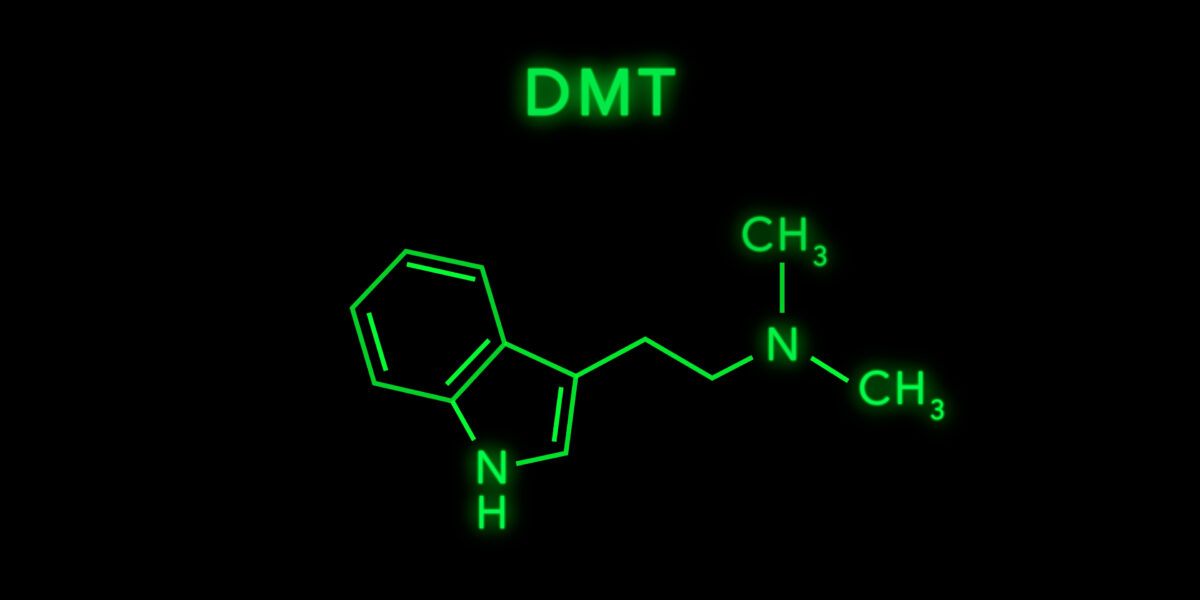
Perhaps we want to stick to the stronger psychedelic claim: psychedelic perceptions are not as real, but realer. The consummate expression of this ‘realer reality’ meme is found among users of the drug DMT. The ‘breakthrough’ state enabled by the drug is widely reported to possess a characteristic ‘externality’, a quality of being its own strange and navigable world, occupied by entities with agency and agendas. Different users report encountering the same entities without any prior knowledge. One example is the ‘Purple Lady’. One explanation for this phenomenon is the so-called ‘externalist’ idea, which explains its commonality in terms of a world to which one travels. This may be coupled with various ideas about the Jungian unconscious, the brain as a ‘receiver’ in an idealist schema, or of quantum entanglement and nonlocality: phenomena known to be active in such physical functions as photosynthesis, avian navigation, and perhaps even the sense of smell.

Not everyone who accesses these realms comes away with such a conviction, however. The extreme amnesia and suggestibility involved in the DMT state make drawing clear externalist conclusions difficult. Meeting ‘machine elves’, for instance, is so well-circulated as a memetic idea that its reports may be too confounded. Indeed, DMT is also the active drug in ayahuasca, whose visions include a consistent and culturally-specific pantheon of plant spirits, jaguars, and Catholic saints, which aren’t often seen by users of the smokeable drug. Rather than evacuating their bowels in a Peruvian hut, such users are more likely to sit shell-shocked in their university halls, with kitchen towels drowning the smoke alarm.

One can overstate the power of commonality in itself, too. Within the ‘lower orders’ of psychedelic visions, many people see walls breathing and geometric patterns, in ways that have struck users as being of their own ‘world’ beneath the consensus surface. Must we conclude that these appearances mirror a ‘common’ external world? Or is it that the same cortical regions are being stimulated? Users experiencing amphetamine psychosis, delirium tremens, and sleep deprivation also encounter startlingly similar entities: spiders and insects, snakes, ‘shadow people’, or the ever-present culprit of gang-stalking police forces and the CIA. May we regard these ‘commonalities’ as evidence of ‘another world’, one to which bingeing on speed and going without sleep gives access? 

While undoubtedly bizarre, the experience of encountering apparently sentient and sapiential ‘entities’, ones with their own autonomous beliefs about your presence in their ‘realm’, is not itself compelling. Research by Paul Tholey in the 1980s among experienced lucid dreamers revealed that dream beings often held compelling presence and identity, being capable of undertaking batteries of neurocognitive exams and passing Turing Tests. Such is the wonder of the mind’s ability to map, store, and represent virtualities of other people. There is a strong case, therefore, for holding DMT as akin to a dream, not least since the two may share neurofunctional resonances. Chuang-Tzu and Descartes famously cast doubts on our power to discern between ‘dreams’ and ‘reality’. I tend to favour the perhaps unpopular ‘common sense’ notion in this regard: since we all know a distinction, the burden of proof lies on those who seek to prove that the dream world is equally reliable, and from there to doubt all the findings of modern science. 

Indeed, as with dreams, whose absurd scenarios and lack of reliable scientific structure are rarely questioned, the noetic sense – the feeling that one is experiencing something very real, truthful – is also liable to distortion in the psychedelic state. Given the extremity of the hallucinations created by DMT, it would be surprising under a naturalist schema that one’s ‘reality sense’ were not shaken around and tested. 

To avoid frittering away time on the unprovable, the ‘externalist’ case will rise and fall with the test of falsifiable predictions. Dr. Andrew Gallimore and others associated with the DMTx project, for example, are seeking to ‘map’ an extended psychic cartography of the various landscapes and beings users encounter while high. If compelling and statistically significant correspondences occur, this would be interesting – but it’s hard to know how much it proves. There is the basic conceptual issue – how much of what evidence from this world, of empirical scientific measures, is required to prove another? Taking stock of all the influences of suggestion and prior information diets among subjects requires a panoptical degree of surveillance, one that will wear and tear on their minds and influence their trips. Only a certain kind of psychonaut will agree to volunteer for ‘extended state DMT’, one that has very likely been saturated in decades of messaging and marketing about what to expect, and with certain prior beliefs.  

Weird Naturalism

Let’s put aside ‘DMT worlds’ for a moment. People do reliably have all sorts of extremely unusual experiences with and without drugs. A few common examples are telepathy, synchronicity, and precognition, faculties which some suggest with complete sincerity are expedited by drug use. Are these experiences real? Or are people, frankly, delusional? All the same problems of self-report and unreliability, and the requirements for falsification and empirical testing, may be applied in equal measure. The answer being, let’s test it and see – but are many scientists as open-minded as we’d like? 

Attempts have been made to demonstrate the apparent reality of parapsychological, or ‘psi’, phenomena for more than a century. The evidence is rather mixed, with a lot of shoddy lab work and statistical fiddling and true belief having gone on. It is not nothing, though. The former chief of the American Association of Statisticians, reviewing the work conducted by the CIA in its ‘remote viewing’ programme, concluded that “[t]he data in support of precognition and possibly other related phenomena are quite strong statistically, and would be widely accepted if it pertained to something more mundane. Yet, most scientists reject the possible reality of these abilities without ever looking at data!”

At the same time, the para-anthropologist Jack Hunter has emphasised that psi events may be hard to replicate under strict scientific conditions. They seem to proceed from entirely disparate epistemic axioms. Rather than being regularised and ‘out there’ for the taking, such experiences are almost bound to unpredictability – they simply strike, through and among the fabric of people’s life worlds, and possibly, of course, while they’re tripping. While we may test the accuracy of a declared ‘prophetic dreamer’, say, and see their mean average scores possibly pale against reality, this does little to challenge the integrity of an individual report that occurred out of nowhere – and makes everyone’s eyebrows askew.

Okay, But So What?

A thinker like Wittgenstein was not especially interested in metaphysics. “The meaning of a word is its use in language”, he wrote. Its mistake is to treat different uses of “real” as pointing to a single metaphysical Reality superordinate over all its concrete particular uses. 

If we examine what we mean by ‘real’, we find some common notions with certain “family resemblances”: to be true, authentic, empirically verified, to convey a specific claim that was hitherto concealed (‘the real reason’), or as a mode of encouragement, or tool to naturalise oppressive and tragic social systems (‘get in the real world’). 

In psychedelic practice, the drug experience has its own social function that is simply different. To the “straight” world, the visions are hallucinations, foreign entities – yet the psychedelic world is engaged in an activity, known as ‘tripping’, in which the visions are regularised and familiar, and serve psychosocial functions. Critics might argue that LSD visions are radically private and thus solipsistic. But their visions are communicable. Geometric patterns and vivid colours are so consistent that they have entered popular iconography and design. To call them “hallucinations” is to use a psychiatric label as a battering ram on a specific ‘in-between-ness’ of psychedelic consciousness, in which neural categories are liquefied for a precise purpose. 


This doesn’t entail total relativism. The psychedelic “real” should know its place. The drugged state is marked by brevity and a spatial and social separation from everyday life. If all goes well, one returns to the sober “real” in which our usual criteria for truth and verification apply, and walls don’t move.

What counts as “real,” as Mark Fisher reminds us, is not a neutral category but a politicised one. It is used to naturalise the routines of modern life (climate catastrophe as “just reality”) or to mark a certain hopeless authenticity (“getting real”, in losing aspiration to systemic change). Under psychedelic perception, the sober ‘real’ is simply compartmentalised, in a fashion not unlike what occurs every day under our current political order. Individuals ‘forget’, or ‘repress’, destructive and repressive dynamics that may run downstream of their occupations, in order not to be fired. The psychedelic and sober ‘reals’ usually coexist in a twisted balance. Festivals, raves, and underground scenes maintain a separate cultural economy. 

While the ‘functional’ model may have its uses, does it smack of ‘psychedelic exceptionalism’? Would we say that ‘sleep-deprived real’ or ‘amphetamine real’ were anything other than hallucinatory deviations of the ‘sober real’, which is simply ‘reality’? Sure, seeing ‘shadow people’ involves a certain ‘life world’ inaccessible to those who haven’t been on a binge – but who cares? What takes priority when their claims compete: the ‘sober real’ or the ‘psychedelic real’? When a trip produces violence or psychosis, the sober real must reassert its authority. 

Creating a metaphysical essence known as The Real may be wrong-footed. But this doesn’t undercut the basic naturalist claim: that the best bet we have for what we call ‘real’ is the world of science and verification. No matter how radical one’s belief in the ‘realer’ nature of the psychedelic, we must always ‘return’. For where else would we find our food and drink?

It is up to us what ‘use’ we make of our perceptions, even if we were ‘just tripping’ by common standards.

Ed Prideaux | Community Blogger at Chemical Collective

Ed is one of our community bloggers here at Chemical Collective. If you’re interested in joining our blogging team and getting paid to write about subjects you’re passionate about, please reach out to Sam via email at samwoolfe@gmail.com


share your toughts

Join the Conversation.

0 Comments
Inline Feedbacks
View all comments

Related articles

Our Products

Related Products

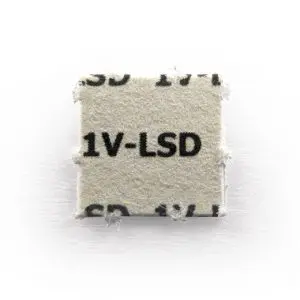
1V-LSD 150mcg Blotters
1V-LSD 150mcg Blotters From 22.00
(143)
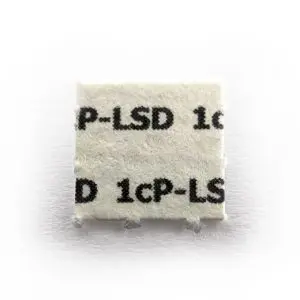
1cP-LSD 100mcg Blotters
1cP-LSD 100mcg Blotters From 18.00
(137)
Tryptamine Mix and Match Pack (4 x 0.1g)
Tryptamine Mix and Match Pack (4 x 0.1g) 65.00
(1)
1V-LSD 10mcg Micro Pellets
1V-LSD 10mcg Micro Pellets From 15.00
(43)
2-FDCK HCL
2-FDCK HCL From 12.00
(82)
1V-LSD 225mcg Art Design Blotters
1V-LSD 225mcg Art Design Blotters From 35.00
(62)
1S-LSD 150mcg Blotters
1S-LSD 150mcg Blotters From 29.00
(16)
1cP-LSD 150mcg Art Design Blotters
1cP-LSD 150mcg Art Design Blotters From 25.00
(74)
1V-LSD 225mcg Pellets
1V-LSD 225mcg Pellets From 35.00
(26)
1D-LSD 225mcg Pellets (1T-LSD)

SALE! -15%

1D-LSD 225mcg Pellets (1T-LSD) From Original price was: €42.00.Current price is: €35.70.
(13)
1cP-LSD 10mcg Micro Pellets
1cP-LSD 10mcg Micro Pellets From 15.00
(23)
5-MeO-DMT Freebase
5-MeO-DMT Freebase From 23.95
(36)
O-PCE HCL
O-PCE HCL From 17.50
(25)
1cP-LSD 20mcg Micro Blotters
1cP-LSD 20mcg Micro Blotters From 18.00
(27)
4-HO-MET Fumarate
4-HO-MET Fumarate From 19.50
(26)
rewards-icon
popup-logo

Reward program

popup-close
  • Earn
  • Affiliates