in this article
- The Roots of Biopiracy
- Psychedelics in the Modern Market
- Examples of Biopiracy in Psychedelics
- Indigenous Perspectives, Resistance to Biopiracy, and Ethical Psychedelic Futures
Are you 18 or older?
Please confirm that your are 18 years of age or older.
You are not allowed to access the page.
Disclaimer: The views and opinions expressed in this article are those of the authors and do not necessarily reflect the official policy or position of the Chemical Collective or any associated parties.
The food sovereignty and environmental activist Vandana Shiva describes biopiracy as “biological theft; illegal collection of indigenous plants by corporations who patent them for their own use.”
We can also see this in the appropriation of more than just the physical plants, where knowledge and traditions are being appropriated by outsiders without necessarily fairly compensating those from whom they’ve taken the wisdom. This might actually be a fitting description for where we’re at with the psychedelic renaissance, as it seems to have taken on a whole character of its own, which could be seen as a departure from the foundational wisdom traditions that have brought people here in the first place.
But why is this important? After all, many countries (not least my home country of the UK) have spent centuries appropriating different herbs and spices into their own culture, and it doesn’t necessarily cause too much friction today, with dishes such as curry becoming a staple of British cuisine, for example. So why is there an issue when it comes to psychedelics?
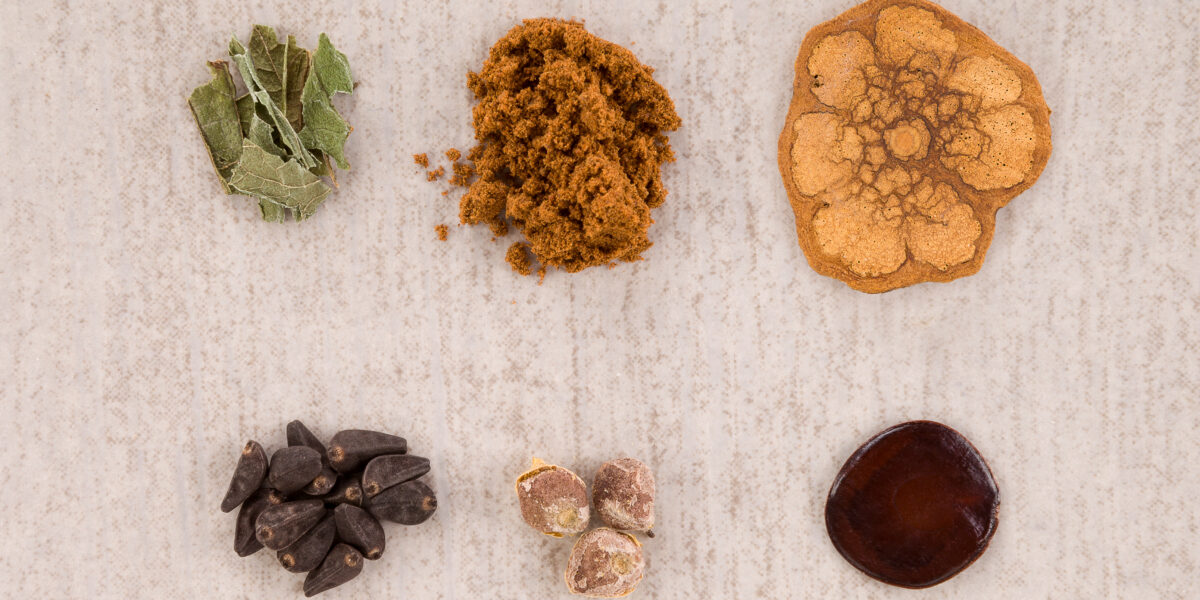
It seems impossible to disentangle psychedelics from the issue of biopiracy, where plants such as ayahuasca, peyote, and iboga, as well as types of fungi which were once marginalised and stigmatised, have now been brought into the fold of capitalist enterprise. Changes to legal frameworks and mindsets surrounding these plants and fungi have now opened up new opportunities for investment, and it might be difficult to change this course now that the genie is out of the bottle.
The growth of psychedelic corporate interests has seemingly created issues surrounding the ethics of appropriation when it comes to indigenous knowledge, where representatives from these communities have felt left out of the wider narrative. Their wisdom simply gets repackaged into commodities which can be owned and sold, all in the name of providing solutions to the global mental health crisis we seem to be going through. But does anyone really own psychedelic knowledge and resources?
Biopiracy can essentially be thought about as ‘scientific colonialism’, in which extraction is the name of the game! It ensures the monopoly of control over indigenous medicinal plants, seeds, genetic resources, knowledge, and traditional medicines through patents and intellectual property. This has formed the basis for the continued commodification of indigenous plants, and current situations regarding the sustainability of certain psychedelics, such as peyote, for example, have been compounded due to illegal poaching.
Top commodities today, such as sugar, tea, coffee, and pepper, are some examples of plants that were taken from colonised countries via the route of Western trading companies, such as the East India Company, which was founded in 1600. This company eventually controlled large parts of the Indian subcontinent and Hong Kong, and rose to such prominence that it accounted for half of the world’s trade during the mid-1700s and 1800s, where it traded in cotton, silk, indigo dye, sugar, salt, spices, saltpetre, tea, gemstones, and, later, opium.
The exploitation of local ecologies bolstered the dominance of the global North, where the majority of patents are held over ecological resources taken from the global South. Early pharmaceutical companies documented and appropriated indigenous knowledge via ‘bioprospecting’, where traditional wisdom surrounding these plants has been exploited without consent or recognition. It seems that most of the plants needed for future development are found only in the biodiversity-rich developing countries, which ultimately creates a conflict between the need for research and development and the need to ensure conservation of plants and protection of indigenous knowledge.
Biopiracy is just one aspect of the wider colonial history, but it seems like a pretty significant part of the story of cultural erasure, especially within the context of psychedelics, where the use of indigenous plants and fungi plays a central role within the cultural narrative. But does the issue of biopiracy just extend outwards in a purely colonial sense, or can we also look closer to home to see where traditional wisdom has been extracted to benefit existing power structures? Is it possible for psychedelics to avoid being caught in the trap of biopiracy in an increasingly globalised world where alternative avenues of healing are being spread far and wide?
When I first entered the world of psychedelics over 15 years ago, there wasn’t necessarily any industry or sector, but the increase in attention on psychedelic therapies, as well as an increase in access to psychedelic retreats, has opened up the conversation to wider sections of the global population. This opening up of the psychedelic conversation has now found its place within a mapped-out psychedelic sector, where public and private companies are now aiming to ‘revolutionise’ mental health treatments.
As more people become aware of the problematic side effects associated with some pharmaceutical drugs, particularly those intended to treat depression, they are looking more towards alternative therapies as serious contenders for managing these types of conditions long-term.
I often find the way this all gets presented to us is in glowingly positive terms, where these companies have come in to save us from the impending mental health crisis. Tech billionaires such as Peter Thiel are increasing investments in psychedelic biotech companies such as Atai Life Sciences and Compass Pathways, and perhaps this is just the way things go. It might have been naive to think that these plant and fungi therapies wouldn’t have eventually been commodified to this extent.
I do think the speed at which certain substances have gone from being stigmatised to now having the backing of tech billionaires is intriguing. This is especially so when you consider some of the previous connections that some of these billionaires, like Christian Angermayer, have had with world leaders – the most notable being Paul Kagame, who has been President of Rwanda for 25 years, where he has presided over a “well-camouflaged dictatorship”.
Peter Thiel, on the other hand, might have more of a trickier involvement with repressive regimes, having co-founded the tech firm Palantir, which, among many things, has provided support for Israeli defence and national security interests – although it denies being involved in the targeting of individuals using AI during the ongoing genocide in Gaza.
From my personal experience with psychedelics and the culture surrounding them, these kinds of connections don’t sit particularly well with what I have understood to be lessons of oneness, unity, and peace. I was attracted to the psychedelic world largely for its seemingly rebellious energy, where creative types would push the boundaries of art, music, and writing to create some kind of counterculture that challenged the ethos of the dominant political and social institutions. This mindset has often been perceived as a fantasy since the 1960s, and trying to go about accessing psychedelics today in any other paradigm besides capitalism might just be seen as wishful thinking or idealistic.
It’s probably fanciful to think we could ever prevent the commodification of traditional plants and fungi, especially if those of us who are advocates of their benefits want to see more people have the opportunity to find healing through these different avenues. I’ve spoken to some of my fellow psychedelically-minded friends over the past few years, and some have said that they expected things to go this way…while others have said they didn’t expect psychedelics to be so radically swept up by the capitalist paradigm when they’ve previously been so marginalised.
When I was promoting the UKC Psychedelic Society at freshers’ fayres during my time at university, I was often aware of how much certain types of students from the more straight-edge corners of society would come up to the stall and be baffled that this society existed. We’d get questions such as “Oh, so do you all go into the woods and take drugs together?” But now it seems that similar kinds of people are becoming interested in the potential for these substances to be commodities that we can utilise to treat mental health problems.
There’s no denying the genuine ability of different psychedelics to treat a wide range of mental health conditions, but is there a danger of thinking about these plants and fungi within the context of commodities? My own personal experience with magic mushrooms on countless occasions has not been one where I am the subject and the mushroom is the object – it is more in line with the idea of the experience being one of subject-subject.
It is what researcher Luis Eduardo Luna calls ‘relational epistemology’, which is the idea that we should regard the power of these plants and fungi as extending further than simply the healing potential within our own individual experiences:
There is the danger that they will be turned into therapies that put the emphasis only on the individual—the individual’s fear, the individual’s trauma. There is a kind of narcissism in this. Healing can happen, and it’s fantastic. But I think of more importance is that these plants or substances put us into contact with community, with other humans, and with the larger-than-human world.
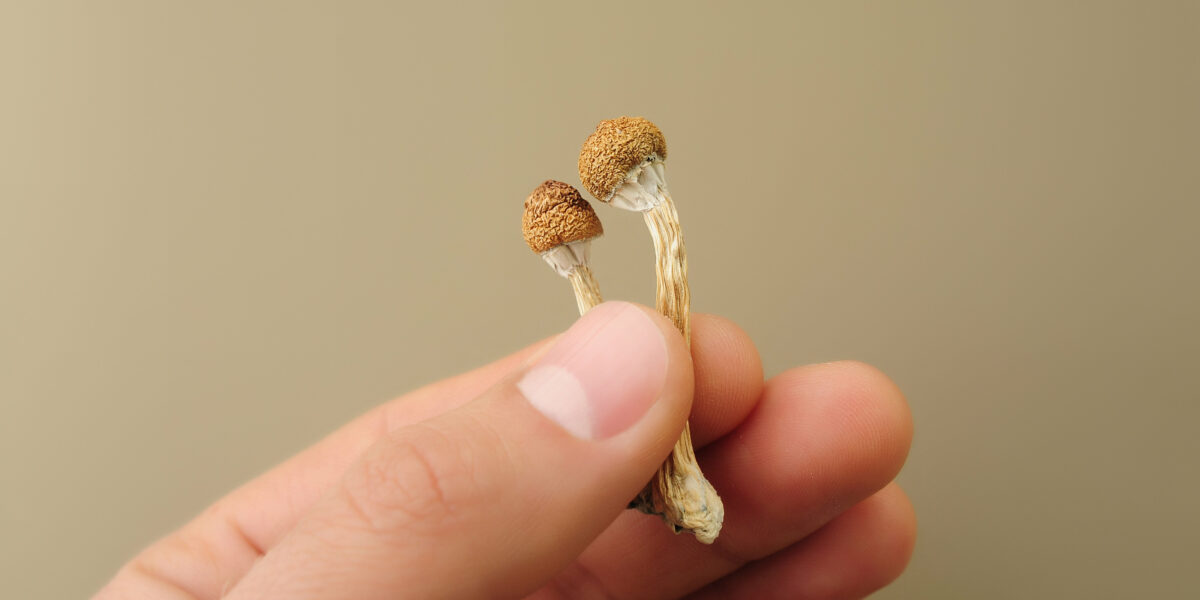
My experience with mushrooms in particular has always made me think that they’re the ones in control of all of this – when we used to go picking liberty caps, it was like they would only reveal themselves at a certain time of the year when the conditions were just right. It created a sacred pilgrimage-like experience, where you would really feel the magic when you notice the first one, which then allows you to see all the others. There was something special about waiting for the right time and joining in with the communal energy of the season. The restrictions surrounding picking (let alone home cultivation) gave the whole experience more of a secretive energy, where you almost felt like you had to be initiated into the world of the mushroom.
Now it seems we’re constantly bombarded by the desperate need to find alternatives to manage the impending mental health crisis, and just allowing people to harvest or cultivate psychedelics such as magic mushrooms isn’t necessarily seen as the right avenue to be going down. I recently had an exchange with Psilocybin Access Rights (PAR), who said that their campaign is “focused on the medical rescheduling of psilocybin, rather than decriminalisation or declassification, as this is strategically where things are most likely to move forward. It’s an immediate need and the science clearly backs the rescheduling, making it hard to argue against.”
But what does access look like if we’re not allowing people to naturally harvest or cultivate mushrooms at home? Will we see the development of synthetic psychedelic substances for use in clinical settings while we still don’t have widespread access to the plants and fungi themselves?
This actually seems to be well underway, with Compass Pathways having developed a synthetic, proprietary formulation of psilocybin for treatment-resistant depression known as COMP360, which is being used in ongoing phase 3 clinical trials. University of California Davis Institute for Psychedelics and Neurotherapeutics has also successfully synthesised the molecule ibogaine, derived from the African plant Tabernanthe iboga, which has shown a lot of promise in treating opiate addiction as well as traumatic brain injury.
While it feels a bit weird to be synthesising proprietary formulations or just extracting one molecule from psychedelic plants or fungi, is there an argument to be made for providing these benefits when access to the actual organisms themselves is still restricted? Mental health problems don’t wait for legislation to change, and we certainly need to find ways to create access in the face of nonsensical laws, but can this be done without engaging in acts of biopiracy?
These ethical concerns regarding the intellectual property of psychedelic plants or fungi came to light in the 1950s, when amateur mycologist and Vice President for Public Relations at J.P. Morgan, Robert Gordon Wasson, along with his wife Valentina, were some of the first Westerners to engage in a psilocybin mushroom ceremony. In 1955, Wasson and his wife took part in a Mazatec ritual with the curandera (folk healer) Maria Sabina, who guided them through the experience in exchange for secrecy. After initially protecting her with a pseudonym (Eva Mendez) in his 1957 Life Magazine article, Wasson betrayed his promise and revealed her name in his second volume of work: Mushrooms, Russia and History. After these secrets were revealed, Maria was briefly jailed, and her house was set on fire by local residents, due to the Mazatec rituals having previously been kept secret for centuries. These rituals had managed to survive throughout the Spanish Inquisition in Mexico from the 16th century all the way until Wasson’s arrival in the 1950s, despite the slaughtering of indigenous people along with the banning of these practices.
Less than a month after Wasson’s article on May 13th, 1957, the Governing Body of the International Labour Office convened in Geneva, on June 5th, 1957, to establish the Indigenous and Tribal Populations Convention No 107. As Mexico adhered on June 01, 1959, the convention could not be applied retroactively to the Wasson case. According to its preamble: “in many parts of the world these peoples are unable to enjoy their fundamental human rights to the same degree as the rest of the population of the States within which they live, and that their laws, values, customs and perspectives have often been eroded”. The same convention determined that “the social, cultural, religious and spiritual values and practices of these peoples shall be recognised and protected”.
Another example of biopiracy occurred during the 1980s, with ayahuasca creating a lot of debate regarding the protection of indigenous knowledge. In 1986, the US Patent and Trademarks Office (PTO) allowed the granting of a patent on the ayahuasca vine B. caapi – this was based on the assumption that ayahuasca’s properties had not been previously described in writing. Several public interest groups, including the Coordinating Body of Indigenous Organizations of the Amazon Basin (COICA) and the Coalition for Amazonian Peoples and Their Environment (Amazon Coalition), objected, and in 1999, the Centre for International Environmental Law (CIEL) brought a legal challenge against this patent.
A decision was issued later that year, with the patent being rejected on the grounds that the plant was not “distinctive or novel”. The decision, however, didn’t acknowledge the argument that the plant’s religious or cultural values prohibited a patent. After an appeal by the patent holder in 2001, the US Patent Office reinstated the patent, and the law at the time did not allow a third party, such as COICA, to participate in that part of the reexamination process. The patent, held by US entrepreneur Loren Miller, expired in 2003.
The challenges faced by indigenous communities for recognition, compensation, or protection over resources and knowledge – but there could be some hope if we engage in actions which involve reciprocity, cultural respect, and benefit-sharing.
Are we now starting to see some kind of pushback against this scientific colonialism? Indigenous-led groups such as the Indigenous Medicine Conservation Fund and Chacruna Institute’s ‘Indigenous Reciprocity Initiative’ are helping to shape a different future, where indigenous medicines and knowledge can be preserved for generations to come. The idea of this knowledge being central to the health of all communities on Earth, rather than just indigenous ones, is a powerful message of healing as well as pushing forward concepts surrounding conservation for the health of the entire planet.
It becomes an empowering message, which is not one of cultural appropriation, but more one of cultural appreciation. If we can appreciate how experiences with plant medicines and engagement with indigenous knowledge can potentially shift our worldview and influence our beliefs, then we might have the opportunity to act in accordance with the flow of nature and the health of our planet.
Cultural appropriation is more obvious when it’s taken from faraway places. But as the landscape of psychedelics has been shaped by certain ways of regarding these plants and fungi as commodities, can we also appreciate the need to reconnect with indigenous worldviews when it comes to our own communities? Could biopiracy exist within Western psychedelic culture itself?
I have experienced knowledge and wisdom being extracted for the benefit of CEO’s without any compensation or acknowledgement for where this wisdom has come from, and quite frankly, I’m just a bit frustrated with the whole flavour of what just feels like corporate psychedelia in the West. Everywhere I look, there is someone trying to find a way to make money out of psychedelics, and even writing this article (and psychedelic journalism in general) could be seen as an example of extracting indigenous wisdom for financial gain. That’s not to pass judgement on myself or anyone else, but simply to recognise where things are at.
The resistance from indigenous-led groups is promising, however, and we might find that the more we engage with these different worldviews, the more we can start to shift our perspectives to be more aligned with energy that reveres nature as sacred, rather than revere tech Gods like Peter Thiel. The spiritual sovereignty of plants and fungi shouldn’t be ignored, and it saddens me when these organisms simply get spoken about as commodities or synthesised into patented products. It’s boring and lame, and totally takes the magic out of the psychedelic experience. When the future of psychedelic medicine might be looking towards taking the hallucinatory effects out of the experience (and effectively the whole ‘trip’ itself), it’s quite clear that we’re at an inflexion point.
Can we create alternative, open-source models, where we can share knowledge and resources rather than always deferring to capitalist billionaires who most probably don’t care if you’re happy or not? Perhaps community-led psychedelic enterprises are a long way off, but we’re seeing more in terms of peer support when it comes to psychedelic experiences, and there’s certainly a lot of room for education, advocacy, and consumer awareness in this space.
Perhaps if we can find a balance between widespread psychedelic access and the need for reciprocity, along with compensation from an indigenous perspective, we might potentially slow down the exploitation of psychedelics. These plants and fungi can provide immense healing potential, but if they are simply exploited or extracted to fit neatly into the existing paradigms, then I worry about the actual impact they will have. The mental health issues that people suffer from are not just contained to the person – these issues are influenced heavily by the world around us, and I believe that psychedelics have the power to influence the world in a positive way, but only through reciprocity and respect for the origins of these medicines.
Oli Genn-Bash | Community Blogger at Chemical Collective | linktr.ee/oligennbash
Oli is one of our community bloggers here at Chemical Collective. If you’re interested in joining our blogging team and getting paid to write about subjects you’re passionate about, please reach out to Sam via email at samwoolfe@gmail.com
Welcome to Chemical Collective.
Create an account to earn 200 welcome points.
Already have an account? Sign in
Check out our Community Blog and get involved with the conversation. You will be awarded 50 x ChemCoins for each comment up to a limit of 250 total ChemCoins.
Have you purchased any of our products? Reviews and reports are so important to the community. Share your honest opinion, and we’ll reward you with 50 ChemCoins for each review!
Every time you complete an order with us, you’ll be awarded ChemCoins for each Euro spent.
Welcome to Chemical Collective.
Create an account to earn 200 welcome points.
Already have an account? Sign in
Earn commission every time someone makes a purchase through your link.
When you become an affiliate, you will be allocated a unique link to share with your friends, followers, subscribers, or Aunt Susan.
You can choose to payout the commission earned once per month, or save it up to receive on a rainy day! Commission earned is 5% of the total order value per referral.
Contact us to join the Chemical Collective family and become an affiliate.
share your toughts
Join the Conversation.