Welcome to
Chemical Collective

Are you 18 or older?

Please confirm that your are 18 years of age or older.

You are not allowed to access the page.

info-icon €100 for domestic (NL, CZ, DE) €125 for the rest of the EU, excluding stealth shipping

Free shipping over €50 & free tracked shipping over €100

Friendly customer service available 9-5pm Monday to Friday

Free shipping over €50 & free tracked shipping over €100

Friendly customer service available 9-5pm Monday to Friday

Your cart is empty

PSYCH NEWS – 20/10/2025

david-blackbourn

By David Blackbourn

shutterstock 2060221841
in this article
  • Psychedelics and Mindfulness for Healthcare Workers
  • 30 Years of the Erowid Vaults
  • Synthetic vs Natural Psilocybin
  • Microdosing and Generalised Anxiety Disorder (GAD)
  • Atai Life Sciences Stock Soars
  • Psychedelic Experiences and Cannabis Use
  • The Silicon Valley “Psychedelic Syndicate”
  • Final Thoughts
david-blackbourn

By David Blackbourn

Disclaimer: The views and opinions expressed in this article are those of the authors and do not necessarily reflect the official policy or position of the Chemical Collective or any associated parties.

News from the psychedelic industry keeps coming, thick and fast. This week, we’ve seen significant strides in the clinical research space, alongside developments in both the business world and wider culture as well. There have been promising new results from a study combining psilocybin and mindfulness practices to support healthcare workers. Also, another study to test the efficacy of microdosing psychedelics to combat anxiety symptoms.

The financial markets have seen some substantial investment, with companies like Atai Life Sciences achieving regulatory milestones. Erowid, the influential drugs internet archive, has celebrated its 30th anniversary, a testament to its longstanding importance and influence on the space as a whole. A major report has also been released alleging a coordinated effort by Silicon Valley elites to control the direction of the industry through the Psychedelic Science Funders Collaborative.

Psychedelics and Mindfulness for Healthcare Workers

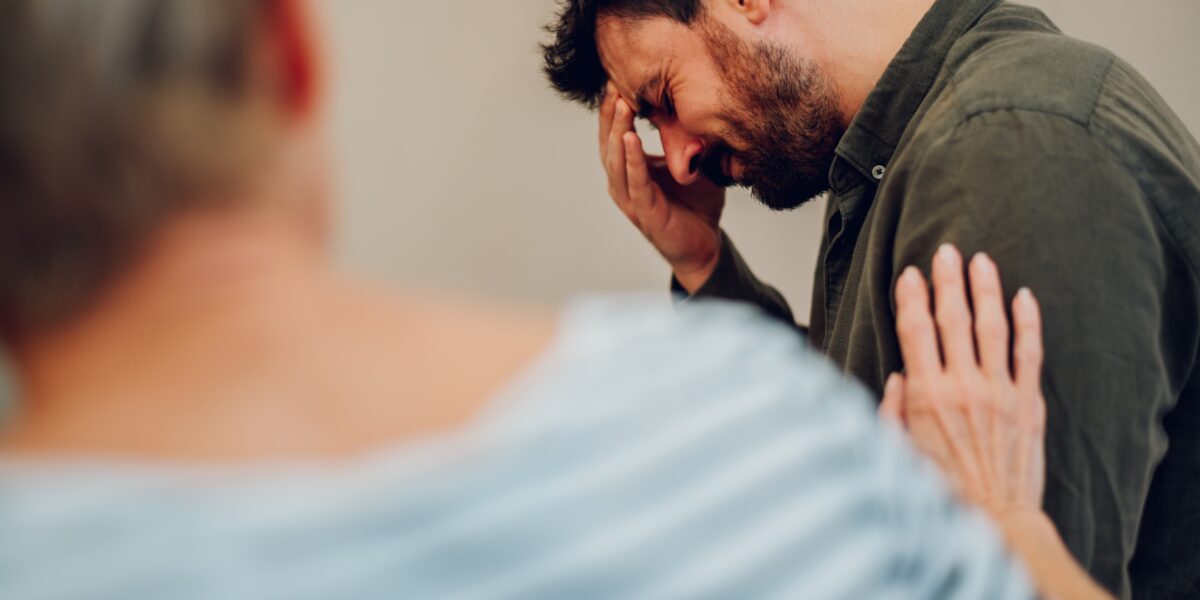
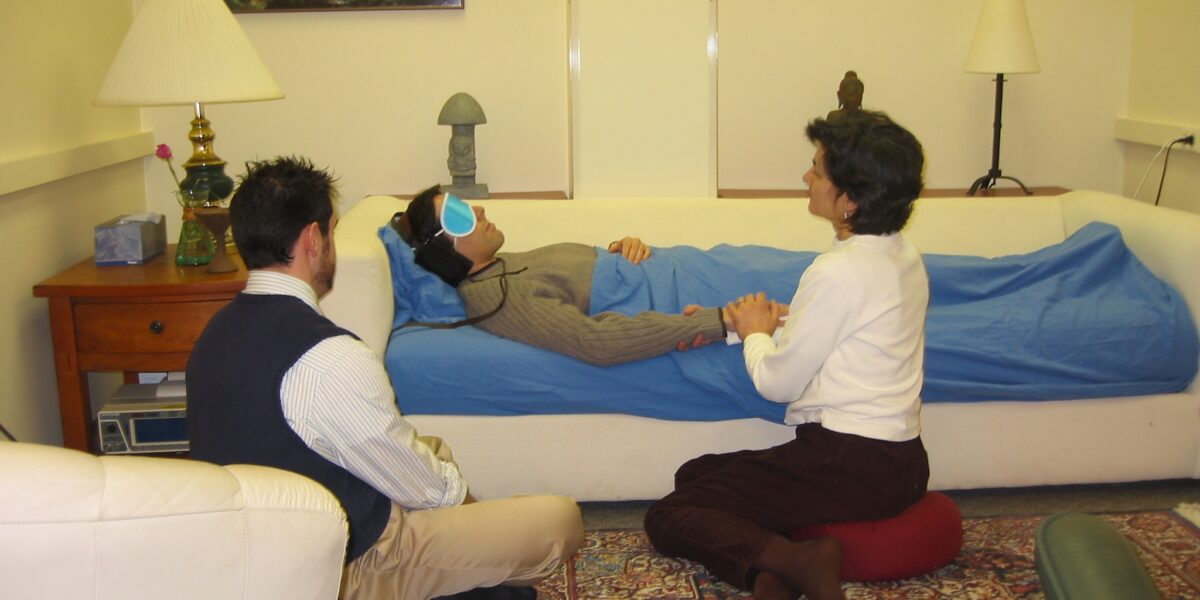
Researchers from the University of Utah Health are investigating the effectiveness of psychedelics as a means to tackle the extreme psychological distress and exhaustion experienced by frontline healthcare workers following the COVID-19 pandemic. The trial consisted of 25 healthcare professionals diagnosed with difficult-to-manage symptoms of both depression and burnout. The participants were split into two groups. One group received an eight-week-long program of mindfulness-based stress reduction (MBSR). The second group received the same program of mindfulness practice, with the addition of a single, controlled dose of psilocybin. The psilocybin was also administered in a group therapy setting.

The results were pretty striking, with the second group, who received both mindfulness training and psilocybin, showing significantly greater reductions in depression symptoms compared to those receiving mindfulness training alone. Improvements in symptoms of burnout were also seen to be much more pronounced in the group receiving group psilocybin-assisted therapy. This therapeutic approach appears to lead to significant decreases in emotional exhaustion, as well as (and likely just as important) increased feelings of self-connection and community.

46% of the participants in the psilocybin assisted group were, in fact, seen to have achieved full remission of their symptoms. This is compared to just 8% of the group who solely practised mindfulness for the duration of the study.

This study is particularly significant, not just for its positive results. Its innovative group therapy model is potentially game-changing when extrapolated to such a rapidly growing industry. The scalability of psychedelic-assisted therapy dramatically increases if researchers are available to work in groups. One-on-one therapy is inherently time-consuming and costly, especially when combined with the potential 8 hours of lasting effectiveness of psilocybin, for example. This, combined with the necessity for screening, prior preparation and the crucial grounding and processing of experiences following them, makes the whole process far longer than really any other form of mental health assistance.

So, if we conclude that one single dose of psilocybin in a group session, combined with structured mindfulness practice, again in a group scenario, could offer rapid and effective treatment for healthcare workers. Then this study is a potentially critical step on the road to combating what amounts to an existing, continually exacerbated mental health crisis within the healthcare system, worldwide.

30 Years of the Erowid Vaults

This year, Erowid, the pioneering drug information website, is marking its 30th anniversary. Its emergence on the early internet sparked the curiosity of untold numbers of psychonauts the world over. It has grown to become one of the most detailed and influential archives of psychoactive substances online and is now a goldmine for researchers and governments.

Founded in 1995, a grassroots project by two graduates, known by the pseudonyms “Earth and Fire”, Erowid was a direct response to the war on drugs and the corresponding lack of publicly available knowledge on the substances they were already consuming. The site functions as a public encyclopedia, but its most significant feature is the “Erowid Experience Vaults”.

The Experience Vaults are a collection of user-submitted “trip reports”, describing their experiences consuming a wide variety of substances. Over the years, this database has grown, and grown, and now consists of over 45,000 detailed reports.

This gigantic collection of anecdotal data was once the sole domain of psychonauts – I vividly remember as a young teen diving into the depths of the DMT Vault, for days on end, with my jaw progressively connected to the floor. Now, though, roughly 20 years later, it has become an invaluable and widely cited resource for the mainstream scientific and medical community. Academics and researchers regularly use the Experience Vaults for studies, especially on substances for which there is a lack of actual clinical data. It is even reported to be used in emergency situations. Emergency doctors and toxicologists can use the site to help identify unknown, novel compounds. The World Health Organisation (WHO) analyses user reports posted to Erowid to help spot trends in emerging drug use – new, recreational research chemicals, for example.

Beyond its increasing position of authority and utility as a powerful data resource, Erowid has also been credited as crucial culturally. With its focus on unbiased information and harm-reduction, regardless of any spiritual or woo-woo connections, it has gone a long way towards destigmatising the field of psychedelics. The site has helped to legitimise and back up a new generation of research, giving a public voice to an area of study once firmly demonised. Rick Doblin, founder of MAPS (Multidisciplinary Association for Psychedelic Studies), has described Erowid as “revolutionary”. Erowid took advantage of the freedom of the early internet to curate a space that has had a dramatic and lasting impact on psychedelic culture. It has been a meaningful catalyst in facilitating the ongoing psychedelic renaissance.


Synthetic vs Natural Psilocybin

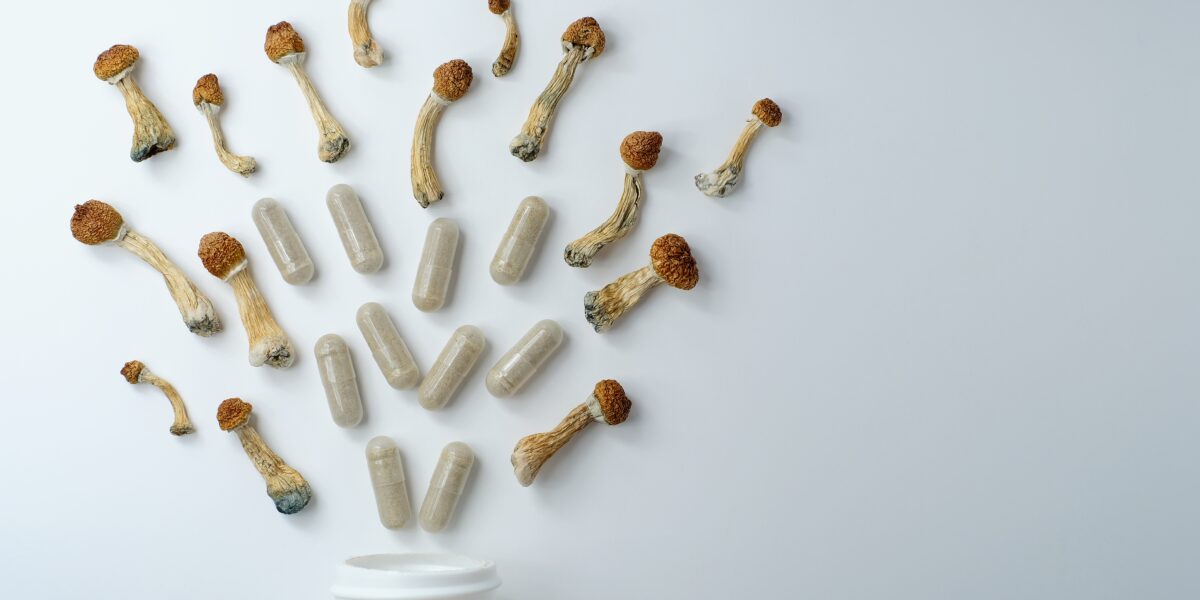
Scientists are debating whether the secondary natural compounds contained in organisms such as psilocybin containing “magic mushrooms” make for more effective drugs in a therapeutic context. This is what is known as the “entourage effect”.

Most current and prior clinical trials of the effectiveness of psilocybin, which is traditionally seen as the active psychoactive ingredient in magic mushrooms, are synthetic. Some scientists are beginning to rail against this, hypothesising that, while it may be cheaper and consistent to use synthetic psilocybin, it may be missing what could be key therapeutic components.

Secondary compounds in magic mushrooms include compounds like: Baeocystin, norbaeocystin, and β-carbolines. Researchers believe these alkaloids may produce an “entourage effect”, working synergistically with psilocybin to potentially both enhance its therapeutic potential, while ameliorating common negative side effects.

The theory is highly controversial and is met with widespread scepticism. Critics cite the fact that data supporting the entourage effect is extremely scarce, and that many of these secondary compounds exist in such tiny concentrations that they are unlikely to have any pharmacological activity in humans. Further to this, some studies suggest that some of these components may not even cross the blood-brain barrier. This debate very much mirrors that in the cannabis industry, in which the entourage is regularly cited in marketing, but is unsubstantiated by the available science.

Despite this scepticism, however, research is still in its preliminary stages. One 2024 animal study, though its methods were criticised, suggested that mushroom extract, as opposed to synthetic psilocybin, increased the production of synaptic proteins in mouse brains. This is linked to neuroplasticity (the brain’s ability to change), which is commonly associated with psychedelics’ potential therapeutic effects. Aside from the actual scientific backing of the entourage effect, the sole fact of a “natural” product, in a purely capitalistic sense, may simply appeal more to many consumers.

Microdosing and Generalised Anxiety Disorder (GAD)

Researchers in Kingston, Ontario, have launched a new Health Canada-approved Phase 2 clinical trial to investigate whether or not the practice of “microdosing” (taking sub-psychedelic doses of a psychedelic substance) can be an effective treatment for generalised anxiety disorder.

The study, led by Dr Claudio Soares from the Kingston Health Sciences Centre, is examining microdosing as a potentially safer, more scalable, less time-consuming alternative to the usual large dose (or “macrodose”) sessions, which induce a lengthy trip. The trial aims to make a far more accessible treatment model. It will involve 60 adults with chronic anxiety issues, who will self-administer small daily doses of psilocybin at home, for four weeks. Following this, they will be randomly assigned to one of two groups, either receiving continued doses of psilocybin or a placebo for an additional four weeks. This will allow researchers to monitor whether or not anxiety symptoms return, or any withdrawal effects of the treatment occur.

While there are widespread anecdotal reports of people self-medicating a variety of conditions with microdosing, the science is sorely lacking. Dr Soares stated that the goal of the study is not only to test the efficacy of microdosing itself, but to destigmatise psilocybin as a whole, as a legitimate treatment.

Atai Life Sciences Stock Soars

The psychedelic biotech company Atai Life Sciences saw its stock rise by a dramatic 18% in October 2025, further evidence of a massive rally that has seen the stock increase by 300-350% in the whole of 2025. The catalyst for this jump in price was the FDA granting “Breakthrough Therapy” designation to Atai’s leading therapeutic drug candidate, BPL-003.

BPL-003 is a formulation of 5-MeO-DMT in a nasal spray, developed to combat treatment-resistant depression (TRD). It has shown rapid and seemingly long-lasting antidepressant effects in a recent Phase 2 trial.

The new FDA designation accelerates both the development and review timeline for the drug. This was quickly followed by the announcement of an additional approximately $130 million in strategic funding. This will maintain their ability to move on to the pivotal Phase 3 trials required to confirm BPL-003’s effectiveness. Trials are expected to begin by mid-2026. This combination of events has fueled significant optimism in investors. The currently bullish outlook is backed up by major investors reinforcing their positions. For example, ARK Invest purchased a significant amount of shares.

These developments confirm Atai Life Sciences as a leader in the field, alongside other major players like Compass Pathways and MindMed.

Psychedelic Experiences and Cannabis Use

A new study, which has been published in the Journal of Psychoactive Drugs, has discovered a link between psychedelic experiences described as “personally meaningful” and subsequent reductions in problematic cannabis use. Researchers studied 152 individuals who habitually used cannabis and had prior experience with classic psychedelics such as LSD or psilocybin at least six months prior.

The rates of cannabis use disorder (CUD) are rising, perhaps due to its increasing societal acceptance. There are currently no approved medications to tackle the condition, which has spurred interest in potential psychedelic-assisted therapies. Psychedelics have already been associated with combating issues with alcohol dependence, so the potential is there.
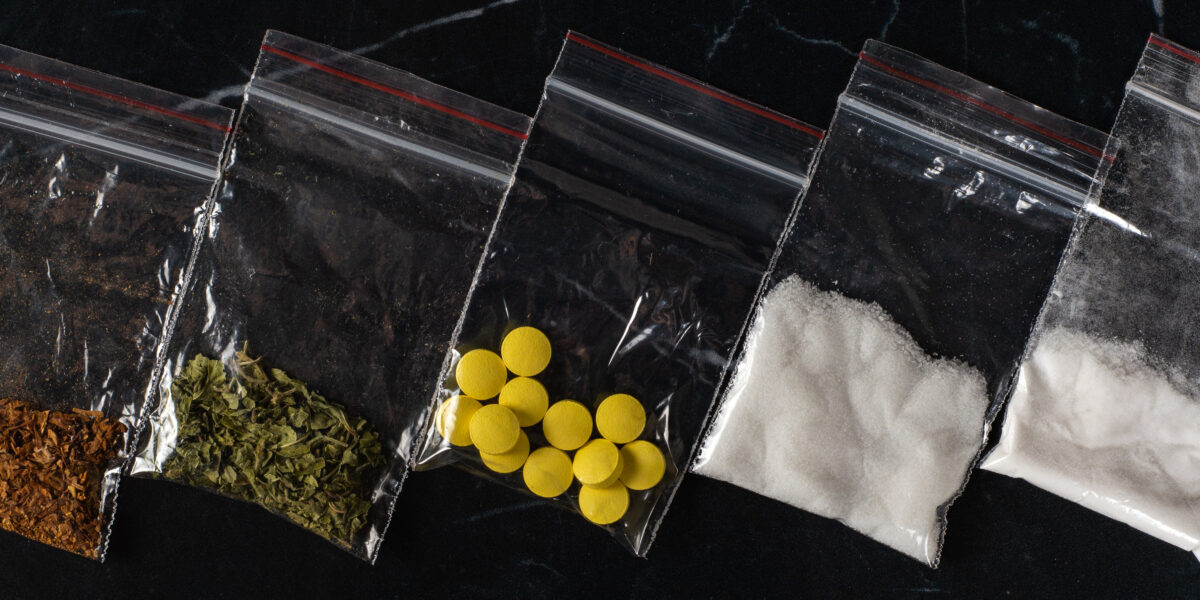
The results were solely based on participants’ self-reports, which showed a significant decline in cannabis use following a psychedelic experience. Scores on the Cannabis Use Disorder Identification Test dropped significantly. 38% of participants reported a decrease in their daily usage at the six-month follow-up appointment. This decrease was also accompanied by a perceived increase in psychological flexibility – staying open during experiences of difficult emotions, adapting to challenging situations.

While the findings are undoubtedly positive, the researchers urge caution, highlighting several limitations. The retrospective nature of the study and reliance on participants’ memories are challenging to categorically confirm. Due to the way they were sourced (through a psychedelic society), individuals were more than likely to have had positive psychedelic experiences. Without a control group, it is even more difficult to ascertain whether or not the perceived benefits participants reported were a direct cause of their lessened cannabis use.

The Silicon Valley “Psychedelic Syndicate”

An extensive investigation by Psymposia alleges that a powerful group of wealthy donors, primarily Silicon Valley tech firms, has strategically positioned itself to control the future direction of the psychedelic industry. Psymposia is a non-profit media organisation that offers critical perspectives on drugs, politics, and culture. Their research has uncovered the group’s seemingly underhanded motivations

The group is known as the Psychedelic Science Funders Collaborative (PSFC), which includes high-profile individuals on the board of companies like SpaceX, GoDaddy, as well as podcaster Tim Ferriss, and Mark Zuckerberg’s former colleague Joe Green. While the PSFC describes itself as “a community of philanthropists dedicated to enabling access to psychedelic healing for all who can benefit,” according to Psymposia’s report, that is far from the whole truth. The PSFC has seemingly employed the tech industry’s famous “move fast and break stuff” motto to the traditionally (and arguably necessarily) cautious approach to research and therapy.

The report is based on hundreds of internal documents which detail how the PSFC and its affiliates have orchestrated a multi-pronged strategy to exert industry-wide influence. Techniques included installing members onto the boards of key organisations such as MAPS and their for-profit arm, Lykos Therapeutics. Then, it utilised strategic funding of veterans’ organisations to pressure regulators into approving Lykos’s MDMA-assisted therapy application. Thus far, this has been refused, due to a variety of serious concerns relating to their practices. The Psymposia report includes details showing that Genevieve Jurvetson, PSFC board member and chair of its greater than $1M donor “Founders Circle”, allegedly led a disinformation campaign blaming critics for the FDA’s rejection, as opposed to the failings of Lykos itself.
Psymposia concludes that the PSFC represents a quite bare-faced attempt by a network of Silicon Valley elites to co-opt the psychedelic renaissance for profit. Their goal seems to be to bypass or manipulate regulatory efforts, establish patent-based barriers to intellectual property, and speed up the wholesale privatisation of the industry. This would transform a predominantly community-driven movement into a centralised space dominated by for-profit corporations focused on return on investment, as opposed to the “healing for all who can benefit” as the PSFC claims.

Final Thoughts

This collection of recent developments illustrates a space that continues to be characterised by rapid progress and change. This is combined with considerable and seemingly increasing pressure and tension. Public opinion continues to thaw, or even actively embrace these substances. Clinical research continues to yield very encouraging results – the potential for psilocybin-assisted therapy, for example, which is supported by growing public-funded efforts in Europe and specific US states. However, this progress is becoming marred by the sadly expected, attempted corporate takeover. The path ahead is, as ever, uncertain.
David Blackbourn | Community Blogger at Chemical Collective

David is one of our community bloggers here at Chemical Collective. If you’re interested in joining our blogging team and getting paid to write about subjects you’re passionate about, please reach out to Sam via email at samwoolfe@gmail.com

share your toughts

Join the Conversation.

0 Comments
Inline Feedbacks
View all comments

Related articles

Our Products

Related Products

1V-LSD 150mcg Blotters
1V-LSD 150mcg Blotters From 22.00
(143)
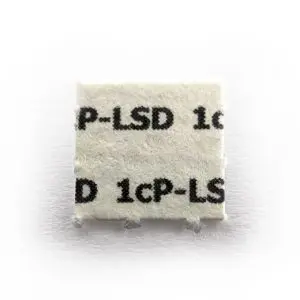
1cP-LSD 100mcg Blotters
1cP-LSD 100mcg Blotters From 18.00
(137)
Tryptamine Mix and Match Pack (4 x 0.1g)
Tryptamine Mix and Match Pack (4 x 0.1g) 65.00
(1)
1V-LSD 10mcg Micro Pellets
1V-LSD 10mcg Micro Pellets From 15.00
(43)
2-FDCK HCL
2-FDCK HCL From 12.00
(82)
1V-LSD 225mcg Art Design Blotters
1V-LSD 225mcg Art Design Blotters From 35.00
(62)
1S-LSD 150mcg Blotters
1S-LSD 150mcg Blotters From 29.00
(16)
1cP-LSD 150mcg Art Design Blotters
1cP-LSD 150mcg Art Design Blotters From 25.00
(74)
1V-LSD 225mcg Pellets
1V-LSD 225mcg Pellets From 35.00
(26)
1D-LSD 225mcg Pellets (1T-LSD)

SALE! -15%

1D-LSD 225mcg Pellets (1T-LSD) From Original price was: €42.00.Current price is: €35.70.
(13)
1cP-LSD 10mcg Micro Pellets
1cP-LSD 10mcg Micro Pellets From 15.00
(23)
5-MeO-DMT Freebase
5-MeO-DMT Freebase From 23.95
(36)
O-PCE HCL
O-PCE HCL From 17.50
(25)
1cP-LSD 20mcg Micro Blotters
1cP-LSD 20mcg Micro Blotters From 18.00
(27)
4-HO-MET Fumarate
4-HO-MET Fumarate From 19.50
(26)
rewards-icon
popup-logo

Reward program

popup-close
  • Earn
  • Affiliates