in this article
- Silicon Valley’s Right-Wing Takes Over Lykos
- In Waves and War
- Women at the Forefront of the Psychedelic Renaissance
- “Jedi Mind Fuck” Trial Received FDA Approval
- Psychedelic Therapy in Europe
- Microdosing and Pregnancy
Are you 18 or older?
Please confirm that your are 18 years of age or older.
You are not allowed to access the page.
Disclaimer: The views and opinions expressed in this article are those of the authors and do not necessarily reflect the official policy or position of the Chemical Collective or any associated parties.
Once again, the psychedelic industry is seeing significant and rapid changes in both the corporate and regulatory sectors. Even as clinical trials gain approval, the efficacy of their data is questioned. Global interest in the field continues to rapidly expand, with several European nations experimenting with new legal frameworks to encourage therapeutic access. Finally, new media is helping to further alter public discourse, bringing personal psychedelic-assisted therapy stories to light.
Billionaire private investor Antonio Gracias, a close friend and longtime associate of psychedelic enthusiast Elon Musk, has taken control of Lykos Therapeutics.
Lykos Therapeutics is the largest, most recognised MDMA-assisted therapy company in the U.S. It is also the for-profit arm of the Multidisciplinary Association for Psychedelic Studies (MAPS). In August this year, Lykos Therapeutics’ application for the use of MDMA-assisted therapy to tackle Post Traumatic Stress Disorder (PTSD) was rejected by the Food and Drug Administration (FDA). This was widely unexpected and threw MAPS into turmoil. Critics described both MAPS and, therefore, Lykos Therapeutics as a “therapy cult”, in which the use of psychedelics was not itself the issue, but rather the poor practices of the company itself.
MAPS founder Rick Doblin says the origin of the takeover was a chance meeting at Burning Man, where Doblin and Gracias discussed seeking a “white knight” investor to save the struggling company. Gracias subsequently led a $50 million funding round to stabilise the company and installed an entirely new board and leadership team.
The Guardian reports on Doblin’s approach to investment: “As Doblin sought out funding and support for Maps and Lykos over the past decade, former employees say he began looking to broader circles of investors. They included … big names in corporate finance and, controversially, the Republican donor Rebekah Mercer.” The Guardian piece adds, “One method was to court investors with invitations to parties where drugs were being used, according to [Ifetayo] Harvey”. Harvey, a psychedelic advocate who was Doblin’s executive assistant in 2015, said, “Definitely part of their fundraising strategy is ‘Meet rich people at Burning Man, do psychedelics with them and get Maps money.’”
Gracias is part of a growing number of Silicon Valley’s right-wing, who are heavily invested in the psychedelic industry. Gracias serves on the board of both SpaceX and Neuralink, further illustrating his close ties to Elon Musk. The takeover was being proposed in January of this year, when both Musk and Gracias were still heavily involved in the Doge project in the Trump administration. This throws up serious ethical concerns. Harvey describes the worrying situation: “I think the aim is to get MDMA-assisted psychotherapy approved by the FDA by any means necessary.”
Gracias’s unprecedented access to federal agencies has been cited as a serious conflict of interest by labour unions and ethics watchdogs. The FDA rejected Lykos Therapeutics’ application due to seemingly flawed science and inadequate data from the trials up to that point. This would require a new and extremely expensive Phase 3 trial to fully ascertain the effectiveness of the potential treatment. However, the new administration’s health experts appear to be considering a potential reversal of the decision or altering the stringency of the required follow-up trial. This would obviously be incredibly beneficial (possibly even necessary for its survival) to Lykos Therapeutics and the new leadership group at the helm.
The relentless drive for capital and the expectation of an exploding market appear to be leading to poor practices, and if not outright corrupt, then exceedingly murky collusion with government agencies. In all likelihood, approaching the psychedelic industry as the next investor bubble will doubtless only serve to hurt it in the long term.
A new Netflix documentary has brought the use of psychedelics for PTSD further into the public consciousness of late. The documentary follows three Navy Seals, US military veterans with severe mental health struggles. The treatment consists of two substances, familiar to those in the psychedelic community, but perhaps much less known in wider culture: 5-MeO-DMT and ibogaine. The veterans had found no relief whatsoever from traditional prescription antidepressants, so the administration of psychedelics, combined with traditional therapy, was described as a “last resort treatment”. Ibogaine is derived from the root bark of an African shrub. 5-MeO-DMT is either entirely synthetic or sourced from the Colorado river toad. Both of these substances are illegal in the United States.
(As an aside, both of these substances, if naturally sourced, are under some quite extreme environmental and social pressure from external Western influences – which is worth bearing in mind, regardless of the benefits of the treatment for these particular individuals.)
The documentary has been well-received and provides an intimate look into the veterans’ experiences. Initially, the men are predictably sceptical (a reflection of the naivety of wider culture to the potential of these substances) but eventually all undergo profound psychic breakthroughs. One of the veterans, Marcus Capone (epic name, by the way), described the treatment as a “complete reboot”, which brought him back to his “true self” prior to all the trauma he had undergone. Capone and his wife, Amber, founded Veterans Exploring Treatment Solutions (VETS), an organisation which (since 2019) has facilitated this treatment in Mexico for around 1200 veterans.
Both the filmmakers and the veterans involved hope the documentary will help to further remove barriers to research and encourage public pressure to push them ahead. Veterans are still in dire need of assistance, on a massive scale – with over 17 veteran suicides daily recorded in 2022, for example. Advocates are not calling for immediate, widespread legalisation, but rather increased study and understanding.
The filmmakers also state clearly that they did not attempt to produce a documentary on the efficacy of the science behind the treatment. This is an emotional film about individuals’ experiences. This small disclaimer is a result of the potential dangers involved with, particularly, ibogaine therapy. The risk it poses of damage to the cardiovascular system is currently still being investigated.
On 09/11/2025, the Cannadelic Global Summit will return to St. Petersburg, Florida, with a speaking slate largely dominated by women. This marks a significant shift in the psychedelic conference landscape. Keynote speakers will include healers, mental health practitioners, and scientists. Talks will cover a wide array of subjects, from trauma regression to the role of the endocannabinoid system in sexual healing.
With featured speakers like Dr Angela Fisher on erotic neurobiology. The presentation, titled “From Blushing to Bonding: Erotic Neurobiology and the New Language of Love”, “will explore the science of intimacy, attraction, and repair through a sensual and somatic journey that blends neuroscience, psychology, and the relational power of nervous system safety. This is not a talk – it’s an embodied experience.”
Cheryl Moore will be discussing regression therapy. The talk illustrates how regression therapy, “when facilitated with compassion, safety, and precision”, can promote neuroplasticity in a very similar way to psychedelic therapy.
The importance of the Cannadelic Global Summit cannot be understated. I think the words of the organisers themselves explain exactly why this matters:
The psychedelic renaissance isn’t just biochemical. It’s relational. Emotional. Feminine. Embodied.
Women are not simply participating in this renaissance – they are architecting it.
Their voices are reframing:
- Safety
- Consent
- Pleasure
- Integration
- Nervous system intelligence
- The sacredness of connection
- The ethics of transformation
They’re expanding the psychedelic narrative beyond outcomes and into felt humanity.
The Scottsdale Research Institute (SRI) has received the green light from the FDA to begin a clinical trial for the therapeutic use of magic mushrooms by the end of 2025. The SRI’s mission statement is to:
[bring] more rigorous and inclusive research forward to not only better understand whole plant/fungal medicines, but to advocate for patients’ access to natural treatments as an alternative to costly synthetic pharmaceuticals.
This trial will be the first to utilise whole psilocybin mushrooms to combat PTSD, as opposed to synthetic psilocybin. It aims, according to the SRI’s president, Dr Sue Sisley, to “deliver real-world data that can guide policy and expand access”.
The study will involve 24 participants split into three groups of eight: firefighters, police officers, and military veterans, all suffering from unmanageable PTSD symptoms. Many people who work in front-line jobs like these struggle with PTSD, and describe their experiences on a “mental health hamster wheel” bouncing from one ineffective (and rife with side-effects) treatment to the next. Participants are to be given a single 30 mg dose of psilocybin, equivalent to a substantial 4.5 gram dose of whole mushrooms.
The hope is that the corresponding period of neuroplasticity (the brain’s ability to change), which psilocybin is believed to promote, will help the participants to open “their mind to the possibilities for healing.”
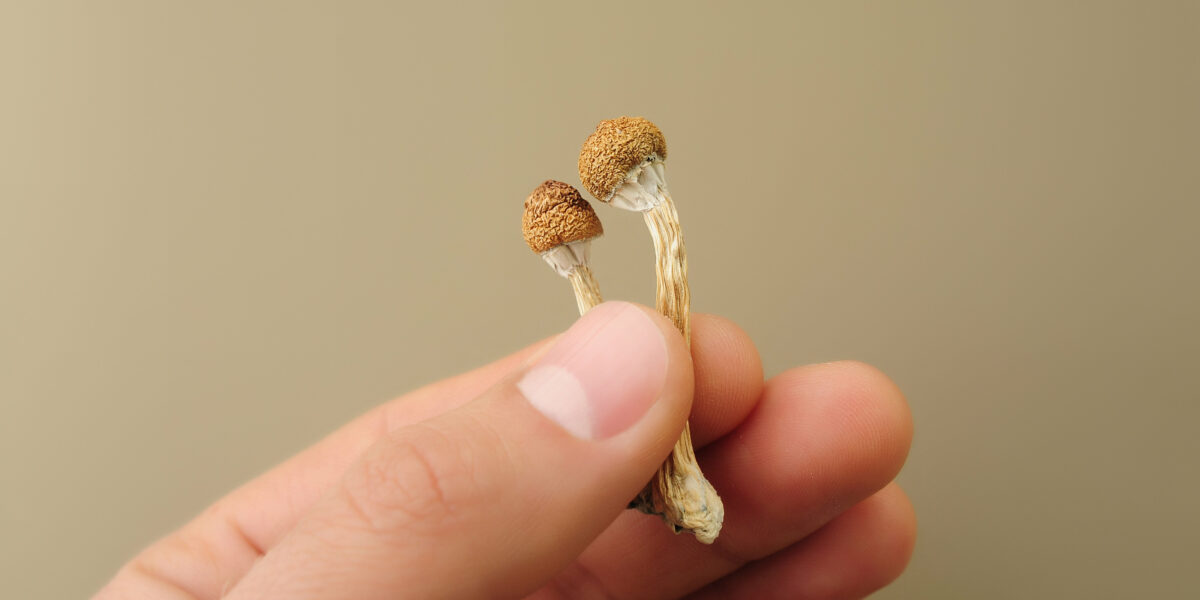
The particular strain the study is growing in their DEA-licensed facility is (quite fantastically) named “Jedi Mind Fuck”, a reflection of its potency. It contains not only psilocybin/psilocin, but also a complex mix of other alkaloids. The SRI aims to investigate whether or not these minor alkaloids improve the potential effectiveness of psilocybin-assisted therapy in this context.
Switzerland, Germany, and the Czech Republic have recently introduced programs to legally recognise psychedelic-assisted therapy. This is limited strictly to the use of psychedelics to tackle treatment-resistant conditions. Estonia and a number of other European nations are set to follow suit.
These new programs build on the established “Swiss model”, which has been in use for over a decade. In Switzerland, there are roughly one hundred physicians permitted to use LSD, MDMA, or psilocybin in their clinical practice – so long as they seek federal authorisation. The Swiss system is structured and organised, and an effective means to avoid the “wild west” the psychedelic renaissance is creating in places like the U.S., due to the arrival of capital pressure
Germany has already established two sites for the use of psilocybin for treatment-resistant depression. A key feature of the German model is its additional flexibility. Practitioners here are able to determine patient suitability without the need to seek case-by-case approval. The program leader, Dr Gerhard Gründer, predicts an additional 5-10 sites within the year as demand is already exceedingly high.
The Czech Republic is employing a slightly different approach, creating a specific category of legal medical psilocybin. This is similar to its laws relating to medical cannabis, in that the ability to prescribe will be limited to licensed psychiatrists. Hospital pharmacies will be tasked with the manufacturing of medical-grade psilocybin.
Experts stress that while there is immense promise from the spread of these programs, psychedelics are not a “cure-all”; rather, they promote a space in which the real therapy can take place – a window of opportunity to do the work.
A San Diego mother, Mikaela de la Myco, has recently spoken publicly about microdosing psilocybin mushrooms, starting at four months into her pregnancy and continuing while breastfeeding. Her motivation was to help control her alcohol addiction. She also reported taking a single large dose in her third trimester. Following the birth, she continued to use psilocybin to help manage anxiety and postpartum depression. She said that the practice had a “positive benefit” to her parenting style, giving her “more patience [and] more empathy”, helping her to be more present and creative with her new baby.
Following her experience, de la Myco started a research project called “Mothers of the Mushroom”, which surveyed over 400 mothers who had also consumed mushrooms during and after pregnancy. Her findings, which she hopes to publish officially, appear to show that all babies were born healthy, and the mothers reported noticeable benefits to their mental health and general well-being. De la Myco wants to remove the “stigma” and fear of accusations of endangering children commonly associated with this (albeit niche) microdosing practice. She believes that microdosing during and after pregnancy may well be a lot more common than we think, due to these worries preventing many mothers from disclosing it to their doctors or therapists.
David Blackbourn | Community Blogger at Chemical Collective
David is one of our community bloggers here at Chemical Collective. If you’re interested in joining our blogging team and getting paid to write about subjects you’re passionate about, please reach out to Sam via email at samwoolfe@gmail.com
Welcome to Chemical Collective.
Create an account to earn 200 welcome points.
Already have an account? Sign in
Check out our Community Blog and get involved with the conversation. You will be awarded 50 x ChemCoins for each comment up to a limit of 250 total ChemCoins.
Have you purchased any of our products? Reviews and reports are so important to the community. Share your honest opinion, and we’ll reward you with 50 ChemCoins for each review!
Every time you complete an order with us, you’ll be awarded ChemCoins for each Euro spent.
Welcome to Chemical Collective.
Create an account to earn 200 welcome points.
Already have an account? Sign in
Earn commission every time someone makes a purchase through your link.
When you become an affiliate, you will be allocated a unique link to share with your friends, followers, subscribers, or Aunt Susan.
You can choose to payout the commission earned once per month, or save it up to receive on a rainy day! Commission earned is 5% of the total order value per referral.
Contact us to join the Chemical Collective family and become an affiliate.
share your toughts
Join the Conversation.
if we look past the tech bros it seems like we’re heading in a good direction!