Welcome to
Chemical Collective

Are you 18 or older?

Please confirm that your are 18 years of age or older.

You are not allowed to access the page.

info-icon €100 for domestic (NL, CZ, DE) €125 for the rest of the EU, excluding stealth shipping

Free shipping over €50 & free tracked shipping over €100

Friendly customer service available 9-5pm Monday to Friday

Free shipping over €50 & free tracked shipping over €100

Friendly customer service available 9-5pm Monday to Friday

Your cart is empty

Terence McKenna’s Mega Bad Trip

ed-prideaux

By Ed Prideaux

terence mckenna
in this article
  • How the Trip Went Down
  • The Immediate Aftermath
  • La Chorrera’s Shadow: Prophetic Authority and Pressure
  • When Drugs Turn on Their Users
  • Public Rhetoric vs Private Reality
  • Performance, Doubt, and the Attention Economy
  • Into the Memory Hole
  • What Makes a Bad Trip?
ed-prideaux

By Ed Prideaux

Disclaimer: The views and opinions expressed in this article are those of the authors and do not necessarily reflect the official policy or position of the Chemical Collective or any associated parties.

What unfolded during a terrifying mushroom trip in Hawaii between 1988 and 1989 would change Terence McKenna’s relationship with psychedelics – and perhaps reshape the message he shared with the world for the rest of his life.

The full account appears in Graham St. John’s biography, Strange Attractor: The Hallucinatory Life of Terence McKenna, based on extensive interviews and archival work. 

Prior to this, the episode lived mostly as rumour and vague anecdotes – touched on in Dennis McKenna’s memoir and a Psychedelic Salon conversation with Bruce Damer – summarised as: McKenna had a trip so bad he basically never tripped again. For a man who popularised the “heroic dose,” this rumour bred charges of hypocrisy. 

The reality, as usual, is more complicated.

How the Trip Went Down

The crisis arrived during what should have been a routine session in the Hawaiian home he shared with his then-wife, Kathleen Harrison. They took their standard five grams of dried psilocybin and lay down on parallel mats. They had followed this ritual monthly since 1982 and weekly for years before, pausing only during Harrison’s pregnancy. On this night, a subtropical storm hit with unusual force. The metal roof, normally a comforting resonator for rain, became deafening.

Harrison reports entering a familiar ecstatic state, a loosening from bodily and domestic burdens. McKenna, by contrast, found himself dragged into what she calls an “outrageous idea space” – “completely uncontrollable, unexpected, ineffable, dense and spacious nothingness.” She could surrender to ego-loss; he could not. In her phrase, he was “really afraid of nothingness.”

As the storm intensified outside, McKenna’s terror escalated inside. Harrison sensed “something dark and scared” to her left; McKenna was curled in the foetal position, vibrating, howling. When language finally returned, it was heavy and minimal: “No… no meaning.” Variations followed: “nothing means anything,” “impossible.” St. John notes that the experience matches classical accounts of a “dark night of the soul”: a collapse of meaning so complete it presents as an abyss of despair, fitting for a man reared in Irish Catholicism. 

And for someone who had argued that psychedelics afford genuine contact with the architecture of reality, an encounter with seeming nihilism was devastating.

Harrison tried strategies that had soothed him before – invoking his late mother, a reliable balm during migraines – but hours would pass before he calmed. The next day, he was “livid,” particularly that Harrison had weathered the same conditions and emerged intact while he was reduced to panic. Terence then drew a hard line: he would never trip with Harrison again. He kept that promise. Dennis McKenna later marked this as the start of Terence’s estrangement from his former plant teachers. The “gentle, wise, humorous mushroom spirit” seemed to have turned on him.

The Immediate Aftermath

After 1988–89, McKenna did not return to mushrooms with his former frequency or bravado. Dennis writes that “he couldn’t deal with it,” that Harrison’s reassurance failed, that “after that experience he very rarely took mushrooms, and he took other psychedelics – such as DMT and ayahuasca – only on rare occasions, and with great reluctance.” The Hawaii trip was not without precedent. Years earlier, McKenna described a specific “place” he would sometimes reach on high-dose psilocybin, which he called “the meatlocker.”

In 1989, speaking at Esalen, he recounted a trip from a few months earlier in which his mental landscape was interrupted by chyrons scrolling across the base of his vision. As he began to read his thoughts displayed before him, he noticed words were misspelt. The text then degenerated into gibberish. He described this as watching his own thoughts “degrade into chaos,” a “visible degradation of meaning.” Elsewhere, he alluded to a Hawaiian trip he simply called “horrible, just horrible.”It also sheds light on why he increasingly preferred to trip alone. Not only did he find others distracting, but his own extreme states could alarm those around him. “I’m sure glad there’s nobody else here to see this,” he reflected, “because… I’m screaming in Urdu, or something.”

In public, though, McKenna continued on occasion to beat the drum for the heroic dose. Harrison and Dennis both identified this as a central contradiction. 

In counselling, Harrison pressed him on this gap. He “didn’t want his fans to know that ‘he could be cracked by this thing that he was a master of,’” she said, even while promoting five grams to the inexperienced “without appropriate qualifications on the risks of use.” A further factor was cannabis. Attempts to quit left him feeling stranded in a “horribly profane” world, with a “tremendous narrowing of consciousness.” Substances that once served exploration soon functioned as psychological maintenance. “He just needed to be high on cannabis,” Harrison said. “That was his medicine… what drove everything,” keeping him from “bouncing off the ceiling.”

There were interpersonal and temperamental issues. Harrison observed that McKenna’s cerebral style could bypass tenderness: “I don’t think he ever learned about love and compassion,” she said. “I think he loved his kids and loved me for a while, but I’m not sure he loved himself… he was really afraid of looking at what that means.” Meanwhile, the speaking circuit gathered pace. Through the 1980s, he became a headliner. With success came expectations: constant travel, extended Q&A, and lots more money than he’d enjoyed as an impoverished philosopher and drug dealer in his Berkeley days. Harrison saw his allegiance shifting from family to the public role of psychedelic bard. She would later describe him as a “brilliant narcissist,” whose perfected “rap” had become a prison. The marriage deteriorated and ended bitterly, with heavy emotional and financial costs. As documented in James Kent’s Dose Nation Podcast, Kathleen told Kent that she had become “tired of all the bullshit”.

The timing matters. The late 1980s were a threshold between Cold War certainties and postmodern incredulity. Lyotard’s “incredulity toward metanarratives” became mainstream; inherited meaning-systems (religious, political, philosophical) were widely questioned. Joseph Dewey described an “apocalyptic temper” that intensified as the nuclear standoff receded: a milieu in which McKenna stood as one of culture’s further-out prophets, with his Timewave prophecies increasingly millenarian. Even without the bad trip, the culture around him had shifted.

La Chorrera’s Shadow: Prophetic Authority and Pressure

McKenna’s crisis likewise cannot be separated from the 1971 “experiment at La Chorrera” in the Colombian Amazon, undertaken with Dennis. Days of high-dose psilocybin with minimal sleep produced for the brothers a vision in which mind and matter interpenetrated; the mushroom intelligence – the Logos – could be contacted and consulted. Back in California, Terence told friends, “history’s going to end any day now.” Friends worried they’d “gone off the rails,” and Dennis later conceded they had a point. In The Invisible Landscape, Terence recalled how friends “preferred to reject us,” as everyone behaved “very oddly” relative to baseline.

Terence was explicit that psychedelics generate “funny ideas” – some valid, some interesting, many delusional. “You have to look at them objectively… before you can either dismiss them or accept them”, Dennis has said.

Out of La Chorrera came Timewave Zero: an attempt to formalise the vision using the I Ching, mapping cycles of “novelty” and “habit” across history toward a singularity that would collapse ordinary time (later pegged to 2012). The instinct to use the I Ching had come from what Terence received as direct messages from ‘the Logos’ in later mushroom trips, including arbitrary and specific instructions to segment the oracle’s various patterns in denominations he understood as “elements of time”. In the Logos – a name he drew from Ancient Greek philosophy and the Gospel of St. John – McKenna believed he was in touch with a real personality.

The same animist conviction underwrote his love of DMT. After early exposures in the mid-1960s, McKenna declared that understanding the drug would form his life’s work. In The Archaic Revival, he called DMT “so much more powerful, so much more alien” than the rest; “the strongest psychedelic there is.” As Vincent Rado notes, McKenna’s DMT rhetoric is inflected by power: it once empowered his commitment and appalled him. He called it an “intellectual black hole” – the more you understand, the less others can understand you – then added, “but I recommend it.”

He could also be blunt about mania. In a Tripzine interview with James L. Kent, he admitted to “taking roomfuls of people prisoner… for up to 14 hours,” calling it “a sign of mania.” Friends hovered “with a net”, suspicious of the veracity of his Timewave ramblings, which he documented on an enormous and scribble-covered scroll. He once remarked, “I consider myself schizophrenic,” though he preferred to frame his states anthropologically (in shamanic terms) rather than psychiatrically. 

When Drugs Turn on Their Users

Indeed, one of the most revealing threads in McKenna’s worldview – highlighted later by critics like James Kent – is his tendency to treat psychoactive substances not as inert chemicals but as conscious agents. Across psychedelic subcultures, users often speak of drugs as friends, teachers, or tricksters; as LSD, cannabis, or alcohol “turning on” them. Rather than understand their own interiority, the animist tendency may cause drug users to look outside, at the drug itself. 

Ashley Lande, reflecting on her own experiences years later, captured this animistic dynamic with brutal honesty: “LSD was my friend. My mercurial, exhilarating, terrifying, abusive friend.” There are accounts of McKenna being later incapacitated by a single sip of mushroom tea at a London party – apparently ingesting the concentrated residue floating on the surface. He confessed: “I don’t want to become afraid of it.” He likened his situation to a mountaineer nearing retirement: “People who climb Mount Everest… at some point they knock off and become a consultant for a sportswear manufacturer or something.”

In contrast to McKenna’s seriousness, figures like Hunter S. Thompson and the Grateful Dead approached these drugs with total intellectual irreverence. While its exponents’ lives were far from exemplary, the Pranksterish strain offered resilience to disappointment and confusion. McKenna, by contrast, staked everything on the consistency and profundity of the “heroic dose” and cosmic revelation, which rendered him especially vulnerable to destabilisation when his expectations were betrayed by the unpredictable, sometimes incoherent reality of altered states. A recreational approach might have spared McKenna some of the psychic agony that followed his “bad trip,” allowing for flexible coping rather than existential collapse.

Public Rhetoric vs Private Reality

The psychological blow of the terror trip came first; the intellectual blow came later. 

In the mid-1990s, a young mathematician named Matthew Watkins corresponded with McKenna to discuss flaws in the Timewave Zero calculations, which had metastasised to an ornate pseudo-mathematical computer programme that McKenna believed could finally vectorise his acceptance in the academy as a genius. (While mostly nonsense, McKenna’s colleague Ralph Abraham remarked that Terence had independently discovered certain ideas in chaos theory). They met at the Palenque seminars in 1996. Watkins didn’t arrive as a hostile debunker; he was genuinely curious. Over several friendly conversations, however, he systematically dismantled the mathematics underpinning the theory. Watkins also noticed that the ‘fractals’ now present in McKenna’s graphical constructions were absent in the original formulations from years before, drawing suspicion that the content was changing to fit the raved-up mood of the times. 

The timing was difficult. McKenna was suffering from severe migraines, barely able to leave his room. Once back in Hawaii, he posted a formal response on his Hyperborea website, but the encounter clearly shook him. For the first time, someone had challenged his prophetic mathematics on their own terms – and won.

Watkins’s critique came years after the terror trip, so it didn’t cause the initial collapse. But it did deepen McKenna’s scepticism about his own grand narratives. He spent two years in what he called “mathematical hell,” working with physicist John Sheliak to salvage the theory. They could not. By then, the theory’s fate was sealed: it was mathematically baseless.

Performance, Doubt, and the Attention Economy

Despite his growing doubts, McKenna’s public lectures only became more popular. In private, however, he began to admit what he would not say on stage. To Christian Rätsch and Samten Dorje, he reportedly said he didn’t believe in Timewave Zero anymore: “No. But it pays the bills.” In some regards, his situation resembled contemporary media figures like Alex Jones and Russell Brand, who monetise elaborate ideas and suspicions of the establishment, whether or not they privately believe their own words. As Jules Evans points out, in 1990, Terence charged the equivalent of $7,000 per talk. Like Alan Watts decades earlier, who numbed himself with vodka before dazzling audiences with cosmic aphorisms, McKenna found himself trapped in the role of spiritual entertainer. He knew the risks of audience capture but could not entirely escape them.

Terence himself understood this tension. When Ram Dass once told him, “Your life is your message,” Terence famously replied, “My life is a mess. My message is my message.” 

This was not helped by the peculiar power of what one could call McKenna’s “loquacity shield.” Terence was, quite simply, dazzlingly articulate. His long, improvised riffs on history, language, drugs, and consciousness often ran for hours, spinning wild ideas into ornate, seemingly coherent narratives. What might have sounded unhinged in the mouth of someone else – visions of self-transforming machine elves, mushroom Logos, and apocalyptic time fractals – became, through McKenna’s eloquence, compelling philosophical entertainment. This articulate mania had protected him since La Chorrera, where what was arguably a shared psychotic episode between two brothers became the foundation of an elaborate metaphysical system. Later in life, this same verbal brilliance insulated him from scrutiny: few could (or wanted to) puncture the spell. McKenna’s linguistic virtuosity allowed him to present what might otherwise have been dismissed as drug-induced madness as if it were high theory.

Into the Memory Hole

For all its significance in McKenna’s life story, little was known of it in detail until St. John’s biography was released on October 7th. Dennis originally included some brief details in the first edition of his memoir. Later editions removed the passage entirely, replacing it with a more muted description of Terence’s growing ambivalence and infrequent use of psychedelics.

Why this quiet deletion? 

There are perhaps some practical explanations. As Dennis himself remained active on the psychedelic speaking circuit, highlighting that the prophet of the “heroic dose” had been shattered by one might have handed ammunition to prohibitionists or disillusioned McKenna’s followers. But the deeper reason might lie in the cultural dynamics of psychedelic evangelism. As journalist Jules Evans has noted, “psychedelic spokespeople can be prone to audience capture – their audience tends to be younger people who want to hear how healing, meaningful and fun psychedelics are. They don’t want to hear about bad trips.” Some fans were indeed betrayed by the story on first hearing. “For some, it was as if Luke Skywalker suddenly beheld Master Yoda as a malevolent gremlin”, St. John writes.

What Makes a Bad Trip?

“I am pretty certain he slammed it pre-1990 and earned the right to talk about it in that context,” another commentator wrote on the Psychedelic Salon discussion board. “There is nothing shocking about losing interest in the Mushroom. He just defeated the thing. In the end there was nothing more there to explore from Terence’s point of view.” Although there is no clear evidence that McKenna ever spoke directly about his “terror trip” or integrated lessons from his marriage counselling sessions, he did not shy away from sharing accounts of his difficult experiences in the late 1980s and beyond. Brutal honesty was one of his signature traits, and he often divulged the limits of his own psyche in front of audiences.

He grew increasingly reluctant to serve as a straightforward advocate for mushrooms, noting that they “might not be good for you” and that “there is nothing heroic” about taking them. Yet he continued to valorise the experience of terror itself. “If it doesn’t scare you, it’s not worth doing,” he told audiences. “I will not jump from airplanes, I do not shoot the rapids, I do not rock climb, I’m a bookish person. But I will submit to that terror, because it seems to make sense.” Terror, for McKenna, had its own strange logic. He maintained a heroic attitude toward psychedelics, insisting that “nobody abuses these drugs unless they do too little.”

This dissonance is symptomatic of what Evans calls the “psychedelic religion.” Its central dogma is that psychedelic experiences are inherently meaningful, transformative, and positive. Those who publicly question this – either through critique or through inconvenient personal experiences – risk being ignored, sidelined, or edited out. McKenna’s case is instructive because he wasn’t silenced by external authorities but by the logic of the movement he helped create. The cultural economy surrounding McKenna amplified this dynamic. He was making substantial income from lectures, books, and consultancies – all tied to his role as the witty prophet of the “archaic revival.”

The tragedy and brilliance of Terence McKenna is that this grappling happened in public, under the weight of immense cultural expectation. Most people who experience a shattering bad trip do so in private, integrating the fallout through therapy or spiritual reflection. McKenna had to do it on stage, night after night, while maintaining the persona of someone who had it all figured out. 

His loquacity shield could protect him from external challenge, but it could not protect him from the internal collapse triggered by the Hawaii trip. 

It’s curious, therefore, that Dennis McKenna has said “there is no such thing as a bad trip”. Recent empirical studies make it impossible to dismiss the existence of truly “bad” psychedelic experiences. In a survey of 613 people who had used classic psychedelics, 8.9% reported functional impairment lasting more than one day, and 2.6% sought medical or psychological assistance following a challenging trip.

These numbers may seem small – indeed, the majority report no difficult experiences – but applied across millions of users, they signal a non-negligible risk. Yet even the worst experiences, as merely ‘bad’ as they first appeared, can become ‘challenging’ over time, with negotiation and discernment. Just ask Terence.

Ed Prideaux | Community Blogger at Chemical Collective

Ed is one of our community bloggers here at Chemical Collective. If you’re interested in joining our blogging team and getting paid to write about subjects you’re passionate about, please reach out to Sam via email at samwoolfe@gmail.com


share your toughts

Join the Conversation.

1 Comment
Inline Feedbacks
View all comments
Manuel David Lopez
17 days ago

Queda muy claro que la misma vida es un viaje, y que depende de tu estado diario psicológico te tomarás una disolución del ego de una forma u otra. Solo recuerden, siempre volvemos! Y volvemos más aprendidos que nunca, un aprendizaje sobre nosotros mismos y sobre el universo que nos rodea. Somos energía, energía positiva y buena.
Gracias hofmann y mCkenna.y todos los que han seguido estos proyectos tan bonitos de la vida.

Last edited 17 days ago by Manuel David Lopez

Related articles

Our Products

Related Products

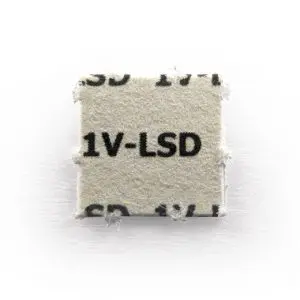
1V-LSD 150mcg Blotters
1V-LSD 150mcg Blotters From 22.00
(143)
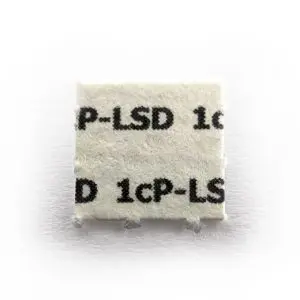
1cP-LSD 100mcg Blotters
1cP-LSD 100mcg Blotters From 18.00
(137)
Tryptamine Mix and Match Pack (4 x 0.1g)
Tryptamine Mix and Match Pack (4 x 0.1g) 65.00
(1)
1V-LSD 10mcg Micro Pellets
1V-LSD 10mcg Micro Pellets From 15.00
(43)
2-FDCK HCL
2-FDCK HCL From 12.00
(82)
1V-LSD 225mcg Art Design Blotters
1V-LSD 225mcg Art Design Blotters From 35.00
(62)
1S-LSD 150mcg Blotters
1S-LSD 150mcg Blotters From 29.00
(16)
1cP-LSD 150mcg Art Design Blotters
1cP-LSD 150mcg Art Design Blotters From 25.00
(74)
1V-LSD 225mcg Pellets
1V-LSD 225mcg Pellets From 35.00
(26)
1D-LSD 225mcg Pellets (1T-LSD)

SALE! -15%

1D-LSD 225mcg Pellets (1T-LSD) From Original price was: €42.00.Current price is: €35.70.
(13)
1cP-LSD 10mcg Micro Pellets
1cP-LSD 10mcg Micro Pellets From 15.00
(23)
5-MeO-DMT Freebase
5-MeO-DMT Freebase From 23.95
(36)
O-PCE HCL
O-PCE HCL From 17.50
(25)
1cP-LSD 20mcg Micro Blotters
1cP-LSD 20mcg Micro Blotters From 18.00
(27)
4-HO-MET Fumarate
4-HO-MET Fumarate From 19.50
(26)
rewards-icon
popup-logo

Reward program

popup-close
  • Earn
  • Affiliates