Welcome to
Chemical Collective

Are you 18 or older?

Please confirm that your are 18 years of age or older.

You are not allowed to access the page.

info-icon €100 for domestic (NL, CZ, DE) €125 for the rest of the EU, excluding stealth shipping
Free shipping over €50 & free tracked shipping over €100

Friendly customer service available 9-5pm Monday to Friday

Free shipping over €50 & free tracked shipping over €100

Friendly customer service available 9-5pm Monday to Friday

Your cart is empty

PSYCH NEWS – 17/11/25
david-blackbourn

By David Blackbourn

shutterstock 1948643866
in this article
  • LSD and Major Depressive Disorder
  • Robert F. Kennedy Jr. Smokes DMT?
  • 25C-NBF is a Rapid Antidepressant
  • Not Just a Running Documentary: Dante
  • Psychedelic Therapy: Edge of Life
  • Psilocybin More Than Medicine?
  • Psychedelics and Neuroplasticity
  • Methylone and PTSD
  • The Trump Administration Embraces Psychedelic Therapy
  • Harvard Law School Debates Legalisation
david-blackbourn

By David Blackbourn

Disclaimer: The views and opinions expressed in this article are those of the authors and do not necessarily reflect the official policy or position of the Chemical Collective or any associated parties.

This Psych News we’ve more major developments in science, politics and finance. A new study has found that microdosing LSD is effective at tackling symptoms of major depressive disorder. Another study has identified another potential antidepressant substance, 25C-NBF. Further research into psychedelics’ effects on neuroplasticity (the brain’s ability to change) has challenged long-held theories.

In the political sphere, top Trump administration officials have attended a MAHA summit with a panel dedicated solely to psychedelic medicine. Concurrently, a Harvard Law School panel has been debating the potential impact of federal legalisation. This all comes as Health Secretary Robert F. Kennedy Jr. has faced public allegations of drug use, including the use of smoked DMT.

Two new documentaries are broadening the current public conversation on psychedelic use. Edge of Life explores shamanic means of end-of-life care in the Amazon, while Dante follows an ultramarathoner’s 500-mile run, fueled throughout by psychedelics. Conversely to this, a mother’s public admission of microdosing throughout pregnancy has bred controversy, alongside growing debate as to whether or not psychedelics should be treated solely as medication, or whether they have value recreationally.

LSD and Major Depressive Disorder

Researchers at the University of Auckland in New Zealand have shown that microdosing LSD may potentially offer significant relief for people struggling with major depressive disorder. The study consisted of 19 volunteers and aimed to find a more effective treatment than traditional antidepressants. Antidepressants come with a whole host of negative side-effects, are slow to take effect and simply fail to help a large proportion of patients. Many of the participants were already prescribed antidepressants, which had failed to adequately manage their symptoms. The study tasked them with self-administering 16  doses of LSD over 8 weeks. The dose gradually increased throughout the study, from 6mg to 20mg.

The results showed a profound reduction in participants’ depressive symptoms. This reduction also appeared long-lasting. At the end of the 8-week period, participants’ depression scores (measured on the MADRS scale) had dropped by around 60% across the board. Nine of the participants even met the criteria for full remission of their symptoms. Alongside that, anxiety scores dropped by over 50%, while rumination on negative thoughts also decreased by 15%. Participants also reported a perceived better overall quality of life. These changes appeared to continue for at least 6 months following the microdosing regimen.

No serious side effects were reported. The only minor negative effect seemed to be headache, which two participants recorded. One participant withdrew from the study due to anxiety on dosing days. As ever, the researchers concluded that while the results show definite therapeutic potential, there is a need for much more research, at a much larger scale.

Robert F. Kennedy Jr. Smokes DMT?

An upcoming memoir by the journalist Olivia Nuzzi has alleged that current US Health Secretary, Robert F. Kennedy Jr., has secretly used psychedelic drugs for years. This comes despite his decades-long claims of sobriety. The allegation is detailed in Nuzzi’s American Canto, in which she claims to have had a several-month-long “digital-only relationship” with the married Kennedy.

In the book, Nuzzi is said to claim that Kennedy confided in her his use of smoked DMT (dimethyltryptamine). Kennedy has claimed sobriety publicly since a 1983 arrest for heroin use. Their relationship is said to have begun following a profile on Kennedy, which Nuzzi wrote for New York magazine. Kennedy denies this, but has yet to respond to any other allegations.

Kennedy’s psychedelic use is possibly made more plausible due to the fact that, in recent years, he has been campaigning hard for the use of psychedelics in a therapeutic context for depression and trauma.

25C-NBF is a Rapid Antidepressant

A new study, published in Molecular Psychiatry, has identified a new psychedelic phenethylamine, 25C-NBF. The substance has been shown to promote rapid antidepressant effects in rodents. This is combined with a seemingly excellent safety profile. The researchers were seeking potential, effective alternatives to well-known phenethylamines, like amphetamine or methamphetamine, which can carry a high risk of abuse. A single dose of 25C-NBF was shown to reverse depressive behaviours in mice subjected to acute stress. These effects appeared within 24 hours, and during the stress test, the effects continued for at least a week.

Researchers believe the therapeutic effects are a result of the “psychoplastogenic” properties of the substance. 25C-BNF, like many other psychedelics, appears to enhance the brain’s neuroplasticity. This is seen in more detail here, with 25C-BNF promoting structural neural plasticity – basically, promoting new growth. This growth was seen largely in the prefrontal cortex, the part of the brain largely responsible for executive functions – decision making/problem solving, etc. This is a mechanism it shares with other psychedelics with fast-acting antidepressant effects, such as ketamine and psilocybin.

Most importantly, 25C-BNF appears to show no rewarding or reinforcing effects when considering its abuse potential. This is likely due to its selectivity of effects, as, unlike most other phenethylamines, it does not increase dopamine levels in the brain’s reward centre. These findings suggest the substance and its subsequent analogues may represent an entirely new class of antidepressants.

Not Just a Running Documentary: Dante

A new documentary called Dante details the extraordinary 500-mile, 11-day run of Dante Liberato, a 27-year-old, retired MMA fighter. Dante ran from his gym in Manitou, Colorado, to Moab in Utah, consuming LSD and psilocybin mushrooms for the entire journey. The run, which was followed by a camera crew and support team, is what Dante calls a “bridge” to a more self-aware society. Liberato already integrates psychedelics into his lifestyle and promotes this on his Instagram. His gym blends fight training with mindfulness practices using a psilocybin dosing app called Couchmilk. He claims (though I have, if I’m honest, not checked this) that every fighter who has undergone his program is undefeated.

Dante states that any industry sponsors were immediately “out” as soon as psychedelics were mentioned. That only increased his motivation. The documentary aims to destigmatise the use of psychedelics in this context. Dante believes they can act as a performance enhancer. He says the film is not just a “running documentary”. It is designed to shake up the community and show that the stereotype of “sitting around tripping” is a falsehood. The documentary emphasises harm reduction and responsible use.

Psychedelic Therapy: Edge of Life

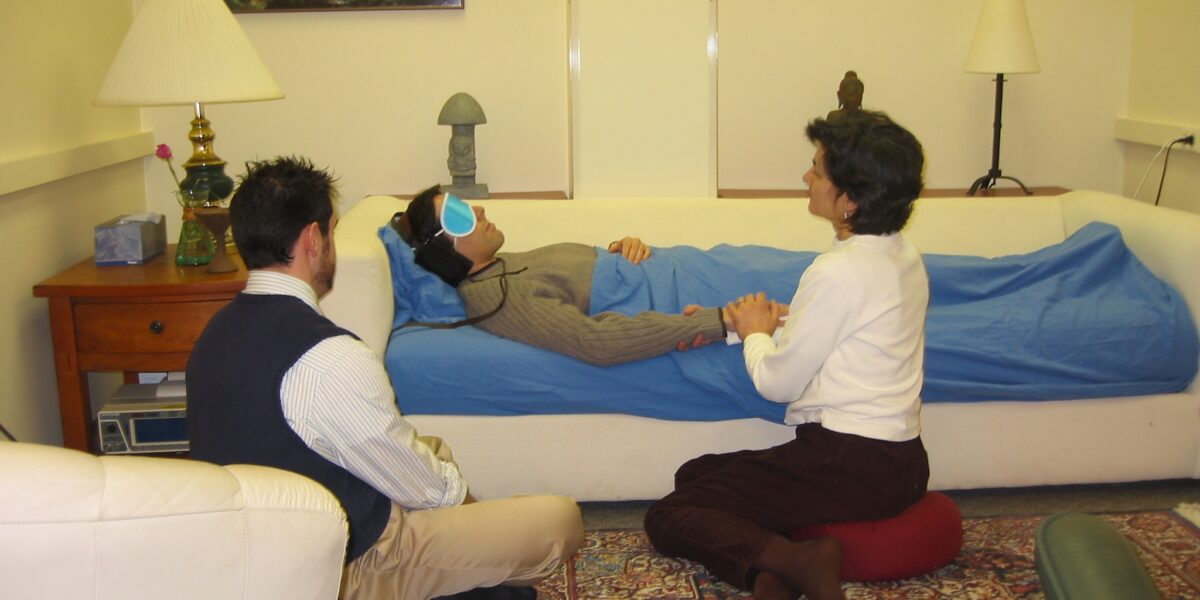
Edge of Life is another new documentary, this time focusing on Australian artist and filmmaker Lynette Wallworth, as she explores alternative approaches to end-of-life care. Wallworth experienced a near-death experience at the age of 11 and, as a result, she has what she calls an “unusual relationship to death”. She created Edge of Life as a direct challenge to the “death-denying” culture of the West. The documentary focuses on two Australian palliative care doctors – Margaret Ross and Justin Dwyer. The pair carried out a successful 3-year trial using psilocybin-assisted therapy to provide what they describe as “rapid and sustained reductions in depression and anxiety” for terminally ill patients.

The documentary follows Wallworth to the Brazilian Amazon, where she connects Ross and Dwyer with the Yawanawá shamans, with whom she had worked previously. She convinced the doctors of the value of the indigenous knowledge that the Brazilian shamanic tradition could provide them. They have used the psychedelic, DMT-containing ayahuasca for millennia to ease the process of dying, embracing death as part of a natural journey. The film contrasts the two cultures, with the Western doctors progressively realising that their own medical language is not sufficient to describe these experiences.

One of the shamans, Muka, says that the film is a “generous gift” that supports indigenous culture, bringing their vital knowledge to the forefront, planting “seeds…in everyone’s heart.”

Psilocybin More Than Medicine?

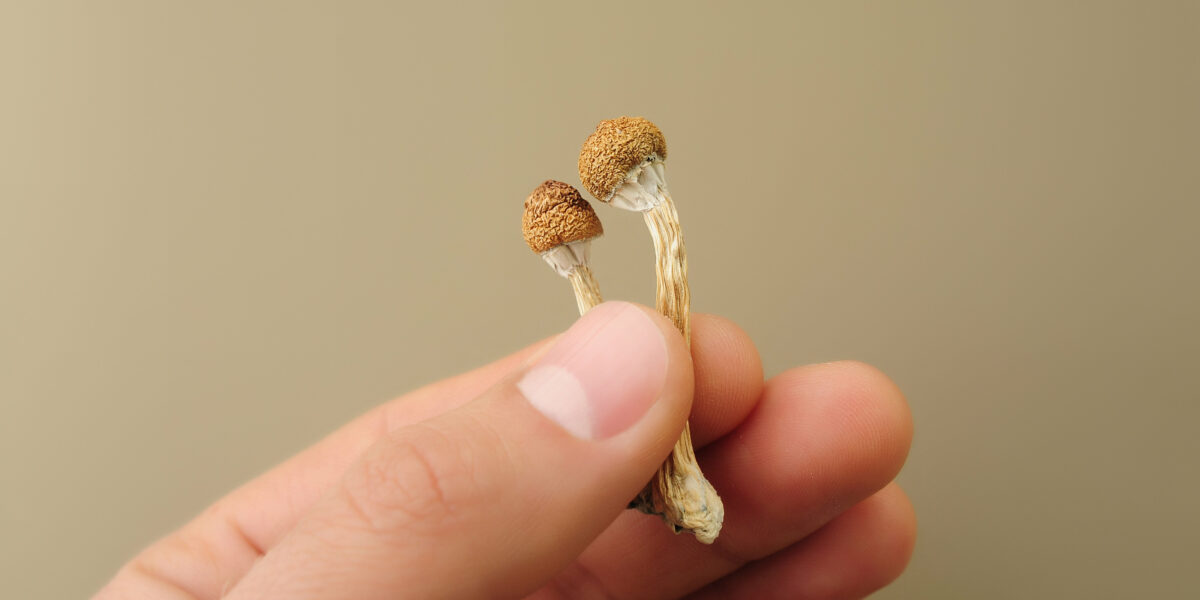
A recent article in Reason has argued that considering psilocybin as solely a psychiatric medication is a flawed view. The reasoning behind this view is that it completely ignores the current (and historical) real-world uses of the substance and fails to address the injustices and illogicalities of prohibition. The author, Jacob Sullum, points to a 2023 RAND Corporation survey, which showed that the primary reasons that people actually use psilocybin will “never be approved by the FDA.

The survey showed that, while “improved mental health” was one goal for 49% of participants, the most common motivation was in fact “fun” (59% of participants). “Spiritual growth” (41%) and “personal development” (45%) were also cited as reasons for psilocybin use. Sullum concludes that this shows the medical-only path for integrating psilocybin into society is flawed. If governments criminalise the majority of psilocybin, or psychedelic use as a whole, simply because they deem it frivolous, this is not, in fact, providing either justice or an effective means of controlling the use of the substance. When individuals continue to be criminalised for personal choices, which can still potentially lead to lengthy prison sentences, Sullum argues that there needs to be a far wider consideration of the acceptable avenues of use.

Psychedelics and Neuroplasticity

Most research into psychedelics suggests they produce their seemingly long-lasting antidepressant effects as a result of their “psychoplastogenic” (new growth) effects. A new study, published in Neuropsychopharmacology, suggests that these effects are not in fact dependent upon structural plasticity. The study showed that a single dose of either psilocybin or another novel compound, 25CN-NBOH, produced antidepressant effects for at least three months. These effects were not accompanied by any corresponding changes in the physical structure of the affected areas of the brain.

Rather, the researchers suggest that these enduring benefits following treatment are a result of “functional plasticity” rather than structural. Months after the single dose, neurons in the medial prefrontal cortex (an area of the brain crucial for integrating new information, emotional regulation, and self-referential thinking) showed significant changes in their electrical properties. This indicates “functional plasticity”, a change in how the circuits themselves function, rather than a change in their construction.

The study reinforces the central role of the 5-HT2A serotonin receptors as largely responsible for the effects of psychedelic substances. The fact that both psilocybin, a well-known “classic” psychedelic, and 25CN-NBOH, a novel and highly selective 5-HT2A agonist (stimulates production at the receptor), exhibit similar antidepressant properties, suggests that stimulation of the 5-HT2A receptor is key to these effects. This discovery appears to alter the landscape of our understanding somewhat, away from a purely structural model to one more focused on alterations to functions within that existing structure.

Methylone and PTSD

The Mirabilis Health Institute, in County Antrim, is the only facility in Northern Ireland currently conducting trials into the therapeutic use of psychoactive substances. They are facing unprecedented levels of demand, with hundreds of people reportedly on the waiting list. The clinic is researching the effectiveness of psychoactive-assisted treatment for chronic conditions like PTSD. This is particularly relevant for a country like Northern Ireland, which one source in the Irish News described as a “pretty traumatised population.

The current trial focuses on methylone, a fairly recent, non-hallucinogenic compound, for treating post-traumatic stress disorder. The study, a first for Northern Ireland, will test both the efficacy and safety of the potential treatment. Participants will receive 4 weekly sessions, followed by a 6-week follow-up period to monitor the continued effects.

Professor Paul Miller, the doctor leading the study, has emphasised the intensely debilitating effects of PTSD and the dire need for innovative treatment for a population in crisis. The exceedingly high demand and length of the current waiting list are a testament to this.

The Trump Administration Embraces Psychedelic Therapy

Top officials in the Trump administration, including Vice President JD Vance, and the (already mentioned) Health Secretary Robert R. Kennedy Jr., attended what was named a “Make America Healthy Again” (MAHA) summit. A prominent feature of this summit was a panel dedicated to psychedelic medicine. The session was titled “Psychedelic Medicine: The Next Frontier in Mental Health” and was led by Christian Angermayer, a prominent proponent of psychedelics. He has previously described their ability to “take away the fear”.

The inclusion of the topic is further high-profile evidence of the Trump administration’s seemingly rapidly growing interest in the therapeutic potential of these substances. The summit’s focus also shows a broader, coordinated push for psychedelic reform. Kennedy has himself stated that he is “absolutely committed” to expanding research efforts, particularly in the area of supporting veterans struggling with PTSD.

Harvard Law School Debates Legalisation

Further evidence of the rapidly thawing attitude towards psychedelics in the US comes from Harvard Law School. A multidisciplinary panel of academics, experts, and advocates have met to discuss the potential for future federal legalisation of various psychedelic therapies.

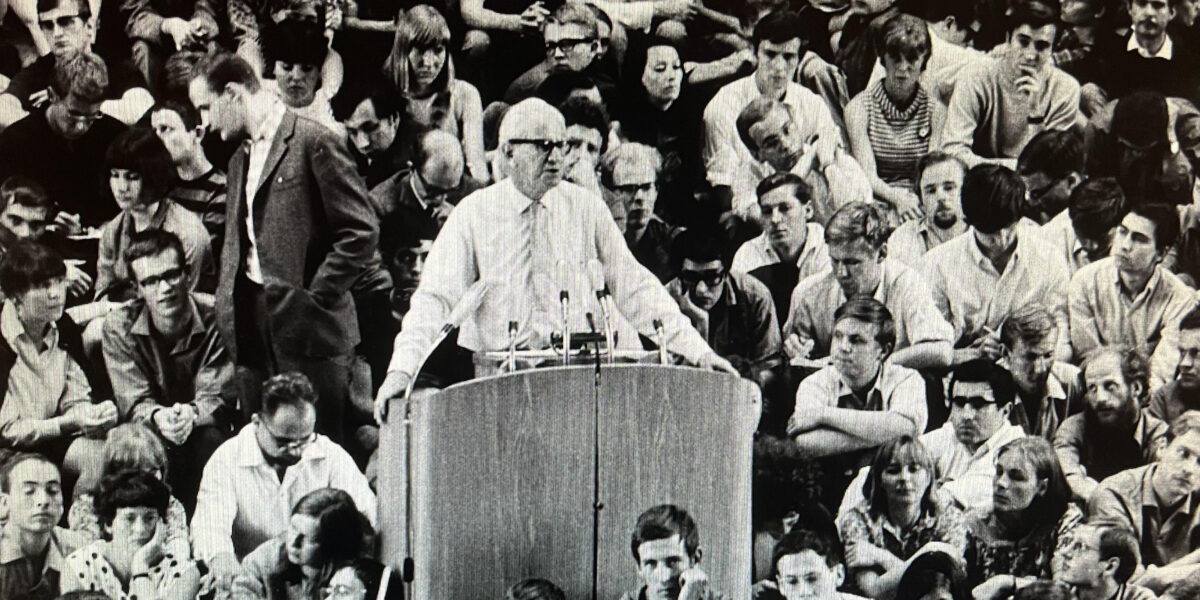
The discussion focused on the myriad benefits of psychedelics for trauma recovery and mental health support, along with the necessity for effective FDA oversight. The experts also highlighted the key tensions across the field, with contrasting cultural attitudes towards drug use as a whole, as well as the lack of reliable data, which is still in comparatively “short supply”. David B. Yaden, a psychedelics researcher from Johns Hopkins, emphasised the necessity for large-scale, government-funded clinical trials. Holly Fernandez Lynch, a medical expert, also pushed the fact that psychedelics must be held to exactly the same FDA standards as other medications. Finally, Cat Packer of the Drugs Policy Alliance explained how the War on Drugs has had a powerfully negative impact on drug users and society as a whole. She emphasised the need for a completely new policy framework to account for the burgeoning psychedelic renaissance in a safe, sustainable manner.

David Blackbourn | Community Blogger at Chemical Collective

David is one of our community bloggers here at Chemical Collective. If you’re interested in joining our blogging team and getting paid to write about subjects you’re passionate about, please reach out to Sam via email at samwoolfe@gmail.com

share your toughts

Join the Conversation.

0 Comments
Inline Feedbacks
View all comments

Related articles

Our Products

Related Products

1V-LSD 150mcg Blotters
1V-LSD 150mcg Blotters From 22.00
(143)
1cP-LSD 100mcg Blotters
1cP-LSD 100mcg Blotters From 18.00
(137)
Tryptamine Mix and Match Pack (4 x 0.1g)
Tryptamine Mix and Match Pack (4 x 0.1g) 65.00
(1)
1V-LSD 10mcg Micro Pellets
1V-LSD 10mcg Micro Pellets From 15.00
(43)
2-FDCK HCL
2-FDCK HCL From 12.00
(82)
1V-LSD 225mcg Art Design Blotters
1V-LSD 225mcg Art Design Blotters From 35.00
(62)
1S-LSD 150mcg Blotters
1S-LSD 150mcg Blotters From 29.00
(16)
1cP-LSD 150mcg Art Design Blotters
1cP-LSD 150mcg Art Design Blotters From 25.00
(74)
1V-LSD 225mcg Pellets
1V-LSD 225mcg Pellets From 35.00
(26)
1D-LSD 225mcg Pellets (1T-LSD)

SALE! -15%

1D-LSD 225mcg Pellets (1T-LSD) From Original price was: €42.00.Current price is: €35.70.
(13)
1cP-LSD 10mcg Micro Pellets
1cP-LSD 10mcg Micro Pellets From 15.00
(23)
5-MeO-DMT Freebase
5-MeO-DMT Freebase From 23.95
(36)
O-PCE HCL
O-PCE HCL From 17.50
(25)
1cP-LSD 20mcg Micro Blotters
1cP-LSD 20mcg Micro Blotters From 18.00
(27)
4-HO-MET Fumarate
4-HO-MET Fumarate From 19.50
(26)
rewards-icon
popup-logo

Reward program

popup-close
  • Earn
  • Affiliates