in this article
- A Medical Practice with Ancient Origins
- Trepanation in Ancient Peru
- Expelling Demons
- A Problem of Blood-Brain Volume
- Heartbeat in the Brain
- The International Trepanation Advocacy Group
- Medical Pushback
- Trepanation Today
Are you 18 or older?
Please confirm that your are 18 years of age or older.
You are not allowed to access the page.
Disclaimer: The views and opinions expressed in this article are those of the authors and do not necessarily reflect the official policy or position of Chemical Collective or any associated parties.
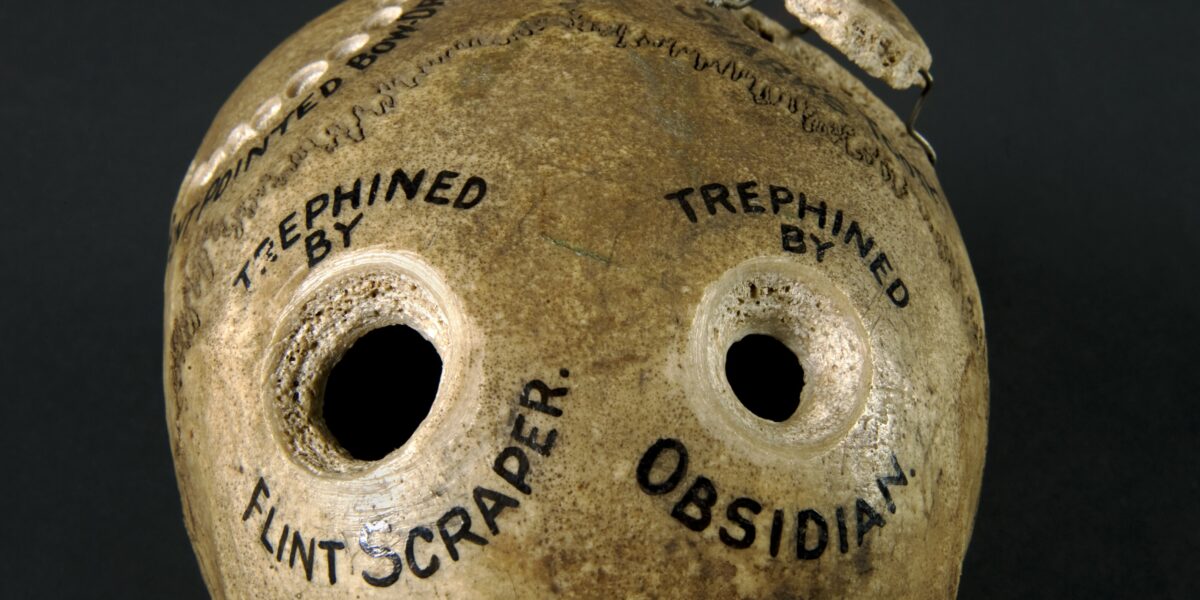
Trepanation, “the practice of making a hole in the skull of a person,” seems macabre. Yet, it is one of the oldest and most enduring surgeries throughout human history. From reducing skull fracture damage to expelling demons, trepanning has been used for a myriad of purposes. Some have even claimed it’s the gateway to eternal happiness.
Trepanation is derived from the ancient Greek word trypanon, meaning auger – a large corkscrew tool. While generally used to bore holes in wood, the auger wasn’t limited to just carpentry.
The Greeks had begun trepanning for medical purposes as early as the second millennium BC. Hippocrates, considered the “father of modern medicine,” recommended trepanation for the treatment of head injuries. Given the numerous military conflicts, these were a common affliction of the time.
In his renowned work On Injuries of the Head, Hippocrates categorised various types of skull fractures and outlined when trepanation should be performed. He advised using the procedure in specific cases to prevent further harm, for example, to drain trapped blood or to lift skull fragments pressing on the brain.
Centuries later, the Roman physician Galen, another pioneer in biomedicine, also endorsed trepanation. He recommended it as a way to relieve pressure inside the skull and to drain areas filled with pus (which he described as “phlegmatous” regions).
Similar methods for draining have also been described in early Chinese literature. In the 14th-century text Romance of the Three Kingdoms, author Luo Guanzhong writes:
Your Highness’s severe headaches are due to a humor that is active. The root cause is in the skull, where trapped air and fluids are building up. Medicine won’t do any good…After general anesthesia, I will open your skull with a cleaver and remove the excess matter, only then can the root cause be removed.
Today, doctors continue to trepan skulls for drainage and pressure relief, but it’s commonly referred to as a craniotomy, or burr-hole surgery, depending on the incision size. The technique is also used to remove tumours and blood clots.
As in Greece, ancient Peru was rife with warfare, and early doctors were similarly using trepanation to treat head injuries. The country has the most trepanned skulls in history, with artefacts dating back to 400 BC.
Ancient Peruvian doctors have been named “experts in trepanation,” with high survival rates from patients who underwent the procedure. In a 2018 study, 800 excavated skulls from Peru were analysed. The researchers estimated that survival rates increased from around 40% in 400–200 BC to about 91% by the Inca era in the 15th century.
Many trepanned skulls from the Incas also show no physical trauma, leading scholars to propose alternative uses for trepanation, including the treatment of epilepsy. As in Europe, the condition was believed to have supernatural origins at the time.
“In the magical religious thinking of the Incas, they assumed that seizures arose from the brain, and the performance of a cranial trepanation would allow the exit of the demons,” wrote the authors of an article in Brain.
Until around the 16th century, much of Europe also believed epilepsy arose from demonic possession. However, unlike the Incas, these beliefs were rooted in Christianity, with the devil often to blame for such a disposition.
And it wasn’t just epilepsy; rather, demonic possessions were used to explain most mental illnesses or bizarre behaviours. Exorcisms were the primary means of removing evil spirits, but trepanation was also common.
In the 16th-century Hieronymus Bosch painting The Extraction of the Stone of Madness, the Flemish painter depicts this practice. He shows a doctor performing trepanation on a patient to remove his folly (madness) through a head incision.
Bosch’s painting is, however, likely satirical, as science was beginning to disprove pathological explanations of mental illness by the early Renaissance. Yet, while the underlying theories changed, the use of trepanation to treat mental illness continued into the 21st century.
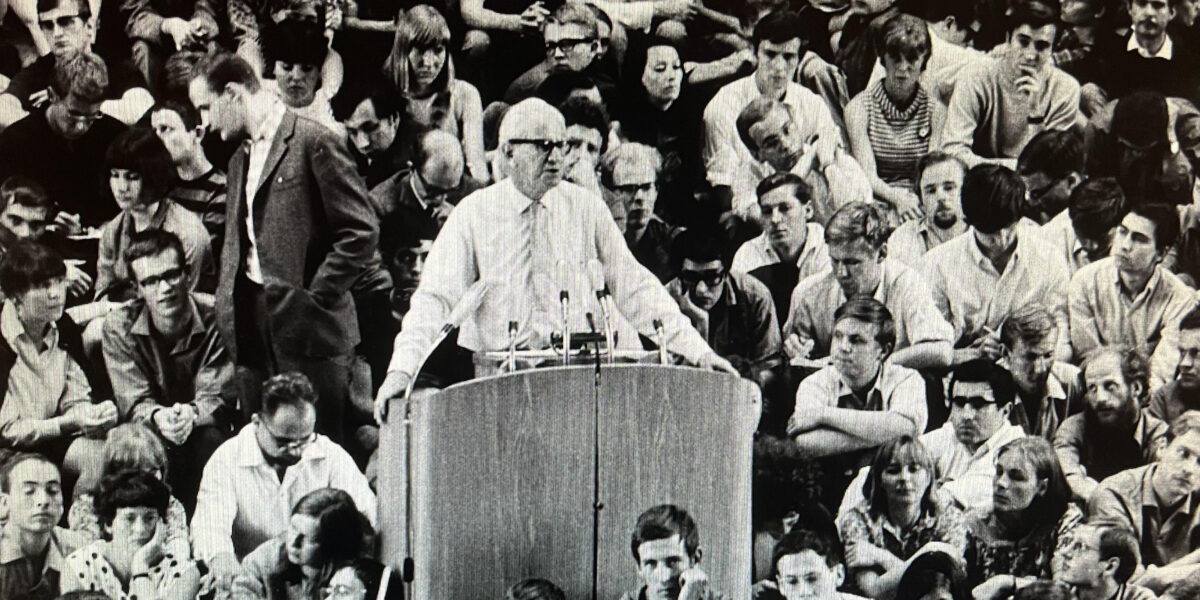
In 1970, Hugo Bart Hughes, a Dutch librarian and ex-medical student, published The Mechanism of Brainblood Volume: Homosapiens Correctus. In which he proposed that mental disorders are caused by a gradual loss of consciousness, which occurs once the skull has properly formed.
“At the end of growth, the sutures in the skull (seams between the bones) seal together, encasing the brain in one rigid structure of bone. Once the skull has sealed, there is no longer any give in the substance surrounding the brain membranes,” explains Joey Mellen, a follower of Hughes, in his memoirs Bore Hole.
“This reduction of brain blood volume means that the brain as a whole loses some of its potential function, since the brain cells depend on the supply of blood to perform their individual functions,” states Mellen.
Hughes believed trepanation could restore the imbalance in blood to cerebrospinal fluid volume and made a hole in his own skull using an electric drill. He claimed it led to a “permanent high,” and encouraged Mellen to do the same. The two met after Mellen dropped out of Oxford University, and had several encounters fuelled by cannabis and LSD.
“Over the next three or four hours, I got gradually higher,” Mellen describes in his book. “I hadn’t really known what to expect, and it was a rather exhilarating feeling this gradual lightening.”
Like Hughes, he reported a change in consciousness and well-being that lasted well after the surgery.
Impressed by Mellen’s results, his wife, the late Amanda Feilding, decided to perform her own surgery. Mellen filmed the act for a short documentary Heart Beat in the Brain, which was used as an advocacy piece to promote the surgery’s benefits.
The film ends with Feilding calmly wiping blood from her face with cotton wool, wrapping a golden turban around her head, and heading out to a party.
“All this took place in 1970,” she narrates. “Now, eight years later, I can say the experience is as good, if not better, than I’d hoped…. I think the advantages should be made available to everyone. Trepanation is the only way of expanding consciousness.”
Feilding was an art student at the time, but later devoted her life to researching and promoting the benefits of trepanation. She ran for Parliament as an independent candidate in her local Chelsea constituency in 1979 and 1983, campaigning solely for the availability of trepanation on the National Health Service. Over this period, she more than doubled her vote count, increasing it from 49 to 139.
Feilding also established the Beckley Foundation in 1998 to investigate the benefits of trepanation. While this side of the research never took off, the organisation successfully conducted several studies involving psychedelics, including the first-ever neuroimaging study of LSD.
Feilding wasn’t alone in her campaigning efforts. Inspired by meeting Hughes, jewellery designer Peter Halverson drilled a hole in his own head in 1972. At the time, the 27-year-old college dropout was struggling with persistent depression, which he said the surgery relieved.
“It’s as if somebody suddenly turns on a light and you realize, `Wow, I’ve been in the dark all this time,” he described in an interview.
Halverson established the International Trepanation Advocacy Group (ITAG) with the aim of “helping people change their lives through trepanation.” Under the ITAG, he conducted a pilot study at a Mexican clinic, performing operations on others.
After conducting a trepanation on the live TV show 20/20 along with partner William Lyons, Halverson was charged with practising medicine without a license and given three years ‘ probation. The surgical subject, Heather Perry, said she suffered negative side effects, including the leakage of brain fluid.
The growing advocacy, spurred by figures like Feilding and Halverson, led to the creation of videos and T-shirts that championed “do it yourself” trepanning. With increasing reports of such procedures, there was a significant pushback from the medical community.
“There are lots of good reasons for making a hole in someone’s head, and in a neurosurgeon’s hands it is not a risky procedure, but for someone doing it themselves the risks are huge,” warns Neurosurgeon Laurence Watkins in an article for the BMJ published in 2000.
With increasing dismissal from medical doctors and a rise in alternative, effective mental health treatments, trepanation began to fall out of fashion.
Today, aside from its use in neurosurgery, people mainly associate trepanation with being an outdated fringe craze. Nonetheless, some remain curious, especially amid the renewed public interest in psychedelics and altered states of consciousness.
With such striking anecdotes, the personal accounts of those who have undergone trepanation are compelling. There are reports of people overcoming anxiety, fatigue, and depression, with rapid-acting and long-lasting benefits.
“It’s an intense high, a sense of happiness and well-being, nothing wild like LSD. And it’s a permanent high that never goes away,” quotes Halverson for a blogpost on Beliefnet.
One former member of the Beckley Foundation recalled still receiving emails from individuals looking to self-trepan up until they left the organisation a few years ago.
However, aside from personal stories, there’s very little evidence to support the claim that trepanation has any neurological benefits for consciousness expansion. And there is no doubt that the process is extremely dangerous, especially when done without medical supervision.
Martha Allitt | Community Blogger at Chemical Collective
Martha is one of our community bloggers here at Chemical Collective. If you’re interested in joining our blogging team and getting paid to write about subjects you’re passionate about, please reach out to Sam via email at samwoolfe@gmail.com
Welcome to Chemical Collective.
Create an account to earn 200 welcome points.
Already have an account? Sign in
Check out our Community Blog and get involved with the conversation. You will be awarded 50 x ChemCoins for each comment up to a limit of 250 total ChemCoins.
Have you purchased any of our products? Reviews and reports are so important to the community. Share your honest opinion, and we’ll reward you with 50 ChemCoins for each review!
Every time you complete an order with us, you’ll be awarded ChemCoins for each Euro spent.
Welcome to Chemical Collective.
Create an account to earn 200 welcome points.
Already have an account? Sign in
Earn commission every time someone makes a purchase through your link.
When you become an affiliate, you will be allocated a unique link to share with your friends, followers, subscribers, or Aunt Susan.
You can choose to payout the commission earned once per month, or save it up to receive on a rainy day! Commission earned is 5% of the total order value per referral.
Contact us to join the Chemical Collective family and become an affiliate.
share your toughts
Join the Conversation.
Love this website