in this article
- The Myth of the Equal Mind: Privilege in Set
- Setting: Who Has Access to Nurturing Spaces?
- The Cultural Divide: Whose Knowledge Counts?
- Moving Towards a More Inclusive Psychedelic Culture
Are you 18 or older?
Please confirm that your are 18 years of age or older.
You are not allowed to access the page.
Disclaimer: The views and opinions expressed in this article are those of the authors and do not necessarily reflect the official policy or position of the Chemical Collective or any associated parties.
The 19th-century American educational reformer and slavery abolitionist Horace Mann argued that education served as a ‘great equaliser’ of the conditions we find ourselves in, where those less fortunate were able to advance on the social scale. The idea behind this was that a well-educated society is essential for our individual and collective well-being, and that having equal opportunity to quality education is a prerequisite for engaging in the different political, social, and economic aspects of society.
Could the same be said for psychedelics being great equalisers of consciousness? Is a well-developed conscious mind essential for the individual and collective health of our society? What about being able to participate in certain areas of society that require more of a developed or expanded consciousness?
Are we necessarily always able to ‘improve’ or expand our state of consciousness to the point where we have a level playing field of understanding? It might be that the reality doesn’t necessarily reflect the potential for psychedelics to be democratised when it comes to accessing them, where things can often seem relatively unequal, depending on which country we live in or our level of financial freedom. So much of the recent narrative surrounding psychedelics has focused on the different mental health conditions we experience as individuals, and perhaps not enough attention has been paid to the structural or societal aspects of our lives that determine our mental health.
When we enter into a psychedelic experience, we are often told of the benefit of having a proper ‘set and setting’, where the set refers to our mindset and the setting is the environment that we find ourselves in. The more supportive these two concepts are, the more potential there is for a positive experience, where we can introduce intentions with our set and ensure we have a comfortable setting that will be conducive to a psychedelic experience. This can often involve having a physically comfortable space if you’re indoors, or going towards nature if you’re out of the house. It may also involve providing sonic containers with the right kind of music, or making sure you’re in an environment with people you know and trust.
The concept of set and setting is often touted as the foundation for a safe and transformative psychedelic experience – but what if either of these isn’t equally accessible? In a recent conversation with Karin Silenzi de Stagni, founder of Psycare International, she expressed that the set is often bigger than just the individual, as it encompasses everything which makes up who we are: “What does it mean to be you?”
This question feels like something we don’t really ask ourselves frequently enough, but perhaps it’s something that has a greater impact on our experience than we give it credit for. We could all ‘know’ what kind of mindset to bring to a psychedelic trip, but do we all have the necessary tools to mentally engage with these substances in a positive way? It’s quite obvious that our level of comfort or ease in the world is often dictated by the structural scenario we find ourselves in, which then would have an impact on our mindset as well as our physical surroundings. If we come from a place of structural privilege, does that afford us more of an opportunity for a comfortable experience – and would the opposite also be true?
The narratives surrounding psychedelics overwhelmingly talk of their healing potential and ability to expand our consciousness. But how can these concepts really be explored without addressing the structural inequalities that might result in us needing healing in the first place? If we look at the psychedelic space from a sociological angle, we might find ways in which we can reflect on creating equal spaces with more accessibility within psychedelic culture.
So what are the different factors which determine someone’s set when entering into a psychedelic experience? Our internal state is profoundly impacted by socio-economic factors, with some research showing that children and adolescents with low socio-economic status suffer from greater mental health problems compared to those with a high socio-economic status. The psychological aspects of social class can have a lasting impact on personal and social identities, which then contribute to the behaviour of individuals within society, along with their thoughts and feelings about their social environment. Other contributing factors, such as pre-existing trauma, race, gender, disabilities, or poor health, can shape the extent to which individuals are able to comfortably engage with psychedelic experiences.
Are we making enough allowances for these contributing factors, or do we assume that the psychedelic experience begins from a neutral starting point? When speaking about the impact of psychedelics on culture, ethnobotanist and psychedelic philosopher Terrence McKenna stated:
Psychedelics are illegal not because a loving government is concerned that you may jump out of a third story window. Psychedelics are illegal because they dissolve opinion structures and culturally laid down models of behaviour and information processing. They open you up to the possibility that everything you know is wrong.
The idea of dissolving opinion structures, as well as culturally laid down models of behaviour and information processing, might imply that our expectations of psychedelics are for them to remove some of the foundations that might inform our particular worldview. This might reflect the sentiments behind the white, middle-class members of society who have been talking and writing about psychedelics for so many years. Perhaps this is a narrow scope to view psychedelics with, as they could, in fact, change or inform our worldviews, rather than totally dissolve them.
Research has shown that marginalised individuals from minority groups are less likely to gain the benefits of psychedelics compared to white people, with white men in particular gaining the most benefit from their psychedelic experiences. The intergenerational impact of structural racism, combined with the cumulative effect of trauma on mental health issues, such as depression, is carried with people from marginalised communities. This can make different groups hypervigilant and less trusting of authority-led psychedelic spaces due to previous experiences of discrimination.
The wider issue of mistrust in the medical model from minority groups can also create some challenges when it comes to engaging with psychedelics as potential treatments for something like working through trauma, and it might be useful to think about how the way in which we talk about these benefits might not be appealing to everyone. In rare cases, psychedelics can even create traumatic experiences, where pre-existing trauma might emerge – this point is often bypassed by those wanting to only think about positive vibrations or see these challenging experiences as “lessons”, rather than feeling a need to guard against these kinds of experiences in order to create a safer environment.
Clinical psychologist and professor Monnica Williams has been on a mission to bring psychedelics into therapy in order to heal racial traumas. This is something that goes beyond just healing the conditions that the individual is grappling with and could be more related to intergenerational trauma. Williams has experienced this personally, as her parents grew up in the Deep South in the USA during the Jim Crow era. As African Americans, they were subject to segregation and extreme oppression. She says that it affected the whole African American community, and something which needs to be taken into consideration when it comes to psychedelics:
We’re looking at historical trauma, that may have happened decades or even centuries ago, that is still associated with the person’s cultural group. These could be catastrophes that happened to a whole group of people, like ethnic cleansing or genocide, the Holocaust, or it could be a natural disaster.
I recently spoke with Akua Ofosuhene, the founder of African Spiritual Practices events and organiser of the African Spiritual Conference, who said that we’ve ended up in a curious place with psychedelics, where it seems that only black or brown people are the ones talking about these disadvantages. When those of us who are in privileged positions don’t say anything, then this is saying something:
It’s always up to the privileged to do the speaking. Anywhere where we’re aware of our privilege means it’s incumbent upon us to do the speaking. We can’t deny the privilege, and our proximity to it means we have to look for it and actively call it out.
Akua said this to me after I mentioned how writing this article feels like I’m telling someone else’s story – but as a white middle-class male who’s often existed between different social spaces, there’s a level of awareness which I feel can be positive in this exploration. Having attended state-funded primary and secondary schools in London, I grew up with people from a wide variety of backgrounds, and I don’t feel like I necessarily fit neatly into a particular social box. Often, I feel that the more middle-class environments end up having an essence that feels somewhat controlled, where I run the risk of saying the wrong thing or making people feel uneasy by pointing out some uncomfortable truths.
We might also risk engaging in tokenism by symbolically including people from minority groups to speak about the topic of racial inequality within the psychedelic space. This could potentially further entrench our privilege as being the ones who decide who is represented and who isn’t, rather than calling out the lack of representation and making it known to our peers.
Despite the underrepresentation of black, indigenous, and people of colour (BIPOC) in psychedelic research, however, there has been some research to suggest that psychedelics such as LSD and MDMA can decrease the cluster of psychopathology often associated with racism (traumatic stress, depression, anxiety, and stress).
When speaking to Akua about the work she facilitates in Ghana with ayahuasca, it was interesting to hear how wider questions might arise for black and brown people regarding the nature of reality, where they might ask about concepts such as racism, where the answers could potentially re-jig their position in the world. Psychedelic experiences can sometimes provide ‘ontological shock’ where our beliefs about the world and the nature of reality can drastically change – but this could allow us to flow with the change and be part of it; as Akua said, “The more we work with the medicine, the more we can ask.”
More research and inclusion are needed, however, to explore the efficacy of psychedelic therapy for individuals with a history of racial trauma to see how engagement with psychedelics can potentially be more positive. If we’re also able to create environments that feel welcoming and inclusive, then this could also provide more potential for positive experiences with psychedelics.
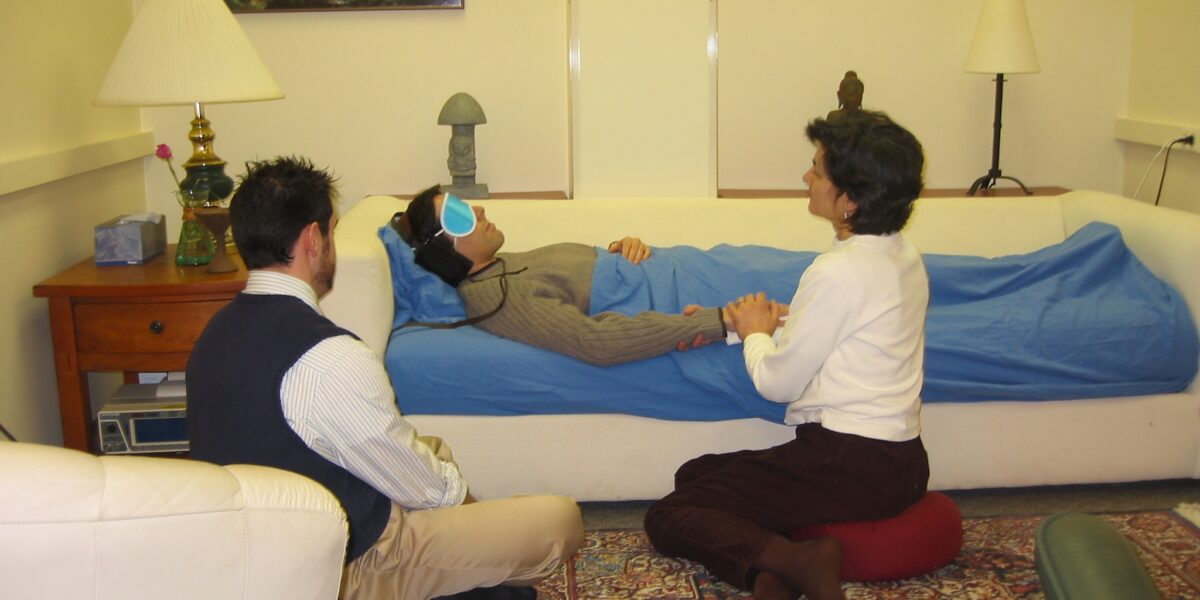
The external part of the experience, which we refer to as ‘setting’, could mean any place where we decide to take psychedelics, which could be either in a therapeutic setting, a retreat, or more of a recreational setting. Within a therapeutic context, setting can involve the physical therapeutic environment, the music being played throughout the psychedelic experience, and the clinicians who are facilitating the session. The use of psychedelics in countries where therapeutic use is allowed can potentially offer a clearly defined environment, which should ideally be nurturing and safe.
The issue of restrictions surrounding the use of psychedelics in certain countries means that not only are there citizens who live in a country which can’t serve their needs, but there is the added impact of a divide being created between those who can afford to travel abroad for their experiences and those who don’t have the funds to do so.
In the UK, it currently feels like there is something of an attack on our humanity, where so much pressure is placed on the individual, and we have to do a lot of work to shield ourselves. So it’s not surprising that many people from places like the UK want to travel to other countries in order to find some pathway to healing in spite of costs, which are ultimately prohibitive to those without the privilege of time and the required resources.
The growing global financial pressures, where many countries have experienced cost-of-living crises, have impacted the cost of providing psychedelic medicine in retreat settings. When speaking to Akua about the retreats she organises, she mentioned how, despite ayahuasca not being just another commodity, there still has to be attention paid to the bottom line. It becomes difficult to be truly underground if there aren’t the financial resources to sustain the work being offered, and this ultimately means there will always be areas that some people aren’t able to access. The divide between those who are able to have a psychedelic experience in a controlled, scenic retreat and those who risk legal consequences or social stigma creates a contrasting situation on a societal level and a gap which might not ever be bridged.
There has been a lot of reporting already about the prohibitive costs of psychedelic therapy or retreats, and I don’t necessarily want to spend too long exploring this issue. It’s quite clear that psychedelics themselves are inexpensive, but the restrictions placed upon them create a situation where people have to look to either therapeutic avenues or retreat spaces to have access to these experiences. I could do a run-down of the different costs involved, but I think we’re all aware of how the situation has unfolded, where plants and fungi, along with indigenous wisdom, are seen as commodities to be extracted by the psychedelic capitalist industrial complex.
This emerging industry has prioritised the needs of those in the Global North, where the individualised Western therapeutic model has disconnected psychedelics from the indigenous wisdom of communal healing. Overwhelmingly, it seems that this industry lacks the proper tools to engage with the structural causes of trauma, which have historically been inflicted upon the Global South by the colonial nations that are now championing psychedelic therapy and research.
The renaissance of clinical psychedelic research since the early 2000s has created a system where academic and corporate interests shape who benefits from psychedelics. Indigenous and countercultural perspectives are being erased from the wider conversation, despite being foundational to the healing potential of these plants and fungi. The non-profit research group Psymposia has long argued that the psychedelic industry has been captured by an elite group from Silicon Valley, where pressure to rush through treatments has come at the expense of public health. Contrary to the belief in grassroots psychedelia, it seems that the community-led model has now been commandeered by the corporate entities that are exerting centralised influence on access to psychedelics.
If we forget the power of psychedelics in creating shared rituals and a collective sense of meaning, then we risk making these plants and fungi just another medical intervention in an already medicalised world. Could it be that we are now invalidating the power of indigenous wisdom when it comes to psychedelics? Or even more so, is writing an article where I use the terms ‘set’ and ‘setting’ simply overlaying a Western mindset on top of concepts that indigenous communities have embodied for centuries? The reliance on communal, group, and family networks, as well as the use of spiritual belief and tradition, and a general sense of interconnectedness, are different examples that underpin this embodiment, and these can present a challenge for the Western system to truly integrate this wisdom without first addressing the colonial power structures.
It’s important to tread this line carefully so we don’t also risk cultural appropriation of psychedelic traditions, but with this exploration, we can gain more insight into whose frameworks of healing or spirituality are being validated. Looking at this through a lens of epistemic privilege, we can see where corporate interests have a unique hold over knowledge and understanding due to their position in society and the experiences of the individuals involved.
Privilege intersects with mental and physical health, where those who would potentially benefit the most from psychedelics often face the biggest obstacles to access. Individuals who are managing long-term physical and mental health conditions can face challenges with long-term work, often creating issues with bringing in a sustainable income. Disabled people in places like the UK are twice as likely to be unemployed, which means the prospects of being able to pay for psychedelic therapy or a retreat become less likely.
My own experience of fibromyalgia has shown me how beneficial psychedelics can be for managing certain symptoms, but it has also presented many challenges on both a physical and mental level for sustaining a long-term career. I have many conversations with people who are frustrated at not being able to afford to go on a fancy psychedelic retreat, but in this instance, I have often resorted to more anarchistic ways of accessing psychedelics. I don’t feel like complaining about the cost of retreats or therapy necessarily does anything to benefit my own state of being, but we should question whether or not the psychedelic community is truly inclusive if accessing wellness requires wealth or stability.
With more education surrounding the ideas related to privilege and cultural humility, are we able to foster change to create a more inclusive psychedelic culture? We might be able to create systems that provide multicultural frameworks for therapeutic avenues, allow for more access to retreats on a sliding scale, and include facilitators from diverse backgrounds, as well as peer-support groups, such as the People of Color Psychedelic Collective or the Fireside Project, as just a couple of examples.
Our awareness of privilege can ultimately increase the potential of psychedelics to heal, where we are able to draw from the perspectives of communal healing, rather than focusing on the “hero’s journey” of the individual. The collective healing requires acknowledgement of the unequal realities faced by many communities. We can deepen our insight and potentially find liberation from pre-existing paradigms by understanding that not everyone starts from the same state of mind or the same world.
Oli Genn-Bash | Community Blogger at Chemical Collective | linktr.ee/oligennbash
Oli is one of our community bloggers here at Chemical Collective. If you’re interested in joining our blogging team and getting paid to write about subjects you’re passionate about, please reach out to Sam via email at samwoolfe@gmail.com
Welcome to Chemical Collective.
Create an account to earn 200 welcome points.
Already have an account? Sign in
Check out our Community Blog and get involved with the conversation. You will be awarded 50 x ChemCoins for each comment up to a limit of 250 total ChemCoins.
Have you purchased any of our products? Reviews and reports are so important to the community. Share your honest opinion, and we’ll reward you with 50 ChemCoins for each review!
Every time you complete an order with us, you’ll be awarded ChemCoins for each Euro spent.
Welcome to Chemical Collective.
Create an account to earn 200 welcome points.
Already have an account? Sign in
Earn commission every time someone makes a purchase through your link.
When you become an affiliate, you will be allocated a unique link to share with your friends, followers, subscribers, or Aunt Susan.
You can choose to payout the commission earned once per month, or save it up to receive on a rainy day! Commission earned is 5% of the total order value per referral.
Contact us to join the Chemical Collective family and become an affiliate.
share your toughts
Join the Conversation.