in this article
- Prosopometamorphopsia: Effects, Causes, and Brain Regions
- Types of Psychedelic-Induced Facial Distortions
- How to Prepare for Face Distortions on Psychedelics
Are you 18 or older?
Please confirm that your are 18 years of age or older.
You are not allowed to access the page.
Disclaimer: The views and opinions expressed in this article are those of the authors and do not necessarily reflect the official policy or position of the Chemical Collective or any associated parties.
The Brain in a Vat podcast, one of my favourite podcasts – hosted by Dr Jason Werbeloff and Mark Oppenheimer – had as a guest Brad Duchaine, Professor of Psychological and Brain Sciences at Dartmouth. (Brain in a Vat is a philosophy podcast, but this particular episode – a rebroadcast – was more psychology-focused.) The topic discussed, which is Duchaine’s area of expertise, was prosopometamorphopsia (PMO), a condition in which individuals perceive distorted faces. Duchaine set up a website dedicated to the condition.
PMO is distinct from prosopagnosia, or ‘face blindness’, a condition where someone has a severe difficulty recognising familiar faces, including those of friends and family. People’s faces are not distorted; they are just unrecognisable. Someone with PMO, by way of contrast, can still recognise someone familiar – they just see their face as distorted in some way. However, while they are distinct disorders, they can also sometimes occur together.
On the podcast episode, the causes, neural correlates, and psychological and social impacts of PMO were discussed, as was the nature of other facial recognition disorders, such as prosopagnosia. As PMO was being discussed on the podcast, its effects started to sound a lot like what someone might experience on psychedelics, and lo and behold, face distortions on psychedelics were then brought up. Duchaine suggested that psychedelics likely affected the various brain regions involved in face perception. These facial distortions are distinct from the face pareidolia that many people also experience on psychedelics, which is when a person sees faces in everyday objects. Still, one or more of the same brain regions are likely involved.
This article looks at what we know about PMO, the types of face distortions that can occur on psychedelics, and how to prepare for these psychedelic effects (they can sometimes cause unnecessary distress when unexpected or manifesting in a particular way).
PMO is an extremely rare condition, with fewer than 100 cases reported in the last century, although it may also be underreported. (Werbeloff, one of the Brain in a Vat co-hosts, is one of the case studies listed on the PMO Wikipedia page. In an article for The New Yorker, the journalist Shayla Love covered the PMO that Werbeloff first experienced in 2007, after spending months in bed with a severe case of mononucleosis. He was told to get in contact with Duchaine about his condition. His symptoms are not very severe, however, as he mentions on the podcast.)
PMO is also known as ‘demon face syndrome’, as it’s common for people to see demonic-looking faces, or faces that look like dragons. Maggie McCart, who has the condition, told Slate:
Sometimes, a person might look exactly like someone I used to know, maybe even someone I haven’t seen in over a decade. Say I’m riding the bus and looking out the window. There, on the street, will be a girl I went to school with in third grade. Except it’s not them—they just happen to be wearing their face.
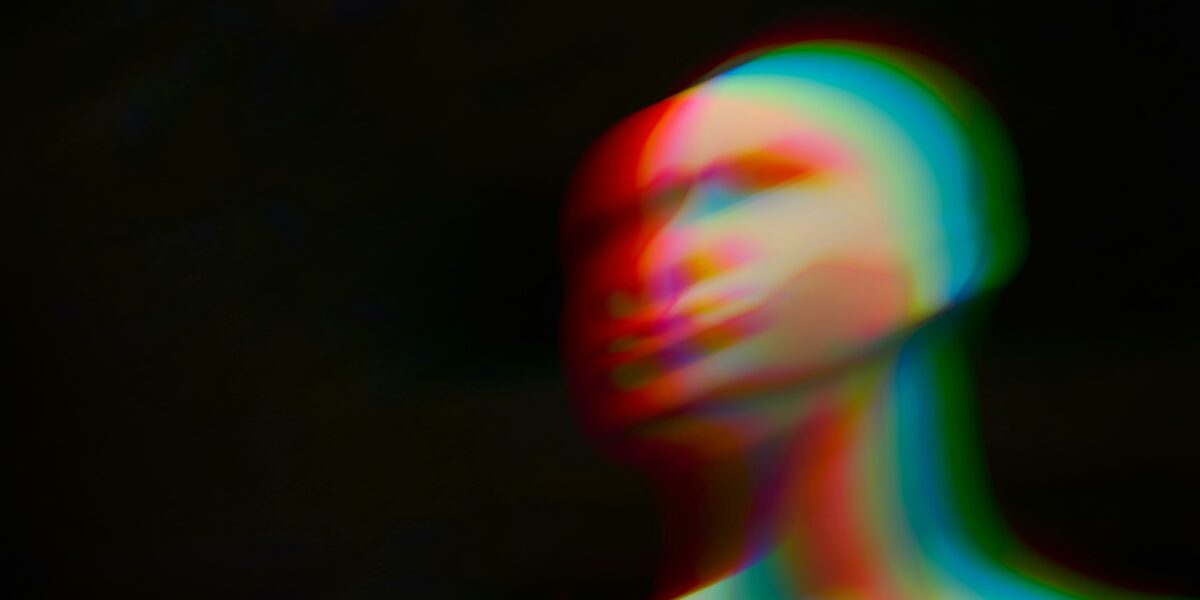
Other times, these disorders can get truly bizarre and hallucinogenic, like a bad acid trip. The skin texture on a face can change, or their noses or eyes seem to be stretched and exaggerated in grotesque, plastic-y ways. Sometimes a person’s face and mouth are replaced by geometric shapes—triangles, hexagons, and so on. When that happens, I call it “going Picasso” because they remind me of his cubist paintings. I’ve had faces appear to be made of potato skin, or tree bark, like the talking apple trees in Wizard of Oz. And I’ll never forget that time I looked at a manager, and he gazed back at me with—no joke—the head of a dragon, complete with matte, black skin. (Thankfully, that distortion has only happened once.)
As described above, sometimes someone’s face is swapped for another, which can cause someone to mistake that person’s identity (this isn’t quite the same as prosopagnosia, as the latter doesn’t involve this kind of distortion, and it still involves a case of recognising someone familiar – just the wrong person).
No one knows exactly what causes PMO, but it will lie in damage or dysfunction in the brain’s face processing network, which, as we’ve seen, involves several brain areas, including the fusiform face area (FFA) and superior temporal sulcus (STS). The condition has also been associated with damage or abnormalities in the temporal, occipital, parietal, and frontal lobes. Generally, PMO is linked with brain damage or injury (this accounts for around 75% of cases of PMO), which may be caused by head trauma, stroke, lesions, or cysts. PMO may also be a manifestation of epilepsy or migraines. Damage to certain brain areas likely accounts for distortions that appear in specific locations on the face, depending on which side of the brain is affected. The condition is a visual/neurological problem, not a psychiatric one (although it can, of course, be tied to psychological distress, and it may also be tied to other conditions, although it should not be confused with a misdiagnosis like schizophrenia).
PMO facial distortions are often perceived as ugly, with eyes and teeth becoming prominent. Some describe the faces as cartoon-like. Faces are often perceived as contorted, disfigured, and having displaced features. One eye or eyebrow may be higher or lower than the other, eyes may droop, or features may look like they’re melting or be at weird angles. PMO can affect the whole face or just one side. Antidepressants and antipsychotics have not been seen to improve symptoms, although other medications like valproic acid and heparin have helped some patients. Often, those living with PMO come to accept and adjust to their symptoms, although this can take some time, as understandably, seeing people with demon faces or mistaking their identity can cause distress, as well as difficulty in one’s social life, relationships, and at work. McCart said:
[F]or most of my life, I did my best to ignore the symptoms and go about my day. I learned to recognize people by their shoes, or their clothes, or the way they walked. When I’d go on trips with friends and I’d get separated from them, I’d stay where I was and wait for them to find me—rather than walking off with someone who simply looks like them. I could manage. But my prosopometamorphopsia became an issue at an old job at an AV company, which was filled with a bunch of men in their 20s, who—to me—all blended together. I’d think I was talking to Tim, when really I was talking to Joey….
I’ve never been able to determine the cause of my prosopometamorphopsia, and it doesn’t kick in with every face I see. I did get diagnosed with autism a few years back, and Duchaine has told me that the disorder can be a side effect. There is also what I like to call the Sulfa Incident. Years ago, to treat a weird cyst on my leg, I was diagnosed with a sulfa antibiotic that my body reacted poorly to, and I was later told that I might have a sulfa allergy. The point is, afterward, my prosopometamorphopsia was further exacerbated—beyond face blindness and toward “Why does that person have a hexagon over their nose?” I’ve come up with some ways to alleviate those symptoms. Sometimes sitting down and drawing simple doodles of human faces helps me, like a way to remind myself what people look like.
But you know what? At this point, the distorted faces I see don’t scare me anymore. I’m used to it. I’ve made peace with it. Yes, when I first saw that dragon it was truly terrifying. Stuff like that would make me gasp. But now I’m able to relax, take a deep breath, remember that it’s just my stupid brain acting up. People don’t look like dragons, and thank God for that.
Our understanding of psychedelic-related face distortions is more limited than it is for PMO. On the one hand, this makes sense, given that PMO is a condition people live with, rather than a temporary trip, so there is a greater urgency to understand its causes and what may effectively treat it.
On the other hand, facial distortions on psychedelics are extremely common, yet they seem to me to be rarely discussed in the context of psychedelic science, therapy, retreats, education, and harm reduction. Many people report face distortions in their trip reports, and they enter into psychedelic culture and commonly shared advice (e.g. “Don’t look in the mirror while tripping”), yet many people new to psychedelics may not be informed that they are a possible effect that can occur. (As a side note, it would be interesting to see how much our understanding of PMO informs our understanding of psychedelic face distortions, or vice versa.)
Psychedelics can cause a variety of facial distortions (when looking at others or oneself in the mirror):
Whatever context one is using psychedelics, face distortions can occur. Your or someone else’s face may shift or morph, sometimes in strange, funny, surprising, or disturbing ways. It’s important to recognise that this is a normal effect of the drug. If someone’s face looks like it’s melting or has become demonic, there’s no reason to be alarmed. It’s not actually melting, and your friend hasn’t become a demon (the latter is crucial to know in case you feel fear, distrust, or paranoia setting in).
Also, despite the common ‘wisdom’ that one shouldn’t look in the mirror on psychedelics, since one’s own facial distortions could be scary, these effects aren’t scary for everyone. Many people find looking in the mirror on psychedelics to be amusing, interesting, or even therapeutic (regardless of whether face distortions occur, staring into the mirror while tripping may lead to states of self-acceptance, self-compassion, and self-love). Regardless, be aware that face distortions, sometimes quite strong ones, involving a lot of morphing and flux, perhaps even transforming into different entities or species, may occur when looking in the mirror on psychedelics. These effects are harmless.
You may even find that particular distortions seen in the mirror take on a kind of significance: perhaps parts one dislikes become more prominent, or one’s face distorts its expression, which may feel like it reveals something psychologically important about oneself. If one’s looks like it’s decaying, growing old, becoming animal-like, or revealing something emotionally ‘dark’ or ‘light’, this could be interpreted as a sign of what one fears or what is unacknowledged or unrealised. Of course, these facial changes may also be seen as meaningless – as just the strange effects of the drug. Not all facial distortions need to be psychoanalysed, and sometimes, it’s best to avoid overanalysing psychedelic effects like these.
If someone else, such as a psychedelic therapist or retreat facilitator, is preparing someone for a psychedelic experience, it’s wise to mention the possibility of face distortions as a potential effect. After all, since high doses are typically used in these sessions, facial distortions become more likely. Without this prior knowledge, seeing a psychedelic guide or someone else in the group undergo facial changes could be unsettling, especially if these changes make them look unrecognisable, disfigured, or threatening in some way. It’s also crucial that someone, whatever the context and setting, feels they trust whoever else will be in their presence when under the effects of a psychedelic. If this trust isn’t established, and especially if distrust already exists, then disturbing facial distortions could be more likely to occur.
There is still much to be learned about the brain changes that occur during psychedelic-induced face distortions. But irrespective of what the science may uncover, knowing that these distortions are normal and can manifest in a wide variety of ways is crucial before taking psychedelics. Moreover, if any of these effects do start to feel unsettling or overwhelming, common advice for handling challenging psychedelic experiences will apply: this may involve acceptance, deep breathing, reminding oneself that the experience is temporary, or some type of reality-checking or cognitive reframing.
Sam Woolfe | Community Blogger at Chemical Collective | www.samwoolfe.com
Sam is one of our community bloggers here at Chemical Collective. If you’re interested in joining our blogging team and getting paid to write about subjects you’re passionate about, please reach out to Sam via email at samwoolfe@gmail.com
Welcome to Chemical Collective.
Create an account to earn 200 welcome points.
Already have an account? Sign in
Check out our Community Blog and get involved with the conversation. You will be awarded 50 x ChemCoins for each comment up to a limit of 250 total ChemCoins.
Have you purchased any of our products? Reviews and reports are so important to the community. Share your honest opinion, and we’ll reward you with 50 ChemCoins for each review!
Every time you complete an order with us, you’ll be awarded ChemCoins for each Euro spent.
Welcome to Chemical Collective.
Create an account to earn 200 welcome points.
Already have an account? Sign in
Earn commission every time someone makes a purchase through your link.
When you become an affiliate, you will be allocated a unique link to share with your friends, followers, subscribers, or Aunt Susan.
You can choose to payout the commission earned once per month, or save it up to receive on a rainy day! Commission earned is 5% of the total order value per referral.
Contact us to join the Chemical Collective family and become an affiliate.
share your toughts
Join the Conversation.