in this article
- The Minority Stress Model
- The Promise of Psychedelics
- The History of Queer Psychedelia
- The Risks and Unknowns
- Transition and Dender-Related Insights
Are you 18 or older?
Please confirm that your are 18 years of age or older.
You are not allowed to access the page.
Disclaimer: The views and opinions expressed in this article are those of the authors and do not necessarily reflect the official policy or position of the Chemical Collective or any associated parties.
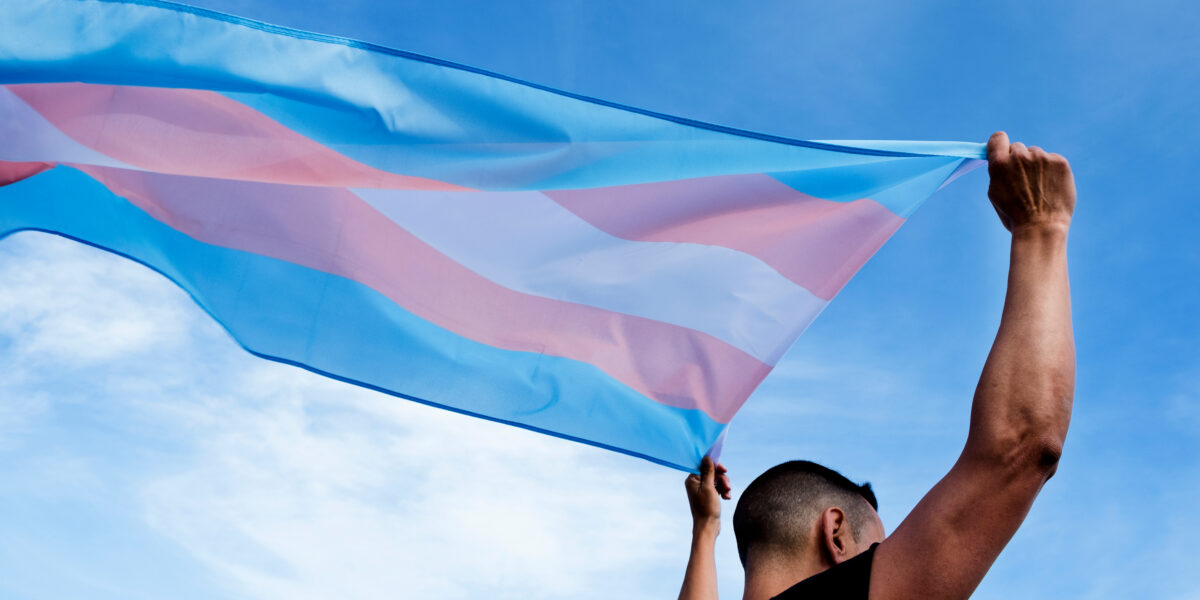
Transgender and gender-diverse people are living through an acute mental health emergency.
Suicide attempt rates among trans youth run at 40-50% in most surveys. States that enacted anti-transgender laws saw suicide attempts among trans youth increase by up to 72% in the following years.
Research published in JAMA found that concerns about trans rights being taken away were associated with 66% higher odds of depression and 167% higher odds of anxiety among trans adults.
Hospitals and clinicians delivering gender-affirming care have faced waves of threats and bomb hoaxes since 2022. Trans Murder Monitoring recorded 350 trans and gender-diverse people killed worldwide in the 2024 cycle, among the highest annual tallies since tracking began. An overwhelming 90% of LGBTQ+ young people reported that recent politics negatively impacted their well-being, with 45% of trans and nonbinary youth considering moving states due to discriminatory laws.
At the same time, transgender people remain profoundly underrepresented in modern psychedelic research. The population with arguably the greatest documented need – 40-50% lifetime suicide attempt rates – is among the least studied in regulated frameworks. In recent MDMA-assisted psychotherapy Phase 3 trials with 90 participants, only 2 participants identified as non-binary out of the entire cohort, with the remaining 88 participants’ gender identities not explicitly reported (though assumed to be cisgender based on sex assigned at birth).
A 2024 review found that, of over 200 published psychedelic-assisted therapy studies since 2000, fewer than 10% reported any gender-minority data, and less than 2% addressed trans-specific experiences. The vast majority of recent psychedelic clinical trials have not collected data on participants’ sexual orientation and gender identity. Where gender is recorded, it is almost exclusively through binary male/female checkboxes. A 2024 investigation representing “the first prospective study to examine psychological effects of psychedelic use specifically in adolescents” did not assess gender identity as a variable. A 2024 systematic review of pharmaceutical trials found that while 85 trials formally allowed transgender participation, it was unclear how many actively recruited trans people, and 12 actively excluded them.
Recent anecdotal and survey evidence suggests that psychedelics may play a role in supporting gender exploration and clarity for some trans people. The nature and extent of these effects remain complex. How can clinicians and investigators create a truly accommodating environment for trans people? What protections can we put in place to safeguard against psychedelics’ adverse effects? And how can clinicians and researchers begin to distinguish between genuine insights about gender identity and those that could reflect temporary or misleading effects of psychedelics?
The minority stress model, now 30 years old, remains the dominant framework for understanding trans mental health disparities. It is elegant and largely correct: chronic discrimination, anticipated rejection, and internalised shame produce a cumulative allostatic load that manifests as depression, anxiety, PTSD, and suicidality at rates few other civilian population approaches. Substance use disorders are three to four times higher among trans adults than cis adults; polysubstance patterns are common; nicotine dependence alone is triple the general rate. Family rejection is a major driver. Nearly half (46%) of LGBTQ+ young adults are estranged from at least one family member.
Workplace discrimination compounds these stresses. Over half (55%) of trans and nonbinary employees report experiencing discrimination at work because of their gender identity, more than double the rate for cisgender LGBQ employees. About one in five LGBTQ+ people have been fired, not hired, or denied promotion due to their identity, and more than half of trans people (51%) have hidden their identity at work out of fear.
Housing insecurity remains pervasive: one in four trans people (25%) faced discrimination when looking for housing in the past year, and trans individuals represent over a quarter (27.7%) of those seeking LGBTQ+-specific homeless services. Among trans young people specifically, one in four (25%) have experienced homelessness. These structural barriers create cascading effects on mental health and well-being. 20% of surveyed kathoey sex workers in Thailand use ketamine to endure occupational violence. Western psychedelic science speaks of “set and setting” while ignoring that for much of the world’s trans population, these environments are fraught with danger.
The minority stress model has limits. It explains the elevated risk of mental illness but not the specific texture of a transgender inner world: the sense, repeatedly articulated in first-person accounts, that the distress is not merely psychological but ontological, that the wrongness is not just in the world but in the fact of embodiment itself. Standard psychiatric tools like SSRIs and CBT often feel like rearranging deck chairs on a sinking ship.
Psychedelics enter this landscape with a certain promise. Classical serotonergic compounds (psilocybin, LSD) may disrupt the default-mode network and generate rapid neuroplasticity. MDMA enhances oxytocin release while reducing amygdala reactivity to threat. Ketamine induces dissociative states that create psychological distance from distress and the dysphoric relationship with the body. These mechanisms address the core symptoms minority stress produces: rigid negative self-schemas maintained by default-mode activity, amygdala-driven hypervigilance, and embodied shame.
Early evidence holds some promise. In a 2025 survey of 346 LGBTQ+ psychedelic users, 77% reported therapeutic potential for gender dysphoria and 65% described lasting shifts in gender-identity attitudes, with large effect sizes for depression, anxiety, and post-traumatic stress reduction. An analysis of 94 LSD trip reports from Reddit found that 48% of authors identified as non-cisgender; among those actively questioning gender beforehand, 94% described the experience as clarifying and 80% reported increased self-acceptance.
For those raised in high-control religious environments, psychedelic drugs often reframe the entire notion of the sacred. Research on religious trauma and psychedelic healing documents how individuals transition from what philosopher Paul Ricoeur termed “critical” spirituality – marked by anger, confusion, and bitterness toward oppressive religious teachings – into a “post-critical” or “second naïveté” spirituality centred on symbolic ideals like love rather than literal doctrine.
Instead of experiencing divinity as a distant, judgemental authority demanding obedience, the psychedelic journey tends to reveal what participants describe as an immanent, compassionate presence that includes LGBTQ+ people without condition. As documented in the anthology Queering Psychedelics (2019), participants in African Diasporic spirituality traditions report receiving “two conflicting messages: You are made in God’s image – but not if you’re queer,” creating profound cognitive dissonance. Psychedelics can help dissolve this contradiction.
Many describe tears of relief when they realise, viscerally, that nothing about them needs to be fixed. Research on transgender and gender-expansive (TGE) individuals’ naturalistic psychedelic experiences found that psychedelics facilitated “self-compassion” and “feeling at home in society,” with one participant stating: “When I do psychedelics…I feel so safe in my identity that it makes it easier to ignore the rest of the world and to be like, ‘I’m content with this, I’m happy with who I am’”. Another described psychedelics allowing them to recognise that “all the pain I carried wasn’t mine”.
On the somatic level, these substances can return people to bodies they once learned to hate or disconnect from. MDMA’s flood of oxytocin and careful therapeutic touch make intimacy feel safe for the first time. Psilocybin catalyses deep catharsis – waves of trembling and crying that release decades of suppressed somatic memories. For transgender and non-binary people, ketamine’s dissociation offers merciful distance from dysphoria, like stepping out of a too-tight skin, while the temporary dissolution of ego boundaries can bring profound gender euphoria – a felt sense of “yes, this is me”.
Artist and pandrogyny pioneer Genesis Breyer P-Orridge, who underwent extensive body modification to merge physically with their partner Lady Jaye, explicitly credited ketamine with catalysing their gender-transgressive project. It is reported that Dr John Lilly got breast implants after extensive ketamine use, perceiving the drug to have broadened their perception/experience of gender, as did another pioneer, Timothy Wyllie, a famous early member of the Process Church of the Final Judgement. Ketamine has been reported to possess a peculiar technological mood. In Trans Girl Suicide Museum, Hannah Baer recalls that “I can’t imagine being trans without the internet”. “The way I can think on k is like drop-down menus in an interface that reads HTML and CSS at the same time, consciousness without an individual subjectivity is like websites.” This sensibility may rest on a longer evolution in how dissociation has been imagined. Mid‑century psychedelic culture framed LSD, cannabis, and PCP through the lens of Eastern mysticism and quasi-religious ego death. By the late 1970s and 1980s, those tropes were increasingly rewired through cybernetics and information theory. William Gibson’s Neuromancer and video games all helped recast “leaving the body” as logging into another system, a space where people could be any avatar they wanted.
53% of trans and nonbinary youth reported feeling safe on Discord compared to 30% of cisgender youth. Notably, 20.5% of transgender people can be classified as probably addicted to social media using clinical thresholds – nearly double the rate among cisgender populations. This elevated use reflects both the sanctuary function of digital spaces and the isolation driving trans people online.
Many queer psychedelic users come away convinced of a certain resonance between their nature as queer individuals and the fluidity embedded in the psychedelic experience. As Kate Kincaid writes in Queering Psychedelics, “The psychedelic worldview is inherently queer,” noting that “both queerness and nonordinary states of consciousness help us tap into spaces that are always there and exist beyond what is often mandated in a society that wants everything to fit into neat little boxes”. In the psychedelic space, she observes, “boundaries, binaries, and hierarchies dissolve temporarily, reminding us that we are everything and nothing at the same time”.
One participant in the anthology described staring into a mirror on psilocybin and seeing “all of their different gender identities moving fluidly on their face and body,” reporting that “it was after this experience that they felt emboldened to claim their nonbinary gender identity”. Another described how psilocybin helped them understand that “we are just a body and all the ways we talk about it are all made up by someone, and so I can define what is going on inside for me”.
Psychedelics have long been associated with queer communities. Pre-colonial cultures using ayahuasca or peyote often revered Two-Spirit people as having spiritual gifts. In the mid-20th century, as LSD and mescaline burst into Western consciousness, however, they were weaponised against LGBTQ+ people in a dark chapter of “psychedelic conversion therapy.” Figures like Timothy Leary infamously claimed LSD was a “specific cure for homosexuality”, while Richard Alpert (later Ram Dass, who came out as queer later in life) dosed bisexual men with high doses to “cure” their attractions. Published case reports from the 1960s detail clinicians administering massive LSD doses – up to 800 micrograms – in attempts to shock queer patients into heterosexuality. Stanislav Grof hypothesised that LSD treated same-sex attraction through the metabolism of birth trauma, and by “showing them transcultural visions of ancient temple prostitution or fertility rights.” Homosexuality was listed in the DSM until 1973.
Queer communities subverted these substances almost immediately. Gerald Heard and Aleister Crowley connected their psychedelic use to the ecstatic practices of gay sex. Allen Ginsberg, the openly gay Beat poet, was an early evangelist for psychedelics, and corresponded with William S. Burroughs (also gay) in his search for ayahuasca (“yage”) in Amazonia in the 1950s. The Cockettes, a gender-fluid drag troupe active from 1969 to 1972, embodied “acid drag”. In 1978, artist Gilbert Baker, high on LSD at a San Francisco disco, envisioned the Rainbow Pride Flag as a swirl of colours symbolising queer diversity and joy. MDMA (then-legal as Ecstasy) fueled queer dance floors. The Radical Faeries, founded in 1979 by activists like Harry Hay, merged gay spirituality with shamanism. As the HIV/AIDS crisis ravaged communities in the 1980s–90s, underground MDMA and psilocybin sessions offered solace, processing grief and mortality. Therapists in San Francisco discreetly dosed AIDS patients and caregivers to ease terror before MDMA’s 1985 ban. A 2020 UCSF pilot study later provided evidence for psilocybin’s role in reducing depression and reaffirming pride among long-term survivors. Indigenous precedents deepen this history.
However, the same openness that heals pain can also worsen it. As research on Psychedelic Iatrogenic Structural Dissociation (PISD) documents, psychedelics may reactivate dissociated traumatic material. In that heightened state, a misgendered comment or an unsupportive therapist response could feel catastrophic and retraumatising. A 2022 study details how psychiatry’s central resource on PTSF, the Trials Standardized Data Repository, fails to include a single trans clinical trial participant. Therapists may be uninformed about gender issues. Intake forms often issue only “M/F” options, forcing trans people to disclose sensitive information repeatedly. Without robust training and ongoing supervision, even well-intentioned providers could inadvertently reinforce harmful narratives in a scaled-up psychedelic treatment programme.
One issue highlighted by Dr Alex Belser is the legacy of the “gender dyad”, which mandated the presence of one male and one female therapist in psychedelic-assisted therapy sessions. This was originally implemented in the 1980s to mitigate rampant patient sexual abuse by cisgender male therapists, providing an additional rationale for offering parental archetypes for transference. However, MAPS protocols enforced this male-female dyad for decades without justification, promoting an essentialism that excluded transgender people.
Indeed, clinical trials prioritise populations with “worthy” suffering – veterans with PTSD, first responders with moral injury – over populations viewed as riskier investments or less sympathetic to regulators and the public. A 2023 systematic review documented widespread conflation of sex and gender across medication studies, preventing reliable detection of whether drug responses stem from physiology or social experience. Fatal-overdose registries may fail to explicitly account for trans people, instead having only male and female categories.
There is also virtually no published clinical research on how gender-affirming hormone therapy interacts with psychedelics. What we do know about the interaction deserves investigation. 11% of transgender men on testosterone develop erythrocytosis (elevated hematocrit >50%) within 10 years, associated with increased risk of thromboembolic events. Transgender men on testosterone also face increased myocardial infarction risk compared to cisgender women. Meanwhile, chronic LSD microdosing may activate serotonin 5-HT2B receptors, which are known to cause heart valve disease. However, recent animal studies found no evidence of cardiac remodelling after prolonged administration of low-dose LSD. Oestrogen and testosterone influence neurotransmitter systems like serotonin and may enhance sensitivity to psychedelics. Hormonal treatments may also change how psychedelics are metabolised due to effects on liver enzymes.
Another under-documented phenomenon is the potentiation of ketamine and gender-affirming hormones. In Queering Psychedelics (2019), a gender-variant individual named Bradie recalls that “I first started to use ketamine as I prepared my estrogen injections. I would take a bump of K about 30 minutes before my IM injection to prepare myself for it. Over time, my brain associated the high of the ketamine with my estrogen shot, and I would experience a rush of euphoria before I took it, even when I no longer did ketamine before my injection.” The risk is twofold. First, ketamine’s antidepressant and anti-dysphoric effects can mask ongoing gender distress, encouraging higher or more frequent dosing to chase relief. Second, when tolerance develops, some escalate ketamine use to recapture the original intensity, potentially leading to bladder damage (ketamine-induced cystitis is severe and sometimes irreversible) or psychological dependence.
Trans patients already face barriers to pain management and urological care; adding ketamine-related complications can be devastating. Ketamine dependency represents a growing concern within queer communities, where usage rates are seven and a half times higher than among heterosexual populations. Within gay club and chemsex scenes, ketamine serves as both a social lubricant and dissociative escape, with gay and bisexual men being early adopters of the drug since the late 1990s. Some, like the philanthropist Reed Erickson, slide from experimental or therapeutic use into fatal long-term dependence.
Another critical question is the weight we ought to place on drug-induced insights. Psychedelics are known to dissolve critical filters and amplify subjective certainty. A single LSD, psilocybin, or ketamine experience can produce overwhelming conviction – “I am trans” or conversely “I never was” – with a noetic quality (felt truth) that feels more certain than months of sober reflection. Metaphysical belief changes can persist for six months or longer, yet prospective studies reveal little lasting change in core metaphysical or religious convictions – suggesting initial certainty often fades without reinforcement. In a survey on extended difficulties with psychedelics, 23% of users struggled with identity-related difficulties, with approximately one-third of the total sample’s issues persisting beyond a year.
It is not clear whether and how often clinicians screen for psychedelic influence on gender realisation. Notwithstanding the prevalence of psychedelic use in the queer community, no prospective controlled study has tracked individuals who experienced strong gender insights on psychedelics to measure how many retained that conviction one, five, or ten years later, or how common this phenomenon is.
Gender-affirming care is not to be taken lightly, and nor, of course, is the risk of suicidality from failure to transition. Interventions like testosterone therapy can increase cardiovascular risk, reduce fertility, and damage orgasmic capacity. There is a paucity of high-quality evidence regarding the long-term benefits and risks of hormone replacement and surgery for suicide risk and gender dysphoria. Historical studies of children with classical, early-onset gender dysphoria suggested that a majority desisted from transgender identification by adolescence or early adulthood. In the 2000s, Dr Az Hakeem mixed pre- and post-surgical patients in group therapy. After hearing detransition testimonies, 98% of the pre-surgical cohort abandoned their transition plans. These observations suggest the conviction itself is plastic when exposed to counter-narratives. At the same time, among transgender women who did not receive transition medical care, suicidal ideation rates were as high as 75.2%, with significantly lower rates among those who received care.
Official regret rates for transition are usually quoted as being exceptionally low – around 0.5%. This figure is derived from a handful of investigations, such as the ‘Amsterdam study’, of whose cohort 36% of participants were lost to follow-up. Likewise, suicides, despite being reported at 20-fold higher rates in post-surgical populations compared to cisgender counterparts, were excluded from that analysis. Moreover, the study’s narrow definition of regret omitted individuals who desisted without returning to the clinic, those who regretted surgery but opted not to report it, and those who discontinued medical transition prior to gonadectomy.
Other studies of detransition indicate a rate as high as 35% among trans men after four years, for instance. These studies were also conducted in an era when patients were overwhelmingly adult, male-to-female, and had lived with dysphoria for years before treatment. Contemporary cohorts often look little like this: they are younger, predominantly natal-female, often have recent-onset dysphoria, and frequently present with autism, trauma, or same-sex attraction. None of the large, modern surges – such as the 50-fold increase in the UK – have been tracked with comparable rigour. Given that regret in the ‘Amsterdam study’ occurred on average 130 months post-surgery, and that the surge in adolescent referrals began only around 2011, one critical commentator contends that the applicability of these findings to current youth cohorts remains uncertain.
Online communities such as r/detrans, which as of November 2025 listed nearly 60,000 members, highlight the presence of a real and growing community. Until registries mandate long-term, independent follow-up – tracking every patient for at least a decade, regardless of whether they stay in treatment – the true scale of regret and detransition will remain unknown.
International clinical guidelines through WPATH require mental health concerns to be stable before gender transition treatment. ICD-11 criteria advise that gender incongruence must have persisted for about two years, with confounding conditions excluded. This ought to protect against the risk of psychedelic false insights. FOI requests issued to UK NHS gender identity clinics and NHS England (with the exception of Northampton) revealed no systematic policy or data collection on drug-related insights.
Cumbria emphasised that gender-related distress must be persistent, however it was induced. Sheffield confirmed that it holds no documented guidance. Devon’s team excludes patients with alcoholism and present addictions, and may defer patients with “substance misuse” affecting “ability to engage,” potentially triggering discharge. Nottingham explicitly stated there is “no clinical evidence” for waiting periods after drug-induced gender insights. Leeds stated that “if someone attributed a gender identity issue to drug use, we would not be moving forward”.
It seems that transgender patients who experience gender realisations on psychedelics may be navigating a clinical system with no shared protocols, depending instead on variable clinical discretion.
It is also important to distinguish temporary persistent identity shifts from signs of mental health issues, though they will be intensely interwoven. Fisher (2022) documents cases where gender dysphoria appears only during acute psychotic episodes and resolves after treatment. Lundberg et al. (2024) found that up to 25% of young people with schizophrenia report gender dysphoria – sometimes persisting after psychotic symptoms improve. Substance use complicates matters: cannabis-triggered OCD sometimes manifests as gender-identity obsessions, while dissociative drugs can blur body-dissociation for already-stressed queer individuals.
A 2025 case report in the Journal of Psychedelic Psychiatry describes a young adult already socially and hormonally transitioned who, on 300 µg of LSD, experienced abrupt cessation of suicidal ideation and a decision to halt medical transition entirely. Chloe Cole, the most visible American detransitioner, began detransitioning at 17 after experiencing hallucinations during an LSD trip, after having undergone puberty blockers, testosterone, and a double mastectomy by age 15. Multiple Reddit testimonies follow the same pattern: psychedelics dissolve the felt necessity of transition, producing not regret but relief at having escaped what now feels like a category error.
A 2025 systematic analysis of LSD experiences found that just over 10% of non-cisgender authors found decreased self-acceptance. Around 30% of cisgender users reported encountering a gender-variant identity for the first time that persisted post-trip.
The drugs do not reliably point in one direction.
Ed Prideaux | Community Blogger at Chemical Collective
Ed is one of our community bloggers here at Chemical Collective. If you’re interested in joining our blogging team and getting paid to write about subjects you’re passionate about, please reach out to Sam via email at samwoolfe@gmail.com
Welcome to Chemical Collective.
Create an account to earn 200 welcome points.
Already have an account? Sign in
Check out our Community Blog and get involved with the conversation. You will be awarded 50 x ChemCoins for each comment up to a limit of 250 total ChemCoins.
Have you purchased any of our products? Reviews and reports are so important to the community. Share your honest opinion, and we’ll reward you with 50 ChemCoins for each review!
Every time you complete an order with us, you’ll be awarded ChemCoins for each Euro spent.
Welcome to Chemical Collective.
Create an account to earn 200 welcome points.
Already have an account? Sign in
Earn commission every time someone makes a purchase through your link.
When you become an affiliate, you will be allocated a unique link to share with your friends, followers, subscribers, or Aunt Susan.
You can choose to payout the commission earned once per month, or save it up to receive on a rainy day! Commission earned is 5% of the total order value per referral.
Contact us to join the Chemical Collective family and become an affiliate.
share your toughts
Join the Conversation.