in this article
- Biological and Pharmacological Factors
- Psychological Factors
- The Safety and Trust Factor
- Final Thoughts
Are you 18 or older?
Please confirm that your are 18 years of age or older.
You are not allowed to access the page.
Disclaimer: The views and opinions expressed in this article are those of the authors and do not necessarily reflect the official policy or position of Chemical Collective or any associated parties.
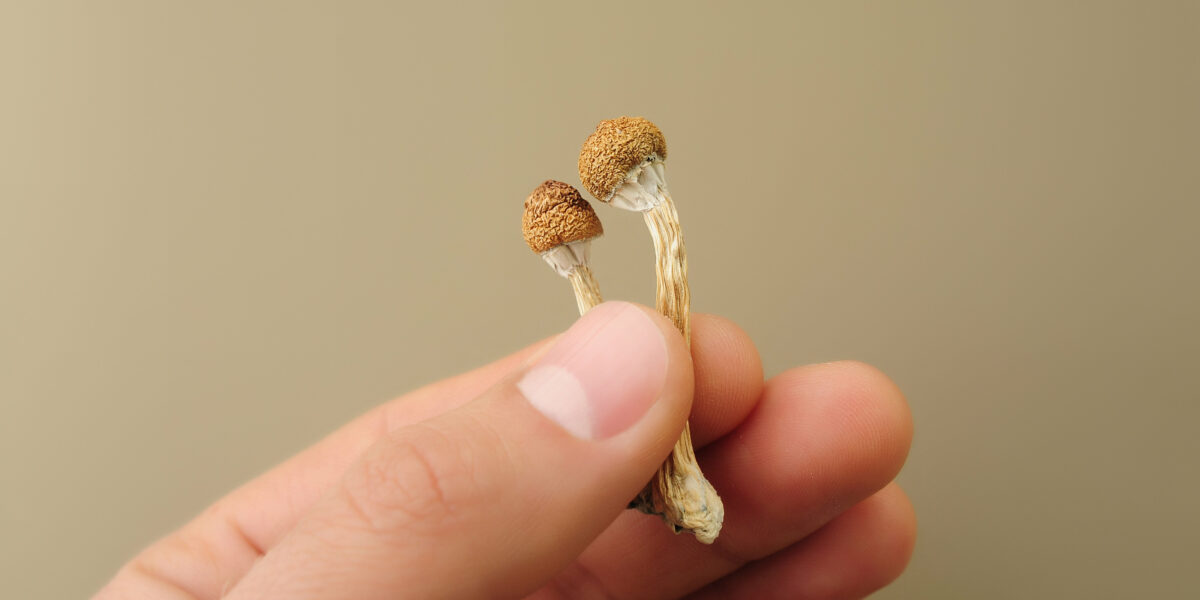
Have you ever taken psychedelic mushrooms and then… nothing happened?
No visuals, no insight, no heightened emotion, no spiritual dimensions…. nothing.
This is what is known as the ‘nada experience’.
And it can also happen with MDMA as well as classic psychedelics like psilocybin or LSD: people take substantial doses of substances known to cause dramatic changes in the user’s consciousness, but for some reason, no apparent changes occur.
It can be a frustrating or confusing place to be in, especially for those who have come to psychedelic medicine with serious intentions of healing or growth.
What is this phenomenon? Why does it happen? And if someone experiences this, is there anything they can do to achieve a psychedelic experience?
This is Part 1 of a two-part series exploring the nada experience. In this first piece, I will be looking at the many possible reasons why it happens. These include biological and pharmacological factors, individual psychological differences, dissociation responses to trauma, and the level of safety and trust one feels. I will go through these one by one in this article, but bear in mind that they are not exclusive, and a nada experience may come about because of more than one or a combination of these factors. Understanding these factors is the first step for anyone looking to find a way forward.
In Part 2, coming to the Chemical Collective blog soon, we will explore practical approaches to working with these factors and what to do if you find yourself in a nada experience.
If you or someone you know seems unable to have a full psychedelic experience, or you are just interested in knowing more, this article is for you.
Let’s dive in.
Classic psychedelic substances like psilocybin and LSD mainly work by binding to the serotonin 2A receptors in our brains. When they bind to this receptor, they also activate it, and this modulates brain circuits involved in sensory perception and cognition. This is what leads to their psychedelic effects.
However, if someone has fewer of these receptors available, a psychedelic will have fewer places to be received in the brain, and therefore less ability to activate these receptors and do their work. This means less psychedelic effect. This can happen for a couple of reasons.
Firstly, some people simply have fewer serotonin 2A receptors in their brains. This is why they need bigger doses or don’t feel the effects as much. Based on early studies, it looks like people’s genetics might cause this. Much like physical makeup, individual brain chemistry can vary hugely, and this has been coming to light more with the discoveries of differing brain chemistry in people with various mental health conditions or neurodivergent categories.
Someone’s history and current use of medication can also play a role in the availability of the psychedelic serotonin 2A receptors. For example, anti-psychotic medications specifically block these receptors, meaning that fewer are available to be activated, and again, there will be less psychedelic effect.
Many types of antidepressants also interfere with psychedelics’ ability to bind to serotonin receptors: specifically, SSRIs (Selective Serotonin Reuptake Inhibitors) and SNRIs (Serotonin-Norepinephrine Reuptake Inhibitors), a class of antidepressant medications that work by increasing serotonin levels in the brain to treat conditions like depression and anxiety. They do this by blocking the reabsorption of serotonin, stopping it from flowing away. This means that serotonin levels stay higher. However, because the amount of serotonin is higher than its natural baseline due to SSRI use, the brain adjusts to this new normal. It reduces the number of serotonin 2A receptors on the receiving neurons and makes the remaining ones less sensitive. This process is called downregulation and desensitisation, and means that because there are fewer available or sensitive receptors, the psychedelic cannot activate enough of them to produce its full effect. The trip is reduced, or may not happen at all.
This is why people who’ve been on these medications for a long time often report blunted, reduced, or nada experiences. Some people have found that increasing the dose can somewhat make up for this decreased effect, and some facilitators or retreat providers will start at a typical dose and then, if nothing happens, increase the dose.
Another factor which may affect one’s ability to experience a full range of classic psychedelic effects is a condition called aphantasia. Aphantasia is the inability to form or visualise mental images in one’s mind. Some researchers have theorised that people with aphantasia might not be able to experience the visual aspects of a psychedelic experience. If someone is unable to naturally create mental imagery, then maybe a psychedelic’s visual effects will not have a system for manifesting the visuals that are typically part of a psychedelic experience. Some people with aphantasia are also unable to imagine sounds, which may also be a sign that it is part of a broader condition that affects how psychedelics are experienced overall.
These biological and medication-related factors can be useful to understand, as they show that a nada or reduced experience is due to something out of one’s immediate control. No one is able to will themselves into having more serotonin receptors, but understanding their role in how psychedelics work can help people make informed decisions about dosing and timing of an experience. They can also relieve worries people may have that something is somehow fundamentally wrong with them.
Beyond a person’s biology, one’s psychological makeup can also be a large factor in how intensely someone experiences psychedelics. This is due to variations in how different people’s minds work.
One of the greatest predictors is a trait called absorption. Absorption refers to someone’s ability to become immersed in an experience. Dr Leor Roseman, a psychedelic researcher at Exeter University, explains that some people are more able to become absorbed in experiences than others. This can also be understood as the ability to “lose oneself” in an experience.
For example, one person may be completely captivated by a movie at the cinema, losing themselves in the story, the characters, and the visuals, whilst someone else may appreciate it but still stay somewhat separate from the experience. This trait of absorption can show up in everyday life in many ways. High-absorption people might drive past their exit on the highway because they were so absorbed in a podcast. They might lose track of time while reading. They might cry easily at films or feel music deeply in their bodies. Low-absorption people, meanwhile, tend to maintain a more constant awareness of their surroundings and internal state.
People who are higher on the absorption scale will tend to be more sensitive to psychedelics. People who are low on absorption will need higher doses to achieve the same intensity of experience.
Another framework that can help us to understand individual responses to psychedelics is the REBUS theory: ‘relaxed beliefs under psychedelics”, proposed by psychopharmacologist Robin Carhart-Harris.
To understand the REBUS theory, it is useful to first understand two ideas of how the brain can process information. These are top-down processing and bottom-up processing.
Top-down processing is when the brain uses what it already knows to interpret information. For example, if you see a shadow in the corner of your eye, your brain might say, “That’s probably a person”. This response has been learned based on previous experience. This shows how existing beliefs, memories, and patterns shape your perception. It is a brain that predicts and interprets based on what is already inside.
Bottom-up processing, on the other hand, is raw sensory information coming in without interpretation. For example, this would be pure colour, shape, sound, or sensation, before the brain has labelled it. This is raw sensory data before the brain has categorised it. This is like seeing the world with fresh eyes and without preconceptions.
The REBUS theory posits that psychedelics work by relaxing or loosening top-down expectations in the mind, and allowing an increased flow of bottom-up information that isn’t filtered through our existing beliefs and assumptions. So instead of your brain immediately categorising and interpreting everything based on what it expects, you get more direct access to the raw sensory information and novel connections. This is why a tree might suddenly seem profound, or someone may notice patterns they have never seen before. The usual filter and response of “I know what a tree is, moving on” is loosened.
This theory is relevant to our discussion on an individual’s sensitivity to psychedelics because not everyone’s filters relax as easily. Someone’s brain may hold more tightly onto the reality which they know, and this can result in a weaker or nada psychedelic experience. Some minds are simply wired more rigidly in their organisational structures and therefore are more insistent on maintaining their usual patterns of thought and perception.
These psychological differences interact with all the other factors discussed in this article and are all potential explanations of why individual sensitivity varies so much. Some people can have profound journeys on 1 gram of mushrooms. Others need 5 grams or more to access similar states. Just like some people are more sensitive to caffeine or alcohol, psychedelic sensitivity exists on a spectrum.
Someone who is naturally low in absorption, has rigid cognitive patterns, and happens to be on the less sensitive end of the spectrum might need significantly higher doses or different preparation approaches to have breakthrough experiences. This is not a flaw, and it is good to remember that psychedelic sensitivity is individual.
As well as these biological and psychological factors, there’s another dimension that can be seen to link the two. This is whether your nervous system feels safe enough to let go.
Dr Rosalind Watts, a psychologist who was the clinical lead for Imperial College London’s psilocybin for depression trial, noticed a pattern among participants who didn’t break through during sessions. Many of them had histories of serious trauma and showed signs of what she calls “interpersonal distancing”. This is a guardedness that comes from years of not feeling safe with other people.
This can result in someone mentally holding on tightly because they find it extremely difficult to feel safe and trust facilitators or emerging experiences.
When someone’s system feels extremely unsafe, there can be a shutting down. Watts has suggested that on a neurobiological level, protective mechanisms are activated that effectively put the brakes on a psychedelic experience; if something feels too dangerous to the organism, the organism simply shuts down rather than opening up.
This doesn’t work as a conscious decision. It is not as simple as just saying “I am going to trust and let go,” and then the defences are down and sensitivity is up. Our nervous systems have their own memory and intelligence, and if someone has learned that opening up leads to harm, then their system may activate shutdown defences, even if they consciously want to have a breakthrough experience.
Watts has talked about our mind/body organism as having what she calls a “homeostatic balancing system”. Homeostasis is our body’s natural tendency to maintain balance and stability. For example, your body will sweat when hot and shiver when cold. It is a type of intelligence that is built in for self-regulation. Regarding psychedelic experiences, this would mean the nervous system has an intelligence about what it needs for healing. Just like your body won’t let you consciously stop your heart or forget to breathe, it might also regulate how deeply you go into a psychedelic experience.
Some have a more mystical way of understanding this and believe that with psychedelics, you do not get the experience you want, but that you get the experience you need. In this frame, one’s own innate intelligence could be protecting them or only allowing them the intensity of experience that they can actually handle and integrate at that point.
But what might actually be happening on a biological level when this shutdown occurs? The answer may lie in a protective mechanism called dissociation.
There is another layer to the safety and shutdown response that is especially relevant for people who have experienced significant trauma. This is dissociation, and it might be one of the most significant factors why some people experience nothing on psychedelics.
Dissociation is a biological response to trauma. It is an involuntary numbing that happens when your brain releases natural, endogenous opioids. Leading PTSD researcher Dr Bessel van der Kolk found that Vietnam veterans, twenty years after their original trauma, still had a numbing response equivalent to an 8 mg injection of morphine when exposed to stimuli that reminded them of the war. To put that in perspective, hospitals use smaller doses of morphine to treat severe breakthrough pain. So this shows that we have an internal pharmacy inside of us that can secrete powerful opioids to numb us out, even decades after a trauma has occurred.
This matters for psychedelic experiences because of what happens when a psychedelic response meets an opioid response. You might take a psychedelic substance to open yourself up, but simultaneously, your neurobiology is dumping numbing opioids into your system to protect you from traumatic memories.
Saj Razvi, who is Director of Education and Founder at Psychedelic Somatic Institute and has been part of hundreds of MDMA-assisted therapy sessions, describes how this shows up: people feel completely sober, even at what should be the peak of the experience. They think they received a placebo. They feel bored, like nothing is going on, or they might become sleepy. Just like antipsychotic meds can stop a psychedelic trip, our body’s own opioids can help shut the experience down.
The degree of dissociation depends on one’s trauma history. Someone with a single traumatic event will have some dissociation around that incident. But someone who grew up with prolonged childhood neglect or abuse has likely lived significant parts of their childhood in a dissociative state and will have much more dissociation to work through.
According to Razvi, the key is recognising that the nothingness itself is valuable and the perceived non-response is an access point to go deeper. This can require skilled facilitation and trust. The blankness might need to be sat with for 30 minutes, 2 hours, or even longer, before it cracks. However, when it does, the overwhelming experiences hidden by dissociation (deep grief, fear, abandonment) can begin to emerge.
Understanding dissociation can help to explain why some people need exceptionally high doses to break through, and why the nada experience does not always mean that psychedelics simply don’t work for someone. It might be a sign that your system has very good reasons for keeping certain material locked away, and working with it may require skilled support to navigate past the protective mechanisms.
However, it seems that it is possible to override even the strongest of defences with high enough doses.
Psychiatrist and psychedelic therapy pioneer Stan Grof noted nada experiences likely due to shutdown responses with some of his most vigilant and guarded patients. Something in their mind/body organism was wanting to keep them safe and shut the experience down at doses that would typically be effective. He found that they had such a tightly held psyche that only an extremely high dose could break through their defences. He would scale up from more standard doses until a breakthrough dose was finally achieved, and he mentioned doses as high as 1500 micrograms of LSD, almost ten times that of a typical high dose.
Interestingly, once a breakthrough dose was finally achieved at the higher dose, a regular dose would then have the expected effect. It seems as if their nervous system needed evidence that it could survive letting go before it would allow itself to do so again.
It is worth noting here that sometimes a lack of trust is appropriate. Resistance to experience is not inherently bad, and people’s defences have been built for a reason.
This is particularly important in the current landscape, where psychedelic ceremonies and retreats are growing faster than proper training and ethical standards can keep pace. Many psychedelic ceremonies also still happen underground, without sufficient regulation or oversight, and there are enough reports of poorly held or otherwise irresponsible spaces and sessions to know some sessions or psychedelic facilitators may actually be unsafe.
In some cases of nada or diminished experiences, someone may be subconsciously picking up on red flags that their conscious mind has not fully processed yet. A nada experience in an unsafe setting might actually be a nervous system’s protection from potential harm.
The nada experience can feel like a personal failure for many who experience it. However, as we have explored in this article, it is not that simple. There are legitimate biological, psychological, and trauma-related reasons why psychedelics might not work as expected. It could be fewer serotonin receptors, medication interactions, a mind that holds its patterns more rigidly, or a nervous system that has learned not to trust.
Understanding these factors can help because it can shift the question from “What is wrong with me?” to “What is happening here?”. A nada experience does not have to be the end of the story. Once you understand what might be happening, you can start to work with it rather than against it. There are practical steps you can take, variables you can control, and approaches that can help you work with your unique biology and psychology to find your way into a deep psychedelic experience, or to recognise when your system is wisely protecting you from going somewhere you are not ready for.
In Part 2 of this series, we will explore the practical side of working with a nada experience. This will include how to manage variables like dosing and preparation, how to work with resistance and dissociation during a session, and when it might be wise to seek professional support. We will also look at what it means to work with your system’s intelligence rather than trying to override it.
See you back on the blog soon.
John Robertson | Community Blogger at Chemical Collective | mapsofthemind.com
John is one of our community bloggers here at Chemical Collective. If you’re interested in joining our blogging team and getting paid to write about subjects you’re passionate about, please reach out to Sam via email at samwoolfe@gmail.com
Welcome to Chemical Collective.
Create an account to earn 200 welcome points.
Already have an account? Sign in
Check out our Community Blog and get involved with the conversation. You will be awarded 50 x ChemCoins for each comment up to a limit of 250 total ChemCoins.
Have you purchased any of our products? Reviews and reports are so important to the community. Share your honest opinion, and we’ll reward you with 50 ChemCoins for each review!
Every time you complete an order with us, you’ll be awarded ChemCoins for each Euro spent.
Welcome to Chemical Collective.
Create an account to earn 200 welcome points.
Already have an account? Sign in
Earn commission every time someone makes a purchase through your link.
When you become an affiliate, you will be allocated a unique link to share with your friends, followers, subscribers, or Aunt Susan.
You can choose to payout the commission earned once per month, or save it up to receive on a rainy day! Commission earned is 5% of the total order value per referral.
Contact us to join the Chemical Collective family and become an affiliate.
share your toughts
Join the Conversation.