in this article
- The Evidence from Eleusis
- The Pompeii Evidence
- The Psychedelic Gospel
- The Grain of Truth
- The Evolutionary Case Against Psychedelics
Are you 18 or older?
Please confirm that your are 18 years of age or older.
You are not allowed to access the page.
Disclaimer: The views and opinions expressed in this article are those of the authors and do not necessarily reflect the official policy or position of the Chemical Collective or any associated parties.
When your book’s foundational scientific authority publicly denounces your thesis, it’s a problem.
Patrick McGovern, the archaeochemist mentioned over 70 times throughout The Immortality Key, walked away from the project. He accused Muraresku of promoting a “psychedelic mysticism agenda” under false pretences of scientific objectivity. Yet Muraresku, a lawyer and cannabis legalisation advocate rather than an academic researcher, proceeded to build his 400-page thesis on evidence his expert witness deemed methodologically insufficient.
The Immortality Key presents a grand historical narrative: a “religion with no name” linking prehistoric shamanism, an ergot-infused kykeon at ancient Eleusis, and a psychedelic Eucharist in early Christianity – all suppressed by institutional Christianity but, Muraresku claims, vindicated by modern archaeochemistry. The book became a bestseller, fueling podcast tours and mainstream media appearances, earning plaudits for its ostensibly “groundbreaking” scholarship.
To understand why Muraresku’s foundational evidence matters, consider what’s at stake: if psychedelics truly shaped the Eleusinian Mysteries and early Christianity, it would rewrite Western religious history. This claim rests on archaeochemical proof – scientific validation that transcends debate about ancient texts or interpretations.
Citing the work of Albert Hofmann, R Gordon Wasson, Carl Ruck, and others, Muraresku argues that the Eleusinian Mysteries – secret initiation ceremonies held for nearly two millennia (c. 1500 BCE–392 CE) near Athens – employed an ergot-laced barley brew (the kykeon) that induced visionary experiences comparable to modern LSD trips. He frames this as the foundational psychedelic sacrament of Western civilisation, passed covertly to early Christianity and later suppressed by ecclesiastical authorities.
But ancient sources describe the kykeon as consisting of barley, water, and mint, and no psychoactive additives are mentioned in any extant text. The Homeric Hymn to Demeter provides this simple recipe, and no ancient author explicitly states that a hallucinogen was used at Eleusis. Initiates like Pindar, Plato, and Cicero testified to profound revelations and hope for life after death, but their descriptions of divine presence are explicable in non-pharmacological terms: ritual drama, fasting, sensory manipulation, psychological suggestion, and collective effervescence.
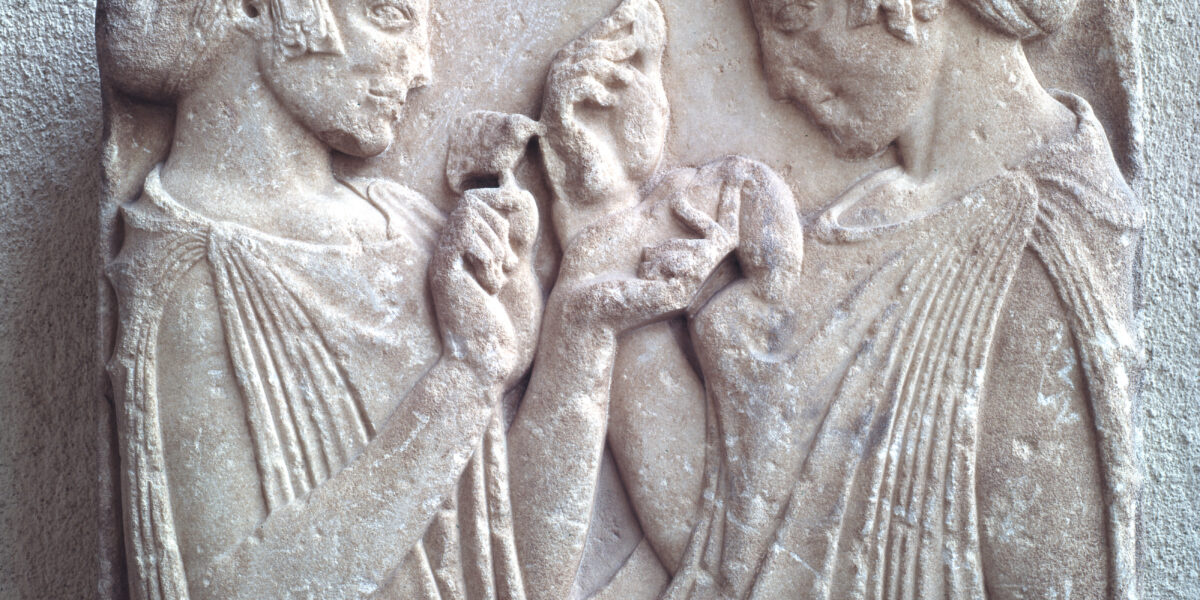
After 143 years of excavation at Eleusis (since 1882), archaeologists have recovered zero ergot residues, zero psychoactive compounds, and zero inscriptional evidence of drug procurement. Sanctuary financial accounts meticulously inscribed on stone detail purchases of grain, mint, and water, but nothing for fungi or mysterious additives. There are some iconographic cases that should give sceptics pause: the Lovatelli urn, Torre Nova sarcophagus, Turin panel, Pharsalus relief, which have been interpreted as depicting mushrooms or other psychoactive plants, though no hard evidence of a mushroom cult has ever emerged. One review lays out how Ruck and Samorini read these objects as mycological, but notes how alternative readings (poppy capsules, breads, fruit, bags, flowers) are at least as plausible. The entheogen hypothesis is still unproven. Resolving it will require tighter collaboration between classical philology, archaeology, and ethnobotany, the reviewer suggests.
The ergotic hypothesis also ignores how dangerous and unreliable ergot actually is as a “sacrament.” As summarised by G.T. Roche, ergot in history appears primarily as a foodborne toxin causing horrible disease states that only later commentators have romanticised. We lack high-quality evidence of a robustly safe, reliably psychedelic ergot preparation. Ergot alkaloid profiles vary seasonally and by strain, making consistent dosing for thousands of initiates logistically and medically implausible.
Still, Muraresky presses on. Perhaps more compelling evidence is lying elsewhere in the record. Consider the Mas Castellar de Ponts site in Catalonia, he urges, a 2nd-century BCE sanctuary which allegedly contained ergot sclerotia in a ritual chalice and even embedded in a temple priest’s dental calculus. This shows that spiked wines were being consumed containing an LSD prodrug. After two decades, archaeochemist Jordi Juan-Tresserras cannot locate the original photomicrographs that would enable independent verification. Muraresku acknowledges this “adds an element of uncertainty,” yet proceeds to build much of his entire 400-page historical thesis on it anyway.
Mas Castellar was a frontier outpost in Catalonia, around 2,000 kilometres from Eleusis as the crow flies. Extrapolating from one provincial site to the Panhellenic Eleusinian Mysteries spanning thousands of years is like finding peyote on a Texas mission and concluding the Vatican uses mescaline in its Eucharist. Another problem is poor science. Blind tests show analysts misidentify residues on unused tools in around half of cases, but considerably less with controlled inspections of used tools. Contamination occurs commonly in the field. Without blank controls, quantitative thresholds, and replicable sampling, preliminary findings are scientifically problematic.
In 2001, researchers claimed cannabis residues were detected in pipes allegedly belonging to William Shakespeare. The finding generated headlines and seemed to provide tangible chemical evidence of drug use among Renaissance intellectuals. By 2015, however, more rigorous analysis revealed the truth: the pipes contained nicotine, cocaine, and nutmeg – not cannabis at all.
To understand Muraresku’s second major “evidence,” it helps to know that ancient Mediterranean medicine routinely used herbs, spices, and psychoactive plants for therapeutic purposes. From Villa Vesuvio in Pompeii, a 1st-century CE vessel allegedly contained wine spiked with opium, cannabis, henbane, and black nightshade. Muraresku presents this as evidence that early Christian sacraments were psychoactive. However, the context of this find complicates the claim.
The vessel dates to the eruption of Vesuvius in 79 CE. While this falls within the generation of the Gospels’ composition – Mark was likely circulating, and Paul’s letters were being collected – the location is a wealthy Roman farm (villa rustica), not a Christian catacomb or house church. Dioscorides’ De Materia Medica (c. 50–70 CE), written at the exact same time Paul’s letters were circulating, and Mark was being drafted, is filled with “spiked wine” recipes used for anaesthesia, pain relief, and sedation. Finding a jar of analgesic wine in a Roman villa is consistent with a household medicine cabinet as much as a religious ritual chalice.
It is possible that the wine was used for its mind-altering effects. De Materia Medica described wine flavored with mandrake as soporific and noted the lethal potential of excessive doses. Galen similarly recommended poppy (Papaver somniferum) for headaches, vertigo, epilepsy, asthma, coughs, and insomnia, while Papaver rhoeas (corn poppy) was cultivated throughout the Roman Empire and processed into rhoeadine, a milder sleep aid. Romans also used opium-based drinks called “cretic wine” as sleep aids, with opium tablets available for purchase in marketplace stalls. The reported absence of any reference to addiction in Roman medical literature, despite clear recognition of alcohol dependency, suggests that narcotic use remained confined to medical and poison contexts with no recreational culture comparable to modern substance abuse.
The weakest part of Muraresku’s argument is his conclusion that a psychedelic Dionysian cult persisted in the Christian religion. His characterisation of Jesus as a new Dionysus – a figure involved in ecstatic, intoxicated rituals – finds some scholarly foundation. Dennis MacDonald has documented how the Gospel of John deliberately employs Dionysian tropes: the water-to-wine miracle, the identification of Jesus with the vine, and the symbolic consumption of divine blood. Yet this does not mean that the Christians took all of Dionysian religion with them. As Jules Evans notes, John’s Jesus is described in numerous metaphors, like being Bread, the Door, and the Good Shepherd.
It is worth reviewing the New Testament in detail.
The Gospel of John may deploy Dionysian imagery as sophisticated theological intertextuality (much as The Gospel of Mark makes use of Homer, or Luke-Acts the works of Josephus), but this is fundamentally different from claiming that early Christians replicated the Dionysian mystery cult’s sacramental pharmacology. “His wine had to be just as unusually intoxicating, seriously mind-altering, occasionally hallucinogenic, and potentially lethal as all the holy wine from Galilee and Greece”, Muraresku exaggerates. “And a shot of his “True Drink” had to transport you”.
The Gospel of John is widely dated to the late 1st century or early 2nd century – decades or generations after Jesus’s ministry. If John reflects later theological elaboration shaped by Paulinism and Alexandrian metaphysics (as most scholars argue), it cannot serve as evidence for apostolic-era practice. While controversial, Hugo Méndez’s recent work plausibly contends that the entire Johannine corpus (the works later attributed to the Apostle John, Son of Zebedee) comprises a series of forgeries, much like the dozens of other circulating texts of the era that variably entered the New Testament. Many letters attributed to Paul have been determined to be fraudulent, as have the two letters of Peter.
Paul presents a complex data point in Muraresku’s case. Paul’s letter to the Galatians presents Paul explicitly denouncing pharmakeia (the root word of pharmaceutical) (5:20) as incompatible with Christian life. The Book of Revelation, likely authored by a competing Jewish anti-Pauline sect, similarly condemns pharmakeia as grounds for exclusion from the new Jerusalem (22:15). This may stand as worthwhile evidence for some heterodox psychedelic practice. This is why it is odd that Muraresku leaves these two citations unmentioned.
One problem is that the Greek pharmakon (φάρμακον) had a radically unstable semantic range. It could mean a healing drug, a lethal poison, a magical amulet, a dye, a chemical trick, or metaphorically, a “corruption” of doctrine. Muraresku makes much of a pharmaceutical interpretation of the word. This means that Muraresku’s case is contradictory. He asserts that the authors of Revelation and the possibly forged Fourth Gospel are “usually” considered the same figure. The identity allows Muraresku to strengthen a connection to a Dionysian psychedelic community in Ephesus, to whom Ignatius was apparently writing with his message of the “medicine of immortality” (more on this shortly). The hypothetical Johannine community is traditionally located in Ephesus – though traditional attestations were recorded decades after the act – while Patmos is nearby.
Muraresku cites Revelation along with a spate of non-canonical texts as indicative of a hallucinatory core of Christian practice. Indeed, Revelation is perhaps the most psychedelic text in the New Testament. He entertains the idea that John’s Eucharistic verses are “addressing a group of female visionaries getting high in Ephesus”, which allows him to “finally understand his Gospel”.
For one, the Fourth Gospel is never attributed to a ‘John’. The Fourth Gospel is anonymous, as well as being the result of multiple versions recorded over centuries. The sayings of Jesus contained in its parchments differ so wildly from those recorded in the Synoptics and Q document that they are not considered historical. What’s more, critical scholarship overwhelmingly does not consider the seer of Revelation and the author/redactor of the Fourth Gospel to be the same individual. The two have completely different beliefs and writing styles – one, a sophisticated neo-Platonic prose, the other ‘pig Greek’. If the two are the same author, it would be odd that this ‘psychedelic’ John would condemn pharmakeia as a sin that bars one from salvation in his work of Revelation.
Instead of an ecstatic ritual, the communion of bread and wine is depicted throughout the Bible as the menu items of a Messianic Banquet, the “wedding feast” for the imminent coming Kingdom. Paul changed this, with the Fourth Gospel following suit decades later. In line with Greek magical papyri and perhaps his revelations in Arabia (Galatians 1:17), Paul conceived the Eucharist instead as a ‘theophagy’, or the ritual consumption of a god’s body. One wonders why Paul, an apostle so steeped in heretical Greek cultic practice, would then condemn an ostensible psychedelic potion as a step too far. Admittedly, Paul has a mixed relationship with Greco-Roman culture. If the Book of Acts is to be believed, we also hear Paul making use of – but ultimately overturning – the prevailing Stoic and Epicurean philosophies of his day while preaching in Athens.
Muraresku’s citation of Paul is more confused still. He freely sprinkles references to Paul’s female apostles, whom he christens as “witches”. Paul was rarely afraid to condemn his congregants and colleagues. If they were using drugs for the purpose of prophecy, we would hear about it. Muraresku notes Paul’s reference to a “cup of demons” that was ‘apparently lethal’. The passage (1 Cor 10:14-22) is explicitly about idolatry and meat sacrificed to pagan gods. Paul is warning that participating in pagan temple feasts (where food and wine were offered to idols) is incompatible with the Christian Eucharist. The “cup of demons” is a reference to participating in worship of foreign gods, whom early Christians literally conceived as demons. Paul does not make reference to a pharmaceutical problem with such preparations. In the same letter, he even indicated that Christians could consume idolatrous food and drink in order to keep the peace, if it would not damage the faith of others.
Muraresku draws on 1 Corinthians 11:30, where Paul tells the Corinthians that “many of you are weak and ill, and some have died” because they are eating and drinking “without discerning the body.” Muraresku then retrojects this into a pharmacological key, as if Paul were hinting that the prepared “demonic” ergotic wine was toxic. But Paul’s own logic in the passage points in a very different direction. In 1 Corinthians 11:23-29, Paul clearly treats the bread and wine as the sacramental presence of Christ’s body and blood, a site where the believer encounters both judgement and grace depending on their moral and communal disposition. When Paul chastises the Corinthians in 1 Corinthians 11:21, his complaint is not that they are ‘getting smashed’ on psychedelics, but that the rich are getting drunk on ordinary wine while the poor go hungry. It seems strange to us today. But Paul was deadly serious about the association of sin with physical disease. The saving power of Jesus comes from his assumption of a “fleshly”, or sarkic, body, and his subsequent resurrection to a spiritual, or pneumatic, body that lives among the stars.
Relatedly, Muraresku cites the Church Father Ignatius, who wrote that “[t]he Eucharist is the medicine of immortality, the antidote preventing death so that we may live forever in Jesus Christ.” Muraresku presents this as evidence that early Christians understood the sacrament as a sort of drug. He frames it as a “loaded phrase” deliberately chosen for Greco-Ephesians “not quite ready to leave Dionysus behind,” implying Ignatius was nodding to a known pharmacological tradition. Whatever the case, it is clear that Ignatius’s “medicine of immortality” (pharmakon athanasias) is a reference to a theological notion. Ignatius introduces this metaphor earlier in the same letter (Ephesians 7:2), where he calls Christ the “One Physician” who is “both flesh and spirit”.
Christianity emerged from Judaism as well as Greece. Here, the record of entheogenic use is minimal. Second Temple Judaism contains no high-quality evidence of entheogenic ritual practice. Merkabah and Hekhalot mystical traditions – the Jewish mystical frameworks that shaped early Christianity – relied on fasting, prayer, Torah study, and contemplative discipline. Alcohol consumption is both recommended and condemned in the Biblical corpus. The strongest evidence for approved consumption of intoxicating drinks in a worship setting is Deuteronomy 14:26. Israelites are told to spend the money on “whatever your appetite craves,” specifically listing “wine (yayin) and strong drink (shekhar).”
There is also tentative evidence of overlap between Yahwism and the Dionysian religion. Biblical prophets write regularly of the polytheistic and syncretist practices in which the Hebraic people engaged. The Bible captures one slice of the diverse contemporaneous beliefs of the Hebrews. But unless we grant Muraresku’s contention that Dionysian wines were spiked with psychedelic drugs – and that Dionysian syncretists replicated their practices – there is little explicit evidence of psychedelic involvement. Authors at Tel Arad (2020) found traces of cannabis on a Judahite altar (701-586 BCE). “It seems feasible to suggest that the use of cannabis on the Arad altar had a deliberate psychoactive role … to stimulate ecstasy as part of cultic ceremonies”, they write. More work would certainly be helpful to strengthen a persistent psychedelic strain into Christian practice
Some have sought to render entheogenic interpretations of Moses’ theophanies through the burning bush, or the descent of manna in the wilderness. One problem is that both accounts are highly legendary. Among non-fundamentalist scholars, the recollections found in Exodus, Deuteronomy, and Numbers are regarded as largely mythological. Or consider the Yom Kippur service, which explicitly centres on filling the Holy of Holies with dense incense smoke, to the point that some contemporary Jewish writers jokingly describe it as a “holy hotbox.” Even without classic psychedelics, a small sealed chamber filled with thick aromatic smoke, sensory deprivation, fasting, and extreme stress could produce lightheadedness, visions, or dissociative experiences in the High Priest.
There is not much evidence that entheogens shaped Judaism. So their effect on the Jewish sect that became Christianity is likely to be limited, even if some offshoot group consumed drugs.
It is also worth taking some mystical experiences with a grain of salt. In his diagnosis of the “spiritual crisis of the West”, Muraresku briefly treats Paul’s Damascus Road encounter as a paradigmatic mystical event from which religions have become too distant. First, the Damascus narrative appears only in Acts, a late, highly theologised prose romance whose historical reliability is contested; Paul’s undisputed letters never recount the episode in that form, speaking instead of a “revelation in me” without narrative detail. Second, when Paul does discuss mystical experience (2 Corinthians 12:1–7), he locates it firmly within Jewish apocalyptic and merkabah patterns, visions attained through prayer and divine initiative, not technique. In the same section, Muraresku cites the ‘experiences’ of Moses and Muhammad, whose encounters may again be seen as legendary, and with little in common beyond a heavily abstracted category of “mysticism”.
Indeed, the “mystic vs. institution” binary Muraresku relies on collapses when we examine the actual literary foundations of the ‘mystical core’ he champions. The apocalyptic literature of Second Temple Judaism, texts like 1 Enoch and the Book of Daniel, was not the product of raw, anti-institutional experience, but often of highly calculated forgery. The Book of Daniel, for instance, is universally dated by scholars to the Maccabean Revolt (c. 164 BCE) but is written in the voice of a legendary 6th-century exile to authorise anti-Seleucid resistance. This means the “mystical” foundation of early Christianity wasn’t a chemically induced “ego death” or a “religion with no name,” but a sophisticated propaganda tool used by educated elites to assert sectarian authority and delegitimise rival priesthoods. Mysticism was frequently the means by which institutions fought for power.
Still, early Christianity was radically diverse – a panoply of competing sects with fundamentally different Christologies and soteriologies. Paul and the Twelve disagreed profoundly about the nature of Christ and the meaning of the Gospel. Within this fractured landscape, could a drug-using sect have existed? Was the evidence destroyed? Do we not see some tentative vestiges of references in Ignatius, Revelation and Paul’s letters?
First, the “Useful Enemy” principle demonstrates that Orthodox heresiologists like Irenaeus and Epiphanius did not hide deviance; they amplified it to delegitimise their opponents. Epiphanius’s Panarion gleefully describes the Borborites, a sect he accused of consuming menstrual blood and semen as sacraments (Panarion 26:4–5). Similarly, Irenaeus dedicated entire sections of Against Heresies (Book I, Ch. 13) to exposing Marcus the Magician, whom he accused of using chemical tricks to turn wine purple (simulating blood) and administering love potions to seduce women and induce frenzies of prophesying. Is this, as Muraresku contests, a possible reference to a hallucinogen? Possibly. But Irenaeus describes Marcus making wine turn purple to simulate blood through a chemical simulation. One might expect that a genuine psychedelic Eucharist would not need to fake blood, that the visionary experience would be the “miracle”, notwithstanding the ecstatic prophecy in which the female initiate later engaged. If a widespread psychedelic Eucharist existed, heresy hunters would have eagerly weaponised it as “sorcery” (pharmakeia) or “madness.”
Second, the Nag Hammadi library – a cache of Gnostic texts buried, likely to escape orthodox burning, and recovered in 1945 – serves as a tentative historical “control group” for what was actually destroyed. While fragmentary, these banned texts (e.g. Gospel of Thomas, Apocryphon of John) do not describe a pharmacological view of “secret knowledge” (gnosis). They describe complex metaphysics and “spiritual powers,” but contain no ritual recipes for psychoactive brews. While Muraresku is keen to cite the constancy of vision and mystical experience in the Hebraic religion, there is little to tie their recordings to drugs. Since these are some of the very documents the Church tried to suppress, their lack of entheogenic content strongly implies that the “secret” was never about drugs.
Finally, the silence of Christianity’s external enemies is also worth noting. While most of their writings are lost and fragmentary, the extracts of pagan critics like Celsus (in On the True Doctrine), Porphyry, and Julian the Apostate do not mention any polemics against entheogenic rituals. They wrote scathing attacks of the Christians’ “Thyestean feasts” (cannibalism) and “Oedipodean intercourse” (incest) – likely distortions of the Eucharist and the “Kiss of Peace.” If Christians were gathering in secret to consume mind-altering intoxicants, these critics would have seized upon it as proof that the sect was a dangerous, irrational cult of “maenads.”
Perhaps some sects did make use of psychedelics. One eccentric offshoot revered the serpent in the Garden of Eden as an early incarnate Jesus. Another venerated Pontius Pilate, who remains a saint among the Ethiopian Orthodox today. Still others viewed God as a woman. Perhaps most provocative is the hypothesised ‘mythicist’ Christians, who purportedly believed that the life of Jesus was an instructive exoteric legend. These plural ‘Christianities’ were repressed in the fourth century under ecclesial diktat. But we don’t see any sexist witch hunts until the Middle Ages, implying that a continuous pagan tradition is not early. There may be other reasons why a psychedelic sacrament did not persist. As we’ve seen, safely extracting ergot alkaloids from infected grain requires sophisticated pharmacological knowledge that ancient communities lacked; without standardising methods, dosage would swing wildly between sub-threshold disappointment and lethal poisoning. Furthermore, ergot infection is seasonal, accidental, and geographically erratic; a sacrament dependent on unpredictable fungal blooms could not scale across the Mediterranean.
Muraresku proposes that hereditary priestesses held the “Secret of Secrets”, a biochemical knowledge enabling them to safely brew ergot-laced sacraments for centuries. No ancient manual, inscription, or priestly dossier describes women as exclusive guardians of dangerous fungal alkaloids. Grain cultivation was also a mixed-gender enterprise, meaning ergotised grain would have been accessible to anyone working the fields, not just a secret sorority of priestesses. Muraresku attempts to bolster this by conflating female leadership in the early church (deacons, patrons) with “witches”: because women served wine, they were psychedelic officiates. Paul’s letters describe the inspiration of certain female members, but there is no evidence to suggest that these women used drugs. As followers of Paul, they would have been condemned for doing so.
While Muraresku is attuned to the one-sidedness of ‘heresy hunters’, Irenaeus’ treatment of Marcus the Magician’s ‘love potions’ is not to be ignored altogether. Psychedelic drugs have been used abundantly in history for seduction and the nurturing of cultic dependency. “Henceforth she reckons herself a prophetess”, Irenaeus writes, “and expresses her thanks to Marcus for having imparted to her of his own [Spirit]. She then makes the effort to reward him, not only by the gift of her possessions (in which way he has collected a very large fortune), but also by yielding up to him her person, desiring in every way to be united to him, that she may become altogether one with him.” This seems like a highly plausible account. Indeed, in a recent comment recorded by Psymposia, Muraresku forecasted “a disaster down the road”, citing “the warped incentives of recruiting and retaining members of a congregation,” the “weaponization of mind-altering drugs,” and the likelihood of cults developing.

As Christianity exploded from Galilee to Rome within two generations, it required a ritual that was radically portable and simple. An ordinary wine Eucharist was infinitely scalable, available anywhere, requiring no specialised “pharmacist” or dangerous preparation. A psychedelic Eucharist would have shattered supply chains and fragmented the movement. Adding unpredictable drug experiences to communities already struggling with chaotic ecstasy (as Paul documents in 1 Corinthians 14) would have invited social disintegration and Roman persecution. Ultimately, the sober Eucharist won out not through conspiracy, but probably through competitive advantage.
The Immortality Key appears as a very sensational and selective history. He advocates a “new Reformation” with Aldous Huxley as its Martin Luther, aiming for state-administered psychedelic therapy by 2030. Messages from Muraresku’s book have been taken up by the Musk Family and billionaire psychedelic philanthropists. Muraresku dismisses traditional religion as “placebo” compared to the rapture of drugs – a stance Jules Evans calls “biochemical reductionism”, who also charges Muraresku with failing to appreciate the hyper-placebo mechanism by which psychedelics operate.
The Immortality Key could have been a curious and tentative thesis about some early Christians. But the past becomes a tool for a breathless fantasy, in which the “Reformation” Muraresku anticipates can save the world and find its historical footing.
Muraresku’s fever dream escalates in the final chapter. He imagines taking his “first psychedelic experience”, having long claimed he has never tripped. “And we’re going to insist that the Pope join us”, he says.
Muraresku later gave a copy of his book to Pope Francis.
God only knows what he thought.
Ed Prideaux | Community Blogger at Chemical Collective
Ed is one of our community bloggers here at Chemical Collective. If you’re interested in joining our blogging team and getting paid to write about subjects you’re passionate about, please reach out to Sam via email at samwoolfe@gmail.com
Welcome to Chemical Collective.
Create an account to earn 200 welcome points.
Already have an account? Sign in
Check out our Community Blog and get involved with the conversation. You will be awarded 50 x ChemCoins for each comment up to a limit of 250 total ChemCoins.
Have you purchased any of our products? Reviews and reports are so important to the community. Share your honest opinion, and we’ll reward you with 50 ChemCoins for each review!
Every time you complete an order with us, you’ll be awarded ChemCoins for each Euro spent.
Welcome to Chemical Collective.
Create an account to earn 200 welcome points.
Already have an account? Sign in
Earn commission every time someone makes a purchase through your link.
When you become an affiliate, you will be allocated a unique link to share with your friends, followers, subscribers, or Aunt Susan.
You can choose to payout the commission earned once per month, or save it up to receive on a rainy day! Commission earned is 5% of the total order value per referral.
Contact us to join the Chemical Collective family and become an affiliate.
share your toughts
Join the Conversation.