in this article
- Motivations: Discovery Mode vs. Search Mode
- Motivations and Effects
- Freedom and Responsibility, Risk and Benefit
- Accessibility and Community
- What Is Recreational Use Anyway?
Are you 18 or older?
Please confirm that your are 18 years of age or older.
You are not allowed to access the page.
Disclaimer: The views and opinions expressed in this article are those of the authors and do not necessarily reflect the official policy or position of Chemical Collective or any associated parties.
Psychedelic use is often split into three main categories: spiritual, therapeutic, and recreational use. At first sight, the meaning of these categories seems self-evident, but in fact, it is not clear at all. Does the difference lie in the setting in which psychedelics are taken? In the motivations for taking them? In the nature of the actual experience? In its integration or in the long-term relationship with psychedelics?
What is clear is that the categories are not granted the same amount of respect or legitimacy. Depending on who is talking, supremacy is given either to spiritual or to (clinical) therapeutic practices, associated with depth, properness, professionalism, ethics, and sometimes truth. While the spiritual and the scientific worldviews sometimes compete, recreational use is always the trouble-child, deemed shallow, even empty, irresponsible, and dangerous. These labels, flat as they are, are used not only by the media but also in academic scholarship. I will pick on them more later, but even without deconstructing the very idea of ‘recreational use’, there are some aspects in which it merits a defence.
One of the most persistent criticisms of recreational use relates to its supposed superficial motivation, to have fun, and in relation to psychedelics as an end in themselves, a diversion from daily life, a pastime. In this story, users are often described on a scale ranging from light-headedness to nihilism, associated with youth, immaturity, irresponsibility, superficiality, and excess. In The Making of a Counter Culture, Theodore Roszak supplies a hilarious description of such a stereotypical character:
There is nothing whatever in common between a man of Huxley’s experience and intellectual discipline sampling mescaline, and a fifteen-year-old tripper whiffing airplane glue until his brain turns into oatmeal. In the one case, we have a gifted mind moving sophisticatedly towards cultural synthesis; in the other, we have a giddy child out to ‘blow his mind’ and bemused to see all the pretty balloons go up. But when all the balloons have gone up and gone pop, what is there left behind but the yearning to see more pretty balloons?
While such attitudes definitely exist within what is called ‘recreational use’, they represent but a minority of a much broader whole. Indeed, Roszak does not identify this character with the counterculture or with recreational use, but with the personal capacities of individuals, maintaining that “there are minds too small and too young for such psychic adventures”.
As part of the set and setting, subtle differences between motivations, intentions, goals, and expectations can have a great impact on the psychedelic experience. While having a general intention is considered helpful in generating safe and beneficial experiences, expectations are deemed problematic according to both science and spiritual traditions. The free and spontaneous exploration mode associated with recreational use probably stands as far away from having concrete expectations as possible. Rather than going on a journey to arrive at some end – whether healing or spiritual enlightenment – the event, the journey itself, and the spontaneous discoveries they may bring take centre stage.
Music festivals are often seen as the example of a recreational setting. When asked for their motivations for taking psychedelics, particularly at a music festival, participants mentioned “having fun, loosening up, giving attention to the playful inner child, enhancement of the sensory exploration of the outer world, and deepening the connection to the diverse parts of it, especially through engagement with art, nature and other beings”. While the first two reasons can be easily tagged ‘recreational’, the rest seem to fall between categories, indicating complex motivations. Even so, it is an interesting question why a positive and harmless motivation as “having fun” stirs so much resistance and even loathing in our society.
Discussing effects, 89% of the participants in the same research linked their psychedelic experiences to changes in their worldview and/or behaviour. The perceived impact on mental health and emotional state included a decrease in fear of death and an increase in happiness, emotional balance, awe, and trust in life. Mystical experiences were found to be “surprisingly common” in festivals. Thus, effects are not necessarily aligned with motivations, and motivations are not necessarily aligned with a specific setting. For example, the authors note that the non-controllability of the festival setting “contributed to the life-changing effects of psychedelic electronic music festivals”. Thus, some characteristics of the festival, including the uncontrollability, diversity, and richness of the environment, which are usually negatively portrayed in science and media, were precisely why people chose this setting.
In my master’s research into psychedelic practices in the Netherlands, autonomy came up as one of the core values contributing to a safe, beneficial, and meaningful experience. While autonomy is considered as important by leading spiritual and therapeutic facilitators, it is not an inherent part of all spiritual or therapeutic practices. With the exception of peer pressure, autonomy is the norm in recreational use.
The notion of autonomy includes a few interrelated aspects contributing to the psychedelic experience. The first concerns the absence of hierarchy and authority. Whether at a rave or a small, friendly gathering, there are no experts or professionals who claim to know the right way of engaging with psychedelics. People may give friendly advice if asked. Other than that, you are your own master. Responsible use is up to you, and no authoritative figure (i.e. therapist, scientist, shaman) will tell you what to do. Indeed, this freedom means that you are also free to turn your brain into oatmeal. Yet in many cases, it is the absence of “a responsible adult” which gives you the opportunity to become one: to learn about what you are consuming, about careful experimentation and about your own preferences and limits.
This brings us to the second point: everybody has different preferences, and recreational settings usually supply a much larger variety than any other practice. During one festival, you can dance, go to a lecture, lie quietly by the fireplace, go to a yoga class, watch an art exhibition, have a deep conversation, or laugh your heart out with friends. A festival is, in fact, a multitude of settings, allowing people to navigate freely between them. The free choice of substance and dose, often deemed problematic, also allows people to test how substances affect them personally and how different days may call for different dosages.
The third aspect is non-judgement, which I have written about here and here. To me, non-judgement is a necessary element for keeping a setting safe. Without it, there is no real autonomy. Non-judgement means accepting a variety of preferences, motivations, and behaviours (up to a certain limit, of course, like violence). The combination of no authority and non-judgement produces real freedom and a potential for meaningful agency, granting the experimenting individual an ocean of possibilities. To be sure, risk is inherent in such an environment and should be taken seriously. Whether at a festival, party, at home or in nature, risk exists, and it does not vanish when psychedelics are taken in other settings either.
Research into extended post-psychedelic difficulties highlights a few interesting statistics on this matter. Almost half of the people who experienced difficulties linked them to a childhood trauma or to a previously diagnosed mental illness. In clinical trials, ayahuasca ceremonies, therapy, and retreat centres, people are usually screened before they are allowed to take part. During screening, people who suffer from certain disorders or take certain medications are screened out for safety reasons. In this sense, recreational use is the most inclusive one, open to everyone: no gatekeepers, no filling forms, no signing papers. Whether or not you have previous experience, if you are diagnosed with a mental condition, or if you are mature enough to go through the experience, these are all your own considerations and your own responsibility.
Interestingly, when participants (who all had long-term post-psychedelics difficulties) were asked if they “believe that the insights and healings gained from psychedelics, when taken in a supportive setting, are worth the risks involved”, the vast majority (ca. 90%) agreed. In fact, more than 50% strongly agreed, and a majority reported continued usage. Thus, in hindsight, even people “who paid the price” consider the risk worth taking.
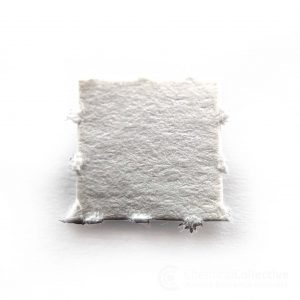
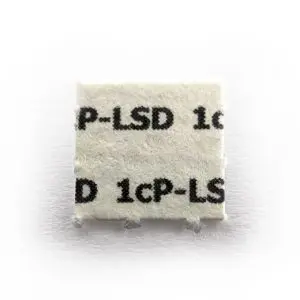
Next to the absence of screening, the financial accessibility of recreational use is incomparable with any other form of consumption. The price of a treatment course of MDMA-assisted therapy in the USA is estimated at $11,000-$15,000. Participation in a mushroom/truffle retreat or in an ayahuasca ceremony in Europe can cost anything from a few hundred to thousands of euros. In the Netherlands, the average LSD blotter costs less than 6 euros. These differences stem partly from the costs of services around the drugs (the presence of medical staff, food and sleeping arrangements, and so forth). Still, not everyone can put a couple of thousand euros into one weekend.
Lastly, one of the most underestimated features of recreational use is the presence of loved ones and a community. Friends, partners and family members can potentially help with risk management as well as integration. Being able to share psychedelic experiences with them physically or to talk about them later can strengthen relationships and supply a safe haven for facing whatever comes. Frequent users – ravers, psychonauts, festival-goers – often report positive feelings of being part of a community. In this sense, the setting of recreational use stands closer to religious and indigenous settings than prevailing therapeutic ones. Rather than alone with a professional, they happen in groups, often with familiar people who are part of a family, tribe or community.
When we say ‘recreational use’, are we referring to the motivations for taking psychedelics? Is it the form of consumption which makes it recreational? The setting? When users state that they use psychedelics for “self-exploration”, do we file them under ‘recreational’? ‘Therapeutic’? ‘Spiritual’? Regardless of motivations, people report positive long-term effects in all of these areas. As medical use becomes legal, there is fear among some psychedelic researchers and policymakers of an increase in recreational use. In the USA, there is indeed a rise in reported self-use of psychedelics in the last years, often attributed to the media hype generated by the psychedelic renaissance and the legalisation of psychedelic treatments in certain states. In the Netherlands and most EU countries, psychedelic use is still extremely marginal.
But is a rise in self-use the same as a rise in recreational use? Perhaps we can learn something from data on (legal) cannabis use in the Netherlands. According to the Trimbos Institute, more than 130,000 people use cannabis for medical reasons, while there are fewer than 7,000 people buying cannabis with a doctor’s prescription. This means that the vast majority (ca. 95%) of medicinal use happens outside the medical system. Even though cannabis is legally accessible as medication, cannabis products are mostly bought in coffee shops or self-grown.
In 2023, the institute launched research in order to understand why this is happening, and uncover for which symptoms people use cannabis, whether it is helpful and why they do so outside the medical system. The results are expected at the beginning of 2026. In the meantime, we can speculate about the concerning rise in mental illness and long waiting lines to health services. But what is already clear from this data is that the motivations for drug use, the chosen provider and the setting for consumption do not mirror each other.
In The Rave: Spiritual Healing in Modern Western Subcultures, Scott R. Hutson laments that most academic literature treats the rave as “a hedonistic, temporary escape from reality”, while ravers report meaningful spiritual experiences and claim that raves are therapeutic. Hutson describes this gap as a stubborn anthropological differentiation between close and far away cultures, where distant cultures are treated with a “respectful yet detached perspective”, and similar local phenomena are deemed inauthentic. For example, metaphors of healing are accepted as authentic and legitimate when they come from indigenous communities, and discarded as ridiculous nonsense when uttered by Westerners. Feelings of communitas and relating to rave-friends as a family or tribe are often rejected by scholars in a similar fashion.
At this point, we still know very little about the actual risks and potentials of psychedelics, the effects of various sets and settings and the reasons behind some of the results we already have. Uncontrollable factors like illegality, stigma and personal background are not only related to risk, but can greatly influence the psychedelic experience itself. Our very understanding of healing is questioned by psychedelics, and ‘recreational’ activities like music and dance seem to have therapeutic, social and spiritual effects. Rather than insisting on prohibition based on unclear categories, scholars, policymakers, and the general public could learn from the various forms of psychedelic use.
* The author does not encourage the use of any illegal substances.
Annabelle Abraham | Community Blogger at Chemical Collective
Annabelle is one of our community bloggers here at Chemical Collective. If you’re interested in joining our blogging team and getting paid to write about subjects you’re passionate about, please reach out to Sam via email at samwoolfe@gmail.com
Welcome to Chemical Collective.
Create an account to earn 200 welcome points.
Already have an account? Sign in
Check out our Community Blog and get involved with the conversation. You will be awarded 50 x ChemCoins for each comment up to a limit of 250 total ChemCoins.
Have you purchased any of our products? Reviews and reports are so important to the community. Share your honest opinion, and we’ll reward you with 50 ChemCoins for each review!
Every time you complete an order with us, you’ll be awarded ChemCoins for each Euro spent.
Welcome to Chemical Collective.
Create an account to earn 200 welcome points.
Already have an account? Sign in
Earn commission every time someone makes a purchase through your link.
When you become an affiliate, you will be allocated a unique link to share with your friends, followers, subscribers, or Aunt Susan.
You can choose to payout the commission earned once per month, or save it up to receive on a rainy day! Commission earned is 5% of the total order value per referral.
Contact us to join the Chemical Collective family and become an affiliate.
share your toughts
Join the Conversation.