Welcome to
Chemical Collective

Are you 18 or older?

Please confirm that your are 18 years of age or older.

You are not allowed to access the page.

info-icon €100 for domestic (NL, CZ, DE) €125 for the rest of the EU, excluding stealth shipping

Free shipping over €50 & free tracked shipping over €100

Friendly customer service available 9-5pm Monday to Friday

Free shipping over €50 & free tracked shipping over €100

Friendly customer service available 9-5pm Monday to Friday

Your cart is empty

A Holistic and Spiritual Approach to Functional Mushrooms

oli-genn-bash

By Oli Genn-Bash

shutterstock 2218536175
in this article
  • The Roots of Mycotherapy: Traditional Chinese Medicine
  • The Spiritual Path of Lion’s Mane
  • Indigenous and Animistic Perspectives on Fungi
  • Modern Holistic Mycotherapy: Bridging Tradition, Spirituality, and Science
oli-genn-bash

By Oli Genn-Bash

Disclaimer: The views and opinions expressed in this article are those of the authors and do not necessarily reflect the official policy or position of the Chemical Collective or any associated parties.

I’m sure you’ve heard the good news by now about all the benefits that different mushroom supplements can offer. From Lion’s Mane boosting your cognitive function, to reishi helping to reduce stress, and cordyceps helping to combat fatigue, as just a few examples, these fungi are becoming more popular in the supplement space to help manage the increasing demands on individuals and society as a whole. 

So are we having a mushroom moment? Could it be that the consumption of psilocybin mushrooms, which seems to be on the rise as attitudes towards psychedelics soften, has also widened the scope to include more fungi in the broader conversation? My own experiences with psychedelic fungi have encouraged me to engage with the natural world in more meaningful ways, and in particular, seek out the different kinds of fungi that might benefit me. After being given some Turkey Tail mushroom on my 30th birthday, I have gone on a deep dive into the world of functional mushrooms over a period of nearly 7 years and personally found mushrooms such as reishi and cordyceps to be quite beneficial in managing some of the symptoms of fibromyalgia.

This personal fascination with fungi led me to found The Fungi Consultant at the end of 2024, where I have been providing consultations on a personal level and for brands looking to develop products in the functional mushroom space. Along with this, I have been creating courses on the benefits of functional mushrooms for a variety of wellness practitioners in different countries. Much of my educational content has been centred around the benefits from a Western biomedical viewpoint, which I very much resonate with when it comes to exploring the wide variety of bioactive compounds. I have gone down rabbit holes where I’ve even been looking at different fractions of these bioactive compounds, and how they might specifically treat certain subsets of breast cancer, for example.

Functional mushrooms are often discussed through this medical framework, as well as being positioned as the latest wellness trend – often within the scope of ‘biohacking’ and performance enhancement. These are totally valid areas to be exploring, and I’ve often been a proponent of dialling in doses and really understanding what these bioactive compounds are doing for us. It allows me to stay excited and enthusiastic, with emerging insights and research often unfolding in real time, where I can properly nerd out with other people in the functional mushroom industry. But perhaps there are deep spiritual and cultural viewpoints that might be missed when we engage with the biomedical model. I’m aware of some mushroom brands bringing these viewpoints into their marketing strategies, and telling the cultural story of the mushroom is certainly a useful way to sell products, but what if these viewpoints are more than just a nice way to position a mushroom?

Ecologically, mushrooms are part of the ‘Wood Wide Web’, where the underground mycelial network allows fungi to communicate with plants and provide access to nutrients in exchange for food. This can help us to see fungi in a way that is based on interconnectedness, reciprocity, long-term orientation, and subtle shifts in relationships. This lends itself more to a spiritual and holistic approach to developing a relationship with functional mushrooms, where we’re able to understand them from a wider perspective that encompasses traditional viewpoints, which emphasise that these mushrooms deserve our respect. Claims about this communicative web unfortunately lack solid evidence, although I still think it’s a useful way to position mushrooms as more than just a health food supplement; instead, they are organisms that are intimately connected to nature. Through this framing, we can avoid the biomedical models becoming too dominant while still maintaining the validity of scientific research.

Can we look towards traditional interpretations of the benefits of certain mushrooms as signposts to where we need to explore with contemporary science? It might seem a bit fanciful, but I think there is a lot of interesting correlation between the more holistic and spiritual interpretations of the benefits of functional mushrooms and the modern interpretations of how they can benefit us on a biochemical level. I speak about my fungi consultancy within the context of ‘bridging the gap between fungal wisdom and modern understandings of wellness’, which I believe is key to appreciating how much certain types of fungi can best support us. 

Through exploring the wisdom of Traditional Chinese Medicine (TCM), Japanese Shugendō, and wider indigenous ecological reverence, we might be able to find new respect for these mushrooms, which are simply being put in the supplement aisle along with everything else.

The Roots of Mycotherapy: Traditional Chinese Medicine

TCM has different classifications known as Qi, Jing, Shen (The Three Treasures), Xue, Jin ye, and Yin/Yang. Qi is commonly referred to as the vital “energy” or breath that sustains all living things, with it being a central concept to this system of medicine. Jing represents the foundational energy gained at birth and refers to the vital “essence”, as well as being associated with longevity. Shen refers to the conscious spirit or mind and is associated with the capacity to form new ideas, as well as the desire to live. Yin is related to the feminine, receptive, cooling, and dark qualities that allow for rest and recharge, whereas Yang refers to the masculine, bright, and hot qualities that allow for movement and positive activity. Xue, or blood, is the liquid life force of the body, and its key proponent is nourishment. Jin ye refers to the fluids in the body (aside from the blood) that lubricate the skin and muscles. 

The emphasis in TCM is on the prevention of disease and promotion of good health, with a focus on different plants to assist with this. Among the several thousands of different plants and fungi used, there is an elite group of around 100 or so that are referred to as being “Superior Herbs”. Primarily, these are used for tonifying the system, as well as promoting vitality and longevity, and for a herb to be considered a “tonic”, it must have been used for centuries and shown to promote a long and healthy life.

There must also be no negative side effects if used reasonably and taken over a long period of time for the cumulative benefits. Within the context of superior herbs, we might be able to reposition functional mushrooms as tonics for providing harmony for our whole system, rather than just being seen as supplements. We can have a look at a selection of some of these functional mushrooms within the context of TCM to see how we might take a broader approach which goes beyond our Western biomedical system.

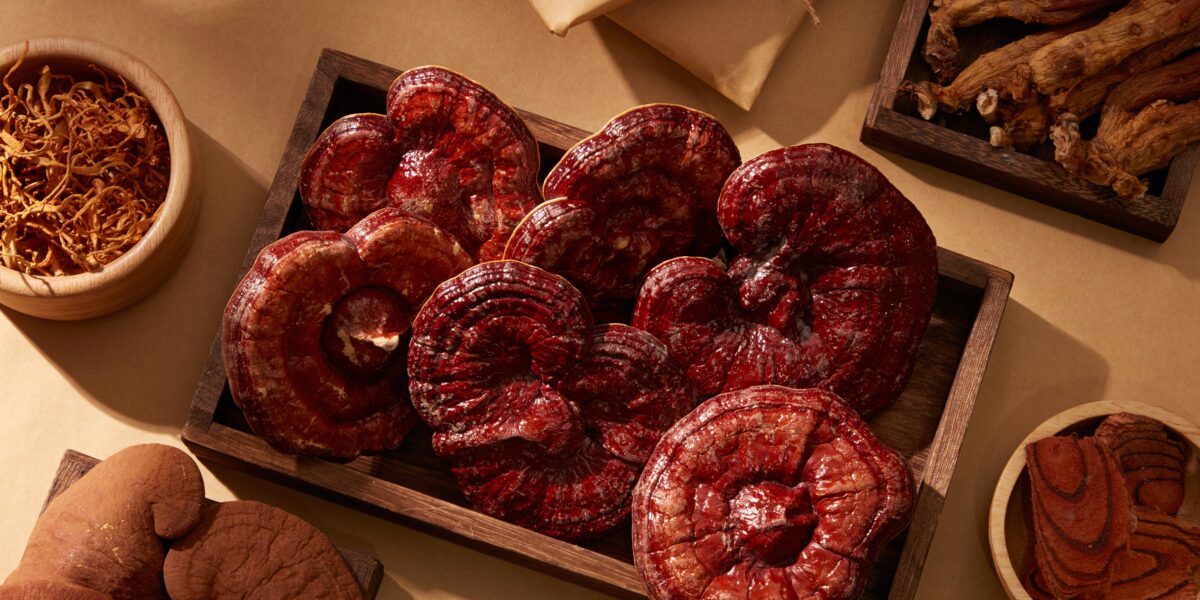
TCM has utilised various types of mushrooms to support immunity, longevity, and vitality, with them an integral part of this system, contributing significantly to the holistic approach to health and wellbeing. Reishi is one of the more central mushrooms and has been reported to have been used as far back as 200 AD (with some reports stating 200 BC) and is known as the ‘Mushroom of Immortality’. It’s considered to be a ‘Shen tonic’ that calms the spirit, nourishes Qi, strengthens the heart, and supports the different functions in the immune system. Traditionally, it was recommended for sleep and relaxation, as well as supporting healthy ageing, which might be a byproduct of sleeping well and feeling relaxed! In Chinese art, Reishi symbolises great health and longevity, and has also been considered a talisman for protection.

My favourite fungus, Cordyceps, is revered in TCM and was historically reserved for royalty. It’s been known to increase Jing, stamina, recovery, assist with lung and kidney function, as well as restore Yin-Yang balance and replenish Qi. Its use goes back possibly thousands of years, but certainly for the past 300 years in TCM and Tibetan folk medicine. With over 350 different species of cordyceps currently known about, only one species – Cordyceps sinensis – has been officially recorded in the Chinese pharmacopoeia since 1964 and is harvested in the wild. 

Another important mushroom, particularly when it comes to our immune health, is Turkey Tail. TCM traditionally recommends it to replenish Jing and Qi, as well as ‘general enhancement’ and regulation of our immune functions. It invigorates the spleen and eliminates dampness, assisting with symptoms such as general weakness, poor appetite, and loose bowels. Traditional use in China has also encompassed treating lung and urinary tract infections, tumours, and liver disorders.

These examples show a system-level model when it comes to understanding the benefits of functional mushrooms, without isolating bioactive compounds and removing them from their energetic context as part of the whole organism. This energetic context also lends itself to more spiritual ways of viewing these mushrooms, as is the case with Lion’s Mane in particular. 

The Spiritual Path of Lion’s Mane

This popular culinary mushroom has been historically praised by a particular sect of Buddhist monks in Japan for its power to increase focus during meditation. In Japan, locals call it Yamabushitake after the Yamabushi Buddhist monks, a word that means “those who sleep in the mountains” and also refers to the mushroom as being the “mountain priest”. It’s said that these monks, who reside in the mountains, wear a garment around their necks with long strands of fur to resemble the Lion’s Mane mushroom. 
The Yamabushi monks practice a form of asceticism in the Shugendō, which combines Buddhism with Shinto, local folk-religious practices, Taoism, and mountain worship. The emphasis in this tradition regards immersion in nature to truly understand it, with an ultimate aim of obtaining supernatural powers to save themselves and the masses. Perhaps there’s some correlation here with the modern way in which Lion’s Mane is positioned, as something which can enhance our cognition (not necessarily at a supernatural level!) and potentially provide benefits on many levels to a wide number of people

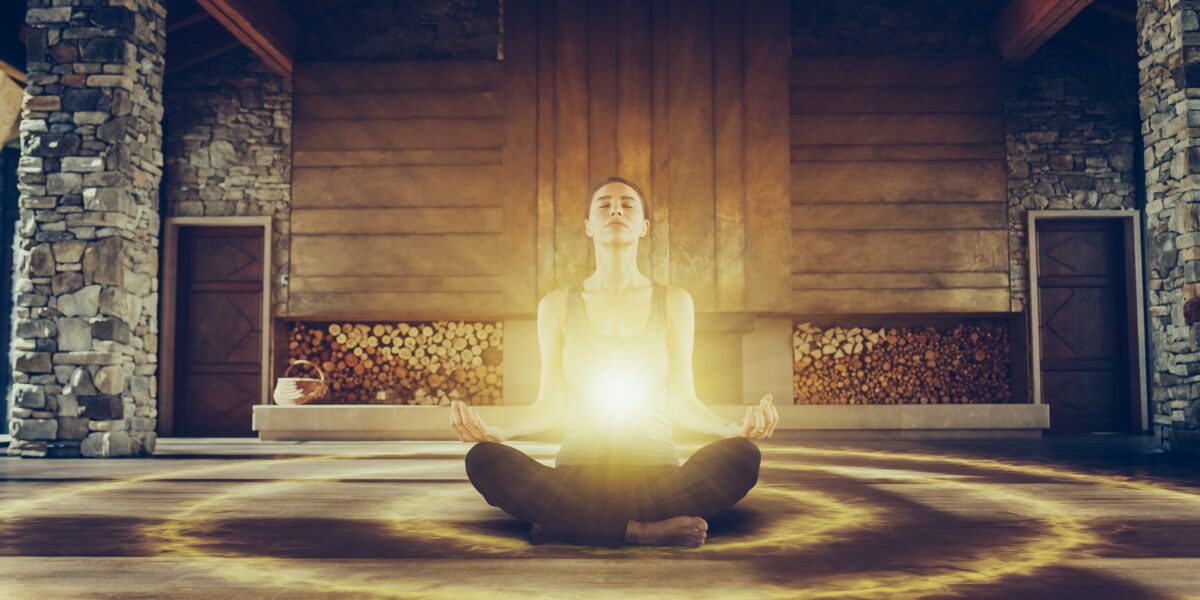
We might begin to see this mushroom as a bridge between our intuitive perception and our nervous system, where the context in which we consume it potentially influences its effects. Could we start to think about how we consume Lion’s Mane in a similar way to how we consume other types of fungi? When it comes to psychedelic mushrooms, there’s a lot of focus on the environment or ‘setting’ we’re in, which encompasses different aspects of the physical environment, and can potentially allow for a more comfortable experience. Contextualising Lion’s Mane more within a spiritual light, compared to just being seen as a brain-boosting supplement, might allow us to find new ways of understanding our bodily needs, perhaps from a state of more somatic awareness in a holistic way, which links body and mind. 

The general reverence for different types of mushrooms in Japan – such as shimeji, enoki, maitake, shiitake, and the highly prized matsutake – links back to a deep-rooted cultural and culinary significance, and from my personal perspective, we should be revering the functional mushrooms we consume in the West so we don’t under-appreciate how much they might be able to assist us with a wide variety of health conditions. This might take more of an indigenous or animistic approach to how we view health, with a move towards more of an interrelational engagement with our natural world, rather than commodifying nature to suit our needs. 

Indigenous and Animistic Perspectives on Fungi

Could we start to look at mushrooms in a way where they are relational teachers? Perhaps the way in which mycelium embodies the idea of connectivity could provide us with more insight regarding intentionality, as well as more positive engagement with the natural world and the wider fungal kingdom. 

We can see this kind of engagement in Siberian shamanism and folklore, where animistic beliefs are central to the way in which communities throughout this region relate to the natural world. Siberian folk medicine involves a wide variety of treatments for different conditions, with different medicines having been passed down through generations. These medicines provide benefit in colder climates, allowing the body to adapt to the natural environments, with this sentiment leading to extensive research by the Soviet Union government in the 1970s from a sealed research city in Siberia, with a focus on understanding how soldiers might endure frostbite and adapt to high elevations in Afghanistan. 

Chaga – a parasitic fungus that grows on birch trees in the region – has been traditionally used by the Khanty, a minority indigenous group in Western Siberia, since the 12th century, as well as other parts of Northern Europe and First Nations communities in Canada. It has been traditionally utilised for a wide variety of benefits, including antiseptic properties, cancer treatment, aiding with digestive issues, providing antimicrobial and antiparasitic benefits, as well as reducing fatigue and increasing mental sharpness. Despite not being psychedelic, chaga is believed to have the ability to connect a person with the spirit world and bring about visions and insights, with it being known as a “Gift from God” since it’s said to purify the body, mind, and spirit.

Chaga being contextualised as a gift from God, rather than something to just be harvested, owes more to a sense of what ayahuasca researcher Luis Eduardo Luna calls a ‘relational epistemology’, where what we know is in relation to the natural world. This means not seeing ourselves as better or more dominant than nature, but simply part of it and able to learn from its wisdom. In this sense, we have the possibility to create more-than-human relationships that go beyond the ideas of extraction (not just in the sense of commodification, but also in a very literal sense where we’re extracting the bioactive compounds from different plants and fungi) towards more of a relational reciprocity with nature. 

When there is growing evidence of the potential for fungi to clean up our environment, all the way from plastic to nuclear waste, should we be looking at them more as collaborators rather than commodities? I don’t think it’s a coincidence that they seem to be showing up more prominently than ever – perhaps they know this, and it’s why we seem to be going through this mushroom moment, both with psychedelic fungi and the world of functional mushrooms. Viewing them in this way might allow us to slow down, where we can take a more holistic and calm approach to utilising functional mushrooms for our health. 

Modern Holistic Mycotherapy: Bridging Tradition, Spirituality, and Science

Over the past year, I have been engaging more in the educational side of functional mushrooms, with a focus on course creation that merges Traditional Chinese Medicine, modern clinical data, and the spiritual and ecological wisdom together to provide a holistic exploration. This allows for both wellness practitioners and consumers to work with both quantitative markers and energetic patterns to fully utilise the benefits of functional mushrooms.

Some of these examples, which are rooted in my teaching practice, could be exploring chronic stress, tension and insomnia, where we would situate Reishi as a potential treatment within the context of calming the spirit and providing nervous system regulation. Another might be looking at cognitive fatigue and emotional dysregulation, where Lion’s Mane would be suggested to assist with clarity and to help regenerate the system. Something like Cordyceps could benefit us when we’re managing physical fatigue and endurance, with the idea that it can assist with overall vitality and improve our lung health, allowing us to make more efficient use of oxygen.

These approaches, which encompass different ideas, open the space to engage with functional mushrooms at a slower pace, where we can incorporate them into daily rituals that provide more of a consistent context for working with them. We might utilise mushroom coffees containing either Lion’s Mane or Cordyceps for our morning routine in place of caffeine, which could allow for a less jittery start to the day and more focus on grounding and reflection. Our nighttime rituals could then be supported with the addition of Reishi to provide more of a calming experience to aid with sleep. With these intentions, we can amplify the effects of different types of fungi, rather than just allowing them to work away in the background with the hope that they’re doing something. In my personal opinion, we should be feeling the effects of fungi when it comes to the immediate dysfunctionality (whether that be brain fog, fatigue, or not being in a calm state), but it also requires a greater degree of awareness regarding how your body is feeling. 

This leads back to the idea of interrelationality, where it’s not just a case of taking a magic supplement and hoping it will do something, but rather engaging with organisms that we can potentially build a relationship with. These functional fungi (like all fungi) require intention to get the most out of them, so they can be situated in a space that allows all different forms of the mushrooms to be used – whether that be eating them as fresh mushrooms, consuming dried powder, making dual-extract powders and tinctures, or going deep into the advanced world of bioavailability and producing liposomal extracts.

The importance of having awareness about what challenges our bodies are facing can allow us to have more of a targeted focus, which is then supported through the creation of a relationship with fungi, which allows us to feel like there are different possibilities for health. When we look at mushrooms as a complementary medicine, rather than something which is alternative, we can see they don’t necessarily have to entirely shift the paradigm; they can, instead, simply allow us more reverence for the possibilities offered to us by the natural world. 

The hyper-commercialisation of mushrooms is something to be wary of, but by developing our personal and community-focused relationships with mushrooms, we can hope to increase integrative literacy regarding where they come from and how others can develop similar relationships with the fungal kingdom. We can approach mushrooms as living medicines with a cultural lineage, where mycotherapy can be seen as something that connects us to ourselves, other people, and the natural world. 

Oli Genn-Bash | Community Blogger at Chemical Collective | linktr.ee/oligennbash

Oli is one of our community bloggers here at Chemical Collective. If you’re interested in joining our blogging team and getting paid to write about subjects you’re passionate about, please reach out to Sam via email at samwoolfe@gmail.com

share your toughts

Join the Conversation.

0 Comments
Inline Feedbacks
View all comments

Related articles

Our Products

Related Products

1V-LSD 150mcg Blotters

SALE! -35%

1V-LSD 150mcg Blotters From Original price was: €22.00.Current price is: €14.30.
(145)
1cP-LSD 100mcg Blotters
1cP-LSD 100mcg Blotters From 18.00
(137)
Tryptamine Mix and Match Pack (4 x 0.1g)
Tryptamine Mix and Match Pack (4 x 0.1g) 65.00
(1)
1V-LSD 10mcg Micro Pellets

SALE! -35%

1V-LSD 10mcg Micro Pellets From Original price was: €15.00.Current price is: €9.75.
(44)
1V-LSD 225mcg Art Design Blotters

SALE! -35%

1V-LSD 225mcg Art Design Blotters From Original price was: €35.00.Current price is: €22.75.
(62)
1S-LSD 150mcg Blotters
1S-LSD 150mcg Blotters From 29.00
(18)
1cP-LSD 150mcg Art Design Blotters
1cP-LSD 150mcg Art Design Blotters From 25.00
(74)
1V-LSD 225mcg Pellets

SALE! -35%

1V-LSD 225mcg Pellets From Original price was: €35.00.Current price is: €22.75.
(26)
1D-LSD 225mcg Pellets (1T-LSD)
1D-LSD 225mcg Pellets (1T-LSD) From 42.00
(13)
1cP-LSD 10mcg Micro Pellets
1cP-LSD 10mcg Micro Pellets From 15.00
(23)
5-MeO-DMT Freebase
5-MeO-DMT Freebase From 23.95
(36)
1S-LSD 10mcg Micro Pellets
1S-LSD 10mcg Micro Pellets 20.00
(3)
O-PCE HCL
O-PCE HCL From 17.50
(25)
1cP-LSD 20mcg Micro Blotters
1cP-LSD 20mcg Micro Blotters From 18.00
(28)
1cP-LSD 150mcg Pellets
1cP-LSD 150mcg Pellets From 25.00
(13)
rewards-icon
popup-logo

Reward program

popup-close
  • Earn
  • Affiliates