Welcome to
Chemical Collective

Are you 18 or older?

Please confirm that your are 18 years of age or older.

You are not allowed to access the page.

info-icon €100 for domestic (NL, CZ, DE) €125 for the rest of the EU, excluding stealth shipping

Free shipping over €50 & free tracked shipping over €100

Friendly customer service available 9-5pm Monday to Friday

Free shipping over €50 & free tracked shipping over €100

Friendly customer service available 9-5pm Monday to Friday

Your cart is empty

Discovering the Authentic Self Through Psychedelics

oli-genn-bash

By Oli Genn-Bash

rsz shutterstock 2461337951
in this article
  • What Do We Mean When Exploring the “Authentic Self”?
  • Mushrooms and the Relational Self
  • Is Self-Discovery an Illusion?
  • Becoming Nobody and Everything
oli-genn-bash

By Oli Genn-Bash

Disclaimer: The views and opinions expressed in this article are those of the authors and do not necessarily reflect the official policy or position of the Chemical Collective or any associated parties.

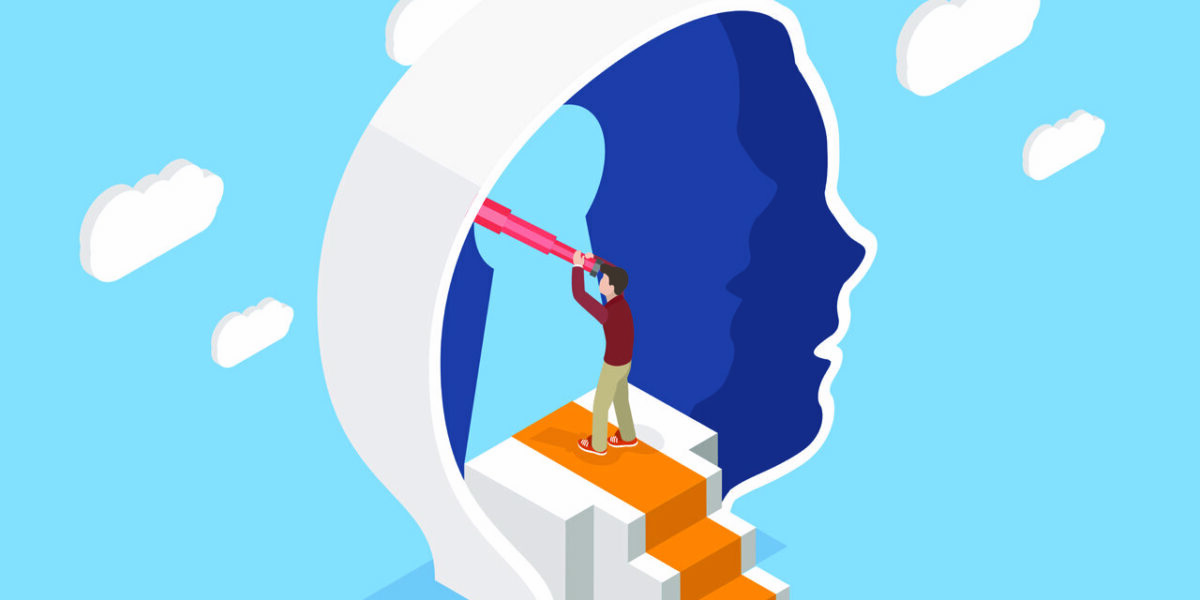
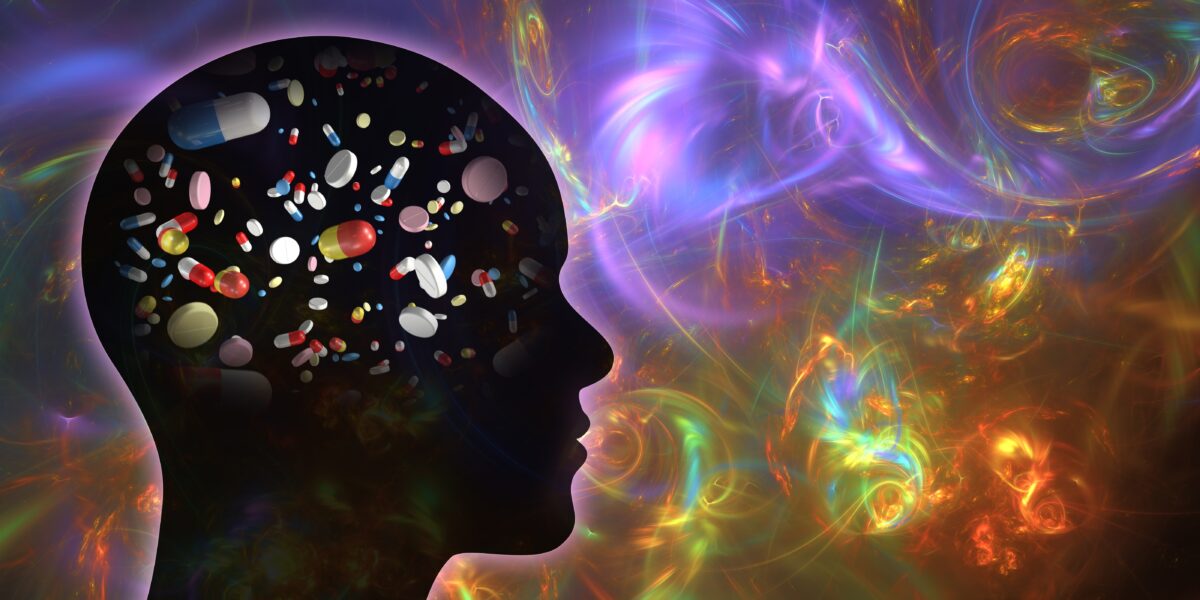
Who is writing this article? It seems like the answer to this is quite obvious – it’s me. But who or what is the me that is writing this? I have fingers typing which are attached to the body of the physical shell of the concept of “Oli” – but are these simply concepts placed upon the real, authentic self? Are these kinds of questions simply a snapback of the ego state where we start to obsess about self-discovery? 

It seems like we’re forever on a path of self-discovery in the West, with various retreats in different parts of the world being advertised to facilitate our path to connecting with this idea of the authentic self. These kinds of retreats can offer something powerful when it comes to self-discovery, particularly when combined with plant medicines: my own experience of taking part in a San Pedro ceremony in Peru in 2018 was surprisingly profound in connecting me to a part of myself that helped to unravel a lot of deeply embedded cynicism. There was a moment where some music was playing, which I found personally a bit cheesy (this moment brought up feelings of being a musician and wanting to only be around music that felt explicitly profound), but the positive aspect of being in a group setting was that I was able to relate to how other people might have been interpreting that music. For others, it might have been very powerful and provided what they needed in that moment, so who was I to judge and be cynical?

This allowed me to uncover something inside myself where I had a lot of close-hearted energy related to grief, and in that moment I was able to become more open and recognise the dynamics of a group setting where I realised that not everything is about me…or the self, for that matter! Psychedelics are often framed as being tools to uncover past traumas or hidden memories that might connect us with this idea of self-discovery, but they can often be destabilising rather than necessarily being able to assist in revealing the authentic self. 

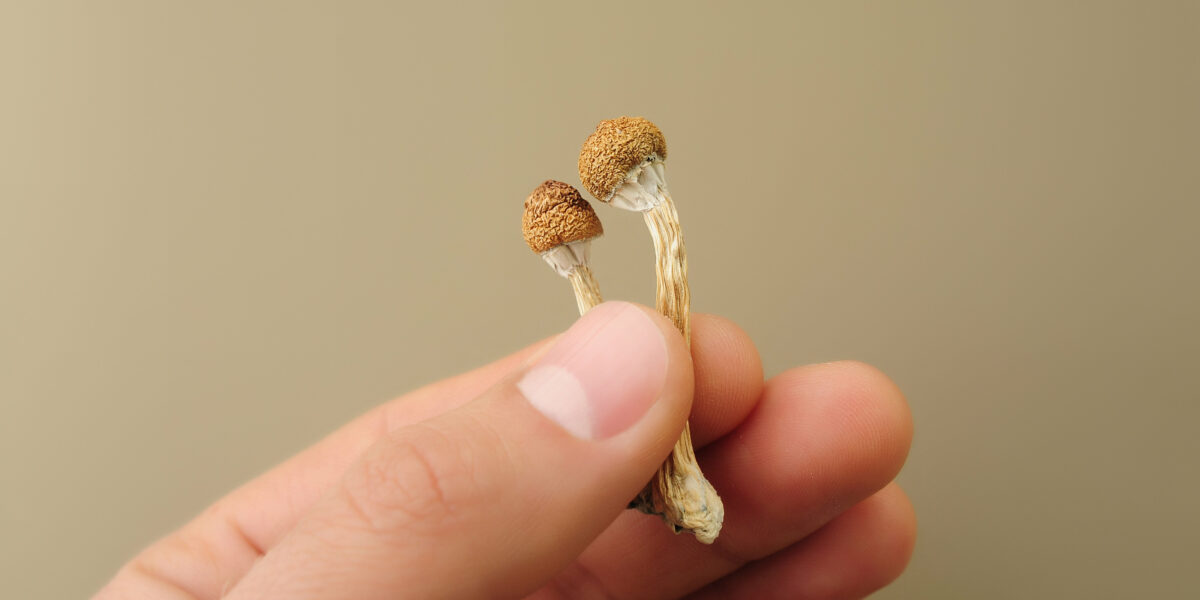
There are even reports of the reduction of the self under the influence of psychedelics, where paradoxically, people are experiencing less of the concept of self through moments of ego-dissolution. My personal experiences with magic mushrooms, for example, have simultaneously been about healing my personal trauma and also about the wider collective narrative. I have received what I perceive to be messages from the mushrooms, letting me know that they’re here to provide healing for me and the rest of the world. These moments have felt unmistakable when it comes to the collective nature of the message, where I’m aware of the importance of healing in relation to others, with healing the self being completely inseparable from this. 

What if this voyage of discovery into the authentic self is more about developing a positive relationship with the self so we know how and when to loosen it? 

What Do We Mean When Exploring the “Authentic Self”?

From a Western psychological perspective, the authentic self can be thought of in relation to self-advancement, where authenticity elicits self-advancement, and self-advancement elicits authenticity. This is the idea of being true to oneself, where we find coherence in our identity and values, with a continuous narrative. These are aspects for me personally that resonate a lot with my psychedelic experiences, especially in a creative sense, where my engagement with psychedelic music is part of a wider cultural narrative. It’s hard to put into words the degree to which this connection makes me feel like I can really be myself, where I can be around others in a state of communal joy. There’s a sense of everyone being on a similar vibe, whether it’s listening to music that we love or engaging in creative conversation, exploring nature, or tapping into different practices with others in a group setting. 

I’ve been playing music for 30 years, but it’s not always been a straight path. Challenges in my life as a teenager had a significant impact on my joy for playing music, and it often seemed like a bit of a slog. I found music lessons and practising quite draining, and studying A-level music just became a bit of a disaster. Being introduced to psychedelics at university was a life-changing experience regarding my creativity, which has now resulted in me pursuing music in a more focused and professional way, having now released a second studio album with my band. Psychedelics have been key in allowing me to return to this core, where previously I might have been shut off or not had enough belief in the level of my playing ability to engage with this self-advancement. 

This is very much in line with thinking about the content of the self, placing the self as an object to base our own existence on. But what if we could understand the self from a different perspective? In his book No Self, No Problem: How Neuropsychology Is Catching Up to Buddhism, Chris Niebauer poses the question:

Why are you unhappy? Because 99.9 percent of everything you think, and of everything you do, is for yourself—and there isn’t one.

From an Eastern philosophical perspective, the concept of self doesn’t actually exist, and it’s simply an illusion of the process of our thought patterns. The Western mindset often perceives the self as a stable force, but this might be quite peculiar within the context of other world cultures. If the self isn’t necessarily stable, could we come to think of it more like a process rather than an object? The philosopher Thomas Metzinger has expressed the idea that the robust phenomenology of the self has convinced us that we’re someone, but there is “no metaphysical entity such as the self which could exist independently of the brain”.

Could this understanding of the self as a process be a detachment from egoic identity? What if there was a difference between egoic identity and presence? One individual whom I’ve become a big fan of is the spiritual teacher and self-help author Eckhart Tolle, who has spoken at great length about the idea of presence in our lives, particularly in his book The Power of Now. When we interact with another person and two consciousnesses are going at it, we might be stuck in this stream of thought where all the space is taken up. We might, however, have moments of recognition that all this space has been taken up and effectively lost, and we have the ability to engage with the awareness that exists outside of thought. We can anchor ourselves in different ways, whether that be awareness of our breath, our body, or our surroundings. 

Without this awareness, we might succumb more to the ‘pain body’, where we experience past emotional pain in terms of anger, depression, anxiety, or some other kind of negative emotional state. We identify with the pain body; there might be something that we’re not willing to let go of, even though it seems obvious that no one would actively choose to experience these negative emotional states. But is this identification due to being stuck in the thoughts and not engaging enough with presence or awareness? If we become more aware of the pain body, we then have the possibility of breaking this identification and shrinking or dissolving the pain body to have the opportunity to enjoy the present more. Tolle often speaks about the human love for dogs in the sense of the recognition of the ‘non-egoic’ or ‘pre-egoic’ state that they seem to have:

They’re not troubled by low self-esteem or body-image problems. You can look into their eyes and feel temporarily liberated from your worries. They’re guardians of being — some people are kept sane by having a dog nearby. But dogs are pre-thought. It’s not our evolutionary destiny to go back to their level.

Is being able to enjoy the moment more about how we relate to situations rather than who we are? If we can understand that we’re not our thoughts and we can’t control them, we can see where we have the power to change how we relate to what’s happening by tapping into the awareness and presence that exists outside thought. My experiences with psychedelics, in particular, LSD, have allowed me this space and ability to tap into the awareness which exists outside of the thinking mind – this is where I think a substance such as LSD has so much beauty contained within it. I’ve had moments where I feel like I’m existing in pure joy of experience and awareness, whether that be what I’m seeing, hearing, smelling, or tasting. There was one moment in particular where I remember sitting in a field on my university campus, and becoming aware of not having any thoughts (or at least being in the space in between my thoughts), where at that moment I started laughing in the joy of feeling like I’d escaped the ego. The famous jazz trumpeter Miles Davis often spoke of playing the silence in between the notes, as this is where the next note is born, and we might be able to think of this in a similar way to psychedelics and thought. 

In this moment, is there a recognition of the healing potential of psychedelics that goes beyond the self and our life story? Perhaps in connecting to that state of pure awareness, there is engagement with something that could be thought of as essential, where this awareness is not defined by our personality, life events or circumstances. Is this something, however, which is only experienced by those of us in the West who already have this personal association with ideas of the self? 

My experiences with magic mushrooms, while having been greatly beneficial in working through challenging life events on an individual level, have also consistently presented me with the idea of these mushrooms being here to help us as a collective species. This has often felt quite clear, and it seems to be a recurring pattern of thought or general conclusion when it comes to understanding the lessons gained from psychedelics such as mushrooms. Perhaps the self doesn’t really exist unless it’s in relation to other selves? 

Mushrooms and the Relational Self

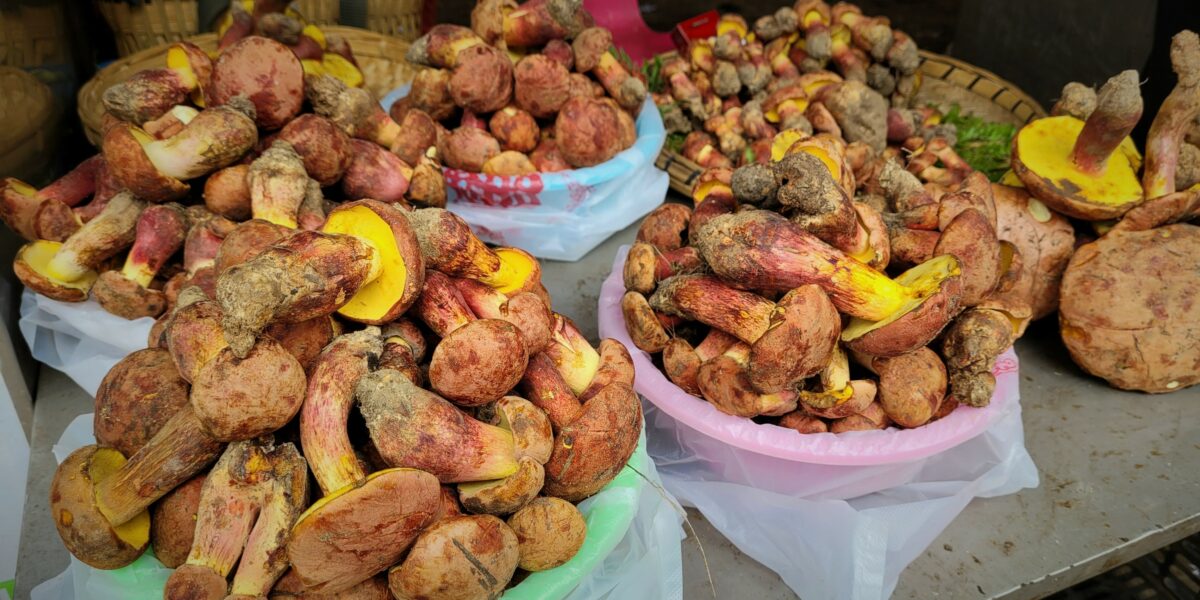
When it comes to talking about mushrooms, there seems to be a general narrative in the West of discussing research which generally explores the benefits of the most spoken about compound, psilocybin, and the therapeutic potential for individuals. But does this limit our engagement to talking about mushrooms in a pharmacological way, rather than speaking about an organism or some kind of intelligence we can engage with, which might reveal a deeper, or perhaps more expanded understanding of the self? 
Thinking of mushrooms as technologies or teachers in more of an animistic way, where we ascribe some sense of aliveness or agency to them, can allow us to interpret knowledge in a way that manifests between different beings. This collaborative sense of interrelational intelligence, rather than just simply taking a drug that is supposed to do something for the individual, might be able to show us that the concept of the self is entirely irrelevant if we’re not only thinking about it in relation to other people but also other beings. Psychedelics are often referred to as being ‘non-specific amplifiers’: they don’t radically change anything, and in fact do the opposite, helping to reinforce the mindset of the individual and the community.

This might be where there are some challenges which come with doing this work of self-discovery with psychedelics outside of a culturally relevant framework, where we’re often consuming them away from our family settings and most probably not being entirely open about our psychedelic use with those family members. So then we do this work on the self, but try to engage with family members who haven’t done similar work, and often this can create tension where family members might hold different values or maintain different beliefs about the world. Rather than existing together under one unifying cultural narrative or communal cosmology, we instead think of ourselves as separate selves, all with our own way of experiencing whatever it is we’ve gone through – but psychedelics, and mushrooms in particular, could have the potential to stop us from getting so stuck in this narrative of the separate self. 

This isn’t to say that individualised psychedelic-assisted psychotherapy doesn’t have a place in allowing us to engage more deeply with the self, but more so that there might only be so far we can go with the individual narrative before we realise how much we’re part of this wider whole that the “I” is a part of. I often feel sad or guilty when I’m consuming psychedelics on my own, almost like I wish I were doing this with my family so that we could all be together in a tribal sense and heal ourselves in a collective way. 

The fact that psychedelic consumption is prohibited in places like the UK means that ultimately, we’re denied this interrelational experience in an ordained communal setting, and instead have to create that interrelationality ourselves through different communities. But through this creation, we can start to ask more questions regarding the authentic self and how it relates to a wider ecological self: in order to really discover this authentic self, do we need to engage with collective trauma and the global issues we face? There might be very little hope of individual self-discovery without first promoting ideas of systemic healing and collective wellness. 

Is Self-Discovery an Illusion?

Perhaps the self just doesn’t really mean anything when it comes down to it. What exactly is there to be discovered if we have a self that is in a fluid state? Do psychedelics necessarily reveal anything besides the fact that there is no solid state to the self? 

Research has shown that mushrooms have the potential to desynchronise the brain, with changes being reported in time-perception, as well as sensations of ego-dissolution. We might find in this sense that psychedelics do more to deconstruct the perceived idea of the self, rather than necessarily reveal anything true or authentic about it. The suggestion or assumption that psychedelics can assist in discovering our authentic self might imply that there’s a false layer of self or an inauthentic self that we should cast aside to discover the truth. Could it be that psychedelics allow for the mechanisms of the self to be deconstructed, where we no longer identify with them, rather than necessarily uncovering anything true? The habits which identify us with thoughts, feelings, emotions, and our life narrative might be changed under the influence of psychedelics, where we no longer have to follow these different identifying factors of the self. 

The tension, however, is that after our psychedelic experiences, we still come back to existence as this self, complete with all the identifying factors of our name, different life responsibilities, and relationships that make up what we know to be our self. We live in this state of existence every day, and perhaps the voyage of self-discovery with psychedelics is about understanding the way in which we relate to these identifying factors, which can potentially allow us to be more comfortable with who we are and others around us.  

Different psychedelics could have various impacts on our perception of the self, with psilocybin, as we’ve already discussed, having the potential to expand our understanding of the authentic self out more towards nature. LSD seems to have the potential to blur the boundaries between ourselves and other beings, and something as powerful as ayahuasca might elicit different mystical alterations in our sense of self through the therapeutic potential of engaging with rituals, where our ego might be dissolved, and the interrelational understanding of the self is potentially enhanced.

Depending on the context in which we’re consuming psychedelics, they might have the potential to deconstruct individualistic interpretations of the self or potentially reinforce more of a collective interpretation of it. An ego-dissolving experience doesn’t necessarily take precedent in some kind of hierarchy of self-discovery; however, it’s clear that this feels so important to us in Western psychedelic culture – almost to the point where we might be over-romanticising the idea of ego-death as a way to get to the point where we’ve discovered the authentic self. 

Becoming Nobody and Everything

When we think about ‘discovering’ something, it’s more than likely that we’re thinking about it within the context of going on a journey or exploration, where we’re supposed to find what we’re looking for. But what if psychedelics don’t actually help us find anything true or authentic? What if the power of psychedelics is to simply stop us from clinging to the idea of who we think we are? 

Sometimes I worry that I say the wrong thing (especially around psychedelic circles) or don’t manage to simply not say something in a particular situation, mostly because it feels like something of my authentic self is always bubbling up below the surface. There’s almost a weird sensation of “well, I guess somebody has to say something,” and I’ve often felt like my experiences with psychedelics have provided me with this confidence in authentic expression, even if it might rub people up the wrong way. I’ve often said to people that perhaps I play this kind of role, where I feel a sense of obligation to speak what I perceive to be the truth, even at the personal expense of potentially not being included in certain spaces for not towing a particular line. 

I like to think I do this in something of a playful way, and my authentic responsiveness is often to find where there is the possibility to not be so serious in any given situation. The authentic self in this sense might become a creative tool from which we can alter our responses and see as something of an instrument for engaging with reality, rather than being a fixed point that we need to arrive at and have knowledge of. The phrase “Know thyself” has many interpretations, often being seen in terms of understanding our unconscious mind or knowing the soul; however, the original translation of this phrase is “know your limits”.

If we think about this within the context of psychedelics, it might be that our discovery of the authentic self is knowing when that self needs to step aside. 

Oli Genn-Bash | Community Blogger at Chemical Collective | linktr.ee/oligennbash

Oli is one of our community bloggers here at Chemical Collective. If you’re interested in joining our blogging team and getting paid to write about subjects you’re passionate about, please reach out to Sam via email at samwoolfe@gmail.com

share your toughts

Join the Conversation.

0 Comments
Inline Feedbacks
View all comments

Related articles

Our Products

Related Products

1V-LSD 150mcg Blotters

SALE! -35%

1V-LSD 150mcg Blotters From Original price was: €22.00.Current price is: €14.30.
(145)
1cP-LSD 100mcg Blotters
1cP-LSD 100mcg Blotters From 18.00
(137)
Tryptamine Mix and Match Pack (4 x 0.1g)
Tryptamine Mix and Match Pack (4 x 0.1g) 65.00
(1)
1V-LSD 10mcg Micro Pellets

SALE! -35%

1V-LSD 10mcg Micro Pellets From Original price was: €15.00.Current price is: €9.75.
(44)
1V-LSD 225mcg Art Design Blotters

SALE! -35%

1V-LSD 225mcg Art Design Blotters From Original price was: €35.00.Current price is: €22.75.
(62)
1S-LSD 150mcg Blotters
1S-LSD 150mcg Blotters From 29.00
(18)
1cP-LSD 150mcg Art Design Blotters
1cP-LSD 150mcg Art Design Blotters From 25.00
(74)
1V-LSD 225mcg Pellets

SALE! -35%

1V-LSD 225mcg Pellets From Original price was: €35.00.Current price is: €22.75.
(26)
1cP-LSD 10mcg Micro Pellets
1cP-LSD 10mcg Micro Pellets From 15.00
(23)
1D-LSD 225mcg Pellets (1T-LSD)
1D-LSD 225mcg Pellets (1T-LSD) From 42.00
(13)
5-MeO-DMT Freebase
5-MeO-DMT Freebase From 23.95
(36)
1S-LSD 10mcg Micro Pellets
1S-LSD 10mcg Micro Pellets 20.00
(3)
O-PCE HCL
O-PCE HCL From 17.50
(25)
1cP-LSD 20mcg Micro Blotters
1cP-LSD 20mcg Micro Blotters From 18.00
(28)
1cP-LSD 150mcg Pellets
1cP-LSD 150mcg Pellets From 25.00
(13)
rewards-icon
popup-logo

Reward program

popup-close
  • Earn
  • Affiliates