Welcome to
Chemical Collective

Are you 18 or older?

Please confirm that your are 18 years of age or older.

You are not allowed to access the page.

info-icon €100 for domestic (NL, CZ, DE) €125 for the rest of the EU, excluding stealth shipping

Free shipping over €50 & free tracked shipping over €100

Friendly customer service available 9-5pm Monday to Friday

Free shipping over €50 & free tracked shipping over €100

Friendly customer service available 9-5pm Monday to Friday

Your cart is empty

The ‘Nada’ Experience: What To Do When Psychedelics Don’t Work (Part 2)

john-robertson

By John Robertson

shutterstock 2414741249
in this article
  • Control Your Variables
  • Medication Considerations & Tapering
  • If Nothing's Happening During Your Session
  • Building Capacity Over Time
  • Seeking Professional Support
  • Final Thoughts
john-robertson

By John Robertson

Disclaimer: The views and opinions expressed in this article are those of the authors and do not necessarily reflect the official policy or position of Chemical Collective or any associated parties.

It’s been 90 minutes since you took what you thought was a heroic psilocybin dose. The music is playing, and the eye mask is on, but the only thing you feel is… disappointment.

That sense of nothing happening is what is known as a ‘nada’ experience. No visuals, no insights, just silence. It is a surprisingly common experience for people taking psychedelics, perhaps even more so when we consider how powerful psychedelics can be as mind-altering substances. And while many may think the solution is to simply take more, that advice is often too simplistic an approach to be a safe or effective solution for what can be a complex issue.

In Part 1 of this two-part series on the nada experience on Chemical Collective, we explored the various reasons why someone might take a psychedelic and feel nothing. This ranges from serotonin receptor availability and medication interactions to rigid cognitive patterns, dissociation, and nervous system shutdown responses.

Today, we’ll be getting practical: what does someone actually do if they experience nothing from a dose of psychedelics?

In this article, we’ll cover the gamut of approaches and walk through controlling variables, navigating medication interactions, and working with resistance when it shows up during a session.

I hope that by the end of this article, you will understand some concrete steps that can be taken to move beyond the nada and experience the benefits that can come from the depth of a full psychedelic experience. 

Let’s dive in.

Control Your Variables

If you’ve had a nada psychedelic experience, it may have been caused by something simple. There are a variety of factors that can affect and weaken a psychedelic experience. A good place to start when investigating nada experiences is to systematically check and control these factors. These include source, batch, physical preparation and tolerance, set, and setting. Let’s take a look at each of these.

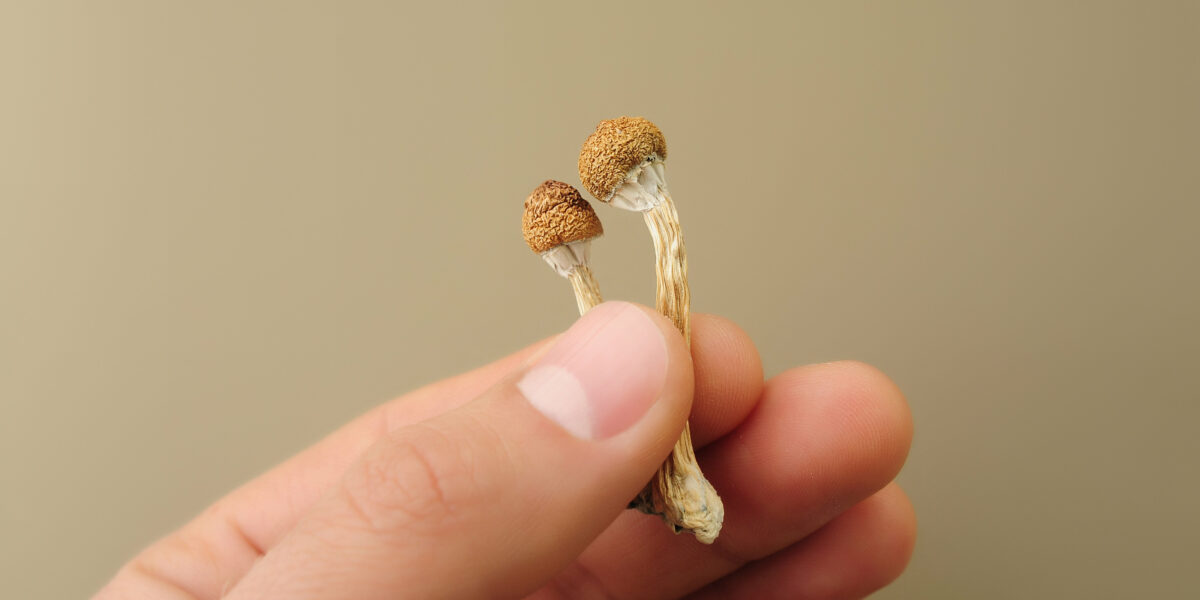
Mushroom potency can vary widely between different grows, flushes, and even individual mushrooms from the same harvest. To ensure consistent dosing, homogenise your supply by grinding all mushrooms into powder and mixing thoroughly. This evens out the differences between individual mushrooms. It’s also worth noting that psilocybin concentration starts degrading after about six months, especially if mushrooms are not stored properly in a cool, dark, airtight container.

Between experiences, don’t adjust your dose based on an experience from a different source or batch. Even if 3 grams from one batch seemed weak, 3 grams from a different batch could be much more potent. This applies to other psychedelics too. One tab of LSD from one source might contain 100 micrograms while another contains 250.

How you consume the substance also matters. Mushrooms in peanut butter sandwiches will hit most people differently than if consumed via lemon tek. Pick one preparation method and stick with it for consistency. Food timing can also make a big difference. Taking psychedelics on a full stomach can dampen or delay effects significantly. The standard recommendation is an empty stomach, meaning 2 to 3 hours since your last meal.

To control for tolerance buildup, wait at least two full weeks between full-dose experiences to let your tolerance reset. Also, be aware that psilocybin and LSD have cross-tolerance, so taking one affects your sensitivity to the other.

Your internal state and external environment also shape how you perceive the experience. I’ve noticed the same dose can feel quite different depending on whether I have headphones and an eye mask on, compared with taking them off and going into a bathroom with lights on. Also, being in private versus a more public setting can shift things too. Set and setting don’t need to be hyper-specific, but they should be intentional. It’s also worth taking into account other body chemistry variables like hormonal fluctuations, any medications you’re taking, and your overall physical state.

To control for and track all these variables, you can keep a simple journal where you record the exact dose and batch, preparation method, when you last ate, time of day, setting details, etc. Here you can also record any subjective effects you felt, even if minimal. From here, change one variable at a time when experimenting, so you will be able to see more clearly what makes a difference. Over time, you will gain valuable data and may spot patterns.

If you need to increase your dose, work up gradually within the same batch and don’t redose during a session unless you’re experienced. It can happen that the first dose hits later than expected, and then you’re dealing with both(!). If you do choose to boost, make it small. As you make your experiments, be systematic and be patient. It may turn out that your nada experience has a simple practical explanation hiding in these variables.

Medication Considerations & Tapering

In Part 1, we covered how certain medications like SSRIs, SNRIs, and antipsychotics can interfere with psychedelic experiences. These medications can dampen or completely dull the effects of a psychedelic. Antipsychotics are tricky since they tend to block the effects of classic psychedelics more completely, so this section will focus on SSRIs and SNRIs.

Working Around SSRI and SNRI Medication Effects

Some retreat centres and practitioners have found ways to work around SSRI and SNRI effects by adjusting the dose. The approach is straightforward: increase the dose to make up for the lower number and sensitivity of serotonin receptors. This may be done by first giving someone on these medications a standard dose to assess their sensitivity. Then, if no effects are experienced, for the next session, the dose is increased. This increase could be anything from 1.25 to 2 times the original dose, depending on the practitioner. For example, if the standard dose was 1 gram, then 1.25x would be 1.25 grams, or 2 times would be 2 grams. The dose may then be gradually increased over multiple sessions until a psychedelic effect is noted.

Many find that this increased dose overcomes the anti-psychedelic effects of SSRIs and SNRIs on the brain. However, many still report that some aspects of the psychedelic experience may still not be experienced in their entirety. For example, some people may experience heightened senses like richer colours or enhanced music, but still not reach the same level of abstract thoughts or a changed sense of self that are typically experienced in a full psychedelic experience. How much gets through varies by individual, and while some may have something akin to a full-blown psychedelic experience, others have reported that many of the effects are still blunted and that the full psychedelic experience is still out of reach.

For those who are unable or unwilling to come off their medication, this approach can be worth trying under supervision. However, it is important to be aware that the dose-response relationship becomes less predictable when doses are increased to compensate for medication interference.

The Tapering Option

The other option to overcome medication that interferes with psychedelics is to taper off before an experience. This means to gradually reduce the dosage over time until no medication is being taken. The approach of a taper is generally advised over a sudden cold-turkey stop, as it allows the person to gradually adjust to a reduction of their meds, rather than having to deal with a sudden change that can be quite significant and even destabilising. Beyond the downside of destabilisation in terms of mental health in general, it is also not the best state for someone to be in when they are heading into a psychedelic experience. For this reason, tapering is generally recommended and should be done in consultation with the prescribing doctor.

Two full weeks of being medication-free is the usual recommendation before a psychedelic experience. However, some practitioners say to wait longer, especially if you’ve been on SSRIs for years. This is because the medication needs time to clear out, and the serotonin receptors need time to upregulate back to their normal levels.

Resources and Considerations

A useful resource on this topic is the Antidepressant and Psychedelic Drug Interaction and Tapering Guide from the Spirit Pharmacist. It breaks down interactions between different medications and psychedelics, and gives guidance on safe tapering.

When considering tapering, it’s worth remembering that if a medication keeps someone stable and functional, the risk of destabilisation might be bigger than the potential benefit of a psychedelic experience.

One final thing to remember is that different psychedelics interact differently with medications. A non-classic psychedelic like ketamine or even marijuana will likely work fine when someone’s on SSRIs, whereas some combinations, like ayahuasca with certain antidepressants, are highly dangerous. It is important for each individual to do research for their specific situation. Any approach should include careful thinking, medical supervision, and an honest assessment of risks versus benefits.

If Nothing's Happening During Your Session

If you’ve controlled variables, aren’t on any medications, and still don’t feel any psychedelic effects from a decent dose, then you might need to consider a few other options to open yourself up or work with dissociation.

Opening Techniques

Before deciding the dose was too low, or it’s just not working, it is worth trying some practices that might make you more sensitive to psychedelics. These work by increasing your openness and receptivity, which connects back to that absorption trait we covered in Part 1.

Breathwork can be highly helpful here, as breathing directly affects our nervous system. Slow, deep breaths regulate and calm the nervous system and can help open you up to whatever the medicine is doing. Try long, deep breaths, especially within the first hour after dosing. Sit down or lie back, close your eyes, and invite the experience in through controlled breathing.

Movement can also help. Yoga, gentle stretching, or just moving however feels right can shift something internally. Somatic awareness can also help. This means paying careful attention to sensations in your body. This can help to notice subtle effects that would otherwise be missed by tuning in a little more carefully.

If there is a facilitator present, you can tell them what you’re experiencing or not experiencing, and they can guide you through these practices. If you’re solo, you can try these yourself, but give them a decent chance and aim for a minimum of at least 10 minutes before writing them off. Using audio recordings of guided exercises can help with this.

Recognising and Working With Dissociation

Sometimes, feeling nothing can actually be a result of dissociation. This is the nervous system’s automatic numbing response. This can feel like being completely sober, bored, sleepy, or like nothing’s happening.

If this happens, don’t fight it or try to fix it. Saj Razvi, Director of Education at the Psychedelic Somatic Institute, who has worked in hundreds of MDMA therapy sessions, says the seeming non-response can actually work as an access point to go deeper. Just like with any strong sensations that may arise in a psychedelic session, the navigation guideline is the same: sit with whatever is there. In this case, that means sitting with the nada effect, staying with the nothingness. Although you may want to dismiss it as boring or write off the session, don’t. Razvi gives this advice in the context of MDMA sessions, but it applies equally to classic psychedelics like psilocybin or LSD.

This takes patience, and the support of a facilitator can help too. The blankness might need sitting with for 30 minutes, an hour, or even two hours before something gets through. But when it does, the overwhelming material held in dissociation can finally start emerging. Grief, fear, abandonment, and other emotions that may have been hiding under the response can finally be processed.

If you do have a facilitator, communicate what’s happening to them. They can help you stay present with the nothingness and work through it. If you’re solo, the same principles apply: stay present, keep breathing, and journal what you notice.

Tuning into Subtleties

A useful reframe you can use is that you’re always feeling something. Many of us have been so disconnected from our bodies that we may not notice subtle sensations that are present. Sometimes slowing down and tuning in makes it possible to notice subtleties that would otherwise go unnoticed.

Instead of dismissing a quiet experience, try to approach it with curiosity. What’s actually present? What’s in your body? Are there any faint emotions? This doesn’t mean you should pretend an underwhelming experience was profound. It is more about honouring whatever is there. Any disappointment or confusion about ‘nothing happening’ is worth sitting with. That’s material too. Sometimes we are so fixated on a particular experience that we miss what is offered. Remember that a psychedelic experience doesn’t have to come with fireworks to be valuable.


Building Capacity Over Time

If you continue to have nada experiences despite controlling for all the factors mentioned so far, you might try a gradual approach where you build capacity over time. This is especially relevant if you have a trauma history or if safety and trust issues are potential factors for why you are unable to open up to an experience.
The Progressive Approach

A progressive approach means starting with practices that build capacity and trust before going for higher doses. This includes breathwork sessions like holotropic breathwork, neurodynamic breathwork, or other intensive breathing practices that access non-ordinary states without substances. These types of breathwork are different to the slower controlled breathing that was mentioned earlier. Where slow deep breaths calm the nervous system so that one is more open to the effects of any substance taken, intensive breathwork practices use accelerated breathing to enter an altered state of consciousness. This can bring about psychedelic effects without taking any substances.

By doing this, someone can get comfortable with altered states and build trust in their ability to let go. They are then in a good position to introduce small doses of psychedelics. The gradual approach can then be applied to the doses of the chosen psychedelic, and one can work up gradually over multiple sessions. One can start at microdoses or low doses to help the body and mind get familiar with the substance without the intensity of a full experience. Over time, this can reduce anxiety around psychedelics and build psychological safety around taking larger doses. It gives the nervous system evidence that it’s safe to open up through repeated positive experiences. This helps to gradually build trust and openness, and is safer than forcing a breakthrough with a single large dose. 

Seeking Professional Support

If you’ve tried everything and are still consistently experiencing nothing, you’d be best to consider working with an integration therapist or psychedelic-informed professional, if you haven’t already. They can help you understand what’s happening beneath the surface, work with trauma or resistance, and develop a personalised approach. Resources like the Psychedelic Support Network and the Institute of Psychedelic Therapy Integration Database are useful resources to help you find professional support.

Final Thoughts

The nada experience can be frustrating. When it feels like you’ve done everything right and then you experience nothing, it’s natural to feel disappointed. However, it doesn’t need to mean the end of your psychedelic exploration. As we’ve explored in this two-part series, there are many reasons why the nada experience may occur, and many approaches to go beyond it.

The systematic approach works for many: controlling variables, tracking data, and making adjustments. Sometimes the solution is as simple as fresher mushrooms or an empty stomach. For others, an awareness of how their medication is interacting with psychedelics and an adjustment to their approach is what works. For others still, they might need to build capacity through breathwork or progressive doses to cultivate a sense of safety and openness that allows the medicine to do its real work.

If you are having nada experiences, I hope these two articles have helped you to understand why they might be happening, and offered you some options for next steps to take so that you may be able to receive some of the benefits of psychedelics.

Stay safe, journey well.

John Robertson | Community Blogger at Chemical Collective | mapsofthemind.com

John is one of our community bloggers here at Chemical Collective. If you’re interested in joining our blogging team and getting paid to write about subjects you’re passionate about, please reach out to Sam via email at samwoolfe@gmail.com

share your toughts

Join the Conversation.

0 Comments
Inline Feedbacks
View all comments

Related articles

Our Products

Related Products

1V-LSD 150mcg Blotters

SALE! -35%

1V-LSD 150mcg Blotters From Original price was: €22.00.Current price is: €14.30.
(145)
1cP-LSD 100mcg Blotters
1cP-LSD 100mcg Blotters From 18.00
(137)
Tryptamine Mix and Match Pack (4 x 0.1g)
Tryptamine Mix and Match Pack (4 x 0.1g) 65.00
(1)
1V-LSD 10mcg Micro Pellets

SALE! -35%

1V-LSD 10mcg Micro Pellets From Original price was: €15.00.Current price is: €9.75.
(44)
1V-LSD 225mcg Art Design Blotters

SALE! -35%

1V-LSD 225mcg Art Design Blotters From Original price was: €35.00.Current price is: €22.75.
(62)
1S-LSD 150mcg Blotters
1S-LSD 150mcg Blotters From 29.00
(18)
1cP-LSD 150mcg Art Design Blotters
1cP-LSD 150mcg Art Design Blotters From 25.00
(74)
1V-LSD 225mcg Pellets

SALE! -35%

1V-LSD 225mcg Pellets From Original price was: €35.00.Current price is: €22.75.
(26)
1D-LSD 225mcg Pellets (1T-LSD)
1D-LSD 225mcg Pellets (1T-LSD) From 42.00
(13)
1cP-LSD 10mcg Micro Pellets
1cP-LSD 10mcg Micro Pellets From 15.00
(23)
5-MeO-DMT Freebase
5-MeO-DMT Freebase From 23.95
(36)
1S-LSD 10mcg Micro Pellets
1S-LSD 10mcg Micro Pellets 20.00
(3)
O-PCE HCL
O-PCE HCL From 17.50
(25)
1cP-LSD 20mcg Micro Blotters
1cP-LSD 20mcg Micro Blotters From 18.00
(28)
1cP-LSD 150mcg Pellets
1cP-LSD 150mcg Pellets From 25.00
(13)
rewards-icon
popup-logo

Reward program

popup-close
  • Earn
  • Affiliates