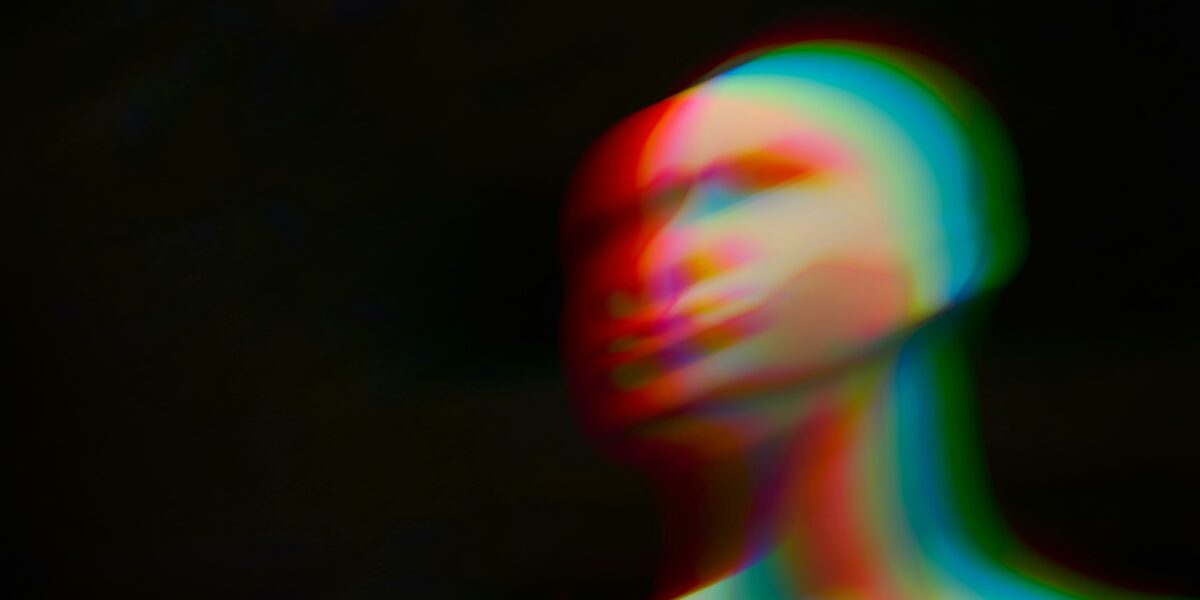
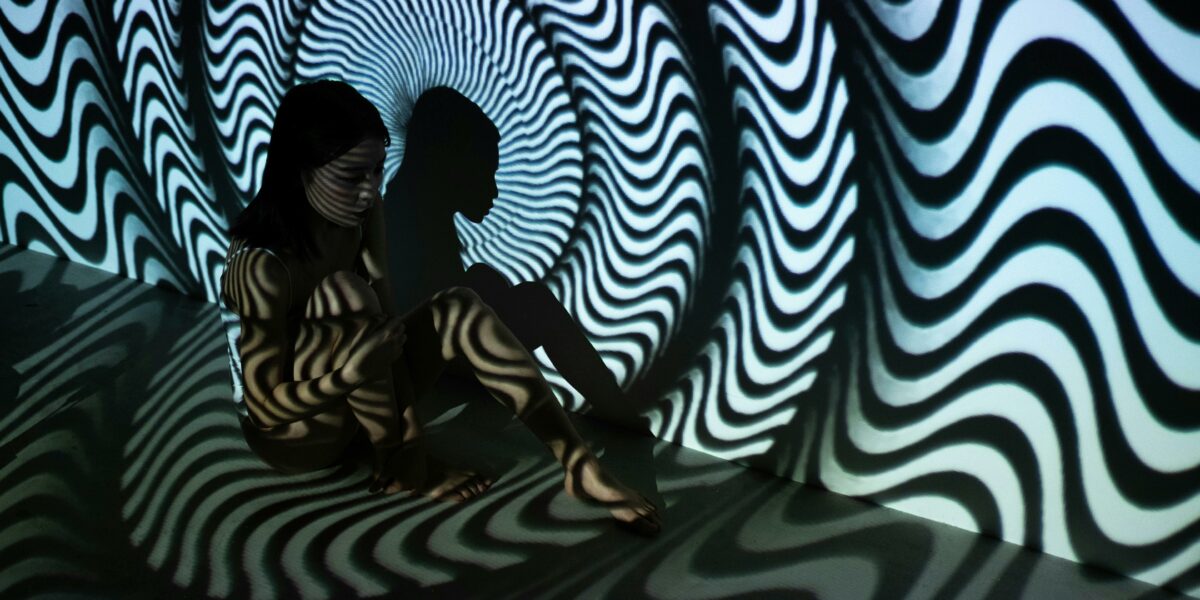
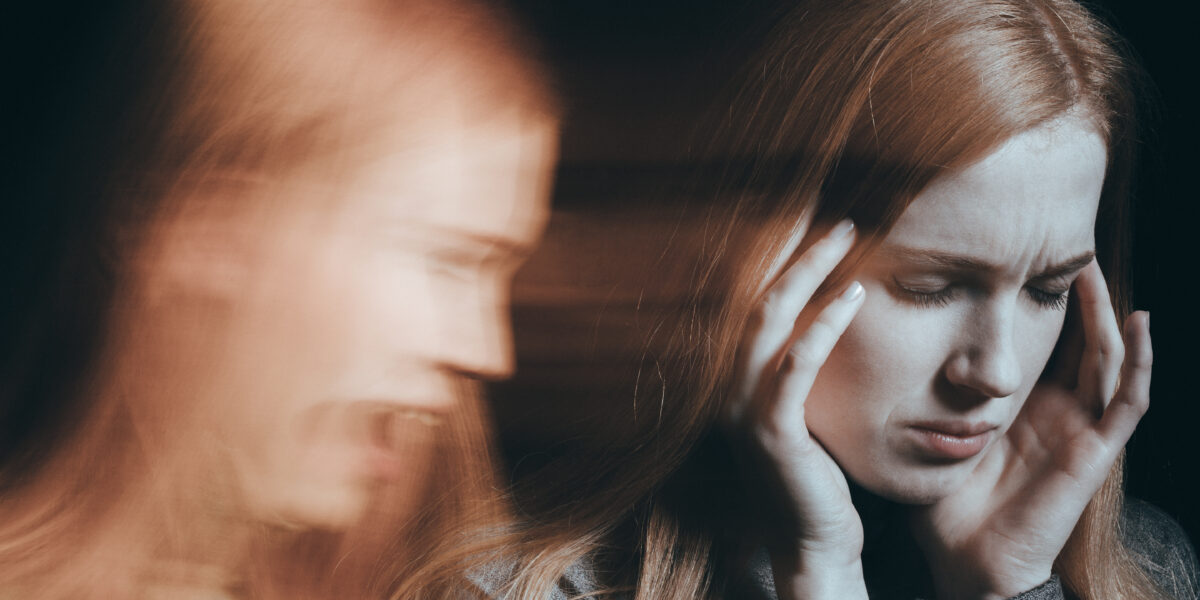
There are many instances, under the influence of psychedelics, in which one perceives something ‘which does not belong’. Consensus reality can get twisted in all sorts of (weird) ways while tripping: walls melt, paintings and posters come alive (as do the figures in them), one’s face (and those of others) distort, one sees faces and symbols superimposed on the world; one may also see a variety of (new) entities in the world – which might be deific, angelic, demonic, tricksterish, alien, archetypal, or culturally specific (e.g. Egyptian, Aztec, Hindu, Christian, etc.). However, the more ‘alien’ the entity is, the more likely it is to induce a feeling of weirdness. A psychedelic entity may also be less visually perceived and feel more like a presence, perhaps an alien intelligence. These intrusions may cause transcendental shock – the term used in psychedelic literature is ontological shock – and, much like Lovecraftian characters, this shock can, in some instances, lead psychedelic users to feel obsessive, destabilised, and distressed.
There are also weird sensations one can feel. Feeling weird is common, which is sometimes unspecified or specified. Weird sensations may include one’s body dissolving, out-of-body experiences, electricity or buzzing in the body (which can get quite intense, feeling like one has been ‘plugged into the universe’), and one’s body being operated on by DMT entities. There can be weird thoughts – strange and idiosyncratic ideas or theories, which could relate to oneself, humanity, or the cosmos – which might feel like grand insights, gibberish, paranoia, or comedy gold. Weird sensations and thoughts are, like weird perceptions, states of being which do not belong. The mind under psychedelics does not belong in consensus reality and society; they exist in a psychedelic mindscape, yet one is having these weird experiences – if one is aware of it – in consensus reality.
Weirdness can get especially heightened – as can overwhelm and distress – if one is navigating the consensus reality of cities, crowds, vehicles, supermarkets, and shopping centres. Everything becomes intensely weird – everything taken for granted as ‘normal’ changes shape, taking on the form of the weird: how people look, the way people interact and gesticulate, the roles people adopt, ordinary objects, the way cars look and move, and so on and so forth. Psychedelics make the ordinary seem out of place: What’s this doing here? Why do we do these things? To use Fisherian language, they’re a way of perceiving the familiar (the inside) from the perspective of the outside.
Things often feel less weird when tripping in nature; for this reason, the contexts in which psychedelics heighten weirdness invite us to question what it is about these contexts, in combination with psychedelics, that achieve this. Perhaps it illuminates the particular oddness of various elements of modern society – their arbitrariness, uselessness, ridiculousness, or unsatisfactoriness (i.e. things may look weird in an unpleasant way, perhaps signalling that these elements aren’t serving our psychological and aesthetic needs in everyday life, but we just don’t realise it, or we don’t realise it as profoundly as we do on psychedelics, in the moment or upon later reflection).
Furthermore, in line with Fisher’s view, psychedelics can cause us to enter a weird mode of being. This may be a mode, which many psychonauts have experienced, in which one feels like a non-human animal – a human-animal hybrid, becoming a distinct animal, transforming into different animals, or just feeling that one is an animal – such as a serpent or feline – in its essence. This commonly occurs under the influence of ayahuasca. These can be felt as spiritual or even therapeutic experiences, as well as weird experiences. The newfound sense of primality and unhumanness is out of place with ordinary human experience; thus, it is weird.
The twisting of time and causality, as examples of the weird identified by Fisher, can also occur on psychedelics. This might involve time dilation (e.g. minutes feeling like hours), time constriction (e.g. hours feeling like minutes), or timelessness. One might also have ‘fateful’ experiences, such as experiences of synchronicity (meaningful coincidences) or insights or visions relating to the unfolding of a cosmic or divine plan.
Fisher’s association of the weird with novelty is, moreover, pertinent to psychedelic states. These states of mind are highly novel, and that’s why they (often) feel weird. When Fisher argues that “the weird here is a signal that the concepts and frameworks which we have previously employed are now obsolete,” it’s easy to see how this applies to psychedelic experiences. Many of the concepts and frameworks gained from conditioning in consensus reality no longer apply in the psychedelic state, or they seem irrelevant. They become, in other words, out of place. Hence, the weird is generated.
In addition, when Fisher claims that the weird entails a mixture of pain and pleasure, which is what Lacan means by jouissance, this relates to psychedelic experiences too. For Lacan, jouissance is a paradoxical pleasure, an extreme pleasure – a pleasure that reaches such an intensity or extremity that it goes beyond Freud’s ‘pleasure principle’. Unlike the forms of pleasure covered by the pleasure principle – such as quenching thirst or satiating hunger, eating junk food, or buying new things – jouissance is a kind of surplus enjoyment not identical to simple pleasure. Jouissance blends bliss with pain; it is like there’s so much pleasure that it becomes ‘too much’.
Psychedelics can lead to the experience of the sublime, which is similar to the notion of jouissance: it is when an experience overwhelms us with its immensity or power, leading to a paradoxical marriage of pain and pleasure. We can also call this an experience of awe, when we are so amazed by something that it causes us both joy and fear. We both enjoy the experience and feel a sense of trepidation, as we feel we are in the presence of something much more powerful than us, which could destroy us. In real-life terms, this could be a natural phenomenon that could literally destroy us, such as a hurricane, tornado, volcano, avalanche, or thunderstorm, whereas in psychedelic terms, we may feel that the power of the experience could overwhelm (or consume) us to such a degree that we will die, disintegrate, or go insane.
Even when psychedelic experiences don’t lead to exactly a state of awe or jouissance, the weirdness that they do lead to can still, nonetheless, cause one to feel a mixture of enjoyment and uneasiness – the weird is effective at provoking this paradoxical feeling. The weird thing we’re seeing in the psychedelic state both fascinates us and makes us nervous; after all, we haven’t seen it before, it seems like it doesn’t (and shouldn’t) belong, and because of this newness, uncertainty is generated: What does this mean? What will happen next? Am I under threat? Is this meant to happen? Am I enjoying this? I don’t know if I like this. Psychedelic weirdness causes us to question our conventional ideas about what things mean and what is enjoyable. By embracing the weird (I imagine doing so, or to what degree we do, is influenced by personality), we may open ourselves up to new kinds of ideas, enjoyment, and humour.
This brings me to the final mode of psychedelic weirdness – weird psychedelic fiction. We could present many examples of such fiction that, in the vein of Fisher, help to highlight the unique weirdness of psychedelic effects. In terms of novels, one that comes to mind is J.G. Ballard’s The Crystal World (1966), a Heart of Darkness tale told through a science fiction/ apocalyptic lens. A physician makes his way deep into the jungles of Cameroon, populated with flora and fauna that transform into static, glittering crystals and jewels. (The Crystal World was not directly inspired by psychedelics; Ballard said he wrote it before his first LSD trip, confirming it was purely a creation of his imagination; nonetheless, the imagery is hallucinogenic enough to convince readers it was psychedelic-inspired.)
We also find weird psychedelic fiction in Naked Lunch (1959) by William S. Boroughs, and the 1991 film adaptation by David Cronenberg; Fear and Loathing in Las Vegas (1971) by Hunter S. Thompson, and the 1998 film adaptation by Terry Giliam; A Scanner Darkly (1977) by Philip K. Dick, and the 2006 film adaptation by Richard Linklater; and The Holy Mountain (1973) by Alejandro Jodorowsky. Beyond fiction, we can also see expressions of the psychedelic weird in music: I’m thinking of Shpongle in particular (whose name comes from member and flutist Raja Ram saying he felt “really Shpongled” while at Glastonbury Festival). In Shpongle’s music, the ‘outside’ – alien voices and noises, made from distorting human voices – intrudes into the familiar. Then there is weird psychedelic artwork, such as the DMT-inspired art of INCEDIGRIS.
In short, Fisher’s analysis of the weird in The Weird and the Eerie opens up many avenues in which to analyse psychedelic experiences and works of psychedelic fiction, film, and art.
Sam Woolfe | Community Blogger at Chemical Collective | www.samwoolfe.com
Sam is one of our community bloggers here at Chemical Collective. If you’re interested in joining our blogging team and getting paid to write about subjects you’re passionate about, please reach out to Sam via email at samwoolfe@gmail.com





































share your toughts
Join the Conversation.