Welcome to
Chemical Collective

Are you 18 or older?

Please confirm that your are 18 years of age or older.

You are not allowed to access the page.

info-icon €100 for domestic (NL, CZ, DE) €125 for the rest of the EU, excluding stealth shipping

Free shipping over €50 & free tracked shipping over €100

Friendly customer service available 9-5pm Monday to Friday

Free shipping over €50 & free tracked shipping over €100

Friendly customer service available 9-5pm Monday to Friday

Your cart is empty

Psychedelics and Death Anxiety: An Experiential Salve for Existential Distress?

sam-gandy

By Sam Gandy

shutterstock 1419474608
in this article
  • No Guarantees
  • History
  • Research
  • Potential for Sustained Shifts
  • Beyond Cancer
  • Impermanence Acceptance
  • Shifts in Perspectives on Death in Healthy People
  • Reduced Death Anxiety Under Psychedelics as a Mediator for Positive Psychological Shifts
  • The Implications of Death Anxiety
  • Experience Over Education
  • Mystical Experience and Existential Anxiety
  • Treatment of Rational Suicide in Elderly Populations
  • Psilocybin in Palliative Care
  • Conclusion
sam-gandy

By Sam Gandy

Disclaimer: The views and opinions expressed in this article are those of the authors and do not necessarily reflect the official policy or position of Chemical Collective or any associated parties.

One inescapable part of life is that we all face death. None of us is getting out of here alive…death is the great leveller. In spite of this, in Western society, death is a taboo subject and, from the perspective of medical science, tends to be viewed as a defeat and a failure. In a sense, society has actually regressed with regard to the integration of death and dying, as medical science has grown in power and death has become a less common part of our lives. Modern medicine is very good at keeping us alive, but struggles to support us in our dying, and facing a terminal diagnosis is one of life’s most difficult challenges.

Studies by terror management theory researchers have found that when death salience is aroused in people, they adapt their behaviour and increase their reliance on defence mechanisms such as denial. The cultural anthropologist Ernest Becker argued in The Denial of Death (1973) that human civilisation is ultimately a symbolic defence mechanism against the awareness of our finite existence. He suggested that “consciousness of death is the primary repression, not sexuality” as Sigmund Freud had popularised. Unconscious denial of death can have a demoralising effect on an individual, potentially affecting loved ones and the community as a whole.

By not facing the issue of our mortality prior to our passing, we miss a unique opportunity, not only to reconcile with death and make peace with it, but also to gain a sense of levity and serenity that we can carry with us through our lives. Diminishing fears around dying can, in turn, diminish fears around living.

No Guarantees

It is important to acknowledge the inherently unpredictable effects of psychedelics. While the weight of evidence from research so far conducted suggests that when they are used in a safe and therapeutically supported context, they can shift views of death and lessen anxiety, this is by no means guaranteed. In principle, it is possible that a psychedelic experience could even increase death anxiety.

History

Even from the very first documented psilocybin mushroom session experienced by a Westerner (in 1955), the potential of psilocybin in treating anxiety around death has been recognised. Based on her initial first experience with the mushroom bestowed upon her by Mazatac shaman Maria Sabina (accompanied by her husband R. Gordon Wasson), ethnomycologist and paediatrician Valentina Wasson predicted that psilocybin would one day be used within medicine to treat a variety of illnesses, including the psychological and existential distress associated with terminal illnesses.

Aldous Huxley was another early advocate for the use of psychedelics to ease the anxieties of the dying. In 1958, he wrote to pioneering psychedelic researcher Dr Humphry Osmond (who first coined the term ‘psychedelic’) about how LSD might be used to treat terminal cancer patients so their dying could be a “more spiritual, less strictly physiological process”. A few years later, when Huxley – a man who talked the talk and walked the walk – lay dying from laryngeal cancer, he requested and received two 100µg dose injections of LSD from his wife Laura, who reported that he died “the most serene, the most beautiful death.”

A pioneering researcher and proponent of using psychedelics to treat the terminally ill was Dr Walter Pahnke. Pahnke joined the Maryland Psychiatric Research Center in 1967 and conducted psychedelic therapy with LSD and N,N-dipropyltryptamine (DPT) until his untimely death in 1971. He used LSD in the treatment of terminal cancer patients and wrote a number of papers and book chapters with colleagues on his research findings during this time. As in the case of Huxley, Pahnke was motivated in part by his own personal mystical-type experiences catalysed through his own psychedelic usage.

The psychiatrist Stanislav Grof has likely supervised more psychedelic therapy sessions than anyone else alive. He treated terminally ill cancer patients with psychedelic therapy as part of his work with the Maryland Psychiatric Research Center. He observed patients describing these sessions as invaluable experiential training for dying, with some reporting near-death experiences as their disease progressed, which they described as eliciting very similar states of consciousness. Grof commented that:

‘dying before dying’ influences deeply the quality of life and the basic strategy of existence. It reduces irrational drives … and increases the ability to live in the present and to enjoy simple life activities. Another important consequence … is a radical opening to spirituality of a universal and non-denominational type.

Research

Across studies, the evidence of the effectiveness of psilocybin in treating existential distress is arguably among the strongest of any yet obtained in the field of psychedelic research. 

A pioneering pilot study led by Charles Grob at UCLA examined the potential of psilocybin, which yielded safe physiological and psychological responses and no clinically adverse events. A reduction in anxiety was noted 1-3 months after treatment, with a long-term improvement in mood observed at six months post experience. 

Another study explored the potential of LSD (at a dose of 200µg) in the treatment of anxiety associated with life-threatening diseases. No lasting adverse reactions from LSD administration were observed, with long-term benefits sustained over a 12-month period following a single dose, and highly significant reductions in anxiety were noted in over three-quarters of participants, with a rise in quality of life noted in two-thirds of participants.

Subsequent research studies conducted by Johns Hopkins and NYU built on this pioneering work, using a randomised controlled trial design to examine the effectiveness of psilocybin administration for the treatment of anxiety and depression among people with a terminal cancer diagnosis with greater rigour. In both trials, psilocybin was found to elicit rapid, substantial and sustained improvements in anxiety and depression, and reductions in cancer-related demoralisation and hopelessness. Trial participants, in addition to staff and community observers, rated participant moods, attitudes, and behaviours throughout the study to enhance the rigour of the findings. 

At long-term follow-up, half a year following the psilocybin session, clinically significant reductions in depression and anxiety were sustained in 60-80% of participants across studies. Reductions in death anxiety and existential distress and improved attitudes towards death were also observed. These changes aside, increases in quality of life, well-being, life meaning, life satisfaction, optimism, and spiritual well-being were also noted by the substantial majority of participants, along with improvements in attitudes about life/self, mood, relationships, and spirituality. It was found that the occurrence of mystical experiences under the psilocybin mediated the therapeutic effect of psilocybin on anxiety and depression while predicting other therapeutic outcomes.

Research gaps have been highlighted in a recent scoping review of the effects of psychedelics on attitudes towards death, with it being highlighted that further work is warranted to better understand factors such as the psychological mechanisms that underpin such shifts in attitude, and the role of set and setting in shaping outcomes.

The late Dr Mark Kleiman, an expert in drug policy and criminal justice who was an advocate of more nuanced drug policy, has been credited with helping usher the USA’s shift away from the all-out war on drugs once mused:

The obvious application [of psychedelics] is people who are currently dying with a terminal diagnosis. But being born is a terminal diagnosis. And people’s lives might be better if they live out of the valley of the shadow of death.


Potential for Sustained Shifts

Research suggests that these positive shifts can be sustained far beyond half a year. One study reported that of 28 people who had received a single 25mg dose of psilocybin (combined with psychotherapy), half showed clinically significant reductions in depression and anxiety at a 2-year follow-up. A longer-term follow-up of surviving NYU trial participants reported that 60-80% met criteria for clinically significant antidepressant or anti-anxiety effects 4.5 years after their psilocybin experience. The substantial majority of participants continued to attribute positive life changes to their previous psilocybin experience, and rated it among the most personally meaningful and spiritually significant experiences of their lives.

Medicine and psychiatry primarily operate under the paradigm of drugs affecting patients for the duration of time they are in a patient’s system. The research described here demonstrates that a single dose of a classical psychedelic like psilocybin administered in a psychotherapeutic setting can produce highly beneficial long-term psychotherapeutic effects, potentially persisting for years following a single dose.

Beyond Cancer

More recent research has built on past work to explore whether psilocybin-assisted psychotherapy might help treat the depression and anxiety associated with other forms of life-threatening illness beyond cancer. One study used a double-blind, randomised, controlled trial design with an open-label extension and 6-month follow-up, with a dosage of 25mg administered or 100mg niacin (as an active placebo). After 6-7 weeks following the double blind dose, all participants received 25mg psilocybin, enabling a comparison to be made between participants receiving one or two doses.

Psilocybin was found to produce significant reductions in depression and anxiety compared to placebo, with benefits sustained at six-and-a-half-month follow-up. Other outcomes included enhanced spiritual well-being, quality of life, and significant reductions in demoralisation, death anxiety, and hopelessness. No serious adverse reactions occurred, although a number of mild-to-moderate adverse events occurred, with one participant withdrawing due to anxiety during dosing.

Impermanence Acceptance

Reductions in death anxiety don’t necessarily hinge on a shift in spiritual beliefs or metaphysical views following psychedelic usage. One study reported that long-term ayahuasca users expressed less fear, anxiety, and avoidance around death, instead expressing more acceptance. Notably, these shifts did not appear to be underpinned by changes in spiritual beliefs, but rather hinged on a psychological attitude known as “impermanence acceptance”. This encompasses the capacity to accept change and the transient nature of life. This shift appeared to be predicted by the cumulative number of ego-dissolution experiences across ayahuasca experiences. In this way, psychedelics such as ayahuasca may be able to soothe death anxiety among non-spiritually inclined materialists.

Shifts in Perspectives on Death in Healthy People

One study conducted at Johns Hopkins, led by Roland Griffiths, exploring the potential synergy of psilocybin administration alongside spiritual practices, found that doses of 20mg and 30mg/70 kg psilocybin yielded large, significant positive changes for a number of trait measures of prosocial attitudes, behaviours, and perspectives, including death transcendence. This study is notable in that, unlike those mentioned previously, participants were physically and mentally healthy and not terminally ill. Significant numbers of these participants nonetheless reported death transcendence under psilocybin, suggesting that healthy people can undergo shifts in their perspectives on death resulting from psychedelic experiences (and that such shifts may be more likely to occur if psychedelic experiences occur alongside a spiritual practice).

As Roland Griffiths mused:

We are all terminal, we’re all dealing with death. This will be far too valuable to limit to sick people.
Reduced Death Anxiety Under Psychedelics as a Mediator for Positive Psychological Shifts

Reductions of death anxiety have been proposed to act as a mediator for other beneficial outcomes stemming from psychedelic use. In one study, participants completed a survey retrospectively reflecting on a past meaningful psychedelic experience, and changes in subjective well-being and death anxiety. While correlational, reductions in death anxiety were found to significantly mediate the effects of mystical experiences occurring under the psychedelic on positive shifts in life satisfaction, positive affect, and negative affect. These findings hint that some of the benefits attributed to psychedelic-induced mystical experiences on subjective well-being may emerge from reductions in death anxiety, with further research required to more rigorously explore this.

The Implications of Death Anxiety

Death anxiety is considered a transdiagnostic and multidimensional construct broadly linked to a range of anxiety disorders, and one of the more profound human anxieties that is resistant to change. One study reported very large correlations between death anxiety and general psychopathology (including depression, anxiety, stress, impairment, lifetime number of diagnoses, and number of medications), as well as symptom severity of 12 different disorders, including depressive and anxiety disorders. This suggests that the capacity of psychedelics to reduce death anxiety could have important implications for mental health.
Experience Over Education

One meta-analysis pooling data from 62 research investigations into the effect of death education programs on death anxiety found that education interventions produced significantly higher death anxiety than experiential interventions, highlighting that the experiential potential of psychedelics may be a more effective means of reducing death anxiety than educational initiatives. Psychedelic experiences aren’t the only altered state experiences associated with soothing fears and anxieties around death and dying; this is something that is also attributed to near-death experiences and out-of-body experiences. 
Mystical Experience and Existential Anxiety

The mystical or transcendent experiences that psychedelics can elicit appear to be deeply interwoven with their long-term therapeutic efficacy, while also being strongly linked to the reduction of death anxiety that can result from their usage. These experiences may allow patients to experience a sense of connection to the sacred or something greater than the self, while enhancing relationships with family and loved ones, helping them to live more fully in the moment with equanimity, and make the most of their remaining time. Through their experience with the psychedelic, individuals may be able to transcend their primary identification with their physical bodies and transcend their egos, which in turn may generate a new perspective towards themselves and their mortality. The loss of subjective self-identity tied to the experience of ego-dissolution may, in essence, provide a simulated dying or death and rebirth experience. 

Reductions in death anxiety have been correlated with changes in belief in panpsychism (the view that consciousness is a fundamental and pervasive aspect of reality) following psychedelic experiences, due to the profound perspective-shifting impact of such experiences. Another aspect of psychedelic experiences that may shift people’s perspectives on death is that they can sometimes occasion perceived contact with the deceased.

Accounts of patients who have undergone therapy using psilocybin on both sides of the Atlantic hint at the profoundly transformative power of this experience:

“I felt like I was being shown what happens after [death], like an afterlife. I’m not a religious person and I’d be hard pushed to say I was anything near spiritual either, but I felt like I’d experienced some of that, and experienced the feeling of an afterlife, like a preview almost, and I felt totally calm, totally relaxed, totally at peace. So that when that time comes for me, I will have no fear of it at all.” – Imperial College trial participant.

Treatment of Rational Suicide in Elderly Populations“I now have the distinct sense that there’s so much more, so many different states of being. I have the sense that death is not the end but part of a process, a way of moving into a different sphere, a different way of being.” – Johns Hopkins trial participant.

Whether the experiences reported by study participants are valid or illusory is of secondary importance to the psychotherapeutic benefits these experiences have for the experiencer in question. David Nichols, an emeritus professor of pharmacology at Purdue University and a founder of the Heffter Research Institute (a key funder of psychedelic research), stated in an interview with Science

If it gives them peace, if it helps people to die peacefully with their friends and their family at their side, I don’t care if it’s real or an illusion.

Treatment of Rational Suicide in Elderly Populations

Treatment of rational suicide in the elderly is another unexplored frontier where psychedelics could hold promise. Rational suicide can be defined as the suicide of the elderly to escape suffering or due to a weariness of living, due to age-related losses. Psychedelic experiences in a psychotherapeutic context may help foster a sense of life meaning and positive outlook and promote the perception that life is worth living, even in conditions of great adversity.

Psilocybin in Palliative Care

Our collective sense of death denial means that palliative care – a clinical specialism which helps those facing death to live well right up to the end – does not receive the attention and funding it deserves, which in turn limits our ability to support those facing the end of their lives with dignity and without fear. Palliative care supports hundreds of thousands of people in the UK each year, but receives less than 0.3% of the £500 million cancer research budget – just one indicator of the pervasive nature of death denial and avoidance in Western culture.

Despite its prevalence, existential anxiety is not yet a recognised condition: in the psychiatric textbooks (such as the DSM), it is relegated to the status of a subtype of depression. While psilocybin therapy for ‘Major Depressive Disorder’ and ‘Treatment Resistant Depression’ has received ‘Breakthrough Therapy’ status in the US – partially easing the draconian restrictions on research with psilocybin – the ambiguous status of existential anxiety means that clinicians are forced to move much more slowly in exploring this potentially invaluable option. Nonetheless, interest is growing, and governments in various parts of the world are beginning to loosen restrictions pertaining to accessing psilocybin for application in end-of-life palliative care contexts.

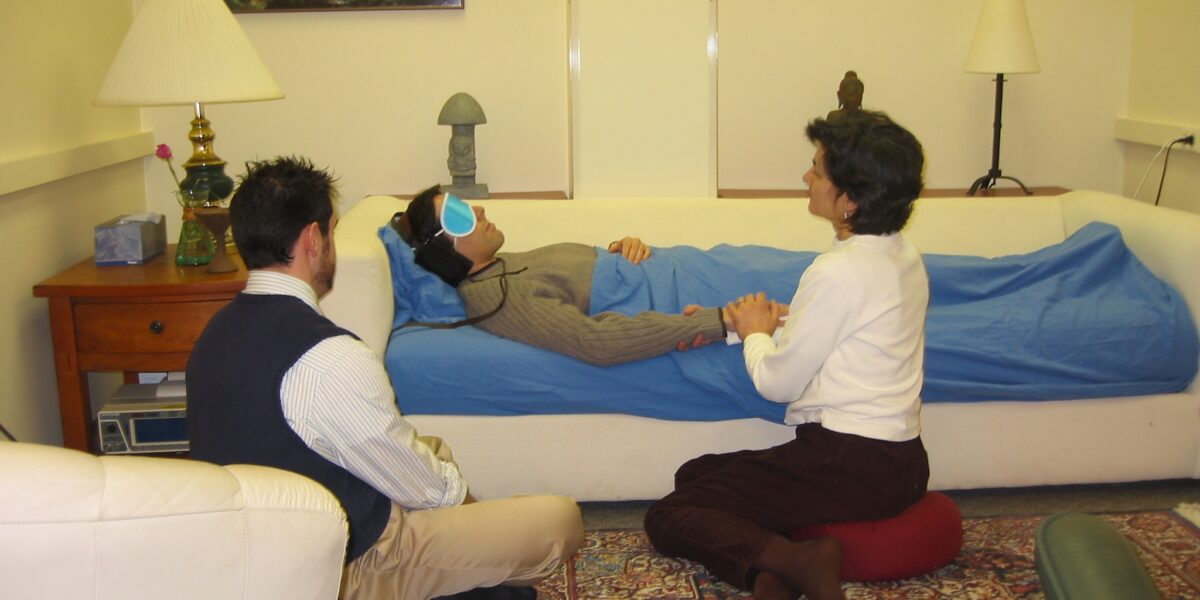
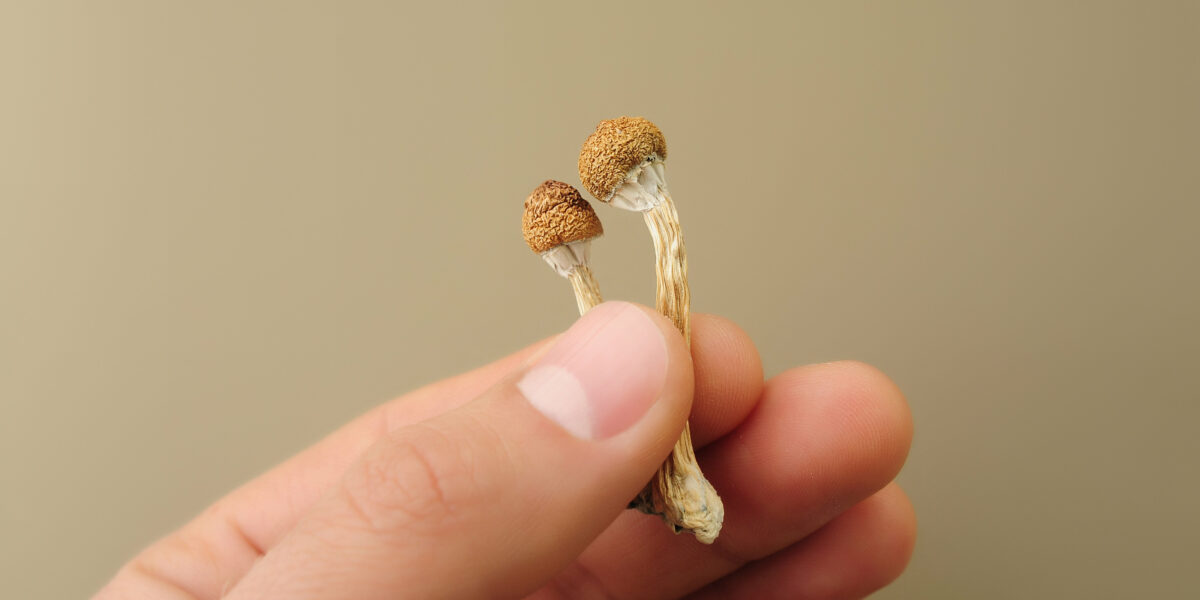
Psilocybin may be particularly well-suited for use in palliative care scenarios. It doesn’t carry the same political or cultural baggage as LSD and is shorter-acting. It is non-toxic, physiologically well-tolerated, and suitable for use by the terminally ill. In the future, it could potentially be administered in family groups in a supportive setting, with psilocybin mushrooms sometimes used in family settings by Indigenous groups such as the Mazatec in Mexico. Due to psilocybin’s ability to lower psychological armour and facilitate communication, it could make an effective catalyst through which family members can connect and say their goodbyes to loved ones with an openness that may otherwise not be easily accessible.

In the words of Anthony P. Bossis, a clinical assistant professor of psychiatry at the NYU School of Medicine and the former director of palliative care research for the NYU trial:

While there have been advances in chemotherapies and pain management, there remains a paucity of therapies to address and relieve the emotional anguish experienced by the dying. The psychedelic therapy model represents a potential paradigm shift for the future of hospice and palliative care, providing a novel and effective therapy to relieve the emotional and spiritual distress so often experienced at the end of life. Not only can it offer emotional and spiritual healing for those facing their mortality, but it can also help their families who witness the relief of suffering in their loved one.

Conclusion

An appraisal regarding how Western society approaches death and dying is urgently warranted. Whilst we must be careful not to overestimate their potential, psychedelics such as psilocybin could have an important part to play in helping bring about such a paradigm shift. As the Natural Death Handbook implores its readers:

To civilize death, to bring it home and make it no longer a source of dread, is one of the great challenges of the age. Gradually, dying may come to hold again the place it used to occupy in the midst of life: not a terror, but a mystery so deep that man would no more wish to cheat himself of it than to cheat himself of life.

Sam Gandy | Community Blogger at Chemical Collective

Sam is one of our community bloggers here at Chemical Collective. If you’re interested in joining our blogging team and getting paid to write about subjects you’re passionate about, please reach out to Sam via email at samwoolfe@gmail.com

share your toughts

Join the Conversation.

0 Comments
Inline Feedbacks
View all comments

Related articles

Our Products

Related Products

1V-LSD 150mcg Blotters
1V-LSD 150mcg Blotters From 22.00
(145)
1cP-LSD 100mcg Blotters
1cP-LSD 100mcg Blotters From 18.00
(137)
Tryptamine Mix and Match Pack (4 x 0.1g)
Tryptamine Mix and Match Pack (4 x 0.1g) 65.00
(1)
1V-LSD 10mcg Micro Pellets
1V-LSD 10mcg Micro Pellets From 15.00
(44)
1V-LSD 225mcg Art Design Blotters
1V-LSD 225mcg Art Design Blotters From 35.00
(62)
1S-LSD 150mcg Blotters
1S-LSD 150mcg Blotters From 29.00
(18)
1cP-LSD 150mcg Art Design Blotters
1cP-LSD 150mcg Art Design Blotters From 25.00
(74)
1V-LSD 225mcg Pellets
1V-LSD 225mcg Pellets From 35.00
(26)
1cP-LSD 10mcg Micro Pellets
1cP-LSD 10mcg Micro Pellets From 15.00
(23)
1D-LSD 225mcg Pellets (1T-LSD)
1D-LSD 225mcg Pellets (1T-LSD) From 42.00
(13)
5-MeO-DMT Freebase
5-MeO-DMT Freebase From 23.95
(36)
1S-LSD 10mcg Micro Pellets
1S-LSD 10mcg Micro Pellets 20.00
(3)
O-PCE HCL
O-PCE HCL From 17.50
(25)
1cP-LSD 20mcg Micro Blotters
1cP-LSD 20mcg Micro Blotters From 18.00
(28)
1cP-LSD 150mcg Pellets
1cP-LSD 150mcg Pellets From 25.00
(13)
rewards-icon
popup-logo

Reward program

popup-close
  • Earn
  • Affiliates