Traditional talk therapy has done little to solve the issue of somatic flashbacks. This has promoted new experimental treatments, as people seek out a means of healing their unresolvable trauma. Foremost among these is Psychedelic Somatic Interactional Psychotherapy (PSIP). This was developed by the Psychedelic Somatic Institute. It represents a pretty radical departure from the methods of traditional psychedelic-assisted therapy (incidentally, a field which itself is still in its complete infancy).
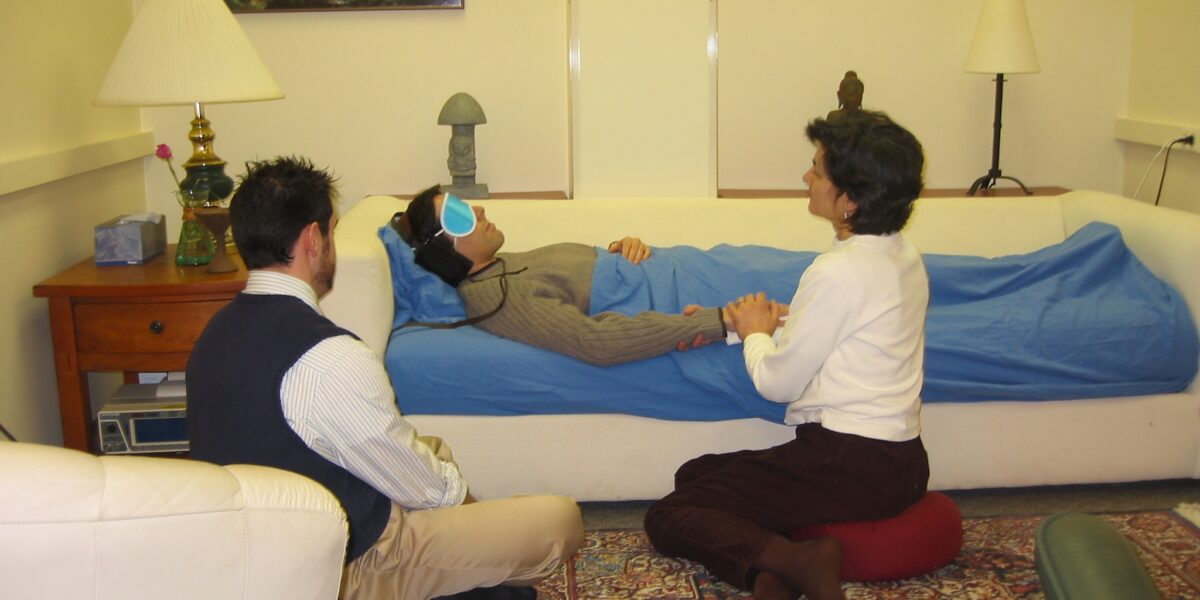
Usually, a patient/client lies passively, wearing eyeshades while a therapist holds space. In PSIP, however, the process is extremely active. It uses cannabis or ketamine to break the dissociation from the trauma. It aims to forcibly strip away the biological anaesthetic and encourage the nervous system to process the frozen trauma response.
Proponents such as Saj Razvi, founder of the institute, argue that this is the only way to reach the root of complex PTSD. Dramatic video footage of clients shaking and convulsing is often cited as evidence of successful release.
However, the legitimacy of PSIP remains controversial. It exists in the unregulated realm of psychedelic wellness. Unlike MDMA-assisted therapy, which is undergoing rigorous Phase 3 clinical trials, PSIP has zero large-scale studies to validate its effectiveness. Its evidence is largely anecdotal and theoretical, relying solely on the clinical observations of its founders. This is murky. In medicine, the burden of proof lies with the claimant. In the psychedelics space, charismatic proponents of therapeutic frameworks can gain traction through podcasts and social media. With a single Google search, we can quickly see that Saj Razvi, while completely lacking in clinical data, is a regular on the podcast circuit.
Critics argue that PSIP very much operates on “guru” logic, rather than medical science. A cursory review of various practitioner websites reveals a blend of high-pressure marketing, expensive (unaccredited) training certifications, and sweeping claims. This obvious commercialisation, combined with an apparent lack of oversight, raises serious ethical red flags. The training appears brief and expensive, creating a pipeline of what amounts to pretty much unqualified practitioners. They lack the clinical experience and expertise required to tackle trauma of any kind, let alone the severity of somatic flashbacks. The fact that they will be responsible for a patient/client with severe trauma, in a chemically altered, extremely vulnerable state, carries a frankly massive risk of making the condition much, much worse.
If an unskilled therapist projects their ill-educated agenda onto a client who has been chemically stripped of their defences, the potential for psychological harm is immense. I will say once more to make this perfectly clear:
Removing the only coping mechanism which severely traumatised people have without a hospital-grade, clinically sound safety net is either an act of extreme hubris, deception, or lack of understanding.















































share your toughts
Join the Conversation.
interesting