Welcome to
Chemical Collective

Are you 18 or older?

Please confirm that your are 18 years of age or older.

You are not allowed to access the page.

info-icon €100 for domestic (NL, CZ, DE) €125 for the rest of the EU, excluding stealth shipping

Free shipping over €50 & free tracked shipping over €100

Friendly customer service available 9-5pm Monday to Friday

Free shipping over €50 & free tracked shipping over €100

Friendly customer service available 9-5pm Monday to Friday

Your cart is empty

The Subtle Harms of Psychedelic-Assisted Therapy and Facilitation (Part 1)

ed-prideaux

By Ed Prideaux

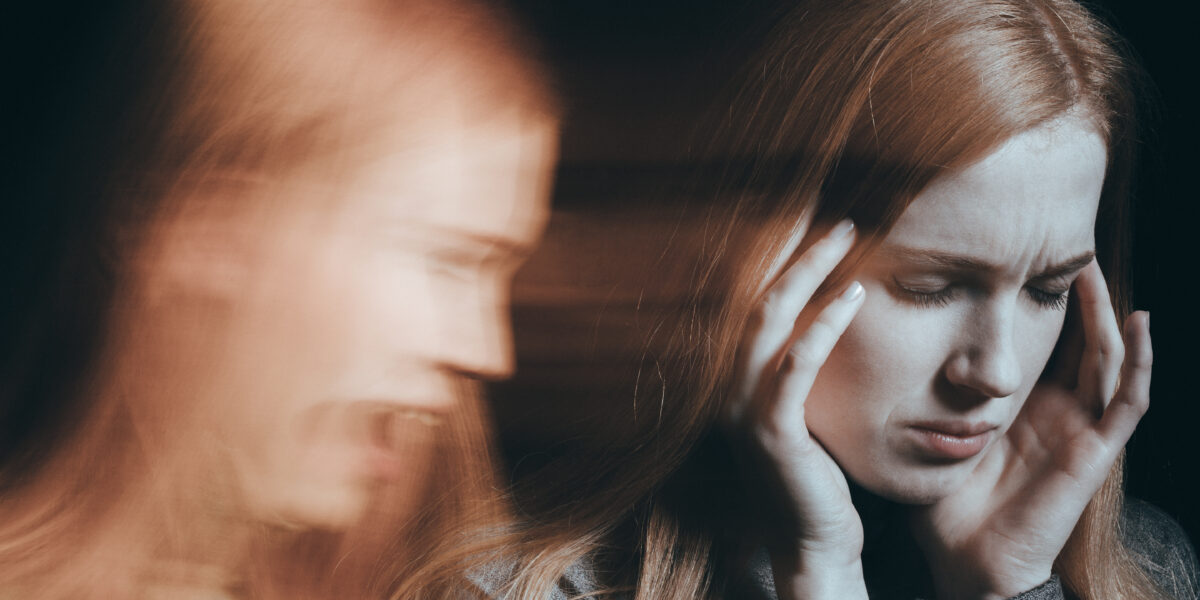
shutterstock 2280840541
in this article
  • Therapy Can Be Dangerous
  • Is Therapy Misleading?
  • The Therapeutic Imbalance
  • Harm in Psychotherapy
ed-prideaux

By Ed Prideaux

Disclaimer: The views and opinions expressed in this article are those of the authors and do not necessarily reflect the official policy or position of the Chemical Collective or any associated parties.

Psychotherapy is often treated as one of the unquestioned goods of modern life, such that to criticise it is to risk appearing to deny mental suffering itself. 

In the US, roughly 10 percent of adults receive counselling or psychotherapy in a given year. UK data from the BACP Public Perceptions Survey indicate that around four-fifths of those surveyed agree that people in general might be happier if they talked to a therapist. 

Industry analyses estimate the psychotherapy market could be valued at nearly $100 billion by 2032. A 2025 market report describes the mental health market as “poised for significant expansion,” driven by “growing awareness of mental well‑being,” “favorable government policies,” and “improved insurance coverage,” and frames this as creating “lucrative opportunities” for companies and investors. A global mental‑health market sizing brief notes that the sector is “experiencing robust growth” with the market “booming” in multiple regions. 

The notion that everyone should “go to therapy” attained peak popularity around the pandemic and its aftermath. Promotional materials push lines like “Therapy is a sign of strength,” “Healing begins with talking,” and “Your mind deserves care”. “Get therapy” for a period became the internet’s default advice for almost anyone experiencing difficulty.

But an emerging literature on negative and harmful effects of psychotherapy documents that it is not universally benign. Both outcome data on adverse and negative effects and patient reports of lasting negative experiences suggest that therapy can harm in systematic, predictable ways.

Therapy Can Be Dangerous

Subtle harms are injuries that do not appear as clear-cut abuse or dramatic breakdowns. They consist of slower and less conspicuous phenomena that may be reframed as “part of the process” or “growing pains”, and necessary for a positive outcome.

Summaries suggest that up to 50% of psychotherapy patients do not show clinically significant improvement. Around 5–20% experience adverse outcomes, such as symptom worsening, new symptoms, suicidality, relationship strain, dependence, or loss of self‑efficacy. In one national sample, 83.2% of respondents reported at least one negative effect, and 56.6% reported at least one effect they attributed directly to treatment.

Crucially, relational and process harms were also common. In that same study, about one in five patients said they “did not always understand [their] treatment” (19.3%) or felt their expectations of the therapist were not fulfilled (20.9%). One in about eleven reported that they had “developed a dependency” on the treatment (7.0%), and 70.6% of those saw this dependency as caused by therapy. Parry, Crawford, and Duggan note that although “the problem of adverse effects of psychotherapy has been recognised for decades,” research on causes and prevention “has failed to progress,” with confusion over definitions and “a lack of systematic recording and reporting”. One issue is whether the deterioration after therapy results from termination. 

One review of psychedelic trials notes that “systematic assessment of adverse events… has received relatively little attention”. Across ten esketamine trials, for instance, authors found that 41.5% of serious adverse events and 39% of non‑serious adverse events recorded in trial registries were not reported in the published articles. In a large systematic review, nearly half did not report systematically analysable adverse‑event data at all. According to disclosures reported in the Cover Story: Power Trip podcast, various adverse events in MAPS MDMA trials – including suicidal ideation, traumatic re-exacerbations, HPPD-like phenomena – were rationalised as necessary for treatment. Systematic evaluation of harms in retreat, workshop and facilitation settings is lacking. 

Psychotherapy offers fertile soil for subtle harms because of its confidential, improvised, and imbalanced structure. Psychedelic‑assisted therapy inherits these harms and then amplifies them with pharmacology. With the prospect of imminent rollouts of psychedelic therapies to veterans, we’ve seen calls for much more rigorous monitoring of adverse events and post-acute harms in psychedelic treatment.

Is Therapy Misleading?

People likely pursue therapy in the belief that it sits on an evidence base comparable to other areas of medicine. Much care is taken to delineate the bounds of “evidence-based” therapies and the need for credentials and training.

Perhaps the sublest harm is therefore epistemic – one of false advertising – because the data supporting this belief are not as strong as one expects.  

Professor W.M. Epstein, after surveying decades of published research, judged in 2006 that “there has never been a scientifically credible study that attests to the effectiveness of any form of psychotherapy for any mental or emotional problem under any condition of treatment.” He compares the discipline to alternative practices like herbalism and aromatherapy.

The statement is shocking – confusing, even. A cursory review of the evidence base would seem to suggest the opposite: that psychotherapy is robust and effective for a range of emotional problems. But methodological flaws have cast doubt on our confidence in headline findings. In randomised control trials, the effects are often modest (on the order of single‑digit to low‑teens percentage‑point advantages at best) and inflated by weak designs, biased samples, and selective reporting. In one umbrella review, authors described that “only a few meta-analyses [of nearly two-hundred] provided convincing evidence without biases”. One survey of over 700 people found that around two-thirds consider the evidence base behind a therapy an important criterion. Another survey of 200 participants found a rough fifty-fifty split in the importance placed on scientific research for their preferred therapeutic practice.

How well informed are these people on the limits of the research?

As documented in Paul Moloney’s The Therapy Industry, performing an RCT on psychotherapy is notoriously difficult. Trials commonly use those on a waiting list rather than active placebos, so both clients and practitioners (who may bear their own ideological commitments to the “active” protocol) know they are in the “real” treatment arm and respond accordingly. Participants are usually YAVIS – “young, attractive, verbal, intelligent, successful” people – who, as critics note, are “those who do best in psychotherapy” and who fail to represent the working‑class and poor most in need of relief. 

Outcome measures rely heavily on self‑report symptom scales and satisfaction ratings. People aren’t always their own best judges. They may be liable to ‘social desirability’ bias, for instance: telling experimenters what they want to hear, or what would make them look good. Self-report measures of mental states are, in fact, often more conservative than the ratings of clinicians. Yet Moloney argues that self-reports are structurally confounded: clients have strong social incentives to report improvement given the money, time, and emotional investment involved. What has been under-catalogued, he argues, is the testimony and evidence of third-party observers and objective material changes, more than people’s interior evaluations of wellbeing. Where credible placebo or structurally equivalent comparison therapies are used, he summarises, they can sometimes yield outcomes indistinguishable from recognised treatments such as CBT for anxiety and depression.

Robyn Dawes’s judgement is equally blunt: “the training, credentials, and experience of psychotherapists are irrelevant, or at least that is what all the evidence indicates,” a conclusion he defends at length in House of Cards: Psychology and Psychotherapy Built on Myth. In the classic Durlak review (1979), so-called ‘paraprofessionals’ – those who were not qualified psychotherapists – were as effective as fully trained clinicians and in many cases exceeded them. Colin Feltham characterised the field as “a mass of opinions, best guesses and selected experiences organised into one belief system among dozens of competing and conflicting others by partisan practitioners.”

The epistemic injury we’ve discussed – that of false beliefs about the status of the field – is enhanced with psychedelic-assisted forms of treatment. Psychedelic researchers face methodological problems of equal or greater magnitude than standard talk therapy. While no high-quality evidence exists that psychedelic treatment is better than incumbents like SSRIs, the approach has been sold as “ten thousand times” more effective, a “paradigm shift” and psychiatry’s “antibiotic”, a “cure” for PTSD.

The Therapeutic Imbalance

If therapy is not a robust technical science, Jeffrey Masson asks in Against Therapy, “then what is it?” 

His answer: “a power relationship,” structurally akin to priesthood and monarchy, in which “abuse of one form or another is built into the very fabric of psychotherapy.” 

Masson trained for eight years as a psychoanalyst before becoming disillusioned. “Every therapeutic interaction involves an imbalance of power. It has to. One person is in need, in pain, and the other person is apparently healthy and being paid, supposedly wise and knowing”. 

“When people get power like that they’re bound to misuse it, and they do”, Masson wrote. “Therapy happens in private. No one looks over the therapist’s shoulder.” He notes that when clients divulge their deepest secrets, “it gives [the therapist] a power over her that far outweighs that which human beings normally willingly bestow upon each other,” making complaint and exit deeply difficult.

We might otherwise be satisfied with this imbalance if it were demonstrably proven that therapy ‘interventions’ (in other words, conversations) were orders of magnitude more important than those we share with our friends and family. Carl Rogers sought to do away with the various theoretical accretions associated with psychoanalysis and other fields rich in concepts. His “humanistic” approach prioritised the basic cultivation of “unconditional positive regard” towards a client. Masson considers this “unattainable because of the artificiality of the circumstances of therapy”. In practice, he argued, the therapist is turned into a kind of professional actor. “Faced with a brutal rapist who murders children, why should any therapist have unconditional regard for him?” Because “no real person really does any of the things Rogers prescribes in real life,” the therapist’s all‑accepting stance is “merely artifice… the very opposite of what Rogers claims to be the central element in his therapy: genuineness.” 

While relations are friendly, the pair are not friends, but relative strangers; while the two will talk for an extended period, it makes for no “normal” conversation of mutual exchange; and the therapist is not “there” for the client as a loved one, except to the extent that any resultant time expended may be financed and fitted into a convenient schedule. 

By any measure, the therapeutic relationship is bizarre. One can reasonably doubt whether its eccentricities bring distinct benefits that justify the field’s imbalances.

We have reviewed the limits of rhetorical claims to being “evidence-based”. What’s more, psychotherapy can have little clarity by way of a clear, shared methodology.

Schools of therapy advertise distinct models: worlds of difference exist between the Jungian fixation on myths and the CBT schema of negative cognitions. In practice, many clinicians are eclectic: they borrow techniques from multiple traditions, tailoring their approach case by case. The famous “dodo bird verdict” suggests that outcomes tend to be similar across methods, with “non-specific” factors such as “client motivation” and “therapeutic alliance” accounting for the majority of outcomes. This suggests that seeking specialist “psychedelic-informed” treatment to “integrate” a trip may not be necessary

If therapists freely mix and match incompatible theories without procedural standards, then psychotherapy is not a cumulative science: a scientific discipline normally tightens its methods as it matures, whereas psychotherapy’s drift toward “whatever works for me” points the other way. Session content disappears into a black box labelled “clinical judgement” or “therapeutic intuition,” which is difficult to scrutinise or replicate. The FDA’s recent scrutiny of MDMA‑assisted psychotherapy for PTSD made this tension explicit. 

Harm in Psychotherapy

Client testimonies help to specify what “harm” looks like in practice. Anna Sands, in Consuming Psychotherapy, foregrounds some interlocking dangers. First, it is that of denaturing people’s adaptive coping patterns without a good alternative. People muddle along, and most therapeutic clients are “the worried well”. Before starting therapy, Sands did not dwell on her problems and “got on with living”. But years of therapy eroded her vital instincts; she had made her very self an analytical object. The therapeutic frame, with its fixed times and fees, also reoriented her sense of what counted as real: “reality” became the carefully bounded space of therapy, while life outside was experienced as secondary. On this basis, she concludes, starkly, that “vulnerable people should not be exposed to psychotherapy,” because those most in need may not be resilient enough to withstand the strain it imposes.

In Shouldn’t I Be Feeling Better By Now?, an anthology of therapy harms by Yvonne Bates, Sylvia Wilde describes love for her therapist that “felt induced. Like being raped.” Rosie Alexander writes that ‘therapeutic neutrality’ can feel “chillingly impersonal”: “If a robot or a monkey were sitting in the chair, it would be just the same.” Sands notes the central paradox: “on the one hand, the overt aims are the creation of a more autonomous, critically perceptive person… On the other hand, most therapists expect unquestioning obedience to the laws of the therapeutic frame.” She became “abjectly dependent” on her second therapist, found her friendships wither, and concluded: “If therapy were a pill, I doubt it would be granted a licence. Its effects are too diverse and too unpredictable.”

Bates, herself a therapist, concedes in her introduction that “whilst therapy may help many clients, it is we, the therapists, who benefit the most. It enhances our self-confidence and sense of self-worth immeasurably.” 

“The captain,” she adds, “does not want the boat to be rocked.”

Masson therefore asks: “We go to therapists expecting them to possess certain qualities: compassion, understanding, kindness, warmth, a sense of justice, integrity. But why should we believe that anybody possesses these qualities? Are they, after all, something that can be learned?” If what helps is largely non‑specific, then the professionalisation of kindness may itself be the central paradox, and perhaps the central harm, of psychotherapy.

Informed consent for these effects is variable. One review noted that “there is little empirical evidence on what psychotherapists’ attitudes towards informed consent” are in the field and how the process is effected. A small study of UK psychotherapy trainees found that some participants didn’t consider informed consent at all necessary. “Informed consent, um, to me it’s nothing”, one second-year trainee commented.

Informed consent for these effects is rare. Sands notes: “I was never warned what would happen to me. I was not warned how long it would take and how much it would cost.” Masson similarly asks how many clients know “that they may spend a great deal of money and not be helped” or that in anonymous surveys, “10 percent of male therapists admit to having had some kind of sexual contact with women clients.”

Ed Prideaux | Community Blogger at Chemical Collective

Ed is one of our community bloggers here at Chemical Collective. If you’re interested in joining our blogging team and getting paid to write about subjects you’re passionate about, please reach out to Sam via email at samwoolfe@gmail.com


share your toughts

Join the Conversation.

0 Comments
Inline Feedbacks
View all comments

Related articles

Our Products

Related Products

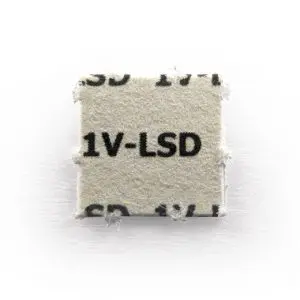
1V-LSD 150mcg Blotters
1V-LSD 150mcg Blotters From 22.00
(145)
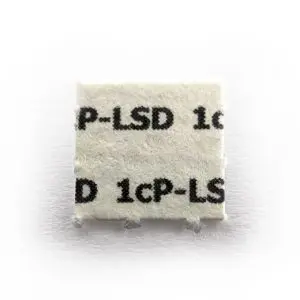
1cP-LSD 100mcg Blotters
1cP-LSD 100mcg Blotters From 18.00
(137)
Tryptamine Mix and Match Pack (4 x 0.1g)
Tryptamine Mix and Match Pack (4 x 0.1g) 65.00
(1)
1V-LSD 10mcg Micro Pellets
1V-LSD 10mcg Micro Pellets From 15.00
(44)
1V-LSD 225mcg Art Design Blotters
1V-LSD 225mcg Art Design Blotters From 35.00
(62)
1S-LSD 150mcg Blotters
1S-LSD 150mcg Blotters From 29.00
(18)
1cP-LSD 150mcg Art Design Blotters
1cP-LSD 150mcg Art Design Blotters From 25.00
(74)
1V-LSD 225mcg Pellets
1V-LSD 225mcg Pellets From 35.00
(26)
1cP-LSD 10mcg Micro Pellets
1cP-LSD 10mcg Micro Pellets From 15.00
(23)
1D-LSD 225mcg Pellets (1T-LSD)
1D-LSD 225mcg Pellets (1T-LSD) From 42.00
(13)
5-MeO-DMT Freebase
5-MeO-DMT Freebase From 23.95
(36)
1S-LSD 10mcg Micro Pellets
1S-LSD 10mcg Micro Pellets 20.00
(3)
O-PCE HCL
O-PCE HCL From 17.50
(25)
1cP-LSD 20mcg Micro Blotters
1cP-LSD 20mcg Micro Blotters From 18.00
(28)
1cP-LSD 150mcg Pellets
1cP-LSD 150mcg Pellets From 25.00
(13)
rewards-icon
popup-logo

Reward program

popup-close
  • Earn
  • Affiliates