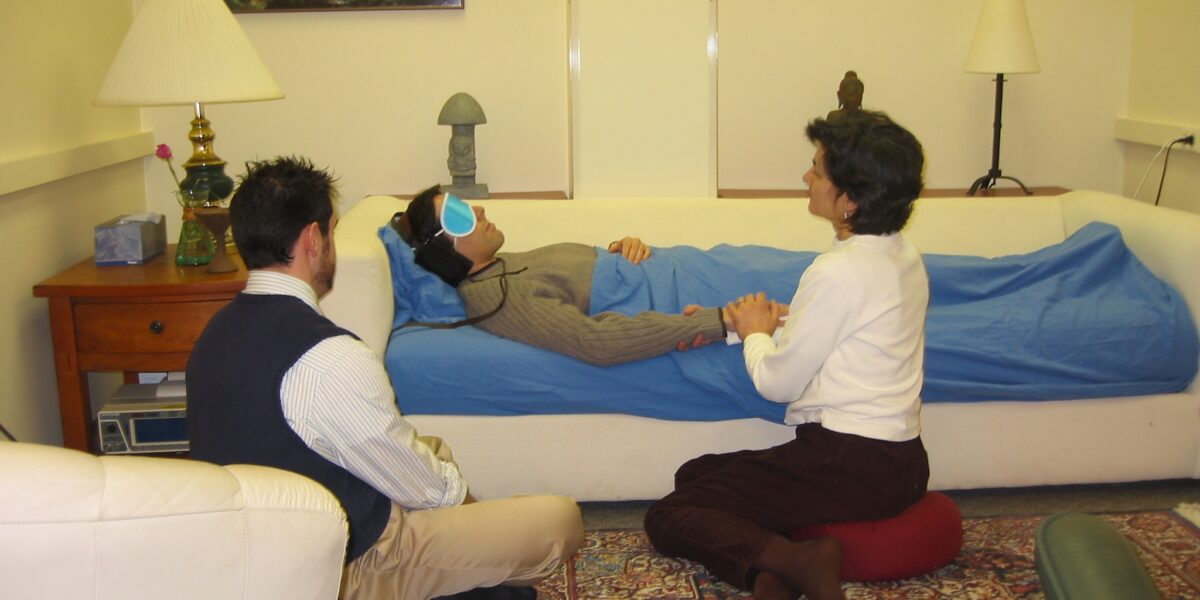
Psychedelic therapy arose from transpersonal psychology, which aimed to honour spiritual and altered states beyond reductionist psychiatry. But it has entered practice on psychiatry’s terms. Clinical trials of psilocybin and MDMA are organised around standard DSM diagnoses such as major depressive disorder and PTSD, and rely on familiar rating scales like the Hamilton Depression Rating Scale and CAPS. At the same time, exclusion criteria systematically screen out those deemed highest risk: people with psychosis, bipolar history, severe suicidal attempts, substance dependence, or complex personality presentations. As reviewers note, this makes safety look better on paper while sharply limiting how far trial results can be generalised to real-world, distressed populations.
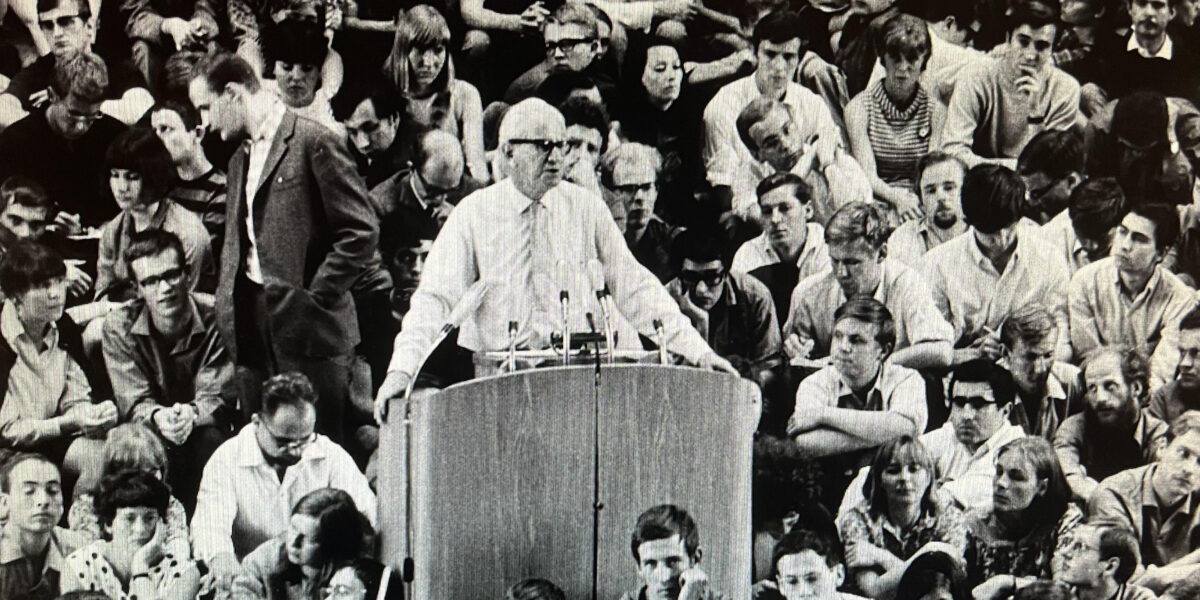
It also means that, when ‘things go badly’, the backstop is the ordinary psychiatric pathway: drugging and incarceration. Since no clear physical tests define most psychiatric diagnoses, commitment is triggered by subjective judgements beyond democratic reproach. This allows people to be kidnapped and deprived of liberty without having committed a crime. For Thomas Szasz, the controversial critic of psychiatry, the insistence that people change their beliefs and behaviour absent criminal offence was akin to ‘re-education’ efforts otherwise seen in cults and dictatorships. In works like The Myth of Mental Illness (1961) and Psychiatric Slavery (1977), Szasz argued that no amount of legal safeguard can legitimise coercion without compelling evidence that “mental illnesses” actually existed. Diagnosis often encodes social judgements about behaviour: what beliefs we deem “bizarre”, or “inappropriate” affects.
The former chairman of the DSM-IV Taskforce, Dr Allen Frances, famously regarded diagnosis as “bullshit”.
“There is no definition of a mental disorder. I mean, you just can’t define it.”
Dr Steven Hyman, former director of the National Institute of Mental Health, said the DSM was “totally wrong, an absolute scientific nightmare.”
Depriving another human being of their freedom through state kidnapping should meet a high evidentiary bar. With experts issuing comments like these, does this not constitute a prima facie reasonable doubt?
Not everyone agrees. Those same high-profile figures support occasional involuntary admission. Since the de-institutionalisations of the 1960s, during which state hospitals were shuttered with no substitutes, the carceral process has simply shifted from the horrendous state facilities of old to prisons, where mentally ill offenders will likely deteriorate. Critics like Freddie deBoer have argued that involuntary care is thereby underprovided: more than 60% of all U.S. counties, including 80% of rural counties, do not have a single psychiatrist. Those in psychiatric emergencies – including onsetting psychoses and suicidality – may be turned away from state hospitals if they lack specific admission notes. Failures to admit have resulted in countless deaths, deBoer claims, including the James Holmes and Virginia Tech shootings.
We may never know how many lives proper involuntary care would save: many of the severely mentally ill simply die on the streets with little sensible paperwork.
Still, for those who are appropriately sectioned, hospital care may not be ideal. A joint investigation has revealed thousands of complaints of sexual assault, abuse and harassment in England’s mental health trusts since 2019, with experts characterising NHS psychiatric care as “collapsing”. In the United States, a federal Senate inquiry has documented sexual abuse, misuse of seclusion and chemical restraint, and scores of deaths and injuries.
In England, CCTV at St Andrew’s Healthcare in Northampton captured staff assaulting a restrained patient, leading regulators to express “extreme concern” about physical and sexual abuse on the wards. In Scotland, reporting on the country’s largest children’s psychiatric hospital described teenagers being openly mocked by nurses and spoke of a “culture of cruelty”.
England’s 2023/24 public‑health profiles report a rate of 7.7 hospital admissions per 100,000 people for drug‑related mental and behavioural disorders. Granular data on hallucinogens are not immediately accessible. Over the same period, there were about 52,458 detentions under the Mental Health Act in England (around 93–95 detentions per 100,000). Roughly 40% of acute adult psychiatric inpatients are, at some point in their stay, subject to compulsory powers.
This implies an approximate 1,800 drug‑related forced hospitalisations in recent English data. How many had their lives saved by the process? How many suffered extreme abuse and trauma? We may never know.
Population data illustrate how badly psychedelic crises can intersect with this infrastructure. A Canadian cohort study of over 77,000 people found that those attending emergency departments for hallucinogen-related problems had markedly elevated five‑year mortality compared with matched controls. Another large study reported that individuals with hallucinogen-related emergency visits had a dramatically increased risk of later schizophrenia diagnoses, even after adjusting for other substances and prior mental health problems. These figures come from uncontrolled, real-world use rather than therapy trials, but they reveal where people end up when psychedelic experiences destabilise them: emergency psychiatry.
Psychedelic therapy, as currently implemented, continues this pattern: it borrows spiritual language but anchors itself in the very diagnostic and institutional systems it once sought to surpass.
From this perspective, psychedelic therapy does not resolve the core ethical and political problems of psychiatry and psychotherapy. Insofar as the field is “medicalised” and broadly distant from criminal reform, a central “subtle harm” is unaddressed.
Psychedelic drugs remain federally illegal in the United States and a Class A drug in the UK. If one sought ‘underground’ therapy, one would risk arrest and detention. It is unknown how many people are incarcerated for hallucinogen-specific offences, but it is in the thousands. As of 2023/24, around 2,000 people are imprisoned in the United States for offences related to ‘other’ drugs, including MDMA and LSD. One famous population is the Deadheads, targeted under a DEA “LSD Task Force”. Of the 2,000 Deadhead drug dealers reportedly incarcerated in the 1990s, many under mandatory life sentences, it is unknown how many remain in custody. In England and Wales, police recorded around 181,000 drug offences in 2023/24, with cannabis present in roughly three‑quarters of all drug seizures. It is not clear how many were incarcerated for hallucinogen-related offences.
The “new” risks of psychedelic therapy, those of profound disruptions of belief and self-world relations, are folded into “old” architectures of control.
Ed Prideaux | Community Blogger at Chemical Collective
Ed is one of our community bloggers here at Chemical Collective. If you’re interested in joining our blogging team and getting paid to write about subjects you’re passionate about, please reach out to Sam via email at samwoolfe@gmail.com































share your toughts
Join the Conversation.