in this article
- Clarifying UK Mushroom Culture
- Documenting the Fungi’s Spread
- Surprising Treasures, Persisting Mysteries
- A Slice of Tradition
Are you 18 or older?
Please confirm that your are 18 years of age or older.
You are not allowed to access the page.
Disclaimer: The views and opinions expressed in this article are those of the authors and do not necessarily reflect the official policy or position of the Chemical Collective or any associated parties.
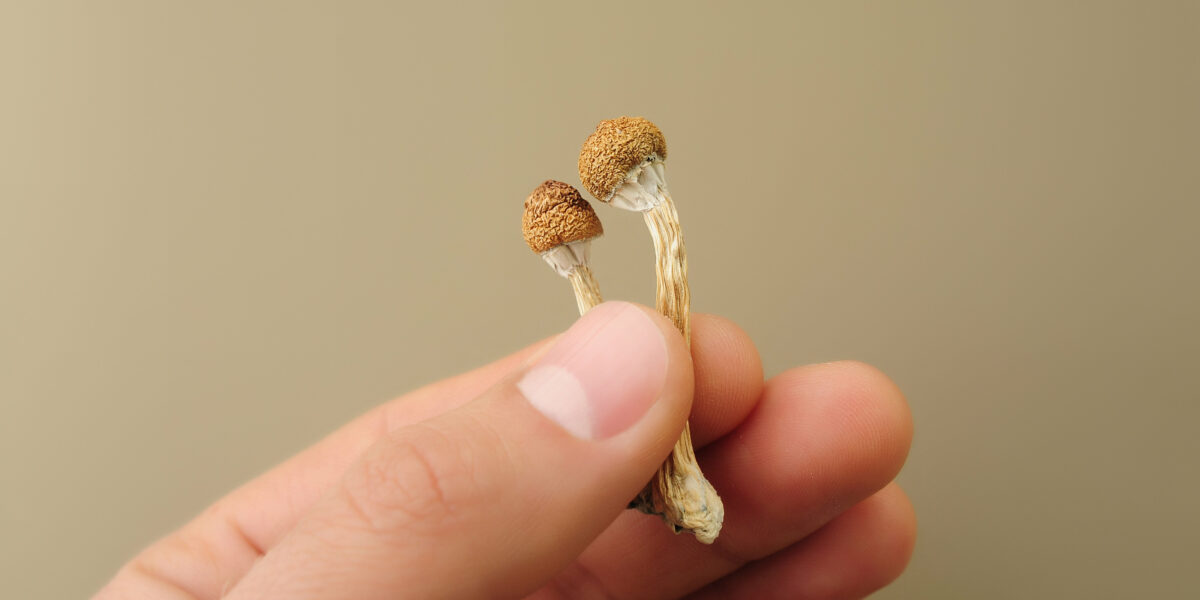
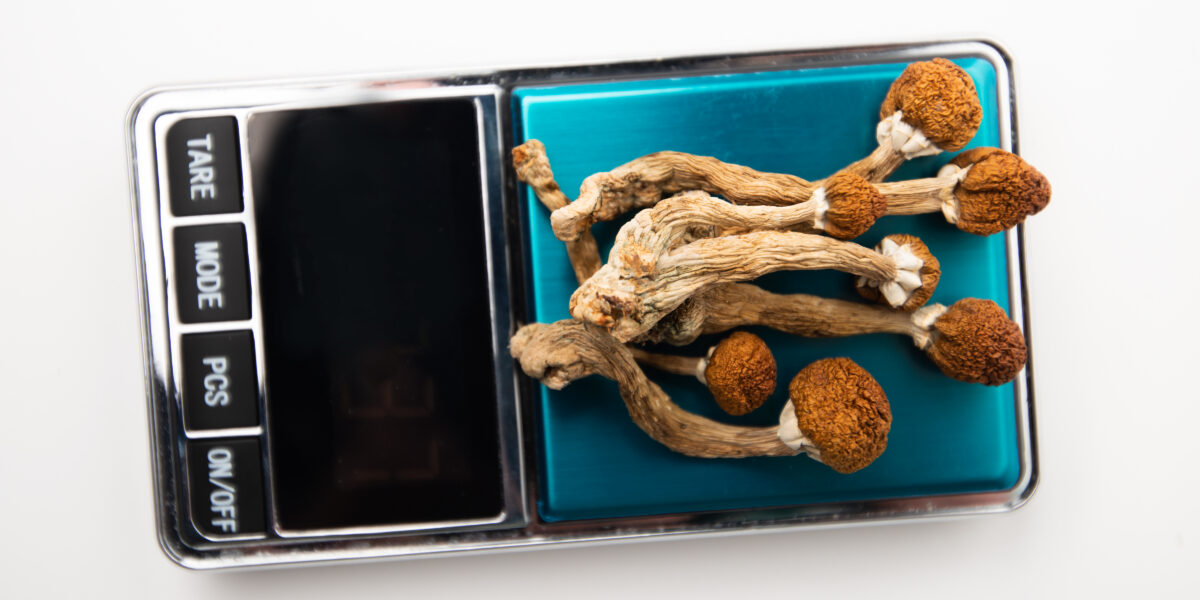
Psilocybe semilanceata – the Liberty Cap – flushes the sloping, wet hills of green Britain in the Autumn months. But how were these humble mushrooms and their magical properties first discovered in the UK?
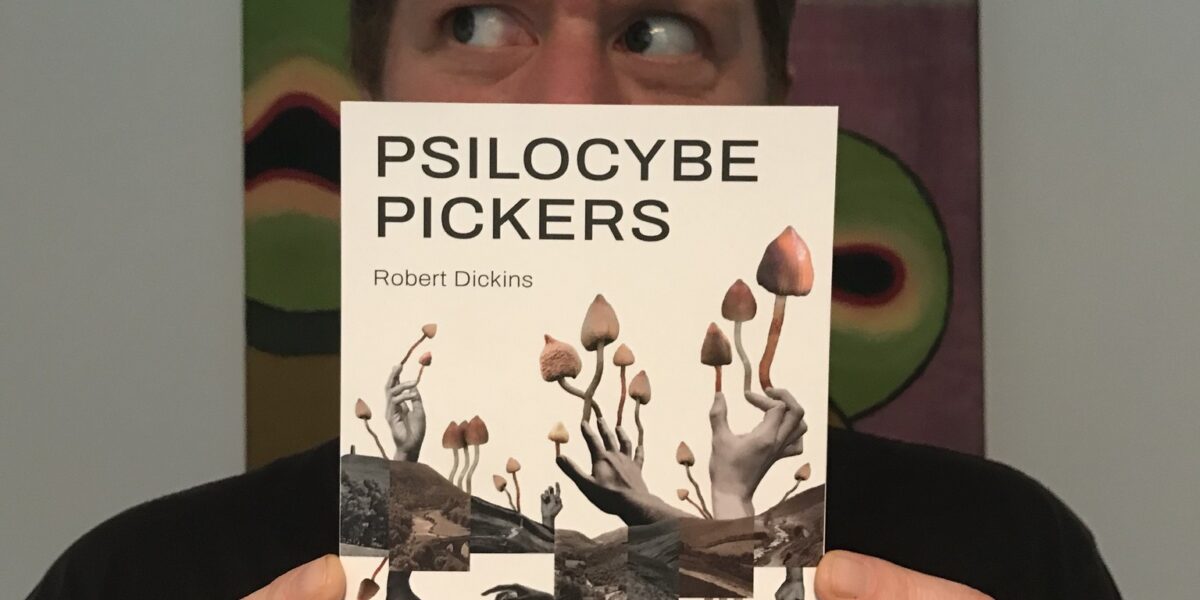
Dickins provides a meticulously researched and updated account of the Liberty Cap’s adoption on the Isle of Albion.
The author, literary historian, and Psychedelic Press publisher says that Psilocybe Pickers aims to elucidate not only how the Liberty Cap first appeared on the counterculture scene, but how its spread across Britain brought mycological enthusiasts and the law to a head in both the farmer’s fields and the courtroom.
On his pilgrimage to uncover the truth behind the Liberty Cap’s history, Dickins finds some surprising treasures along the way – including the discovery of a UK mushroom cult.
Benefiting from relatively free use until the mid-2000’s, the Liberty Cap’s journey to counterculture icon and scheduled substance was a little different from psychedelics like LSD that were included in the Misuse of Drugs Act 1971.
While psilocin and psilocybin were made illegal under the act, fresh mushrooms containing the substances were not, contributing to the spread of psychedelic experiences had by British citizens across the nation.
In Psilocybe Pickers, Dickins walks us through the grassy slopes, free festivals, and farmers’ battles over to the UK streets, where, before 2005, you might find vendors selling mushroom growing kits.
“Psilocybe Pickers aims to clarify two important aspects of mushroom picking culture in Britain,” says Dickins.
“Firstly, that there emerged both local/regional picking scenes alongside the counterculture.
“There was obviously some overlap, however, those small cliques of pickers around the country are often forgotten in wider drug histories and I wanted to start situating them in the bigger story.”
The mushrooms did not stay confined to the fields, however. In Psilocybe Pickers, Dickins traces the mushrooms’ sporeprints back through time to unpick the story of how they gained their status as a Class A drug.
“Secondly, I wanted to tease out just how complex the pickers versus establishment story was and how that evolved over 40 years,” he says.
While Psilocybe Pickers explores the contributions of poets, mycologists, and writers who, in the earlier twentieth century, contributed to spreading knowledge of the mushroom, Dickins also provides an exclusive look inside the story of the UK Liberty Cap beyond its folklore.
Dickins has scoured the records – from newspapers, magazines, and court cases to government reports, mushroom guide books, websites and more – to uncover historic documentation that reveals a bigger picture.
In the process, Dickins demonstrates just how prominent media reports – particularly local coverage – and citizen letters have been in documenting and contributing to the Liberty Cap’s rise into public awareness.
These revealing media correspondence and articles, as well as letters and reports from court officials and the government, facilitate a curious glance at the evolving public sentiment and discourse around the mushrooms as they became more widely known.
The book’s expansion beyond drug culture into the wider history of 20th-century Britain sets the mushroom’s foray through the country against the changing socio-economic landscape, including the credit-fuelled 70s and the economically volatile 80s.
“It tells a story that is both urban and rural, bringing together bits of social, cultural, political and even economic history,” says Dickins.
Psilocybe mushrooms are a feature of traditional practices across the globe that stretch back thousands of years, but how far back their presence has been known in Britain has remained much more of a mystery.
While Dickins recognises the limitations of written documentation in revealing the full story of the psilocybe mushroom in Britain, his in-depth research tells the mushroom’s surprising, modern story.
Part of this story includes its use as a sacrament in an unlikely town in North West England.
This “existence of a small mushroom picking cult in Runcorn”, Dickins highlights as one of his most interesting findings.
Psilocybe Pickers is packed with these unexpected surprises and reminders of unlikely drug culture, such as live mescaline trips on the BBC.
And while Dickins says that this updated look at the Liberty Cap’s history on the island fills large gaps, he emphasises that the mushroom’s early origins in UK culture may remain as mysterious as its magic.
“There’s always more to uncover, I feel sure — just how widespread mushroom picking was and is across the whole of Britain really drove home the fact that it quickly became a national pastime,” he says.

“There will always remain questions over the earliest pickers and trippers, mostly due to a lack of written evidence, and that’s a mystery that I think will forever persist.”
Psilocybe Pickers includes an insightful foreword from Dr Andy Letcher, Senior Lecturer at the University of Exeter, where he teaches on the PGCert Psychedelics: Mind, Medicine and Culture. Letcher is also the author of Shroom: A Cultural History of the Magic Mushroom, which explores how magic mushrooms came to be Britain’s drug of choice.
Dickins’s well-researched book expands on Letcher’s work to provide a freshly picked insight into the Liberty Cap’s adoption into British culture – from its early roots to how it came to be banned as recently as 2005.
“The book is something of a gift to pickers themselves – a slice of their tradition – however, it is for anyone interested in, not only British drug culture, but the history of twentieth-century Britain more widely,” says Dickins, whose previous book, Cobweb of Trips, explores how LSD impacted Britain in the mid-20th century.
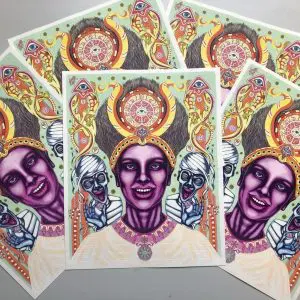
A trip across Britain through the decades, Psilocybe Pickers features a beautifully designed cover by illustrator Ellen Osborne with postcards from locations in the book to inspire the imagination.
A must-read for any curious mushroom, counterculture or psilocybe enthusiast.
Stephanie Price | Community Blogger at Chemical Collective
Stephanie is one of our community bloggers here at Chemical Collective. If you’re interested in joining our blogging team and getting paid to write about subjects you’re passionate about, please reach out to Sam via email at samwoolfe@gmail.com
Welcome to Chemical Collective.
Create an account to earn 200 welcome points.
Already have an account? Sign in
Check out our Community Blog and get involved with the conversation. You will be awarded 50 x ChemCoins for each comment up to a limit of 250 total ChemCoins.
Have you purchased any of our products? Reviews and reports are so important to the community. Share your honest opinion, and we’ll reward you with 50 ChemCoins for each review!
Every time you complete an order with us, you’ll be awarded ChemCoins for each Euro spent.
Welcome to Chemical Collective.
Create an account to earn 200 welcome points.
Already have an account? Sign in
Earn commission every time someone makes a purchase through your link.
When you become an affiliate, you will be allocated a unique link to share with your friends, followers, subscribers, or Aunt Susan.
You can choose to payout the commission earned once per month, or save it up to receive on a rainy day! Commission earned is 5% of the total order value per referral.
Contact us to join the Chemical Collective family and become an affiliate.
share your toughts
Join the Conversation.