Welcome to
Chemical Collective

Are you 18 or older?

Please confirm that your are 18 years of age or older.

You are not allowed to access the page.

info-icon €100 for domestic (NL, CZ, DE) €125 for the rest of the EU, excluding stealth shipping

Free shipping over €50 & free tracked shipping over €100

Friendly customer service available 9-5pm Monday to Friday

Free shipping over €50 & free tracked shipping over €100

Friendly customer service available 9-5pm Monday to Friday

Your cart is empty

What Are We to Make of Cosmic Insights and Visions on Psychedelics?

david-blackbourn

By David Blackbourn

shutterstock 2685094217
in this article
  • Research on Psychedelic Mystical Experiences
  • The Unfiltered Brain
  • Integrating Infinity
  • Set and Setting
  • After the Insight
david-blackbourn

By David Blackbourn

Disclaimer: The views and opinions expressed in this article are those of the authors and do not necessarily reflect the official policy or position of the Chemical Collective or any associated parties.

The peak of a high dose of pretty much any psychedelic is not a predictable event, regardless of our careful planning or adherence to set and setting. We can go in with as much intention as we desire – maybe we want to overcome a creative block, tackle a personal trauma, or break a depressive cycle; but often the substance itself has other ideas. Often, our perspective will be far removed from anything directly related to our individual histories in favour of a far wider perspective. This is the realm of cosmic visions and insights.

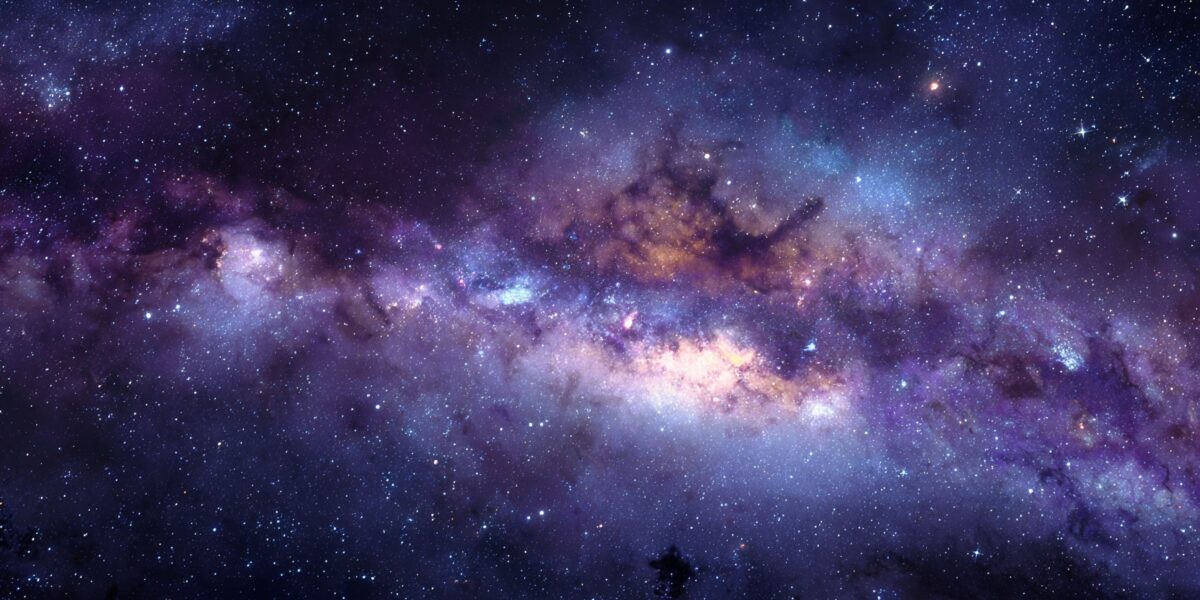
The individual ceases to be the centre of experience. The ego dissolves, and the true scale of existence as a whole becomes apparent. This is on an impossible scale. You (whilst completely outside of yourself) can be/witness the birth and death of stars or the rotation of galaxies. This is a state of complete connection, woven into the very fabric of the universe. Everything is perceived as one: this is the realisation of ultimate unity.

This is not a person watching fractal patterns on the back of their eyelids. This is a complete overhaul of perception on a grand scale. In clinical research, this is categorised as a “mystical experience”. This might sound like quite a poetic, non-specific term, but in modern psychopharmacology, it is a specific and measurable psychological state.

Research on Psychedelic Mystical Experiences

In 2006, a team at Johns Hopkins University, led by Roland Griffiths, demonstrated that psilocybin could reliably trigger these mystical experiences in a controlled setting. The purpose of the study was to shed light on “the acute and longer-term psychological effects of a high dose of psilocybin”. Participants in the study often reported experiences of “unity and transcendence of time and space”. The sheer scale of these mystical visions is impossible to put into words. They may involve being surrounded by and simultaneously part of the entirety of the universe. This is what is known as a conscious state of “oceanic boundlessness”, where the walls of the self completely crumble away.

More recent research has further explored this cosmic perspective. The lead article of the 2025 special issue of the International Journal of Clinical and Experimental Hypnosis, by Etzel Cardeña, provides some fresh insight. Cardeña highlights the similarities between hypnosis and psychedelics in their abilities to promote mystical states of consciousness. She concludes that the individual’s suggestibility is key to the benefits they may gain from either experience. While in psychedelic research, increased suggestibility may be seen as a potential barrier to understanding the effects that the drug is solely responsible for. But in a therapeutic context, it may be both unavoidable and beneficial. The patient’s ability to step outside of the usual limits of the physical world – space, time, etc. – is a potential indicator of the likelihood of a session’s success.

The key here is that the cosmic perspective, however it is accessed (and we are not going to dive into hypnosis any further), appears to offer a vantage point that is otherwise difficult to access. As we explore both the limits of our everyday perception and encounter the infinite vastness of these “oceanic states of consciousness”, we can begin to see how the brain itself builds them. This, in the end, is not so much about the chemicals themselves, but rather how they alter the brain’s ability to map the universe in which it is enmeshed.

The Unfiltered Brain

The transition from watching the walls melt and endlessly giggling at the innate silliness of it all to witnessing the creation of EVERYTHING is a big one. The way the brain processes information has to alter substantially. For many years (likely as a result of the prohibition and demonisation of psychedelic substances), the medical establishment believed psychedelics simply smashed normal perception to bits. It is, in fact, far more nuanced than that. To understand this, we need to consider the REBUS model. REBUS stands for “relaxed beliefs under psychedelics” and is a framework first proposed in 2019 by Robin Carhart-Harris and Karl Friston.

REBUS effectively treats the brain as a prediction engine. Rather than experiencing the real world in real time, we experience a model of the world based on our prior experiences. This model acts as a filter, allowing us to focus on what is important for our survival. The “Default Mode Network” (DMN) has been proposed as acting as this kind of filter. Yet, the DMN also has many other functions.

“The DMN is a collection of…interconnected brain regions that are typically suppressed when an individual is focused on external stimuli…in the absence of attention to external stimuli, the DMN switches or “defaults” to internally focused thought processes, such as self-reflection, daydreaming, mind wandering, recall of personal experiences, and envisioning the future.”

Put simply, it maintains a coherent sense of self and the surrounding world, utilising the brain’s prediction model. When you introduce a psychedelic, though, these prior experiences guiding our perception begin to dissolve. This may explain the sensation of the seeming ridiculousness of some words, phrases, or very normal activities we can experience in the early stages of a trip. The brain becomes more sensitive to the raw data coming from the senses. Without an ego in the centre, the boundaries between self and the external world can disappear. This is the brain outside of its default mode, free to explore new ways of interpreting the sensory information. The familiar feeling of merging with the cosmos happens because the brain’s prior knowledge that this separation exists has been so dialled down.

This opening up of the mind brings us back to a very old idea. Author and famous proponent of psychedelics Aldous Huxley described the brain as a “reducing valve”, preventing us from being overwhelmed by the sheer chaos of reality. If we could perceive everything, we wouldn’t have the capacity to feed ourselves, avoid predators, etc. Our biology is necessarily tuned to only focus on particular elements. Strip this away, and we are exposed to a much wider spectrum of perceptions.

The fractal visions and sense of infinite space, or endlessly complicated, cosmic architecture, are not necessarily hallucinations in the sense of being false. They are what happens when the brain attempts to understand the raw data of reality without the usual survival blocks in place. Perhaps this is why people often describe psychedelic experiences as more real than real life. You may, in these transcendent moments, actually be experiencing more of the whole, rather than less – significantly more than your brain would usually permit.

At higher levels, experiences may hit a point which is often described as the “breakthrough”. This is where the fractal visions give way to encounters with what appear to be autonomous beings. This is particularly common with high doses of DMT. While in the past these encounters may have been seen as simple glitches, more recent studies suggest that something more consistent is potentially going on. These entities are frequently described as cosmic guides or alien intelligences, seemingly with their own, independent agendas. Whether or not they are actually something external is up for debate. What we do know is that, when the DMN is disrupted, the brain is capable of producing incredibly complex, fully populated realities completely divorced from waking life.


Integrating Infinity

If we are to understand and perhaps harness these states of consciousness, we must move beyond biology and chemistry and consider a psychological and philosophical perspective. For most of our waking lives, we inhabit this solid, three-dimensional space, which we are separate from. However, the psychedelic experience flips this on its head. Stanislav Grof called this: “holotropic experience…a journey beyond the usual…limits of the mind”.
Holotropic experience is one that is oriented toward the whole rather than the individual. To Grof, these cosmic encounters are not personal hallucinations; they are an encounter with Jung’s “collective unconscious” – universal symbols and states of being that belong to all of humanity. Grof describes “non-ordinary states of consciousness” (NOSC) as the means to access these states. While he believed LSD to be an effective adjunct to psychotherapy, for exactly this purpose (see his book LSD Psychotherapy), he also proposed breathwork as an alternate means. “Holotropic Breathwork” is now a common practice for accessing alternate states of consciousness. Grof believed that only “through immersion in the state of consciousness can we explore [the] whole.” Accessing this collective unconscious may therefore allow an individual to better understand themselves. 

The challenge here, however you may choose to access the altered state, is integrating the experience once normality resumes. How do you parse your infinitely interconnected, cosmic consciousness with getting up in the morning and going to work, for example? This is where the current medical model fails somewhat, as psychedelic visions are still often considered as essentially delusions – however useful they may be therapeutically. The suggestion here is that while an individual experience may have been profound, it was not in fact real. This is where philosophy takes over.

If an individual experiences something which could be described as metaphysical (beyond what can be measured scientifically), then surely it stands to reason that “metaphysics should be used to integrate and understand [it]”.

Peter Sjöstedt-Hughes, a philosopher who has become a prominent voice in the psychedelic space, argues for just this. If medicine considers a patient’s powerfully affecting experience to be simply untrue, it can be extremely alienating. Instead, Sjöstedt-Hughes advocates for providing people with multiple metaphysical frameworks that may fit their particular belief system. By using the specific philosophical vocabulary suitable to them, individuals will be better able to describe their experiences in ways that allow them to integrate them both intellectually and emotionally.

This is crucial as it gives these experiences the weight and respect they deserve. These are legitimate encounters with aspects of reality, not just a chemical side-effect. They deserve intense philosophical consideration, not just more talk therapy.

By bridging this gap between science and philosophy, we can begin to understand the complexity of these experiences. If we don’t simply pathologise them, we open up a much larger space for potential healing and self-discovery. 

Set and Setting

The content of cosmic visions and insights is never a neutral or objective experience. While the specific neurological shifts required to enter a space where the experience might be possible (psychedelics/breathwork/meditation) may be universal, the imagery itself is not. Our DMN is constructed by our physical experience, and on a higher level, our cultural baggage. The universe we see is coloured by everything else we have experienced. This is the power of “Set and Setting”.

Set and Setting was a concept popularised by Timothy Leary in the 1960s. In a manual based on the Tibetan Book of the Dead, Leary describes the concept as follows:

“Set denotes the preparation of the individual, including his personality structure and his mood at the time. Setting is physical – the weather, the room’s atmosphere; social – feelings of persons present towards one another; and cultural – prevailing views as to what is real.”

It is this final point that is most important in the context of these cosmic insights we are exploring. Culture is the lens through which these experiences are interpreted. In a modern context, therefore, our internal model for cosmic experiences is saturated with imagery of space as we see it now: high-resolution photos from the Hubble and James Webb telescopes, countless sci-fi blockbusters, endless reports of alien encounters. Therefore, as an individual’s sense of cosmic scale is heightened, the brain naturally reaches for known imagery to explain this sense.

Compare this to the experience of a member of an indigenous tribe in the Amazon. They are unlikely to relate experiences of extraterrestrial contact with multi-dimensional beings. Instead, their visions will form within the context of things like nature spirits, encounters with ancestors, or animals that hold particular significance. The experience of unity and transcendence from day-to-day reality is universal. The cosmic insights gleaned from this are very different.

None of these experiences is less valid or real; we cannot help but bring our myths, stories, and biases with us into them. Understanding the impact of culture and the unconscious on these experiences is vital to effectively integrating them. By acknowledging that our symbolic ways of interpreting these cosmic insights are at least partly chapped by our cultural programming, we can begin to look deeper.

Regardless of what we actually see, the experience is one of interconnectedness and a universe far more complex than we can (or should ever hope to) truly comprehend.

After the Insight

The ultimate challenge of any cosmic journey is the return to normality. We are left with a collection of vivid, incredibly meaningful memories that often completely defy everyday logic. How do we rationalise this? Critics argue that these experiences are a comforting lie. If a person has to believe they have literally spoken to a celestial intelligence to gain psychological benefits from the experience, is that not just a chemical mask for reality?

Philosopher Chris Letheby, from the University of Western Australia, has gone some way towards untangling this knot. In his 2021 book Philosophy of Psychedelics, he argues that the therapeutic benefits of these experiences are not derived from any kind of supernatural belief. Instead, Letheby posits that:

“psychedelics lead to lasting benefits by altering the sense of self, and changing how people relate to their own minds and lives, not by changing their beliefs about the ultimate nature of reality”.

When you can see yourself as a tiny part of a gigantic interconnected cosmos, the rigid, negative stories we tell ourselves feel much less significant. The cosmic insight could be seen as a psychological reset, an escape from intense individualism. Integration is the means by which this insight can become practical and applicable to the day-to-day. The visceral sense of everything being connected shows that no action is isolated. Integrating the experience is about maintaining this sense of belonging to a whole – living in a way which acknowledges the infinite vastness we have experienced. (This is obviously far from simple.)

If we look a little wider, these insights could be applied outside of the individual, to culture and society worldwide. Look at the world right now. It honestly feels as if these cosmic insights are not integrated into our overarching worldview as a species; there’s a whole lot of fire in our future. The ongoing, increasingly rapid psychedelic renaissance perhaps provides some hope. As psychedelics are such a reliable means to access these powerful states, they may be a means to push us ahead.

Cosmic visions and insights, regardless of how they are achieved, are far more than trippy glitches or an escape from reality. They offer a profound engagement with it on a universal scale. Regardless of which lens we choose to interpret them through, the message remains the same. Everything is connected; we are just a part of a cosmos that is bigger and stranger than we can possibly imagine.

David Blackbourn | Community Blogger at Chemical Collective

David is one of our community bloggers here at Chemical Collective. If you’re interested in joining our blogging team and getting paid to write about subjects you’re passionate about, please reach out to Sam via email at samwoolfe@gmail.com

share your toughts

Join the Conversation.

0 Comments
Inline Feedbacks
View all comments

Related articles

Our Products

Related Products

1V-LSD 150mcg Blotters
1V-LSD 150mcg Blotters From 22.00
(147)
1cP-LSD 100mcg Blotters
1cP-LSD 100mcg Blotters From 18.00
(138)
Tryptamine Mix and Match Pack (4 x 0.1g)
Tryptamine Mix and Match Pack (4 x 0.1g) 65.00
(1)
1V-LSD 10mcg Micro Pellets
1V-LSD 10mcg Micro Pellets From 15.00
(45)
1V-LSD 225mcg Art Design Blotters
1V-LSD 225mcg Art Design Blotters From 35.00
(64)
1S-LSD 150mcg Blotters
1S-LSD 150mcg Blotters From 29.00
(20)
1V-LSD 225mcg Pellets
1V-LSD 225mcg Pellets From 35.00
(26)
1cP-LSD 10mcg Micro Pellets
1cP-LSD 10mcg Micro Pellets From 15.00
(23)
1D-LSD 225mcg Pellets (1T-LSD)
1D-LSD 225mcg Pellets (1T-LSD) From 42.00
(13)
5-MeO-DMT Freebase
5-MeO-DMT Freebase From 23.95
(36)
O-PCE HCL
O-PCE HCL From 17.50
(25)
1cP-LSD 20mcg Micro Blotters
1cP-LSD 20mcg Micro Blotters From 18.00
(29)
4-HO-MET Powder
4-HO-MET Powder From 19.50
(27)
1cP-LSD 150mcg Pellets
1cP-LSD 150mcg Pellets From 25.00
(13)
4-AcO-MET Fumarate
4-AcO-MET Fumarate From 19.50
(12)
rewards-icon
popup-logo

Reward program

popup-close
  • Earn
  • Affiliates