Welcome to
Chemical Collective

Are you 18 or older?

Please confirm that your are 18 years of age or older.

You are not allowed to access the page.

info-icon €100 for domestic (NL, CZ, DE) €125 for the rest of the EU, excluding stealth shipping

Free shipping over €50 & free tracked shipping over €100

Friendly customer service available 9-5pm Monday to Friday

Free shipping over €50 & free tracked shipping over €100

Friendly customer service available 9-5pm Monday to Friday

Your cart is empty

Could Psychedelics Be Helpful in Tackling Cognitive Decline?

stephanie-price

By Stephanie Price

shutterstock 2493316299
in this article
  • The Need for New Dementia Treatments
  • Neuroplasticity, Cognitive Decline, and Psychedelics
  • Neuroinflammation, Cognitive Decline, and Psychedelics
  • Psychedelics as Potential Therapies for Dementia and Related Conditions
stephanie-price

By Stephanie Price

Disclaimer: The views and opinions expressed in this article are those of the authors and do not necessarily reflect the official policy or position of the Chemical Collective or any associated parties.

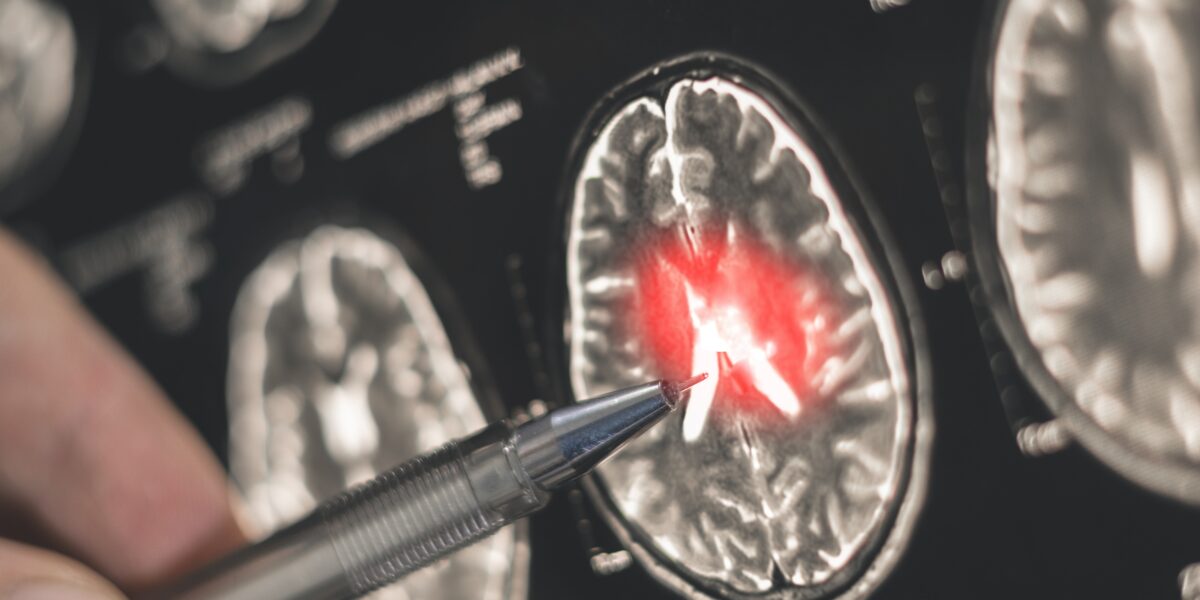
A certain level of cognitive decline is natural as we age, but excessive decline can lead to dementia and related conditions. 

Currently, cases of dementia are rising across the globe, with around 152.8 million people projected to be living with some form of cognitive decline by 2050.

The Need for New Dementia Treatments

There are currently some treatments available for different types of dementia, but they are limited.

Non-pharmacological interventions, such as neuro rehabilitation therapies and transcutaneous electrical nerve stimulation (TENS), along with lifestyle changes, can be implemented. However, these treatments and therapies help mostly with managing symptoms and slowing the progression of the disease, and do not address underlying causes or prevent disease progression. 

Equally, drug development for dementia treatments, such as Alzheimer’s treatments, has incredibly high failure rates, with one review revealing a 99.6% failure rate from 2002 to 2012.

Breakthroughs in our understanding of the role of amyloid plaques in cognitive decline have led to the recent development and approval of two new treatments for Alzheimer’s, but there still remains no approved treatments for other dementias, such as frontotemporal dementia.

Over the last decade, an increasing number of scientific studies have revealed that psychedelic compounds have a unique impact on the brain, and researchers are now investigating whether they could hold potential as innovative therapeutics for cognitive decline.

Neuroplasticity, Cognitive Decline, and Psychedelics

Neuroplasticity is the brain’s ability to adapt throughout life and respond to injury or habit changes, for example. 

A plastic brain is able to make changes – reorganising itself, growing and creating new neural connections – whereas a lack of brain plasticity is unable to do this, and is strongly linked to cognitive decline, memory problems, depression, and anxiety.

Ageing causes a natural decrease in brain plasticity; however, in dementia and related conditions, there is a significant decrease in plasticity.

So far, research has suggested that psychedelics may increase neuroplasticity by impacting certain receptors and pathways in the brain. 

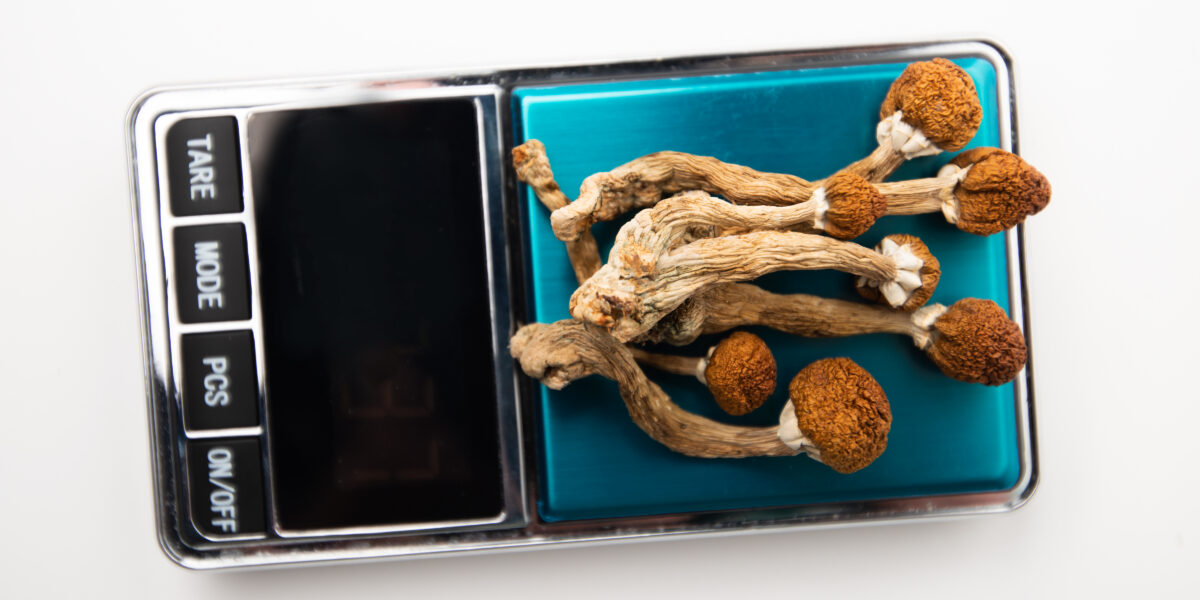
One receptor is 5-HT2A – a serotonin receptor that helps modulate neuroplasticity, and which serotonergic psychedelics such as mescaline, psilocybin, LSD, and DMT activate.   

Researchers suggest that psychedelics have a high affinity for these receptors, enabling synaptic, structural, and functional changes in neurons and networks, which promote functional connectivity in the brain. 

However, recent research suggests that the plasticity-promoting effects of psychedelics may be independent of 5-HT2A activation, and instead depend on TrkB binding and promotion of endogenous brain derived neurotrophic factor (BDNF) signalling.

BDNF is a protein that plays a crucial role in plasticity, supporting the growth and strengthening of neurons. Research shows low levels of BDNF in people with dementia; however, conversely, people who have used psychedelics show significantly higher BDNF levels.

TrkB is a receptor for BDNF, and the research shows that psychedelics such as LSD have a significantly high binding affinity to TrkB, impacting the signalling pathways for neuroplasticity.  

As it is the 5-HT2A receptors that are responsible for the perceptual effects of psychedelics, the research team suggest that modified analogues of LSD that only impact TrKB and not 5-HT2A receptors could be key to developing psychedelic therapeutics without any perceptual effects.


Neuroinflammation, Cognitive Decline, and Psychedelics

Neuroinflammation is one of the key characteristics of cognitive decline, and another major influencing factor in the decline of brain plasticity. 

Recent research suggests that psychedelics may modulate or reduce neuroinflammation. In studies, psilocybin, for example, has been shown to rapidly reduce concentrations of an inflammatory cytokine – TNF-alpha – a cytokine that is implicated in the pathology of Alzheimer’s, as people with the condition have shown elevated levels.

Psilocybin is also being investigated as a potential treatment for traumatic brain injury (TBI), a condition for which brain inflammation is a hallmark, and which is now recognised as leading to dementia-related conditions such as chronic traumatic encephalopathy (CTE).

There are currently limited treatments available for TBIs, and until recently, typical treatment for TBI was to rest; however, there is now increasing awareness that TBI can lead to long-term health and cognitive problems, necessitating more holistic health support. 

With a global rise in TBIs – seeing a 22.6% increase between 1990 and 2021 – concerns over TBIs potentially leading to cognitive decline and neurodegenerative disease mean that the UK is phasing out the use of headers in youth football.

According to one researcher, despite more than $1 billion being spent worldwide on clinical trials of more than 30 severe TBI treatments, all failed to show any benefit, underscoring an urgent need for therapeutic interventions.

Research suggests that psilocin – the active metabolite of psilocybin – may play an interesting role in modulating inflammation in the brain that may lead to dementia.

As well as modulating cytokines in the body that regulate inflammation, researchers suggest that psilocin may exert a neuroprotective effect and indirectly affect the immune system in the brain through interactions with microglia cells (which clean up damage in the brain).

Emerging research is now pointing to Alzheimer’s as having an autoimmune-related component, where the body mistakenly attacks itself, and immunosuppressants are being investigated as potential treatments.

However, researchers have highlighted the potential of immunosuppressants to increase the risk of age-related conditions such as osteoporosis and hypertension, suggesting that psychedelics pose an alternative avenue of research.

Psychedelics as Potential Therapies for Dementia and Related Conditions

With a lack of innovation in the treatment of cognitive decline, neurodegenerative diseases, and TBIs, a number of researchers, non-profit organisations, and companies are now investigating psychedelics such as psilocybin, DMT, and LSD in these areas. 
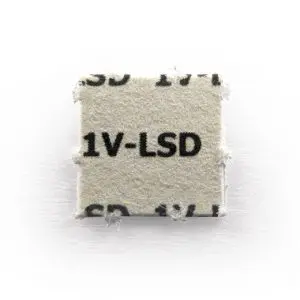
If psychedelics were to prove beneficial as therapeutic tools for the treatment of cognitive decline and related conditions, their hallucinogenic effects still present a number of logistical and ethical challenges.
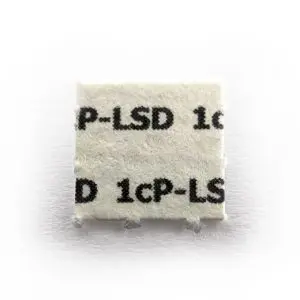
With further research investigating non-hallucinogenic treatments that maintain the therapeutic impact of psychedelics, maybe these compounds could hold potential for rolling out and scaling up into health systems. 

Much more research is needed before we understand the full impact of psychedelics on cognitive decline and conditions such as dementia and Alzheimer’s. However, they are proving to be an innovative avenue of research that may hold promise as potential interventions.

Stephanie Price | Community Blogger at Chemical Collective

Stephanie is one of our community bloggers here at Chemical Collective. If you’re interested in joining our blogging team and getting paid to write about subjects you’re passionate about, please reach out to Sam via email at samwoolfe@gmail.com

share your toughts

Join the Conversation.

0 Comments
Inline Feedbacks
View all comments

Related articles

Our Products

Related Products

1V-LSD 150mcg Blotters
1V-LSD 150mcg Blotters From 22.00
(143)
1cP-LSD 100mcg Blotters
1cP-LSD 100mcg Blotters From 18.00
(137)
Tryptamine Mix and Match Pack (4 x 0.1g)
Tryptamine Mix and Match Pack (4 x 0.1g) 65.00
(1)
1V-LSD 10mcg Micro Pellets
1V-LSD 10mcg Micro Pellets From 15.00
(43)
2-FDCK HCL
2-FDCK HCL From 12.00
(82)
1V-LSD 225mcg Art Design Blotters
1V-LSD 225mcg Art Design Blotters From 35.00
(62)
1S-LSD 150mcg Blotters
1S-LSD 150mcg Blotters From 29.00
(16)
1cP-LSD 150mcg Art Design Blotters
1cP-LSD 150mcg Art Design Blotters From 25.00
(74)
1V-LSD 225mcg Pellets
1V-LSD 225mcg Pellets From 35.00
(26)
1D-LSD 225mcg Pellets (1T-LSD)

SALE! -15%

1D-LSD 225mcg Pellets (1T-LSD) From Original price was: €42.00.Current price is: €35.70.
(13)
1cP-LSD 10mcg Micro Pellets
1cP-LSD 10mcg Micro Pellets From 15.00
(23)
5-MeO-DMT Freebase
5-MeO-DMT Freebase From 23.95
(36)
O-PCE HCL
O-PCE HCL From 17.50
(25)
1cP-LSD 20mcg Micro Blotters
1cP-LSD 20mcg Micro Blotters From 18.00
(27)
4-HO-MET Fumarate
4-HO-MET Fumarate From 19.50
(26)
rewards-icon
popup-logo

Reward program

popup-close
  • Earn
  • Affiliates