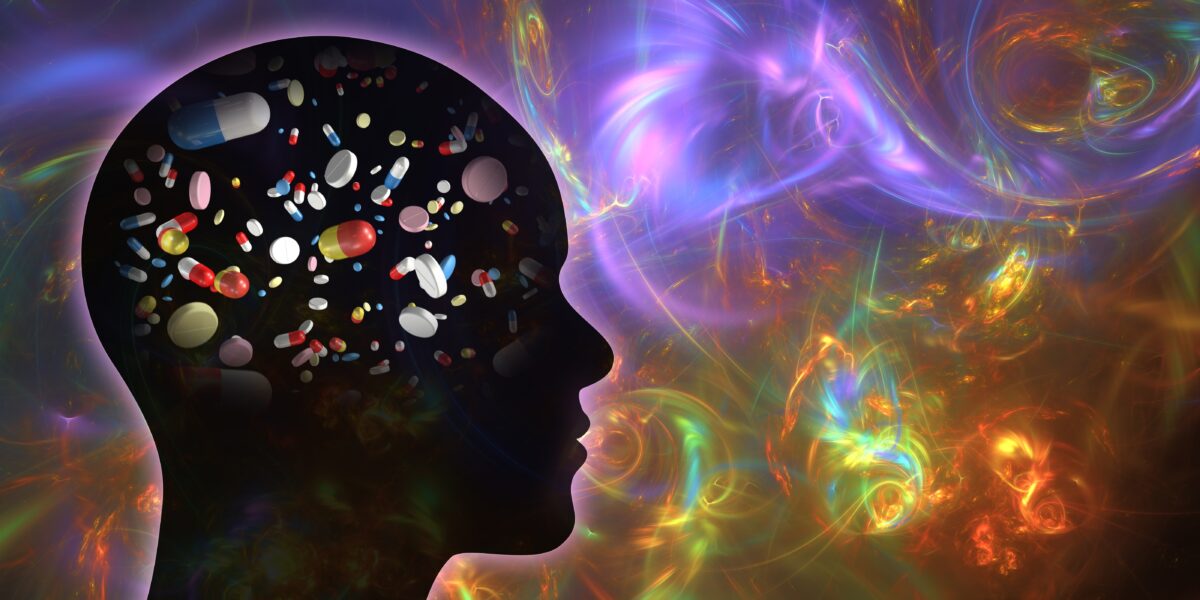
The hype surrounding psychedelics can be characterised as an overly positive picture of the benefits of psychedelics and an overlooking, or at least underrepresentation, of the harms and risks of these compounds.
The growing psychedelic industry can be seen as following the trend of the Gartner hype cycle, a graph developed and used by the American technology firm Gartner to represent how a technology evolves over time. While not a technology per se, psychedelics seem to have followed the pattern of this hype cycle: the ‘psychedelic renaissance’ – the proliferation of studies into the effects and benefits of these compounds in the last 20 years or so – led to inflated expectations, a peak of such expectations, and has now been on the path of disillusionment.
Experts in the field have argued that the psychedelic hype bubble will burst, which will lead to a trough of disillusionment, but by moving beyond overly negative and positive extremes, we can gain a more realistic view of psychedelics that embraces the actual evidence. This will set the psychedelic industry on the slope of enlightenment, leading to a plateau of productivity.
Those in the field of psychedelic research who have warned against the rose-tinted, overly positive picture of psychedelics include Rosalind Watts – former Clinical Lead for Imperial College London’s psilocybin trial – and Rick Strassman, who has been credited with kickstarting the psychedelic renaissance with his studies on DMT that took place between 1990 and 1995, which broke the 20-year gap in psychedelic research.
But there are many other voices warning against psychedelic hype. These include the writers at Psymposia – who have brought attention to issues like the abuse that can occur in psychedelic therapy – and other writers who highlight psychedelic harms, such as Jules Evans (who is behind the Challenging Psychedelic Experiences Project and Ecstatic Integration site) and Ed Prideaux (who has written extensively on the post-trip condition known as hallucinogen persisting perception disorder, or HPPD).
The backlash against psychedelic hype is multifaceted, however. It is necessary, but there is always a risk it may veer into the overly negative, perhaps even feeding into the 1960s-style stigma and scaremongering that has been so difficult to combat. Moreover, the intentions behind the backlash are often based on an evidence-based, harm-reduction mindset, but it may – in addition to such a mindset, or without it – also be based on other attitudes. I would like to describe some of the most common themes behind psychedelic hype, the backlash against it, and some reflections I had on the complex picture of anti-psychedelic hype.

























share your toughts
Join the Conversation.
Hello, my name is Lily, I’m a 48 year old mom of a 17 year old boy, I’ve been trained as a nurse & MAT plus I had the privilege to inherit all the family “abilities”, or traits or talents (whatever words suits you best) concerning Shamanic/Druid related work and the duties and responsibilities that come with this kind of work. My cousin taught me for over 12 years, and I assisted him when he worked as Shaman.
I liked this article very much, as it points out very well the opinions , rumours and over exaggerated articles (positive as well as negative) I observed around me for a good while now.
As someone who has a lot of experience with psychedelics I must say that a lot of what I’ve heard from people is fear based on misinformation and campfire-style horror stories.
I always try to explain to people that psychedelics are not like a medication, psychedelics ARE medication, and as such first of all information has to be gathered, preferrably from sources where people had their own experiences and know what they are talking about.
There are chances that psychedelics and the research into the subject could support new beginnings in psychotherapy and medications. If we would just turn our backs on it we would miss out on opportunities to learn and experience considering many subjects.
My personal belief is that there’s a reason why human beings are able to “trip”, this has been part of the history of mankind from the very beginning.
If it wasn’t supposed to be we wouldn’t be able to experience what we do under those circumstances.
But: The other part of my personal opinion is that apart from gathering information from trustworthy sources, it would also be necessary to talk to a doctor first, to check on personal health difficulties like high or low blood pressure, any heart conditions, etc…if a doctor can be found that could handle this subject neutral enough without banging his personal opinion plus his “life experiene” around the patient’s brain because he has set his mind on “saving” the patient from a horrific experience, and (all in his opinion) permanent damage….oh, and not to forget losing another paying customer for the pharmaceutical industry.
The other side of the opinion spectrum is equally annoying and also dangerous:
Treating psychedelics like miracle cough drops with an attitude like: just take one, get through the next 12 hours and you’ve got yourself a brand new brain , restored to factory settings.
If you’ve got a psychological condition like a personality disorder or if you suffer from panic attacks and depression and you’ve set all of the last hope you can scratch together in your self on psychedelics for relief of the illness or just as much as the symptoms: you should know that: Yes, it can mean improvement under certain conditions, for certain patients.
But: it also bears risks under certain conditions for some patients.
My advice will always be: go to a doctor you can trust , a psychologist or psychiatrist, but best (In my opinion) is a psychotherapist because he knows his way around therapies in a practical way, not only
from books. Take all the facts you’ve learned, put them on a piece of paper and devide them in 2 categories: pro and contra. In the end you can count how many points speak for a psychedelic trip, how many against it? It will help you figure out if you really want to do this. I would take my time with this thinking process.
I’m not sure how to wake everyone up to the true benefits and hazards of psychedelics, there are as many different experiences as there are people who were tripping.
And every humans being is different, reacts different to substances/medications.
I don’t know exactly when it happened, if fast or slow, but over time people developed the attitude that for every problem there’s a quick fix, a pill, a powder, a cream, etc.
If you’ve got the flu you should stay in bed, normally. These days you take 3 pills & 2 powders and you won’t have to miss a day at work. How convenient! Your body might not rebel this time, but one day he will have revenge for all the times we ignored our bodies need to rest, get the proper nutrition, fresh air, sunshine, sleep and care.
I’m not a role model when it comes to those things either, but I try to improve my life bit by bit. There’s no short cut -1 pill-miracle-cure for mental problems, working on your problems will always be neccessary. It’s just that for some people psychedelics make it easier to become able for therapy, to find a personal access point from where they can work towards a more balanced mind and life.
I’m not sure how we’re gonna get there, but putting out the right, balanced information and not shying away from discussions are a first step into the right direction.