Welcome to
Chemical Collective

Are you 18 or older?

Please confirm that your are 18 years of age or older.

You are not allowed to access the page.

info-icon €100 for domestic (NL, CZ, DE) €125 for the rest of the EU, excluding stealth shipping

Free shipping over €50 & free tracked shipping over €100

Friendly customer service available 9-5pm Monday to Friday

Free shipping over €50 & free tracked shipping over €100

Friendly customer service available 9-5pm Monday to Friday

Your cart is empty

Why Do Psychedelics Change People’s Metaphysical Beliefs?

oli-genn-bash

By Oli Genn-Bash

shutterstock 1714132720
in this article
  • What are Metaphysical Beliefs?
  • Can Psychedelic Experiences Challenge Western Metaphysical Views?
  • Making Sense of Ontological Shock
  • Metaphysical Shifts and Healing
oli-genn-bash

By Oli Genn-Bash

Disclaimer: The views and opinions expressed in this article are those of the authors and do not necessarily reflect the official policy or position of the Chemical Collective or any associated parties.

There’s no denying the importance of a medicalised framework when it comes to creating more acceptance surrounding the use of psychedelics – those who are conducting the research seem to take centre stage with a lot of the attention being placed on the latest findings, allowing us to quantify the revelations we’ve experienced so that people take us seriously. Psychedelic science has done a great job of getting people to take the psychonautical exploration seriously, with a lot of the other areas of inquiry taking a step back to make way for the legitimisation of the consumption of plants and fungi (which have been used for thousands of years without any need for scientists to provide a stamp of approval).

But while the clinical framework has opened up the conversation, is there now a need for more philosophical understandings of how psychedelics can impact our beliefs? 

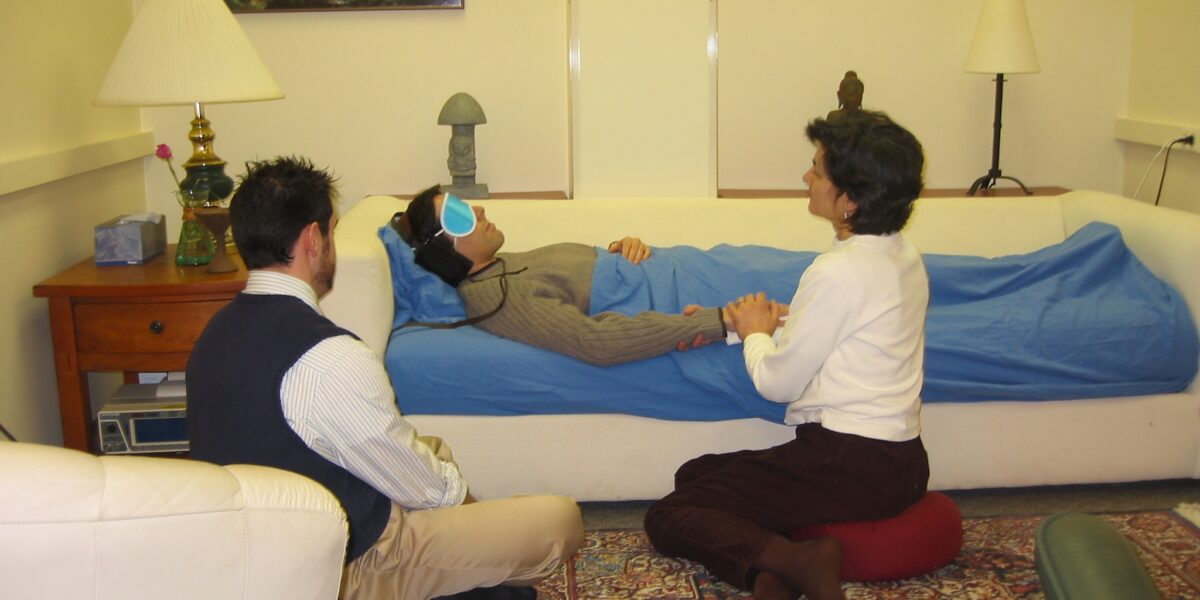
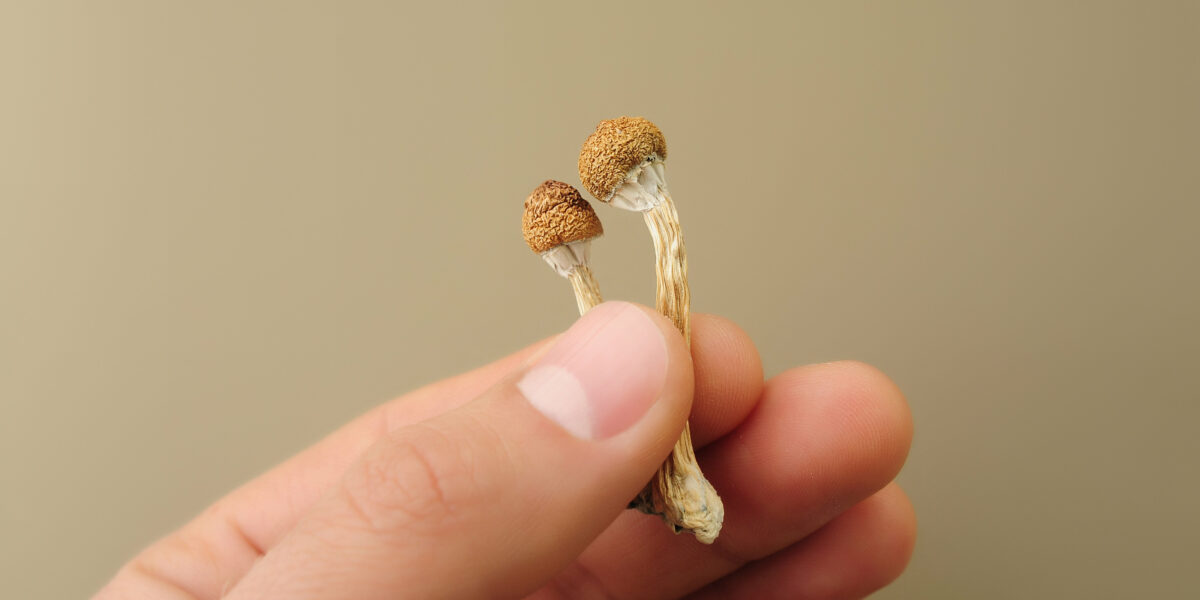
Take for example someone who is receiving a session of psilocybin therapy, where they are most likely lying on the couch in a dimly lit room, with eyeshades on and listening to music – in this situation, there is a clear focus of engaging with this molecule (and not talking about it within the context of the mushrooms themselves) to achieve a desired outcome, i.e. helping to alleviate symptoms of depression. There’s certainly a lot of promising evidence to show how psilocybin can be beneficial in these circumstances, and I’m not denying the need to understand the mechanisms of action in a scientific way, but perhaps there’s more that we need to pay attention to. 

While many people report healing from their psychedelic experiences, there are those who are having full-blown metaphysical revelations about the nature of consciousness and reality. We are beginning to realise that these kinds of experiences go further than just looking at what’s happening inside the brain, and even this is a limited scope when it comes to scientific inquiry itself, which suggests we’re probably still at the early stages of everything.

When I spoke to Dr Peter Sjöstedt-Hughes, a philosopher of mind and metaphysics at the University of Exeter who is at the forefront of this discussion, he asked: Why is it that we’re not looking at the whole body when it comes to this experience? We can look towards concepts such as the ‘Extended Mind Thesis’ to understand where we might have prejudice towards thinking that consciousness simply resides within the confines of the human body, and see how things like intelligent problem-solving or revelatory experiences might be a result of the brain and body working together with the environment, which is often facilitated by the use of technology. This way of conceptualising the mind in an extended way might allow us to better understand why it is that psychedelic experiences have the potential to change our beliefs about the nature of reality, where psychedelics could provide a catalyst to radically shift the frameworks we use to understand existence.

Could this kind of shift be more central to healing than we think? Or are these kinds of revelations delusions or distractions from the clinically verifiable stuff that’s happening inside our brains? When recounting his first experiences with psychedelics, Timothy Leary stated, “A hundred million miles an hour is the rpms, revelations per minute. Kind of standard, classic, psychedelic experience. Jumbo and overload, acceleration of everything. All the file cards of your mind fluttering around. It’s standard.”

This might suggest that all psychedelic experiences have some kind of metaphysical aspect to them in a revelatory sense; however, Sjöstedt-Hughes has said this is not the case, and that most psychedelic experiences aren’t metaphysical, although the substances themselves have the potential to be “gateway drugs to metaphysics”.

What are Metaphysical Beliefs?

The study of metaphysics fundamentally relates to our understanding of the nature of reality, focusing on things like existence, time and space, the relationship between mind and body, or what consciousness itself means. These types of inquiry can inform our worldview and influence how we engage with everything in the world. There are different metaphysical positions which one can take, and we can explore some of these to see where psychedelics might have the potential to radically shift these perspectives. 

Physicalism is a metaphysical belief in the idea that all that exists is physical matter, and all processes of the mind, body, and spirit can be explained through scientific explanation relating to the physical nature of reality. There is no room for anything non-physical, and even thinking about this as being a worldview might come as a surprise to those who engage with this way of understanding reality, where the physicalists don’t even realise they’re physicalists. Discussions surrounding consciousness and all other things mental or spiritual were simply set aside.

In contrast to this, metaphysical idealism asserts the idea that consciousness itself, or the mental and spiritual aspect of our experience, plays a central role in the interpretation of reality, with abstractions and laws being more fundamental than the sensory experience. Going further is the concept of panpsychism, which is the all-encompassing idea of everything having a mind, including non-human objects. This worldview places the human psyche above things like plants, fungi, or rocks, where it has a unique and complex quality unlike the other minds of a lower order. 

There is the dualist perspective, championed by René Descartes, which sees a distinct difference between the body and mind, where there are non-physical properties of physical structures, such as the mind being contained within the physical structure of the brain. Despite the physical and non-physical being fundamentally distinct, they interact in a way where the mind is seen as being immaterial and non-extended, and this way of thinking might have informed quite a lot of psychedelic research in the West. I recently joined a Facebook group that is centred around the use of mushrooms in relation to the Nahua philosophy of the Aztecs, where one of the admins has been making a lot of noise in opposition to what they perceive to be the dominance of the “mental Western Eurocentric Cartesian dualist viewpoint” within psychedelic research. The overriding sentiment is that this viewpoint fails to grasp the concept of the all-permeating force, known as teotl in Nahua philosophy. 

This concept falls more in line with what this person calls “Pantheistic neutral monism” – combining Pantheism, which identifies God as the universe (or the universe being a manifestation of God), with neutral monism, which is the concept of both mind and matter being drawn from this all-permeating force or underlying substance, which is neutral in nature. This is similar to other concepts such as the Taoist understanding of “Qi” or Polynesian “mana”, but the idea of combining these two concepts has God at its centre as the underlying force of the universe. As the admin of this group has repeatedly stated, “It believes MIND and MATTER are equal with a THIRD EQUAL ENERGY~MOTION~POWER as a third substance which we cannot ever comprehend completely or fully understand.

The psychedelic experience might lend itself more towards this way of interpreting reality, as something which is ‘felt’ rather than necessarily understood in the same way that we understand these different metaphysical beliefs. There might also be similarities with the concept of dual-aspect monism, which considers the mental and physical to be aspects of a neutral psychophysical reality, with meaning being fundamental to the very fabric of this reality. Some might argue that this is an unnecessary way of moving past the physicalist metaphysics, as there is a deep structure of meaning in consciousness itself, and consciousness is fundamental to idealism.

Can Psychedelic Experiences Challenge Western Metaphysical Views?

Most people probably aren’t sitting around all day analysing their metaphysical beliefs, and I imagine these conceptual ideas are largely unexamined when we have such busy lives which require us to act, rather than think about how we’re actually engaging with the world. Psychedelics might, however, have the potential to take notice and radically shift our beliefs, but is this enough? When speaking to Sjöstedt-Hughes, he mentioned that we need to combine these shifts with an understanding of philosophy in order to understand how to properly engage with the world via a new metaphysical worldview.

If we’re looking at things from a Western perspective, are most people coming into the psychedelic experience as implicit physicalists? The logical positivist AJ Ayer thought that metaphysics was essentially nonsense because these worldviews can’t be empirically verified or understood as a statement, which is true by virtue of its logical form, and that philosophy was “a superstition from which we are freed by the abandonment of metaphysics” – but do we need to necessarily verify something for it to have an impact? 

Psychedelic experiences have the potential to induce “ontological shock”, relating to the way in which people understand the nature of existence and what it means to be. Ontology and metaphysics can often be used interchangeably, but ontology is concerned more with the idea of what is, rather than what could be possible in a metaphysical sense. So if we’re going about our existence just thinking we’re consciousness inside of a physical body, but then have an experience where there is a felt sense of ideas such as consciousness not being confined to the brain, or that our whole reality has some kind of interconnectedness that we previously ignored, or maybe that everything around us is truly alive, then this experience has serious potential to radically shift our metaphysical beliefs. It can change how we engage with our reality, which may cause a high degree of shock, given how rooted a lot of us are in our general consensus reality. 

I have personally experienced a sense of “aliveness” when having psychedelic experiences out in nature, where it feels like, for the first time, you’re really seeing, hearing, and smelling all the different aspects of the natural world. I had the benefit of consuming psychedelics for the first time around the woodlands of Canterbury, and I was always overjoyed at how much awe I had for the nature around me. I learnt to identify trees, plants, and mushrooms, all through the focused lens of being thoroughly engaged with the world around me. This animistic worldview of everything being alive and conscious has personally been amplified for me when consuming psychedelics in this way, and the more I continue to connect with this worldview, the more sense the world seems to make to me. 

But is this a random occurrence from consuming a psychedelic substance, or are these beliefs altered in a specific direction? In my conversation with Sjöstedt-Hughes, he suggested that this shift in our metaphysical beliefs isn’t random, and we can create philosophical frameworks to understand these shifts and how we engage with our reality. But is there a specific metaphysical shift that we should be paying more attention to? 

The contemporary philosopher Chris Letheby thinks so. His view is that unless you’re engaging with a naturalistic metaphysical worldview, the ideas of shifting your metaphysical beliefs through psychedelic experiences might simply be a comforting delusion:

I realised that typically people fall into one of two camps. There are the people who think psychedelics give you genuine spiritual experiences; these people tend to call the drugs “entheogens”, and to reject philosophical naturalism or materialism. And then there’s the camp of naturalists or materialists who see psychedelics as hallucinogens that distort perception and cognition and don’t give you any real knowledge. They often think of the drugs as “hallucinogens” or “psychotomimetics” – as anti-epistemic by definition. So the middle ground – that materialism or naturalism is true, but psychedelics still have epistemic and spiritual value – seemed to me to be a really underrepresented and plausible position.

So, do we need psychedelics to radically shift our metaphysical beliefs in order to have some benefit from these experiences? Or can they be useful for engaging more with the natural world that is right in front of us, rather than creating potentially delusional beliefs about reality? 

Making Sense of Ontological Shock

Sjöstedt-Hughes has claimed that we need to have a metaphysical framework in order to make sense of our psychedelic experiences, as well as provide maintenance for the sense of wonder we might encounter, so we don’t just end up reverting to our default worldview. A lot of the research surrounding psychedelics has focused on what’s happening in the brain, but is this enough to understand how we interpret reality or what the nature of consciousness is? We don’t even necessarily look at the whole body even within the medicalised psychedelic framework, and we might eventually come up against limitations in our understanding of these experiences by simply operating under these kinds of frameworks.

With this in mind, Sjöstedt-Hughes has developed a “Metaphysics Matrix” to assist participants in understanding potential metaphysical insights while under the influence of psychedelics. This can be thought of as an alternative or complementary tool for quantitative measurement of psychedelic experiences within clinical trials, where it can be seen as possibly the missing piece that helps participants to fully make sense of their experience. The field of psychedelic research arguably lacks a comprehensive set of tools for assessing and understanding people’s metaphysical beliefs, but this line of inquiry might help create better overall outcomes for those engaging in psychedelic experiences, particularly within clinical trials. As Sjöstedt-Hughes writes:

In psychedelic-assisted psychotherapy one sees here the potential bridge between reason-based philosophy and practical therapy—or, more broadly, with psychedelic-assisted psychotherapy there is the potential and mutually beneficial fusion of philosophy with practical science.

In order to understand this further, Sjöstedt-Hughes has created a “Metaphysics Matrix Questionnaire” to capture a diverse range of beliefs while still remaining theoretically informed. 68 existing items were selected from the literature and combined with 43 newly created items aimed at covering under-addressed metaphysical positions. A factor analysis revealed an eight-factor solution, grouping beliefs into the following broad stroke categories: 1) Religiosity/Spirituality; 2) Physicalism; 3) Transcendency; 4) Panpsychism/Cosmopsychism; 5) Determinism/Fatalism/Low-autonomy; 6) Pseudo-Emergentism; 7) High-autonomy/Moral; 8) Randomness. The intended application of this questionnaire can have an impact on the mental health outcomes of participants in psychedelic clinical trials and potentially provide more benefit to the whole experience, where participants are able to gain some insight into their beliefs.

Metaphysical Shifts and Healing

Does this insight into our metaphysical beliefs add another dimension to the healing process? Sjöstedt-Hughes has argued that without this shift in belief, it’s difficult for those insights to cement themselves and for the experience to have some kind of longevity. If we don’t engage with this shift through a philosophical lens, do we risk returning to the default? Is it possible to maintain the wonder without giving the psyche reasons to believe? 

We intentionally perform actions because we believe that they will have an intended result, and if we’re experiencing a shift in our metaphysical beliefs due to a psychedelic experience, then it would make sense to act in accordance with that belief. I personally find myself aligned with the animist worldview, both during and outside of my psychedelic experiences, and it wouldn’t make sense for me to act in a way that doesn’t honour this metaphysical belief. Giving my psyche greater reasons to believe in the interrelationships within nature can provide more therapeutic benefit, with me being able to engage in energy that exists outside of what’s just going on for me in my brain. This greater sense of connection allows me to experience joy within what feels like something of an interrelated loop, where the effect of the plants or fungi on my brain chemistry is a catalyst for engaging more within nature, with the natural environment providing a positive container and almost acting like a therapist itself.

There does seem to be an overall positive correlation between shifts in metaphysical beliefs and mental health outcomes, but is there a danger of over-emphasising one particular worldview over another? If one framework seems to be more beneficial than another, do we want to effectively brainwash ourselves into acting in accordance with that belief? Would it necessarily be such a bad thing to radically shift our beliefs to act more in accordance with nature, for example? 

I guess it all depends on how true we think the shift in our belief is, or whether or not that even matters. Does it matter if this belief is true if it helps people on the path to healing? Therapists might be able to offer interpretive frameworks without any coercion or indoctrination, but they should also seek to engage with the philosophical literature to create this foundation in the first place.

Does the emergence of a metaphysical framework to interpret the psychedelic experience provide an opportunity to expand our conceptual map of reality? While the medicalised model has, of course, played a huge role in establishing a container for understanding these experiences, we’re ultimately only looking at a small part of the picture. The scientific line of inquiry is forever trying to understand these kinds of experiences, but healing might not just be about creating different neural pathways or habits. It might be more related to how we understand our existence and how we engage with the world. 
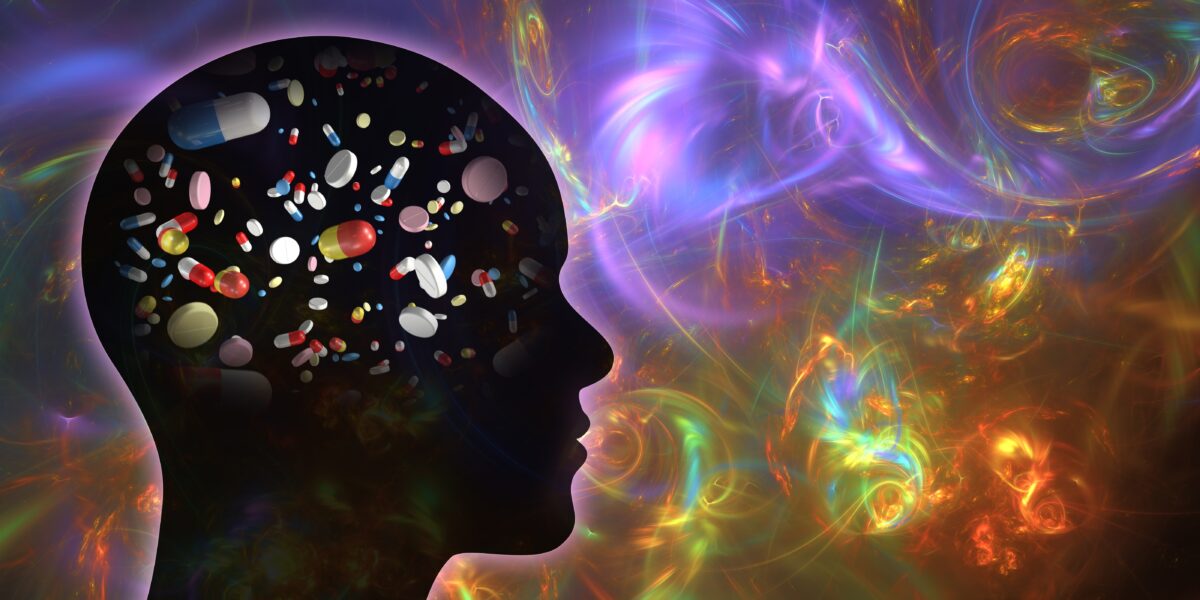
I don’t feel like I just simply exist as an isolated human with a head full of trauma – there’s a wider experience to engage with, and if we’re able to get on board with these potential shifts, then we might be able to exist in the world in a more involved and positive way. 

Oli Genn-Bash | Community Blogger at Chemical Collective | linktr.ee/oligennbash

Oli is one of our community bloggers here at Chemical Collective. If you’re interested in joining our blogging team and getting paid to write about subjects you’re passionate about, please reach out to Sam via email at samwoolfe@gmail.com

share your toughts

Join the Conversation.

1 Comment
Inline Feedbacks
View all comments
Steve Brewer
5 months ago

My feeling is that this word “spiritual” is indeed the “no-thing” or “eternal now” and the physical-mental world we live in is the extrusion or resolution of this “non-substance” called mind-stuff or neutral monism, perhaps seen as a superposition of mind and matter, into reality by the process of self-observation (the I am). There must be a structure to this dimension because it has physical and mental aspects when it is made “real”. The psychonauts, mystics or divines have a minimal access to this numinous dimension, but it is the source of all experiential aspects of life and is the experiential basis of what unites us as well as divides us. This is where philosophy unites reality with religion, the real with the numinous.

Last edited 5 months ago by Steve Brewer

Related articles

Our Products

Related Products

1V-LSD 150mcg Blotters

SALE! -35%

1V-LSD 150mcg Blotters From Original price was: €22.00.Current price is: €14.30.
(143)
1cP-LSD 100mcg Blotters

SALE! -20%

1cP-LSD 100mcg Blotters From Original price was: €18.00.Current price is: €14.40.
(137)
Tryptamine Mix and Match Pack (4 x 0.1g)

SALE! -20%

Tryptamine Mix and Match Pack (4 x 0.1g) From Original price was: €65.00.Current price is: €52.00.
(1)
1V-LSD 10mcg Micro Pellets

SALE! -35%

1V-LSD 10mcg Micro Pellets From Original price was: €15.00.Current price is: €9.75.
(43)
2-FDCK HCL

SALE! -20%

2-FDCK HCL From Original price was: €12.00.Current price is: €9.60.
(82)
1V-LSD 225mcg Art Design Blotters

SALE! -35%

1V-LSD 225mcg Art Design Blotters From Original price was: €35.00.Current price is: €22.75.
(62)
1S-LSD 150mcg Blotters

SALE! -20%

1S-LSD 150mcg Blotters From Original price was: €29.00.Current price is: €23.20.
(16)
1cP-LSD 150mcg Art Design Blotters

SALE! -20%

1cP-LSD 150mcg Art Design Blotters From Original price was: €25.00.Current price is: €20.00.
(74)
1V-LSD 225mcg Pellets

SALE! -35%

1V-LSD 225mcg Pellets From Original price was: €35.00.Current price is: €22.75.
(26)
1D-LSD 225mcg Pellets (1T-LSD)

SALE! -20%

1D-LSD 225mcg Pellets (1T-LSD) From Original price was: €42.00.Current price is: €33.60.
(13)
1cP-LSD 10mcg Micro Pellets

SALE! -20%

1cP-LSD 10mcg Micro Pellets From Original price was: €15.00.Current price is: €12.00.
(23)
5-MeO-DMT Freebase

SALE! -20%

5-MeO-DMT Freebase From Original price was: €23.95.Current price is: €19.16.
(36)
1S-LSD 10mcg Micro Pellets

SALE! -20%

1S-LSD 10mcg Micro Pellets From Original price was: €20.00.Current price is: €16.00.
(3)
O-PCE HCL

SALE! -20%

O-PCE HCL From Original price was: €17.50.Current price is: €14.00.
(25)
1cP-LSD 20mcg Micro Blotters

SALE! -20%

1cP-LSD 20mcg Micro Blotters From Original price was: €18.00.Current price is: €14.40.
(27)
rewards-icon
popup-logo

Reward program

popup-close
  • Earn
  • Affiliates