Do psychedelics actually have any power in being tools for resistance and decentralised consciousness, or have they simply been accommodated by the existing system? Are the impacts of these substances still shaped by the same structural patterns that catalyse us to seek out something different? If we try to imagine new ways of engaging with the world and each other, it might involve radically altering systems to create more peace and social equity, which won’t be easy.
The impact of meaningful psychedelic experiences seems to be positive on therapeutic outcomes (and life in general), with many people feeling a sense of unity or reverence, love and peace, alterations in time and space, and difficulty expressing the experience with words. These kinds of feelings may create something of an inflection point in people’s lives, where the impact of these experiences can profoundly impact certain paths or pursuits. The joy I’ve found within creative psychedelic experiences, particularly from the perspective of creating music with others in my band, has massively impacted the way in which I engage with the world – I find myself always looking for others to co-create with, and while this might slow things down and potentially lead to missed opportunities, I find myself drawn more towards a place where the ego is not so important. I understand where the creativity is flowing from, and I don’t take ownership of it, but simply recognise and hold the space for it.
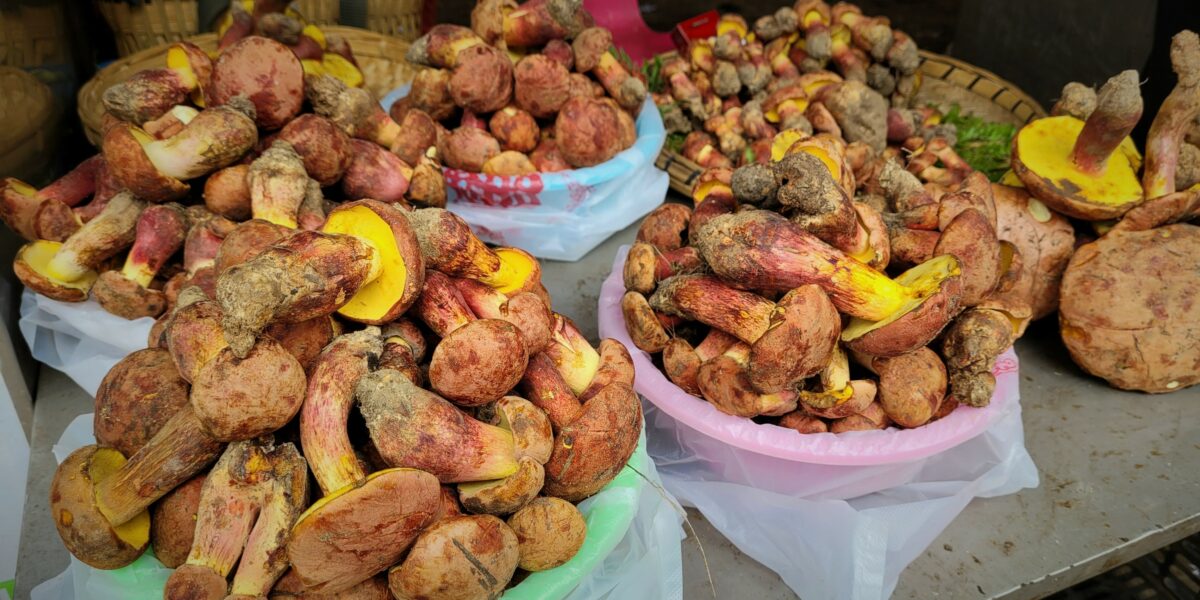
What I enjoy about co-creation in this sense is being able to temper my ego, where I recognise that I need just enough of a concept of self to be able to be a physical entity that is holding an instrument, but not too much in case the performance becomes about me rather than the music. Providing this meaning and context to the creative situation ultimately shapes the outcome, where things tend to operate in quite a peaceful and joyful way. The importance of intentionality is crucial to shaping the way in which our world could become more peaceful, and we should be careful to note that psychedelics don’t automatically make people more peaceful, despite what people such as Paul Stamets think regarding mushrooms making “people nicer, smarter, and more intelligent”.
The people and systems we have in place are what make the world more peaceful, and while ideas of ‘world peace’ can be seen as being idealistic, we might be able to engage with concepts of ‘systems thinking’ by looking at the complexity of the world from the perspective of relationships. When we take the system as a whole and start to ask if it’s working for everyone or not, then this radically challenges models based on profit and win-lose scenarios. Could we start to see a shift where psychedelics begin to impact us in turning away from the system that enforces the belief of a permanent state of war? This doesn’t necessarily mean war and violence ending, but it could mean that we find new ways to disconnect from the endless ‘banality of evil’, as Hannah Arendt described it when speaking about the actions of those in the Nazi regime who thoughtlessly followed orders. This is not to say that we disconnect from what is happening – quite the opposite. In disconnecting from the banality and the thoughtlessness, we adorn war with the only accurate description of it being truly evil.
There seems to be potential in psychedelics to connect us with an expanded consciousness through profound and joyful interactions with others, as well as thinking about the world in more of a holistic way, which could help us to live more harmoniously with our natural world. This has the ability to create a sense of togetherness, which could, in essence, reduce the propensity for engaging in war.
I’m reminded here of a quote from the late American comedian Bill Hicks when speaking about the impacts of mushroom experiences on the wider society:
What’s gonna happen to the arms industry when we realize we’re all one. Ha ha ha ha ha! It’s gonna fuck up the economy! The economy that’s fake anyway! Ha ha ha! Which would be a real bummer. You know. You can see why the government’s cracking down… on the idea of experiencing unconditional love.
I’m aware, however, that there’s a danger of romanticising the benefits of psychedelics, particularly when we think about indigenous use. The danger of contextualising psychedelics too much within the scope of individual healing might miss the wider context of cosmological renewal and maintenance of spiritual health to keep the world alive. It might not necessarily be about us as humans coming together to create a more peaceful world, and there’s even evidence to suggest that some of these indigenous communities engage in spiritual and physical warfare, sorcery, and witchcraft. Some of these groups include the Yanomami shapori (shamans) in the area of the Upper Orinoco River in Venezuela, who engage in hostile acts against neighbouring communities to inflict misery and death. There is also the concept of Tsentsak, which is a practice that exists throughout the Amazon basin involving the creation of invisible pathogenic projectiles or magical darts, which can be utilised either for healing or sorcery.
This is to reiterate that psychedelics don’t make us inherently peaceful, loving, or nice to each other – but what they can do is disrupt systems of thought that keep us trapped under the foot of an industry which is just going to keep expanding through further industrialisation and the use of AI in the frontlines of warfare.
Could psychedelics potentially detach us from an association with hierarchy, nationalism, and dehumanisation? My hope is that I continue to meet other like-minded people in the psychedelic space who feel similar to me, where I’m able to connect through feelings of community and togetherness, with the potential to reimagine new ways of thinking. A psychedelic culture that is aligned with peace should resist endless militarisation and refuse to simply medicalise the psychological consequences of structural violence. In this way, we might be able to prioritise reconciliation, justice, and systemic change over individual resilience.
The magic contained within these plants and fungi is wonderful from an experiential perspective, but can we expand this magic to possibly re-enchant our world to where we can imagine ourselves out of a permanent state of war?
Oli Genn-Bash | Community Blogger at Chemical Collective | linktr.ee/oligennbash
Oli is one of our community bloggers here at Chemical Collective. If you’re interested in joining our blogging team and getting paid to write about subjects you’re passionate about, please reach out to Sam via email at samwoolfe@gmail.com

























share your toughts
Join the Conversation.