in this article
- What is the Role of Laughter?
- Historical Roots: Psychedelia and Comedy
- Bill Hicks: The Psychedelic Comedian
- Contemporary Psychedelic Comedy
- Comedy, Healing, and Integration
Are you 18 or older?
Please confirm that your are 18 years of age or older.
You are not allowed to access the page.
Disclaimer: The views and opinions expressed in this article are those of the authors and do not necessarily reflect the official policy or position of the Chemical Collective or any associated parties.
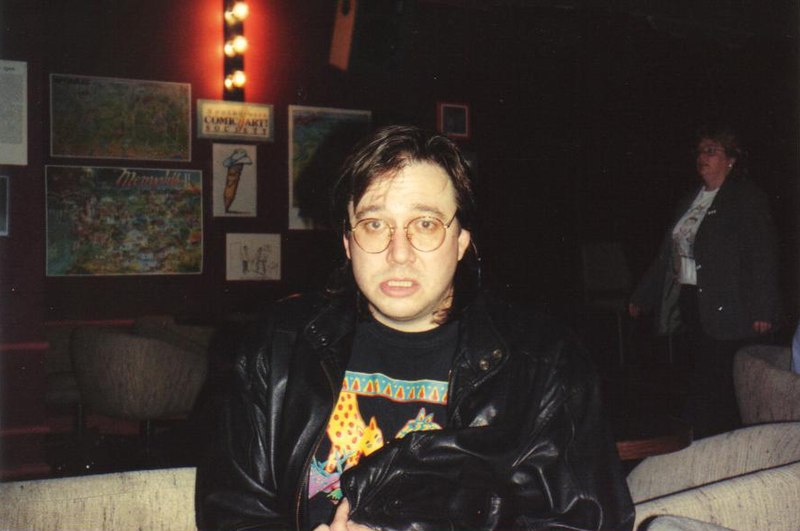
“Today a young man on acid realised that all matter is merely energy condensed to a slow vibration, that we are all one consciousness experiencing itself subjectively, there is no such thing as death, life is only a dream, and we are the imagination of ourselves. Here’s Tom with the Weather.” – Bill Hicks
This quote from the late American stand-up comedian follows on from a rant which features in his 1993 special, Revelations, where Hicks is hoping for more positive news reports of people taking drugs, saying that it’s:
“Always that same LSD story, you’ve all seen it. ‘Young man on acid, thought he could fly, jumped out of a building. What a tragedy.’ What a dick! Fuck him, he’s an idiot. If he thought he could fly, why didn’t he take off on the ground first? Check it out. You don’t see ducks lined up to catch elevators to fly south—they fly from the ground, ya moron, quit ruining it for everybody.”
This might be thought of as something of a harsh response to a tragic incident, but with the comparison to ducks lining up to catch elevators to fly south, Hicks has seemingly pierced through the veil of scare stories about drugs. This wasn’t to offend the imaginary person who jumped out of a window on LSD, but more so to illuminate how illogical all the fear is surrounding the potential dangers of psychedelic drugs.
We can see how this bit of acid-inspired humour contains a powerful essence that relates to truth-telling, specifically in the sense of an obligation to reveal things in service of the common good. Often this might come at one’s own personal risk, but the fearlessness of comedians such as Hicks allowed this essence to flow in a way which doesn’t worry about offending because this essence is in relation to truth. There’s something to be said about the effect of psychedelics resonating with the trickster archetype, where energy can be shifted to challenge customary norms and show us where there could be alternative possibilities.
The power that psychedelics can have on infusing a situation with humour, and through that, we might be able to understand the power of joy in our own healing process. Perhaps the narrative has been shaped by certain people in a way which has focused more on the power of psychedelic-assisted psychotherapy to provide healing, rather than just engaging in experiences of laughter or joy.
From a personal perspective, this is why I’m so fond of psychedelics! If they didn’t make me laugh or feel joy, I’d have never found them so alluring in the first place – sure, I’ve had unpleasant experiences, as well as wonderfully healing experiences which have taken me to some fascinating places. But ultimately, the real wisdom for me was connecting with the joy of engaging with the world in different ways, where I shifted my beliefs about what kind of engagement I could have with it. This connection to joy through my psychedelic experiences has allowed me to be more at ease with the world, where I’m able to connect with others in mutual joyous energy. People often think of me as a fun and silly person to be around, but this has often felt like transmuted energy from experiences of grief and trauma, where it could be seen as a protective mechanism against being in an anxious or depressed state.
This isn’t to say that it’s always a positive thing, as sometimes we do really need to take some serious inquiry into what’s going on for us, and I certainly don’t want to diminish the potential power of psychedelic-assisted psychotherapy. But I do think that many people have engaged with psychedelic experiences primarily because they’re fun and they allow us to step outside of the ordinary confines of consciousness. Perhaps we think too much about obtaining ‘happiness’ rather than experiencing states of joy, which allow us to feel what’s happening right now and could be a lot more easily accessible than trying to reach the goal of being ‘happy’.
So what is the relationship between psychedelics and humour, and are there ways to understand it from cultural, philosophical, and perhaps even neurological perspectives? How we experience joy within our psychedelic experiences more than likely expresses itself in the form of laughter, and this is certainly key to understanding our response to situations which we find funny.
I’m sure we can all agree on how difficult it is to suppress laughter, and certainly, the euphoric and joyous effects that we experience make us want to do it more. There’s something uniquely human about this kind of laughter, especially if we’re attending a live stand-up comedy performance where we’re in unison with others in the laughter.
The 20th-century French philosopher Henri Bergson explored the concept of laughter in his 1900 writings, Laughter: An Essay on the Meaning of the Comic. Paramount to Bergson’s understanding of laughter was that it could not exist outside the human realm. We may find our natural environment to be beautiful or inspiring, but we never laugh at it. If we have ever laughed at animals within our environment, it is only because we have attached some form of human characteristic to them. (I myself once had a thoroughly enjoyable experience on a large dose of mushrooms, where I had a vision of a friend talking to me in the form of a water vole, which made me cackle with delight after having previously been stuck in a philosophical conundrum about the nature of the universe.)
Laughter is inherently human and relates to our feelings towards something or a situation. Bergson makes the comparison of one entering a room full of people dancing to music that we are unable to hear – the people dancing would obviously look quite ridiculous. In this sense, laughter appeals to intelligence rather than to sentiment. The intelligence that laughter appeals to is interrelated with other intelligences. There is always a sense of complicity with others when laughing, as an appreciation of humour would be extremely difficult in isolation from a group. Laughter does not just serve to satisfy the intellect, but instead has an important social and moral function to keep our minds in a state of elasticity.
Could this elastic mind state have parallels with the neuroplasticity we experience under the influence of psychedelics? It could be that laughing has a similar effect in developing neural pathways that can provide us with new perspectives. Perhaps comedy has the power to break us out of ordinary thought patterns and reframe situations where we might find some comfort in that new perspective.
In the moment of laughter, we’re able to undermine the power of what we’re resisting against, rather than fueling it through engaging in conflict. Laughter can’t be fought against because it simply doesn’t engage with the fight to begin with. The moment when one is actively seeking to laugh and being consciously made to laugh creates an opportunity to engage in creative resistance, rather than attempting to destroy something through force, or hoping that this thing will simply go away if you don’t pay attention to it.
Could the combination of psychedelics with laughter provide a synergistic effect to increase neuroplasticity within these moments? When looking at the introduction of psychedelics into popular culture, we can see where they might have influenced the work of certain comedians.
In the late 1950s, the stand-up comedian, satirist, and social critic Lenny Bruce began talking about things that challenged the overwhelming post-war confidence in the American way of life. His edgy persona and profane way of delivering his material were often antithetical to this perceived confidence, where Bruce would uncover the growing social unrest during a politically uneasy time heading into the 1960s. The growing countercultural movement, which rejected war, consumerism, and social norms, provided an arena for Bruce to thrust himself into, and with this came the consumption of drugs. Unfortunately, this resulted in his untimely end due to an accidental morphine overdose in 1966 at the age of 40. While not especially known for consumption of psychedelics, he did mention smoking DMT and jumping out of a window during a lecture that same year when asked if he’d ever taken LSD.
This energy that pushed the boundaries regarding social norms might have been fuelled by drugs, and comedians who came after Bruce, such as George Carlin, were rather open about the impact that psychedelics in particular had on their stand-up material. In the 1960s, Carlin was something of a “middle-American” comic, while others around him began to engage more in the countercultural movements. This started to become uncomfortable for him when he realised his propensity for anti-authoritarianism made him resonate more with younger people, rather than those he was entertaining at the clubs. His encounters with LSD and mescaline seemed to amplify these sentiments and accelerate his transformation into someone who created comedy which challenged certain aspects of society, stating that:
LSD was a much stronger experience [than marijuana], and the mescaline, and I don’t know what they did or how they did it, I just know that going through that gave me the confidence in these changes I was feeling, in this direction, this metamorphosis, I was in the middle of. I gained confidence in it and I took strength from it, feeling that I was right, that I was really on the right path, that I was being true to myself. And that was what counted to me, to be true to myself—my mother had always said that. To thine—Shakespeare—“To thine own self be true.” She loved quoting the classics, and she quoted Emerson or Shakespeare or whoever it was she thought was appropriate for her lesson. And to thine own self be true. And I just—I just had to be who I felt like I was, not who I had led them to believe I was.
It might be that the consumption of psychedelics and other drugs provided an opportunity for certain individuals to express truth in this lived sense through the art of comedy. Could psychedelics in this sense provide a catalyst for dismantling authority by way of laughing at the absurdity of culture?
The psychedelic philosopher and ethnobotanist Terence McKenna spoke about culture in a negative light, stating that:
Culture is not your friend. Culture is for other people’s convenience and the convenience of various institutions, churches, companies, tax collection schemes, what have you. It is not your friend. It insults you. It disempowers you. It uses and abuses you. None of us are well-treated by culture.
Interestingly, McKenna was writing at the time when Bill Hicks was making his name in the world of stand-up comedy, and his philosophy almost certainly had an impact on Hicks’ material.
Hicks’ comedy began to take shape in the early 1980s; however, he felt that despite this development, there was an inability to move on to a different level. During this time, drug use – particularly cocaine – amongst comedians had increased significantly. Individuals such as Richard Pryor, John Belushi, and Robin Williams had become very fond of cocaine, talking about it often in their material. Despite his own personal spiritual discovery during his teenage years, Hicks had not encountered any drugs or mind-expanding substances until 1982, when he first took a dose of LSD.
For Hicks, such experiences made room for comedy that he perceived to be free from previous barriers and helped bring in new ideas within a different level of awareness. His use of drugs was no secret, and he was clearly a strong believer in the creative potential that this exploration could produce. In his 1992 live show, Relentless, Hicks states that:
Drugs have done good things for us. If you don’t believe they have, do me a favour – take all your albums, tapes, and CDs and burn ‘em, cause you know what? The musicians who made that great music that has enhanced your lives throughout the years? Rrrrreal fucking high, ha ha ha…The Beatles were so high they even let Ringo sing a couple of tunes… OK, and these other musicians today who don’t do drugs, and in fact speak out against them? Boy, do they suck! What a coincidence!
In his 1993 show Revelations, he goes further with his thoughts on psychedelics, with the idea that they might have enhanced our evolution. He makes an indirect reference to McKenna’s ‘stoned ape’ theory (the idea that the apes evolved through eating hallucinogenic plants once they moved into the grasslands) by acting out an ape eating a mushroom, then eventually having the idea of going to the moon. Hicks entertained McKenna’s view that mushrooms were left behind by an alien race in order to further our own knowledge. His particular fondness for mushrooms gave rise to one of my favourite bits in all of his material, where he says that:
I’m glad they’re against the law, ’cause you know what happened when I took ’em? I laid in a field of green grass for four hours, going “My God, I love everything.” … It is only our illusion that we are separate from God, or that we are alone. In fact the reality is we are one with God and He loves us. Now, if that isn’t a hazard to this country… Do you see my point? How are we gonna keep building nuclear weapons, you know what I mean? What’s gonna happen to the arms industry when we realize we’re all one. Ha ha ha ha ha! It’s gonna fuck up the economy! The economy that’s fake anyway! Ha ha ha! Which would be a real bummer. You know. You can see why the government’s cracking down on the idea of feeling unconditional love!
His use of psychedelics seemed to fuel an act which not only focused on the spiritual aspects of these experiences, but also the power to catalyse thought which could pierce through a veil of perceived consumerist nonsense that would try to diminish artistic integrity. Despite his early death at the age of just 32, there might be some solace in the fact that his material never got too good for his own good, and he managed to avoid being swept up in the growing trend of celebrities selling products just to make some extra money. In Relentless, he is quite clear on where he stands with this saying that:
Any, ANY performer that ever sells a product on television is – for now and all eternity – removed from the artistic world. I don’t care if you shit Mona Lisas out of your ass on cue; you’ve made your fucking choice!
I don’t really believe this fearless ability to cut through the perceived nonsense has been matched since, besides certain comedians such as Doug Stanhope, Patrice O’Neal, or Norm Macdonald. Stanhope was certainly a fan of psychedelics, with specials such as the Acid Bootleg in 2001, as well as espousing them during a bit titled ‘excess in moderation’ in his 2007 live show No Refunds, where he says, “Don’t eat a mushroom stem and see pretty colors. Eat the whole bag and see God. A real God.”
My feelings towards contemporary psychedelic comedy are that psychedelics have possibly become too mainstream for the comedy to maintain its edge. I see less psychedelic-inspired comedy that seeks to catalyse any sort of social change, and more comedy that is just about psychedelics. Comedians such as Shane Mauss, Adam Strauss, and Duncan Trussell have certainly incorporated a lot of psychedelic material into their act – but could it be that now psychedelics are more popular, these comedians are utilising that popularity to promote their material?
The internet era has produced countless memes and satirical social media pages like Healing From Healing, or figures such as Brent Pella and Dennis Walker who have poked fun at all different areas of the psychedelic subculture. While this offers some relief from the growing wave of corporate psychedelia, some of these individuals aren’t exactly on the fringes where they can comfortably challenge the increasingly larger power structures that now have their fingers in the psychedelic pie. People enjoy the adulation and increasing number of followers, where poking fun can be viewed as a necessary thing to provide some balance without necessarily rocking the boat too much.
We might see some of these individuals as court jesters, who have the power to mock and unveil truth freely without punishment, but with the dying out of the jester in the 1800s in most parts of the world, has this role now become tokenistic? Do those at the top of the corporate psychedelic ladder simply laugh off the poking fun? Maybe they even profess to enjoy it, as it provides the veneer of being down-to-earth and part of the subculture, when the reality seems to be more about how much money can be made.
Psychedelic comedy in this sense might have flattened out, where influencers double up as journalists or commentators, rather than being actual artists on the fringes of society who could challenge the social order. Artists often find themselves on the fringes due to the inherently political nature of art, and they are able to pose challenges to existing power structures and dynamics. At least I think this is what separates good art (more specifically comedy) from simply entertainment that comes across as being fairly hacky. We might not be able to rely on comedians to provide these challenges for us anymore (especially when some of the top acts in the world have recently performed at the controversial Riyadh Comedy Festival, where they were literally getting paid in blood money), but we have the ability to maintain the comedic resistance within our own minds.
I’m sure we can all agree that having a good laugh is a healing experience. When we throw psychedelics into the mix, the laughter can be intensely enjoyable, as well as providing a bonding experience between yourself and others. Humour can become a useful tool in psychedelic communication, where people are more likely to remember information and potentially have their minds changed about any stigma. It can also serve a function within the therapeutic space, where practitioners are able to connect more easily to the clients. Humour has the potential to also break the cycle of trauma, and allow it to be processed more easily, as well as preventing dogmatism relating to the way in which we feel we should heal.
Perhaps the humour can open us up to ideas surrounding the concept of the ‘cosmic joke’, where we might understand that we’re part of a wider, unifying consciousness. Although we’ve been totally convinced otherwise this whole time, the more we can utilise humour in this way to break out of ordinary thought patterns and challenge certain structures, the more we can empower ourselves to find peace and healing.
Oli Genn-Bash | Community Blogger at Chemical Collective | linktr.ee/oligennbash
Oli is one of our community bloggers here at Chemical Collective. If you’re interested in joining our blogging team and getting paid to write about subjects you’re passionate about, please reach out to Sam via email at samwoolfe@gmail.com
Welcome to Chemical Collective.
Create an account to earn 200 welcome points.
Already have an account? Sign in
Check out our Community Blog and get involved with the conversation. You will be awarded 50 x ChemCoins for each comment up to a limit of 250 total ChemCoins.
Have you purchased any of our products? Reviews and reports are so important to the community. Share your honest opinion, and we’ll reward you with 50 ChemCoins for each review!
Every time you complete an order with us, you’ll be awarded ChemCoins for each Euro spent.
Welcome to Chemical Collective.
Create an account to earn 200 welcome points.
Already have an account? Sign in
Earn commission every time someone makes a purchase through your link.
When you become an affiliate, you will be allocated a unique link to share with your friends, followers, subscribers, or Aunt Susan.
You can choose to payout the commission earned once per month, or save it up to receive on a rainy day! Commission earned is 5% of the total order value per referral.
Contact us to join the Chemical Collective family and become an affiliate.
share your toughts
Join the Conversation.
haha love the idea that cosmic joke is somthing we get from psychs