in this article
- Why Do These Experiences Feel True?
- Competing Models of Truth in Psychedelic Insights
- How Trustworthy Are These Insights?
- Can Psychedelics Provide Objective Truth or Should We Accept the Mystery?
Are you 18 or older?
Please confirm that your are 18 years of age or older.
You are not allowed to access the page.
Disclaimer: The views and opinions expressed in this article are those of the authors and do not necessarily reflect the official policy or position of the Chemical Collective or any associated parties.
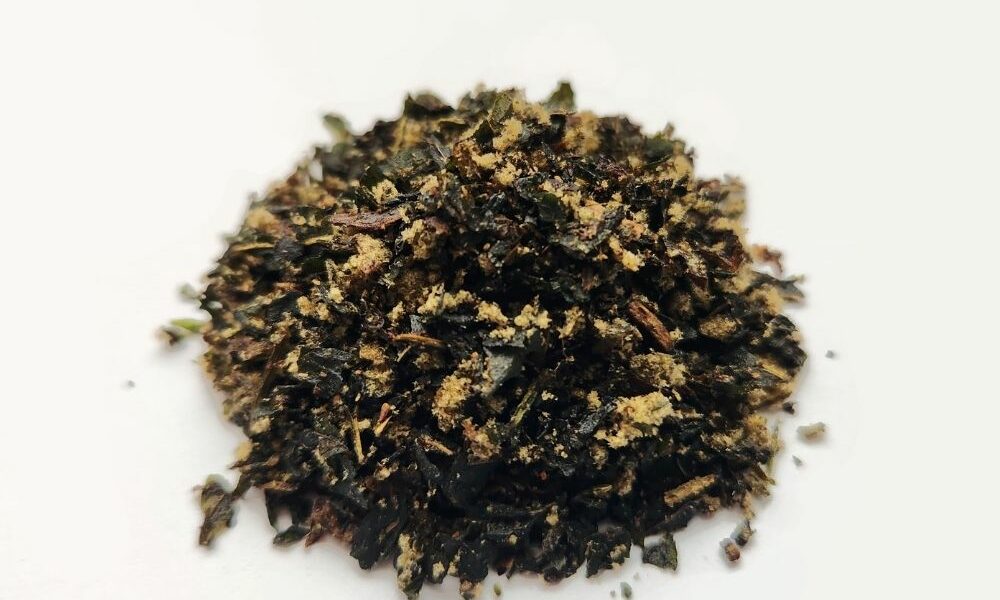
It was a lovely sunny day back in 2012 when I decided to consume just over 4 dried grams of liberty caps (Psilocybe semilanceata) for a solo trip, which ended up taking place entirely in my house and garden at the time. This was certainly the strongest mushroom experience I’d ever had, with the hallucinations being so strong that I was convinced the wall and ceiling were about to tear apart from each other. Initially, the experience felt quite therapeutic, with clear communication from the mushrooms that they were here to provide healing. Many others have certainly found this with their mushroom experiences, with extensive research now demonstrating the therapeutic potential of mushrooms to treat different mental health conditions.
In this experience, I felt like the mushrooms were explicitly soothing me, like they were aware of what I’d been through and what I was bringing to this experience. The long-term complicated grief I’ve encountered after losing my mum when I was 11 years old often comes up in my experiences with mushrooms, and in this particular experience, it felt like they were really trying to relieve me of the sadness. It was a very cathartic experience, where I had a noticeable emotional breakthrough with a lot of tears, while still feeling held in the space and validated by the mushrooms. This moment of the trip felt quite swift, however…and then the mushrooms communicated with me not in explicit words, but very much with the sense of “Right then, you’ve had the healing…now’s the time for the download!”
What happened next was in more of a similar vein to people’s DMT experiences, where people report a sense of familiarity with the space they’re in or the entities they encounter. Perhaps it was something to do with the relatively large dose of liberty caps (the most I’d ever had was 3 dried grams and that was a lot to manage), but it was like I’d tuned into a radio station that said something to the effect of “Hello, well done for tuning into the frequency…we’re so glad you’re back!”
At this moment, I didn’t question that the mushrooms were communicating with me, and I simply responded out loud with a slow and slightly pensive “Oookaaaay…?” before I was “instructed” to grab a pen and start writing everything down that was being communicated to me. This ‘communication’ is always difficult to describe, as it doesn’t come via words, but more so through a direct way of speaking to the inner you, which doesn’t require the decoding of language. On the r/awakened subreddit, user Psilocybenn asked if the mushrooms had ever spoken to anyone, saying that:
The mushrooms have created our bodies and have terraformed our world so we can live in it and come into a state of being that allows for higher consciousness and a deeper connection to the world and that which guides it.
They are actively trying to reach out and reconnect with us in order to help teach and guide us back into a wholly symbiotic relationship with the planet, where we act as gardens and caretakers of this beautiful world we have been given to live in.
Interestingly, this was the same theme that was being communicated to me. I was shown a world that I felt was home, except it didn’t necessarily resemble Earth. I saw scenes depicting tribal groups of non-human entities, almost similar to the 2009 movie Avatar. What I felt from this observation was a clear message of care, with all of the beings, both young and old, being looked after. The overwhelming message I got was that this is where we originate from, but our existence on Earth has made us lose this connection, where we can comfortably look after one another in peace.
I was also shown scenes of the Earth itself, where we have drilled into it to obtain resources to build rockets to explore space, but I became aware that we’ve hardly travelled any distance at all in the grand scheme of things. Some research published in 2018 does actually suggest that interstellar travel via chemical propulsion would have limitations given the amount of fuel required to escape habitable zones of low-mass stars, such as our sun. It was communicated to me that we should be guardians of this planet, and by doing so, we would have advanced to the point of being able to achieve interstellar travel through what I can only describe as the use of wormholes in space.
Theoretically speaking, wormholes do exist and could potentially provide the opportunity to traverse large distances very quickly, due to the wormholes warping space and time. While they only exist in a mathematical sense, the field of quantum physics theorises that it’s likely that microscopic wormholes already exist within quantum foam, a theoretical fluctuation of spacetime. In theory, a highly advanced civilisation could capture one of these microscopic wormholes and utilise technology to enlarge it and keep it stable enough for travel, much like in the science-fiction novel Contact by the late American astronomer Carl Sagan.
I’ve never actually read this novel, and I don’t recall watching the movie Avatar prior to that particular experience with liberty caps. I was a bit of an astronomy geek, though, and there was certainly a fascination with the idea of life from other planets. But despite my varied consumption of different psychedelic plants and fungi, I have only ever experienced this kind of extra-terrestrial type experience while consuming liberty caps. Not any other types of mushrooms or any other substances for that matter. The closed-eye visuals I’ve experienced with these particular mushrooms have more or less always had some relation to alien worlds, with some examples being witnessing an alien DJ on the decks at a party, and then another experience of being taken on a tour of what seemed like an alien colony, where I was told, “Let me show you where we come from.”
Some people often say to me that they find liberty caps a bit “cheeky” or “mischievous”, with them having quite a different energy from different types of Psilocybe mushrooms, and I think there’s certainly something to be said for that. But is it that they’re more potent with a different variety of alkaloids, such as baeocystin, which potentiate something inside of us, or are they bringing us messages which don’t actually have anything to do with our personal story? How do we know if any of these messages is actually true?
The insights we gain on psychedelics such as mushrooms or LSD could be true, or they could be delusional, metaphorical, symbolic, or just simply neurochemical noise…which then presents us with the problem of epistemic authority. Can we actually trust the knowledge we gain under the influence of psychedelics? It’s undeniable that these substances can have value in many different areas of our lives, but more often than not, they require some kind of framework, whether that be psychological, spiritual, philosophical, or cultural, to understand what kind of truth they offer.
We can look at the phenomena happening inside our brain as one of the ways to explore how we come to some sense of feeling like these experiences are true. Under the influence of psychedelics, we can see enhanced pattern recognition in creative processes, as well as a reduction in the filtering of sensory and cognitive information. The Relaxed Beliefs Under Psychedelics (REBUS) model, proposed by Dr Robin Carhart-Harris, aims to account for the acute therapeutic changes experienced under the influence of psychedelics, and it might provide some explanation for what’s happening in terms of our relational beliefs.
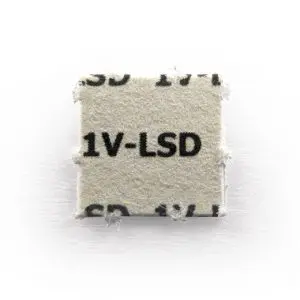
Specific decreases in negative self-belief confidence have been strongly associated with acute unitive experiences, as well as an increase in well-being, which can last for a long period of time after ingesting psychedelics such as psilocybin mushrooms. This model points towards the relaxing effects of psychedelics, where bottom-up information flow can be liberated from the precision of high-level beliefs through intrinsic sources, such as the limbic system.
Neuroimaging studies into how psychedelics can suppress activity in the Default Mode Network have led to the Entropic Brain Hypothesis, which suggests that the quality of consciousness can be associated with high-entropy states of randomness. Ordinary waking states of consciousness could be categorised in a low-entropy way, where things are more ordered and predictable, whereas experiences such as those we have under the influence of psychedelics are more associated with higher-entropy states which have looser constraints over our cognition.
These looser constraints might also allow for some more flexibility when it comes to our emotions, which might influence how much meaning we find in our psychedelic experiences. This emotional flexibility is promoted through the modulation of emotion regulation strategies, with the neuroplasticity we experience under the influence of psychedelics having an impact on this flexibility. This salience of changing emotional states might open up the opportunity for more meaning-making, where we might experience significant breakthroughs, particularly in a clinical sense, where the impact of psychedelics on emotional processing and mood can be key to positive therapeutic outcomes.
I’ve not personally had a psychedelic experience within a clinical setting, but my experiences with psychedelics (particularly mushrooms) have often allowed for these emotional breakthroughs where I have found meaning which feels completely true. My feeling of the mushrooms communicating to me doesn’t strike me as delusional because it’s happening so frequently, and with this feeling, I’m able to open up something of a two-way dialogue, which can really help with releasing and processing emotions.
Often, I get the sense of having something ‘revealed’ to me, and I respond with “Yes, I know…” not in an arrogant way, but in the sense that the mushrooms have touched upon something that is key to the narrative of what I’m going through, and that I feel a sense of the mushrooms holding space for it. I think this is why they’re so powerful when it comes to treating depression, as they can honour the story while also revealing something which you know deep down you need to work on. Sometimes they can reveal things you’ve been totally unaware of, but still, there is a sense of truth in this revealing. It resonates in a way which seems like clarity, almost realising something for the first time ever so profoundly, and with this, there doesn’t seem to be any question about whether or not these revelations are real.
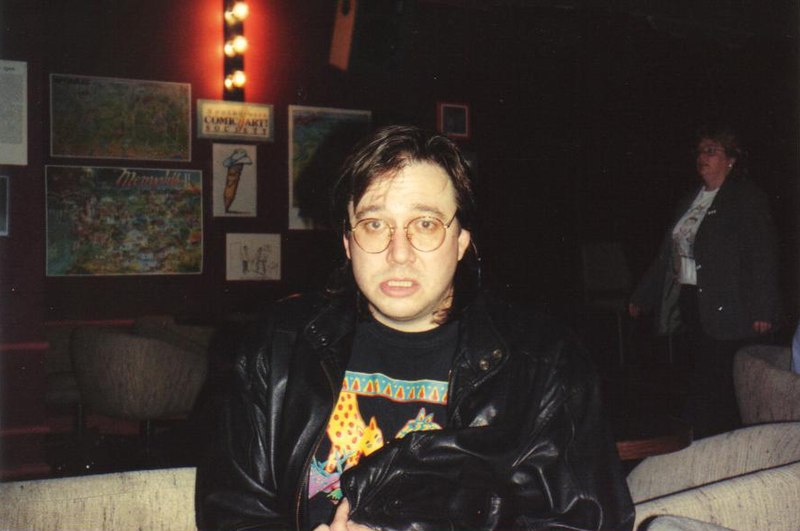
When speaking about his experiences with magic mushrooms, the late American comedian Bill Hicks explicitly framed them within the scope of truth, saying:
My God, I love EVERYTHING! The heavens parted, God looked down and rained gifts of forgiveness onto my being, healing me on every level; psychically, physically, emotionally, and I realized our true nature as spirit, not body, that we are eternal beings and God’s love is unconditional and there’s nothing we can ever do to change that. It is only an illusion that we are separate from God or that we are alone. In fact, the reality is that we are one with God and he loves us.
This sense of certainty can often accompany these kinds of experiences, and there could be insights that resolve emotional challenges from a psychological perspective, regardless of the factual grounding. When we enter into a state of catharsis, it might be so powerful that we end up conflating this with epistemic correctness and feeling as if the content of the experience is undeniably true. If something feels so profound during a major emotional release during a psychedelic experience, it can feel like a major breakthrough that we assume is factually or metaphysically correct.
The certainty we experience might attach itself to both helpful and harmful beliefs, sometimes with contradictory insights, such as “the whole universe is love”, but also “I must walk away from my relationship”, for example. Perhaps these contradictions only exist within cultures that are possibly less connected to the traditional use of psychedelic plants and fungi, and we can explore some models of truth which might be competing for airtime in the psychedelic space.
The biomedical model might suggest that psychedelics simply disrupt or desynchronise our brains, with distortions in space-time but an increase in functional connectivity. The value here might lie more in neuroplasticity and emotional processing, rather than establishing any kind of metaphysics. This could be useful for achieving specific therapeutic outcomes, rather than necessarily getting to any kind of “truth”.
If we look towards the psychological interpretations, we can see where psychedelics have the potential to reveal inner truth, where certain doors can be unlocked to see where we need to focus our intention. There might even be doors leading to rooms that we didn’t even know existed, which could be related to unconscious conflict, archetypal dynamics, or suppressed memories. These insights could also be symbolic, but still meaningful in a metaphorical sense, where these metaphors can assist in guiding the inner journey of the individual towards some kind of realisation. These metaphors can endow the psychedelic experience with perceptible and comprehensible ways of understanding experiences that are largely described as being ineffable. The structure of metaphor allows these experiences to be placed in space and time, where some kind of path is laid out, and we can potentially come to a place of ‘knowing’.
But is this place of ‘knowing’ just related to the individual, or is there a wider scope for including more communal knowledge? Indigenous perspectives regarding epistemic authority might look towards the idea of knowledge being gained through the community, rather than individual certainty. The interrelatedness of indigenous communities with the local ecology could point towards a different way of understanding knowledge, in what researcher Luis Eduardo Luna calls a ‘relational epistemology’. This way of engaging with knowledge allows it to be validated within the scope of the wider community and environment, where the insights gained through ceremony or ritual can be trusted through the observed impact on the health of local ecologies. Perhaps we can look towards indigenous knowledge gained through experiences with psychedelic plants and fungi as an antidote to the individualised sense of knowing, or the materialist worldview that seeks to ‘verify’ everything within strict parameters.
The philosophical perspective, however, might provide different avenues of knowing from claims about what we understand to be the nature of reality, what we feel are core values in life, or pragmatic truths about what works for us. We might be able to expand these avenues to more of a collective and communal mindset of ‘knowing’, especially if we’re not part of an indigenous community, which has more relationality built into a framework of knowing.
From an individual perspective, if our psychedelic experiences line up with previous psychological work we’ve undertaken, then we might have an easier time with integrating this knowledge by understanding how it applies to our values and life patterns. However, we can also see where this expands out to a collective perception of these insights and convergent thinking in relation to ideas surrounding oneness, unity, compassion, or ecological stewardship, for example.
This lends itself more towards the trust that indigenous communities have in the pragmatic knowledge, which can allow communities to live in a more cohesive way without creating new harm. In these instances, it’s probably worthwhile to trust the insights which are gained from experiences within a communal setting.
This pragmatic way of looking at things can also allow us to see whether or not these insights stand the test of time, especially once we come back to our ordinary state of being.
We might have to be wary of some of these insights, especially in moments where there is high certainty and high specificity, such as feeling the need to leave your partner, quit your job, or the sense of having been sent on a “mission” by the universe. Psychedelic experiences can make us highly suggestible and can potentially fuel delusions or paranoia, where it might feel like everything has been leading up to this point and we’ve been somehow “chosen” by forces higher than us. I’m reminded here of some lyrics from the song Rosetta Stoned by the American rock band Tool, which details an encounter with DMT and aliens:
E.T. revealed to me his singular purpose.
He said, “You are the Chosen One,
the One who will deliver the message.
A message of hope for those who choose to hear it
and a warning for those who do not.”
Me. The Chosen One?
They chose me!!!
And I didn’t even graduate from fuckin’ high school.
These tongue-in-cheek lyrics simultaneously show the kind of insights we can gain through these experiences, while keeping us grounded in the knowledge that maybe we haven’t necessarily been chosen in these moments. This might ultimately keep any potential paranoia at bay, where we don’t dive too deeply into something without first having some kind of framework.
In a recent panel discussion at a Psyaware event, researcher and facilitator Daan Keiman mentioned how these frameworks can prevent “epistemic injury or harm” by creating space for ethical meaning-making. By providing these frameworks, we can also minimise the potential risk of individuals having traumatic experiences while under the influence of psychedelics, which could prevent certain insights from being fuelled by the amplification of pre-existing trauma.
One of my favourite things about psychedelics is their ability to catalyse our curiosity into the nature of knowledge, belief, and meaning. Instead of just thinking of them as drugs that alter our consciousness, they can allow us to engage in a state of epistemic humility, where what we think we know might be completely thrown out of the window in quite a profound way. We can look towards trusting that which connects us, grounds us, and provides a sense of healing, while rejecting the insights that inflate the ego, create a sense of destabilisation, or ultimately isolate us within our own thoughts.
We can utilise different frameworks such as psychology, philosophy, spiritual traditions, or community wisdom, as well as seeking corroboration through journaling, therapy, discussion with others, or further reading. The importance of integration after a psychedelic experience can allow us to slow down and develop a lifelong practice of inquiry where we implement different practices, such as meditation, creative expression, or somatic release, to explore different areas related to our experiences.
This exploration can remind us that the knowing and truth we encounter within our psychedelic experiences rarely exists as a single point. When we see how neuroscience, philosophy, psychology, spirituality, and indigenous wisdom all crossover in this area, we can understand how the manifestation of epistemic authority is always an unfolding process.
Oli Genn-Bash | Community Blogger at Chemical Collective | linktr.ee/oligennbash
Oli is one of our community bloggers here at Chemical Collective. If you’re interested in joining our blogging team and getting paid to write about subjects you’re passionate about, please reach out to Sam via email at samwoolfe@gmail.com
Welcome to Chemical Collective.
Create an account to earn 200 welcome points.
Already have an account? Sign in
Check out our Community Blog and get involved with the conversation. You will be awarded 50 x ChemCoins for each comment up to a limit of 250 total ChemCoins.
Have you purchased any of our products? Reviews and reports are so important to the community. Share your honest opinion, and we’ll reward you with 50 ChemCoins for each review!
Every time you complete an order with us, you’ll be awarded ChemCoins for each Euro spent.
Welcome to Chemical Collective.
Create an account to earn 200 welcome points.
Already have an account? Sign in
Earn commission every time someone makes a purchase through your link.
When you become an affiliate, you will be allocated a unique link to share with your friends, followers, subscribers, or Aunt Susan.
You can choose to payout the commission earned once per month, or save it up to receive on a rainy day! Commission earned is 5% of the total order value per referral.
Contact us to join the Chemical Collective family and become an affiliate.
share your toughts
Join the Conversation.